
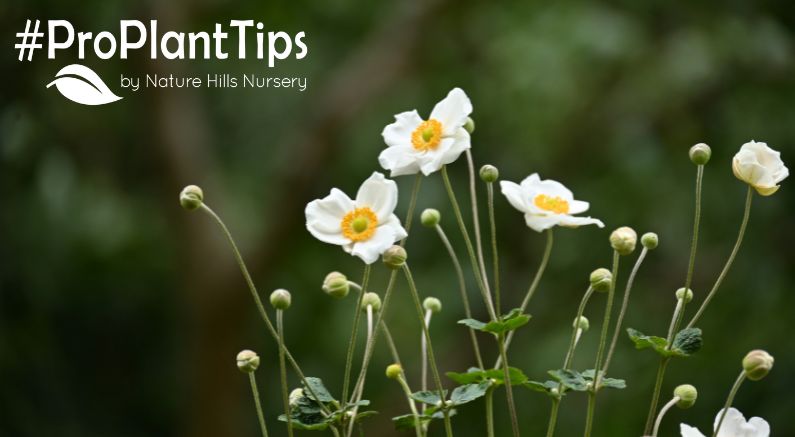

Japanese Anemones bring a romantic charm and a burst of fall color to the garden when most other blooms are fading. With elegant, papery flowers dancing on wiry stems above clumps of dark green foliage, these plants bridge the seasons with effortless grace. They thrive in partial shade, offer exceptional pollinator value, and pair beautifully with other late bloomers, like Sedum, Asters, and Ornamental Grasses!
This guide dives into the graceful world of Japanese Anemones, from the refined Honorine Jobert to compact varieties like the Curtain Call series and whimsical hybrids like the Fantasy™ collection. We'll also explore their care, how they differ from spring-blooming bulb Anemones and Bush Anemones, and ways to use them in today’s modern gardens!
The Many Faces of Japanese Anemone
Japanese Anemone (Anemone × hybrida and Anemone hupehensis) belongs to the Buttercup family (Ranunculaceae) and is technically a herbaceous perennial, not a bulb. They bloom late summer through fall, growing from fibrous roots or rhizomes, not spring bulbs like Anemone coronaria.
Classic Pink Japanese Anemone:

The quintessential pink variety with wide blooms on long, wiry stems. The standard pink Japanese Anemone is the iconic, time-honored variety that gardeners have adored for generations. With wide, shell-pink blooms perched on graceful, wiry stems, this cultivar captures the essence of late-season romance.
Each flower features overlapping petals surrounding a golden center, glowing against the backdrop of dark green, deeply divided foliage. These are the quintessential Japanese Anemones, ideal for naturalized woodland borders, cottage garden drifts, or as a gently waving screen behind shorter perennials.
Features:
- Grows 24-36 inches tall
- Soft pink blooms from late summer into fall
- Spreads gently by rhizomes to form clumps
- Perfect for pollinators and cut flower arrangements
This pink selection is a must-have for creating a nostalgic, calming space with an old-world feel. It pairs beautifully with white Hydrangeas, bronze-leaved Heucheras, and fall-blooming Sedums.
Curtain Call Series
Compact and tidy, the Curtain Call Japanese Anemones are bred for smaller spaces and containers, yet still flaunt that romantic woodland charm.
- Curtain Call Deep Rose Japanese Anemone: Rich pink blooms with sunny yellow centers sit close to the foliage on shorter stems, making it great for the front of a border.
- Curtain Call Pink Japanese Anemone: Softer in hue but just as bold in performance, this compact variety is perfect for mixed beds or shaded patios.
Features:
- Grows 12-18 inches tall
- Great for containers or tight garden edges
- Long-lasting blooms into fall
- Pollinator magnet
Fantasy™ Series: Playful and Petite
These hybrid cultivars bring a bit of whimsy to the traditional elegance of Japanese Anemones.
- Fantasy™ Cinderella Anemone: Soft bubblegum pink blooms with overlapping petals make this one a storybook star. Ideal for whimsical garden beds.
- Fantasy™ Pocahontas Japanese Anemone: Ruffled semi-double flowers in purplish-pink tones bloom prolifically on strong, compact plants.
Highlights:
- Grow to 12-18 inches tall
- Bloom profusely from late summer through frost
- Excellent for low borders and fairy gardens
- Easy care and low maintenance
Classic Beauties With Height and Grace
These selections bring the statuesque elegance that classic Japanese Anemones are known for, perfect for naturalized borders, woodland edges, and cottage gardens.
- Honorine Jobert Japanese Anemone: One of the oldest cultivars, this award-winning heirloom boasts pristine white petals and golden stamens. It’s a timeless pick for moon gardens.
- Snowdrop Japanese Anemone: Delicate, nodding white flowers create a drifting effect, reminiscent of snowfall.
- Whirlwind Japanese Anemone: Semi-double white flowers flutter like handkerchiefs in the breeze, adding movement and texture.
- Wild Swan Japanese Anemone: Bicolor with white fronts and soft violet-blue backs, it’s a modern take on traditional form with flowers that turn with the light.
- Fall in Love Sweetly Japanese Anemone: A standout with saturated rose-pink blooms, ideal for bold fall interest.
Japanese Anemone Traits:
- Most reach 2-3 feet tall
- Strong, upright bloom stems ideal for cutting
- Spread slowly to form drifts in part-shade areas
- Loved by bees and butterflies
Meet The Bush Anemone (Carpenteria californica)
Elizabeth Bush Anemone, like other Bush Anemone, is not a true Anemone but a flowering evergreen shrub native to California.
- Glossy evergreen foliage
- White, citrus-scented blossoms from late spring to early summer
- Thrives in Zones 7-10 in dry, well-drained Mediterranean soils
This shrub is drought-tolerant once established and makes a fabulous flowering hedge or backdrop in pollinator gardens. Unlike herbaceous Japanese Anemones, Bush Anemones form woody stems and retain their evergreen structure year-round.
Japanese Anemone vs. Bulb Anemones: Know The Difference

Japanese Anemones bloom in late summer and fall, growing from fibrous roots or rhizomes. In contrast, bulb-type Anemones, like Anemone coronaria, emerge in spring from small tubers and are usually shorter-lived in cold climates.
Spring Bulb Anemones:
- Examples: ‘De Caen’, ’Blanda’, and ‘St. Brigid’ types
- Bloom early to mid-spring
- Grown from corms/tubers
- Used more often in bulb beds or annual displays
Japanese Anemones:
- Perennial, zone-hardy plants
- Bloom from late summer to fall
- Great in woodland, cottage, and shade gardens
- Loved for their resilience and long season of bloom
Landscaping With Japanese Anemones
Whether you're building a woodland nook or designing a serene cottage garden path, Japanese Anemones are versatile and enchanting!
Great Garden Uses:
- Cut Flower Gardens: Long-lasting in vases with delicate texture.
- Pollinator Borders: Fantastic pollen and nectar-resources for your beneficial insects late in the season when they need it most.
- Borders and Woodland Edges: Adds late-season bloom under trees and shrubs.
- Shade Gardens: Glows under filtered light.
- Containers: Especially with compact varieties like Curtain Call and Fantasy™.
- Moon Gardens: The white-flowering Japanese Anemone reflects the moonlight.
For extra texture, layer them with fall-blooming plants and other shade garden plants like Ferns, Hostas, Heuchera, or Sedums. Mix colors for a layered look that mimics nature’s brushstrokes.
Caring For Japanese Anemones
Japanese Anemones are so much easier than they look! Here’s how to keep them flourishing year after year:
- Soil: Moist, well-drained soil enriched with compost is ideal, but these are highly adaptable!
- Sun Needs: Partial shade is best, especially in hot climates. Morning sun and afternoon shade work wonders.
- Watering: Keep the soil evenly moist their first year. Use the Finger Test to check moisture before watering.
- Mulch: Apply arborist mulch around the root zone to conserve moisture and suppress weeds.
- Deadheading: To prolong bloom, deadhead regularly, though the seedheads are attractive in fall gardens.
- Winter Prep: In colder zones, cut back after frost and apply mulch for winter protection.
- Division: Every 3-5 years, divide clumps in early spring to rejuvenate and spread the beauty.
Fluttering Finale: A Graceful Fall Performer!
Japanese Anemones are the unsung stars of the late-season garden, fluttering with grace and bringing much-needed color as summer fades. Their soft, satiny blooms sway on slender stems like ballerinas in the breeze, elegant, enduring, and always in motion. These beauties ask for little and give so much: pollinator support, long-lasting blooms, and a sense of serenity that settles over the garden like a whisper.
With choices ranging from petite charmers to statuesque stunners, there’s a Japanese Anemone for every garden style, from fairy-tale borders to modern minimalist spaces. And whether you're planting them for their texture, movement, or moonlit blooms, they'll repay you year after year with more magic.
Let Japanese Anemones remind you that even as the light changes and the air cools, mother nature’s artistry carries on in full bloom!
Happy Planting!


