
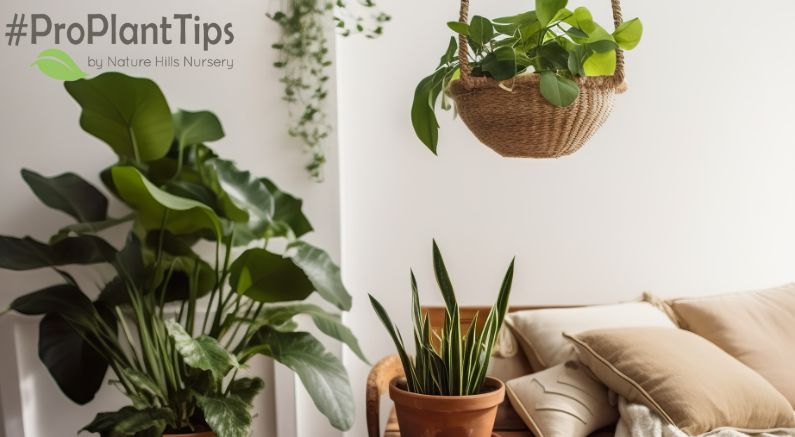
Not every room has a big window, and a grow light is not always practical or wanted. The good news is that a fair number of houseplants evolved on a forest floor under a canopy, and those are the ones that will live happily in the dim corner of your house that currently holds nothing.
Everything recommended below is a plant we actually grow, sorted by what its plant record says about light rather than by what usually shows up on lists like this one.
What Low Light Actually Means Indoors
Low light indoors is not darkness. It is a north-facing window, a spot several feet back from a bright window, a corner lit mostly by a lamp, or an office with overhead fluorescents and no window at all. Almost nothing green will live in a genuinely dark room, and a plant sold as "low light" is really a plant that tolerates less light than the rest without turning thin and stretched.
Two things tell you a plant is not getting enough. Growth comes in smaller and the gaps between leaves get longer, because the stem is reaching. And a variegated plant loses its pattern, because the white and cream parts of a leaf carry no chlorophyll and cannot pay for themselves in a dim corner. If that is happening, move the plant before you change anything else about how you are caring for it.
How to Tell What Kind of Light You Actually Have
People are bad at judging indoor light, because eyes adjust and cameras do not. Two quick tests settle it without buying anything.
The shadow test. On a bright day, hold your hand a foot above a sheet of paper in the spot you have in mind. A sharp, dark shadow with clean edges means direct sun, which is too much for everything in this article. A soft shadow with fuzzy edges is bright indirect light, the best spot most houses have. A faint, barely-there shadow is medium light. No visible shadow at all is low light, and that is the tier this article opens with.
The read test. If you can comfortably read a paperback there at midday without switching a lamp on, a low-light plant will live. If you cannot, no plant will, and the honest answer is a lamp or a different spot rather than a hardier plant.
Two other things matter as much as the tier. A north-facing window gives steady, weak light all day; an east window gives gentle morning sun and then very little. And light falls off far faster than it looks: a plant three feet back from a window may be getting a small fraction of what a plant on the sill gets. If a plant is struggling, try moving it two feet closer before you try anything else.
The Plants We Grow for the Lowest Light
Every plant in this section carries shade on its sunlight rating, which on our site means it will take the dimmest spot in the house that still counts as lit. They are here because the plant record says so, not because the list needed filling out. There are 10 of them.
- Asparagus Aethiopicus 'Sprengeri' Fern. Soft, arching, needle-fine stems that fill a hanging basket. Note that despite the name it is not a true fern, and it is not pet safe.
- Asplenium Antiquum 'Victoria' Bird's Nest Fern. Solid, glossy, wavy-edged fronds in a rosette. Bird’s Nest Ferns are the most forgiving group we grow indoors, because an unbroken frond loses far less water than a divided one.
- Australian Tree Fern (Cyathea cooperi). The floor-sized option. It builds a short trunk and a canopy of arching fronds, and it is a forest understorey plant, so a bright room is not required. Give it room and humidity.
- Goeppertia Insignis Rattlesnake Plant. Patterned foliage with dark banding on top and deep purple underneath. It evolved on a rainforest floor and genuinely prefers a spot out of direct sun, which most houseplants only tolerate.
- Hemionitis Arifolia Heart Fern. A low mound of small, thick, heart-shaped leaves. The leaf is solid rather than finely cut, which is why it holds up where a lacy fern would crisp, and it stays small enough for a desk or a bathroom shelf.
- Microsorum Thailandicum Blue Oil Fern. Narrow strap-like fronds with an iridescent blue-green sheen that reads strongest in lower light. It is a slow grower and does not need much to keep going.
- Silver Lace Fern (Pteris ensiformis 'Evergemiensis'). Fine fronds edged and centred in creamy white. A variegated plant usually wants more light, not less, so this one is unusual in tolerating a dim corner while keeping its pattern.
- Silver Ribbon Fern (Pteris cretica 'Albolineata'). Broader ribbon-shaped fronds with a silver-white central stripe. Same tolerance as the Silver Lace, at a slightly larger size.
- Staghorn Bifurcatum Fern (Platycerium bifurcatum). An epiphyte that grows on bark in the wild, so it mounts on a board or sits in a hanging basket rather than in a pot of soil. Understorey light is its normal condition. Let the top two inches dry before watering, because it stores water in its rhizomes and rots if kept wet.
- Staghorn Netherlands Fern (Platycerium bifurcatum 'Netherlands'). A broader, more upright Staghorn with the same mounted habit and the same rule about letting it dry between waterings.
If you want one place to start, the ferns in that list are the most forgiving, because a solid frond loses less water and needs less light than a finely cut one. The whole indoor fern assortment is in Indoor Ferns.
Plants for Medium Light, Which Is Most Rooms
Most homes are brighter than people think. If your spot gets indirect light for a good part of the day, or sits within a few feet of an east window, you are in medium light and the assortment opens up considerably. These are the plants rated for partial shade, which is our medium tier.
The easiest of them are the trailing ones. Pothos in particular keeps going well back from a window, though it grows fuller and holds its variegation better the closer you put it. Trailing and vining plants in general suit rooms where the light is decent but the floor space is not.
Alocasia sits at the other end. It wants the brightest indirect light in this whole article, so if the room is the problem, it is the wrong plant for it.
The full medium-light list runs to 36 plants, which is most of what we grow indoors. Browse them all in Houseplants.
Caring for a Plant in a Dim Spot
Water less, not more. This is the mistake that kills low-light plants. A plant in a dim corner uses less water than the same plant by a window, so the soil stays wet longer and the roots sit in it. Test with a finger an inch into the soil every few days rather than watering on a schedule.
Keep the leaves clean. Dust cuts the light reaching a leaf more than people expect, and it matters most exactly where there is least light to spare. Wipe broad leaves with a damp cloth every few weeks.
Turn the pot. A quarter turn each week keeps the plant from leaning hard toward its one light source and going lopsided.
Ease off the fertilizer. Less light means less growth, and unused fertilizer builds up as salts in the soil. Feed lightly through spring and summer, then stop until the days lengthen.
Watch the humidity, not just the light. Once the furnace comes on, dry air browns leaf tips faster than any watering mistake. A pebble tray or a cluster of plants fixes it.
What Goes Wrong, and What It Means
Long gaps between leaves, and smaller new growth. The plant is reaching for the window. This is the clearest sign it needs more light, and no amount of water or fertilizer fixes it. Move it closer or accept a leggier plant.
A variegated plant turning plain green. Same cause. The white and cream areas of a leaf carry no chlorophyll, so a plant short on light produces greener leaves that can feed it. Move it to a brighter indirect spot and cut back the plain runs so the energy goes into the patterned growth.
Yellowing that starts on the lowest, oldest leaves. Usually too much water, and it is the classic low-light failure: the plant is using less water than it did by the window, so the soil never dries and the roots sit wet. Check with a finger before every watering rather than working to a schedule.
Brown, crispy tips and edges. Dry air, not thirst, and watering more in response is how this turns into root rot. Move the pot away from heat vents and drafty doors, set it on a tray of pebbles and water, or run a humidifier through the heating season.
Sudden leaf drop after you bring it home. Normal, and usually temporary. The plant is adjusting from a greenhouse to your house. Give it two or three weeks in a settled spot before you repot, fertilize or move it again.
Dusty leaves. Worth its own line, because it matters most where there is least light to spare. Dust measurably cuts what reaches the leaf. Wipe broad leaves with a damp cloth every few weeks.
Start With One
Pick the dimmest spot you actually want a plant in, match it to the right list above, and start with one plant rather than five. A month of watching how fast that pot dries out teaches you more than any care guide, this one included.
Browse the full indoor range in Houseplants, or go straight to Indoor Ferns if the spot is genuinely dark.


