Shop With Confidence: FREE Growing & Glowing Promise

Free Shipping on Orders $199+

Embrace Bellingham’s Evergreen Gardening Charm

Embrace Bellingham’s Evergreen Gardening Charm - Nature Hills Nursery

Nature Hills Nursery |

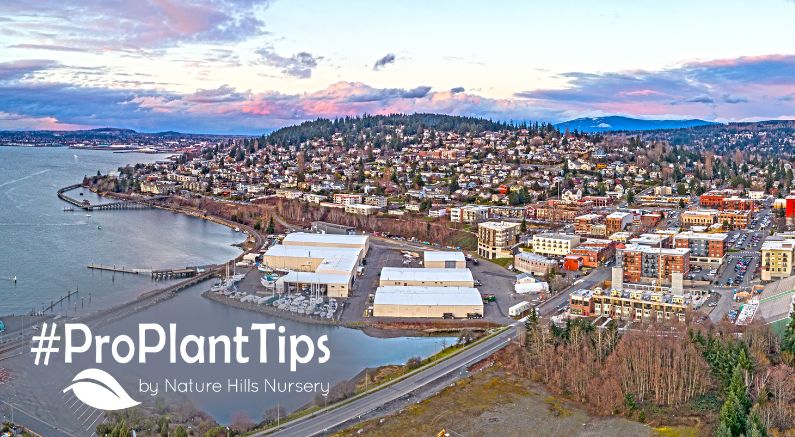
Nestled along the sparkling shores of Bellingham Bay and shadowed by the majestic Mount Baker, Bellingham, Washington, affectionately nicknamed The City of Subdued Excitement, boasts a temperate marine climate that delights gardeners year-round. With mossy woodlands, ocean breezes, and gentle rains, this region sits in USDA Hardiness Zone 8a, making it a Pacific Northwest gem for lush, layered landscapes.

Whatcom Falls, Bellingham, Washington

Thanks to mild, damp winters and cool, dry summers, Bellingham's gardens flourish when designed with climate-smart selections. Whether you're sprucing up a backyard retreat or crafting a sustainable edible landscape, mother nature provides the perfect canvas!

Let's dig into the top ornamental, native, and fruiting plants that thrive here, along with the best tips to keep your garden grounded and gorgeous!

Expanded Soil, Landscape & Weather Insights

Bellingham's soil tends to be acidic, well-draining, and loamy, but some areas, especially near the coast or foothills, can have clay-heavy or rocky pockets. Regular amendments with compost and occasional applications of lime can help balance pH levels.

The marine west coast climate delivers over 34 inches of rainfall annually, with foggy mornings, cool breezes, and ample cloud cover. Dry spells can arrive by late summer, so arborist mulch helps regulate moisture and protect tender roots.

Top 10 Ornamental Plants For Bellingham Gardens

These stunning selections from NatureHills.com are perfect for Zone 8a:

  1. Blue Chinese Wisteria Tree
    Romantic lavender blooms cascade in late spring, climbing arbors and pergolas with ease. Twisting woody stems support pinnate leaves, and the tree thrives in Bellingham's moisture-laden air.

  2. Provence Lavender
    A perennial with silvery, aromatic foliage and upright purple flower spikes. Resilient and drought-tolerant once established, it invites pollinators while deterring deer.

  3. Regent Saskatoon Serviceberry
    This shrub offers early spring white blossoms, tasty summer berries, and fiery fall foliage. Its roots stabilize slopes, and birds flock to its nutritious fruit.

  4. Annabelle Hydrangea
    Massive snowball blooms brighten shady corners with grace. This flowering shrub features smooth stems and large, serrated leaves.

  5. Perfecta Trifecta Butterfly Bush
    Triple-toned combo of 3 Buddleia blooms, magenta, lavender, and white, attracts butterflies and hummingbirds. Its woody stems support lance-shaped leaves and long flower panicles.

  6. Frost Proof Gardenia
    Deep green leaves frame creamy white blossoms with an irresistible jasmine-like scent. Compact and cold-hardy, it fits snugly into containers or garden beds.

  7. Treasure Azalea
    Show-stopping blooms in pink, coral, or orange light up spring gardens. Shallow roots prefer dappled light and acidic soil, common throughout Bellingham.

  8. First Editions® Vanilla Strawberry™ Panicle Hydrangea
    Cone-shaped blooms shift from white to blush pink. Perfect for floral arrangements or border plantings in cooler summer climates.

  9. Italian Plum Tree
    Ideal for small yards, this stone fruit tree bears sweet purple plums with little fuss. White spring flowers precede a bountiful summer harvest.

  10. Improved Dwarf Meyer Lemon Tree
    Indoors or on a patio, this citrus tree offers fragrant blossoms and tart fruit year-round. A great way to add edible landscaping to your Northwest home.

Why Choose Natives For Washington State?

Hemlock Tree

Washington’s state tree is the Western Hemlock (Tsuga heterophylla). This towering evergreen, with its graceful, drooping branches and feathery needles, thrives in Washington’s moist coastal forests and symbolizes the state's lush, resilient natural beauty.

In this lush corner of Washington, native plants are more than just a nod to mother nature, they are the backbone of successful, sustainable gardens. These locally adapted species evolved alongside Bellingham’s specific rainfall patterns, acidic soils, and seasonal shifts, which means they thrive with minimal water, little to no fertilization, and without a fuss.

Better yet, native plants offer a lifeline to regional wildlife, from pollinators and songbirds to beneficial insects and amphibians. For homeowners dreaming of a vibrant, low-maintenance landscape that changes beautifully with the seasons, choosing native trees, shrubs, and perennials is a wise and wildly rewarding investment.

Check out these fan favorites that will thrive in Bellingham with little effort

Native Trees of Bellingham, WA

  • Western Red Cedar (Thuja plicata) - Also known as Arborvitae, this is a sacred tree among Coast Salish tribes, it offers fragrant, rot-resistant wood and scale-like leaves. Roots thrive in moist, shady spots and provide nesting shelter for native birds. Try the Fluffy™ Western Red Cedar.
  • Bigleaf Maple Tree (Acer macrophyllum) - Towering limbs and dinner-plate-sized leaves make it a Pacific Northwest favorite. In fall, its foliage glows with golden light, and sap can even be tapped.
  • Douglas Fir (Pseudotsuga menziesii) - Iconic evergreen with thick bark and upright cones. Excellent for wildlife shelter, windbreaks, and long-lasting timber.

Native Shrubs For Structure & Wildlife

  • Red-Flowering Currant (Ribes sanguineum) - Brilliant early spring flowers attract hummingbirds, while lobed leaves and blue-black berries feed local fauna.
  • Salal (Gaultheria) - A tough groundcover shrub with leathery leaves and edible berries, once used in First Nations’ trade (explore other great low-growing flowering plants).
  • Pacific Ninebark (Physocarpus) - Clusters of white flowers, peeling bark, and tolerance to soggy sites make this shrub a woodland favorite.

Native Perennials Anchor The Garden

  • Sword Fern (Polystichum) - Evergreen fronds fan out dramatically, ideal for shady woodland gardens. Its roots help stabilize slopes and enrich soil.
  • Western Columbine (Aquilegia) - Nodding red-and-yellow flowers enchant pollinators in spring. This native beauty spreads gently and reseeds naturally.
  • False Lily of the Valley (Maianthemum) - Heart-shaped leaves and delicate white blooms make it a charming carpet for woodland beds.

Native Fruiting Trees & Bushes

  • Pacific Crabapple (Malus fusca) - Tart fruits feed birds and bears; pink spring blooms support early pollinators. Historically used by native peoples for food and medicine.
  • Evergreen Huckleberry (Vaccinium ovatum) - Glossy green foliage and dark berries make this shade-tolerant shrub a winner for both gardens and pies.
  • Thimbleberry (Rubus parviflorus) - Broad, maple-like leaves and soft, red berries that melt in your mouth. Great for naturalized areas and pollinator corridors.

Gardening Tips For Success In Bellingham

  1. Water Wisely
    Despite frequent rain, summers can dry out quickly. Use drip irrigation or soaker hoses and rely on the Finger Test to avoid overwatering.
  2. Garden Strategically
    By including rain gardens in areas that flood or to collect water for filtration before going back into the aquifers, or by creating rock gardens in gravelly, coarse soil locations, you’ll work with your landscape instead of against it.
  3. Mulch with Purpose
    Apply a layer of arborist mulch to insulate roots, enrich the soil, and suppress weeds. It mimics the forest floor mother nature favors. (Learn more about how and why to mulch your plants.)
  4. Embrace the Shade
    Design gardens with layers: tall conifers, mid-story shrubs, and shade-loving groundcovers. Ferns, Azaleas, and shade-loving Hydrangeas excel in these microclimates.
  5. Join the Community
    Explore Whatcom County’s Master Gardener program and local County Extension Office, or stop by Cloud Mountain Farm Center for native plant sales and workshops.

Keep Calm and Garden On!

Bellingham WA scenery

Gardening in Bellingham is as much about working with the rhythm of mother nature as it is about creating something beautiful. By leaning into native plants and moisture-loving ornamentals, you’ll enjoy a landscape that practically cares for itself, even through rainy winters and dry summer stretches. From shady Sword Ferns to fruit-bearing Serviceberries and elegant Hydrangeas, your yard can reflect the natural magic of the Pacific Northwest with less effort and more reward.

For added support and inspiration, connect with local resources like the Whatcom County Master Gardeners or visit Cloud Mountain Farm Center for native plant sales and educational workshops. Take a walk through Sehome Arboretum or WWU's Outdoor Sculpture Garden and arboretum trails for living examples of what thrives in Bellingham’s coastal woodland climate. With the right plants and a little local knowledge, your garden will grow wild, resilient, and wonderful.

Happy Planting!

Previous Next

Compare Plants

Browse the features and specs side-by-side to find the best fit for your garden.

A table comparing the facets of 5 products
Facet
A large, flourishing purple wisteria vine draped over a wooden arbor against a clear blue sky in a spring garden with pink tulips in the background.
Blue Chinese Wisteria Tree
View details
Provence Lavender (Lavandula x intermedia 'Provence'), a perennial featuring purple flowers and perennial.
Provence Lavender
View details
Annabelle Hydrangea (Hydrangea arborescens 'Annabelle'), a shrub featuring white, green flowers and clumping, multi-stemmed form.
Annabelle Hydrangea
View details
Perfecta Trifecta Butterfly Bush (Buddleia davidii BUZZ 'Sky Blue', Buddleia davidii...), a shrub featuring blue, purple, red, white flowers and perennial.
Perfecta Trifecta Butterfly Bush
View details
Frost Proof Gardenia (Gardenia jasminoides 'Frostproof'), a shrub featuring white flowers and broad-leaved evergreen.
Frost Proof Gardenia
View details
Rating
Rating
(304)
(7)
(623)
(72)
(37)
Type
TypeTreePerennialShrubShrubShrub
By
ByNature Hills NurseryNature Hills NurseryAmerican BeautiesNature Hills NurseryNature Hills Nursery
Flower Color
Flower Color
  • Blue
  • Purple
  • Lavender
  • Violet
  • Purple
  • White
  • Green
  • Blue
  • Purple
  • Red
  • White
  • White
Growing Zone Range
Growing Zone Range
5-9
5-9
3–9
5-9
7-10
Mature Height
Mature Height
10-15 ft
1-2 ft
5 ft
3-4 ft
3-4 ft
Width
Width
10-15 ft
1-3 ft
6 ft
2-3 ft
4-5 ft
Price
Price
Sale price From $10799 Regular price $11999
Regular price $3656
Regular price From $2771
Regular price From $4729
Regular price $2999

Frequently Asked Questions

What USDA hardiness zone is Bellingham, WA, and which evergreen plants grow best there?

Bellingham, WA falls in USDA Hardiness Zone 8a, benefiting from a temperate marine climate with mild winters, cool summers, and over 34 inches of annual rainfall. This environment is ideal for evergreen performers like Frost Proof Gardenia, Provence Lavender, and Blue Chinese Wisteria Tree, all available at naturehills.com. To make the most of Bellingham's naturally acidic, loamy soil, amend with compost at planting time and apply arborist mulch to retain moisture through the dry late-summer months.

Should I amend Bellingham's clay-heavy soil before planting evergreens, and what amendments work best?

Yes, amending clay-heavy soil before planting evergreens in Bellingham is strongly recommended, as compacted clay restricts drainage and can cause root rot in our wet Zone 8a winters. Work in 3 to 4 inches of quality compost into the top 12 inches of soil to improve structure, aeration, and drainage before planting. A light application of lime can also help balance Bellingham's naturally acidic pH, which tends to run low in coastal and foothill areas. Plant in early fall or early spring when soil is workable, and finish with a 2 to 3 inch layer of arborist mulch around the root zone to retain moisture during summer dry spells.

How far apart should I space evergreen shrubs for a hedge, border, or mass planting in the Pacific Northwest?

For most evergreen shrubs used in hedges or borders in the Pacific Northwest, spacing of 3 to 5 feet apart works well for a dense, unified planting, while mass plantings often look best with shrubs spaced 4 to 6 feet on center depending on mature spread. In Bellingham's Zone 8a, the mild, moist climate encourages vigorous growth, so err toward the wider end of spacing recommendations to allow for good air circulation and reduce fungal pressure from the region's humidity. Plant in early fall or early spring when soil is workable and roots can establish before temperature extremes. Always check the mature width listed for your specific variety on naturehills.com and use that measurement as your baseline spacing guide.

How often should I water newly planted evergreens during establishment in Bellingham's climate?

Newly planted evergreens in Bellingham's Zone 8a typically need deep watering two to three times per week during the first growing season, applying enough water to soak the root zone to about 12 inches. Bellingham receives over 34 inches of annual rainfall, but the dry spells that often arrive by late summer mean you cannot rely on natural precipitation alone during that critical period. Applying a 3 to 4 inch layer of arborist mulch around the base will help retain soil moisture and protect roots between waterings. Monitor soil moisture by pressing a finger 2 to 3 inches into the ground, and water deeply whenever it feels dry to the touch.

Can evergreens in Bellingham rely on natural rainfall once established, or do they still need supplemental irrigation?

Even in Bellingham's Zone 8a climate, which receives over 34 inches of rainfall annually, established evergreens will still need supplemental irrigation during the dry spells that typically arrive in late summer. The cool, moist winters and springs are generous, but summer drought stress can weaken root systems and make plants vulnerable to disease. Apply a generous layer of arborist mulch around the root zone to retain soil moisture and buffer temperature swings through dry periods. Plan to water deeply once or twice a week during dry stretches from July through September to keep your evergreens healthy and thriving.

How should I mulch around evergreen plants to protect roots and reduce weeds in a Pacific Northwest garden?

Apply a 2 to 3 inch layer of arborist wood chip mulch around your evergreen plants, keeping it pulled back a few inches from the base of the trunk or stems to prevent rot. In Bellingham's Zone 8a climate, the best time to mulch is in late fall before winter rains set in or in early spring before the dry season arrives, as both windows help regulate soil moisture and temperature. Since Bellingham soils tend toward acidity, choose mulch materials like shredded bark or wood chips that break down slowly and won't dramatically shift your pH. Reapply as needed each season to maintain that 2 to 3 inch depth, and you'll suppress weeds, retain summer moisture during dry spells, and protect shallow evergreen roots year-round.

How do I prune evergreen shrubs to maintain a compact, tidy shape in a Bellingham landscape?

For Zone 8a Bellingham gardens, the best time to prune most evergreen shrubs is late winter to early spring, just before new growth emerges, typically February through early March. Light shaping cuts of no more than one-third of the plant's total growth help maintain a tidy form without stressing the plant. Avoid heavy pruning in late summer or fall, as new tender growth can be vulnerable to Bellingham's occasional cold snaps. Use clean, sharp bypass pruners for small stems and loppers for branches up to an inch thick, and always cut just above a healthy outward-facing bud or lateral branch to encourage a naturally rounded, compact habit.

Which evergreen plants perform well in Bellingham's shady, part shade, or full sun garden conditions?

Bellingham's Zone 8a climate supports a wide range of evergreens across varying light conditions, from deep shade to full sun. Frost Proof Gardenia thrives in part shade with its glossy deep green foliage and creamy blooms, while Provence Lavender excels in full sun and becomes drought-tolerant once established in well-draining, amended soil. For shadier woodland spots, layered plantings of shade-tolerant broadleaf evergreens pair beautifully with Bellingham's naturally acidic, loamy soil. Visit naturehills.com to filter plants by light requirement and zone to find the best evergreen match for each area of your garden.

What evergreen shrubs work well as privacy screens, hedges, or foundation plantings in Bellingham yards?

For Bellingham's Zone 8a climate, evergreen shrubs like Frost Proof Gardenia and compact hollies offer year-round structure and dense foliage ideal for privacy screens and foundation plantings. The region's acidic, loamy soil suits broadleaf evergreens particularly well, though clay pockets near the coast may need compost amendments to improve drainage before planting. Visit naturehills.com to browse Zone 8a-rated evergreen shrubs and filter by mature height to find the right fit for your hedging or foundation needs.

Are evergreen plants generally deer resistant and low maintenance in the Pacific Northwest?

Not all evergreen plants are automatically deer resistant or low maintenance in the Pacific Northwest, though Zone 8a conditions in areas like Bellingham do favor many resilient selections. Some evergreens, like Provence Lavender, naturally deter deer with their aromatic foliage, while others may require protective measures during the growing season. Soil amendments, proper mulching with arborist mulch, and occasional pH balancing with lime go a long way toward reducing maintenance needs across most plantings. Focus on choosing native or climate-adapted evergreens suited to Zone 8a, and pair them with a 2 to 3 inch layer of mulch to lock in moisture through Bellingham's dry summer spells.