
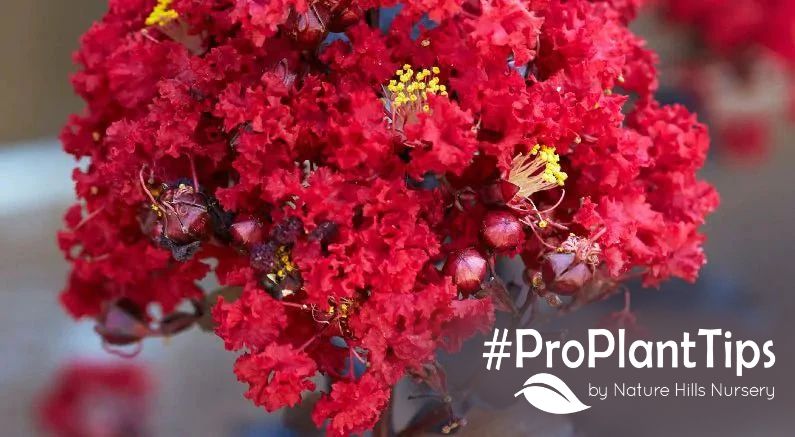
Crape myrtles (Lagerstroemia) earn their place as one of the most versatile landscape plants in America. From a 30-inch patio shrub to a 30-foot shade tree, the right crape myrtle transforms any outdoor space with months of summer blooms, textured bark, and fiery fall color. The trick is matching the plant to the job before you fall in love with a flower color.
This guide walks you through where crape myrtles fit in the landscape, which size category suits each role, and how to narrow your pick based on the space you actually have. For a detailed head-to-head breakdown of individual varieties, see our Crape Myrtle Varieties Compared guide.
Why Crape Myrtles Belong in Every Landscape Plan
Few plants deliver as much seasonal interest as a well-placed crape myrtle. They bloom from early summer through fall, produce vivid autumn foliage in oranges, reds, and yellows, and reveal exfoliating bark that adds winter structure. All crape myrtles sold at Nature Hills are deciduous and container-grown, so they arrive with established root systems ready to perform in your landscape.
Crape myrtles thrive in USDA zones 6-10, tolerate drought once established, and resist deer browsing. They need at least 6 hours of direct sun daily. Give them that, plus well-drained soil, and you will be rewarded with nonstop flower production from June through September in most zones.
Best Crape Myrtles for Specimen and Focal Point Planting
[INLINE IMAGE PLACEHOLDER: White Natchez crape myrtle in full summer bloom standing as a multi-trunk specimen tree in a front yard, exfoliating cinnamon bark visible. Alt text: "Natchez crape myrtle as a white-blooming specimen tree anchoring a front yard with exfoliating cinnamon bark."]
A single crape myrtle anchoring a front yard or framing an entrance makes a year-round statement. For this role, choose a large tree-form variety with attractive bark, strong branching structure, and a flower color that complements your home.
Natchez Crape Myrtle (Lagerstroemia 'Natchez') is the gold standard for specimen planting. It reaches 20-30 feet tall and 15-20 feet wide in zones 6-9, with white blooms, cinnamon-brown exfoliating bark, and red-orange fall color. Its multi-trunk form looks best when lower suckers are removed to expose the bark.
Zones 6-9 | Mature Size: 20-30 ft. tall, 15-20 ft. wide
Muskogee Crape Myrtle (Lagerstroemia 'Muskogee') delivers lavender blooms on a 15-20 foot tree with bronze-tinged foliage that turns brilliant red in autumn. It makes a commanding specimen for larger yards in zones 6-9.
Zones 6-9 | Mature Size: 15-20 ft. tall, 12-15 ft. wide
Dynamite Crape Myrtle (Lagerstroemia 'Whit II') is the top pick when you want bold red flowers on an upright tree reaching 15-20 feet. It thrives in zones 6-9 and keeps a tidy form without heavy pruning.
Zones 6-9 | Mature Size: 15-20 ft. tall, 10-15 ft. wide
Best Crape Myrtles for Row and Hedge Planting
[INLINE IMAGE PLACEHOLDER: Row of purple Catawba crape myrtles planted along a residential driveway in peak summer bloom, uniform spacing and matching height. Alt text: "Row of purple Catawba crape myrtles in peak summer bloom planted as an informal hedge along a residential driveway."]
Crape myrtles planted in a row along a driveway, property line, or walkway create a uniform rhythm of color that peaks in summer. For rows and informal hedges, choose mid-sized varieties with consistent growth habits and plant them 8-10 feet apart on center.
Catawba Crape Myrtle (Lagerstroemia 'Catawba') grows 12-15 feet tall with bold purple blooms and strong disease resistance. Its upright habit makes it ideal for street-side rows in zones 7-9.
Zones 7-9 | Mature Size: 12-15 ft. tall, 8-10 ft. wide
Sioux Crape Myrtle (Lagerstroemia 'Sioux') reaches 12-15 feet with soft pink blooms and stunning exfoliating bark that looks especially good when planted in groups. Hardy in zones 6-9.
Zones 6-9 | Mature Size: 12-15 ft. tall, 8-10 ft. wide
The Black Diamond Crimson Red Crape Myrtle offers deep crimson flowers against near-black foliage at 10-12 feet tall. Space these 6-8 feet apart for a dramatic hedge effect in zones 6-10.
Zones 6-10 | Mature Size: 10-12 ft. tall, 8-10 ft. wide
Best Crape Myrtles for Patio and Small-Space Gardens
[INLINE IMAGE PLACEHOLDER: Pink Velour crape myrtle in fuchsia-pink bloom planted at the corner of a brick patio with outdoor seating, wine-colored foliage visible. Alt text: "Pink Velour crape myrtle in fuchsia-pink bloom anchoring a brick patio corner with wine-colored spring foliage."]
Tight on space? Compact crape myrtles bring the same summer flower power to patios, courtyards, foundation beds, and container plantings. Choose dwarf or semi-dwarf varieties that top out under 10 feet, and give them a sunny spot with room for air circulation.
Tonto Crape Myrtle (Lagerstroemia 'Tonto') is a versatile small tree or large shrub reaching 8-10 feet tall with fuchsia-red blooms and red-orange fall color. It fits well in foundation plantings and along walkways in zones 6-9.
Zones 6-9 | Mature Size: 8-10 ft. tall, 8-10 ft. wide
Pink Velour Crape Myrtle (Lagerstroemia 'Whit III') stays 6-10 feet tall with bright fuchsia-pink flowers and wine-colored spring foliage. It works beautifully as a patio accent in zones 6-9.
Zones 6-9 | Mature Size: 6-10 ft. tall, 6-8 ft. wide
Purple Magic Crape Myrtle (Lagerstroemia 'Purple Magic') shows off rich purple blooms on a vase-shaped form reaching 7-10 feet tall. It rebounds with additional flower flushes if you deadhead spent blooms. Hardy in zones 7-9.
Zones 7-9 | Mature Size: 7-10 ft. tall, 6-8 ft. wide
Best Dwarf Crape Myrtles for Containers and Borders
[INLINE IMAGE PLACEHOLDER: GreatMyrtle Cherry Delight in vibrant pink bloom growing in a large terracotta patio container, mounded compact form roughly 30 inches tall. Alt text: "GreatMyrtle Cherry Delight crape myrtle in vibrant pink bloom growing in a terracotta patio container at a compact 30-inch mounded form."]
For gardeners working with truly small spaces, container gardens, or low border plantings, dwarf crape myrtles deliver big color in a compact package. These varieties stay under 5 feet tall and work well in large patio pots or along walkway edges.
The GreatMyrtle collection is purpose-built for this role. These compact shrubs top out at roughly 30 inches tall and wide, making them perfect for container gardens and low borders in zones 5-9.
GreatMyrtle Cherry Delight delivers vibrant pink blooms on a mounded form. GreatMyrtle Red Velvet showcases cherry red blossoms. GreatMyrtle Cotton Candy produces light baby pink panicles. And GreatMyrtle French Vanilla covers itself in pure white flowers.
Zones 5-9 | Mature Size: 30 in. tall, 30 in. wide
How to Choose the Right Crape Myrtle Size for Your Space
Size is the single most important factor when selecting a crape myrtle. Choosing the wrong size leads to overgrown plants that get butchered with heavy pruning (a practice called "crape murder" that ruins the plant's natural form and bark display). Pick the right size from the start and you will never need to fight your tree.
| Size Category | Mature Height | Best Landscape Use | Example Varieties |
|---|---|---|---|
| Dwarf | 2-5 ft. | Containers, borders, mass planting | GreatMyrtle series |
| Semi-Dwarf | 6-10 ft. | Foundation beds, patios, small yards | Tonto, Pink Velour, Purple Magic |
| Medium | 10-15 ft. | Hedges, property lines, driveway rows | Catawba, Sioux, Black Diamond series |
| Large | 15-30 ft. | Specimen trees, shade, street trees | Natchez, Muskogee, Dynamite |
Measure the space where your crape myrtle will grow, including the width at maturity. A plant needs room to spread to its full canopy without crowding structures, power lines, or neighboring plants. This is especially important for the large tree forms that can reach 20-30 feet wide.
Planning for Bloom Season and Color Coordination
Crape myrtles bloom from early summer through fall, with peak color typically arriving in July and August. In zones 7-9, blooms can persist from June through October if spent flowers are removed. This long season makes crape myrtles a backbone plant for summer garden color.
When planning your landscape palette, consider that crape myrtle flowers come in white, pink, red, fuchsia, lavender, and purple. Warm-toned homes pair well with white or lavender blooms. Cool-toned exteriors complement pink and red varieties. Dark-foliaged selections like the Black Diamond Purely Purple (zones 6-10, 10-12 ft. tall) add year-round foliage contrast even before the flowers open.
Plant several varieties with overlapping bloom times to keep color flowing all season. Mix sizes strategically: a tall Natchez as the backdrop, mid-sized Catawba along the sides, and GreatMyrtle dwarf varieties at the front border.
Crape Myrtle Care Essentials for a Strong Landscape
Once planted in the right spot, crape myrtles are low-maintenance performers. These care basics keep them blooming heavily and looking their best year after year.
- Sunlight: Full sun (6+ hours daily) produces the densest blooms and most compact growth. Shade causes leggy growth and fewer flowers.
- Soil: Well-drained soil is essential. Crape myrtles tolerate a wide pH range but will not survive in soggy, waterlogged sites.
- Watering: Water deeply during the first growing season to establish roots. Once established, crape myrtles are drought tolerant and only need supplemental water during extended dry spells.
- Pruning: Prune lightly in late winter to remove crossing branches, suckers at the base, and spent seed heads. Never top or "crape murder" your tree. Choose the right size variety and let it grow to its natural form.
- Mulch: Apply 3-4 inches of arborist wood mulch over the root zone, keeping it pulled back 4 inches from the trunk.
- Air circulation: Space plants with enough room between them and surrounding structures. Good airflow prevents powdery mildew, which is the most common crape myrtle disease.
#ProPlantTip: Match the Job to the Plant, Not the Other Way Around
The most common crape myrtle mistake is buying a 25-foot tree for a 10-foot space, then hacking it back every year to fit. That cycle destroys the bark display, reduces blooms, and creates an ugly stubbed canopy. Instead, measure your space first, then pick a variety that naturally matures at the height and width you need. A 7-foot Tonto in front of a window will always look better than a butchered Natchez.
Crape Myrtle FAQs
What zones grow crape myrtles?
Crape myrtles thrive in USDA zones 6 through 10, with the strongest performance in zones 7 to 9. Cold-hardy selections like Sioux, Natchez, and the GreatMyrtle series push reliable bloom into zone 6, and the GreatMyrtle dwarf shrubs are rated to zone 5 with winter protection.
When do crape myrtles bloom?
Most crape myrtles bloom from early summer through early fall, with peak color in July and August. In zones 7 to 9, the show often runs from June into October, especially if you remove spent flower clusters to encourage a second flush.
How big do dwarf crape myrtles get?
True dwarf crape myrtles like the GreatMyrtle series stay around 30 inches tall and 30 inches wide at maturity. Semi-dwarf varieties such as Pink Velour and Purple Magic top out between 6 and 10 feet, which still qualifies as compact compared to traditional 20-foot tree forms.
What is crape murder and how do I avoid it?
Crape murder is the practice of cutting a crape myrtle back to thick stubs every winter to control its size. It destroys the plant's natural branching, ruins the exfoliating bark display, and produces weak, leggy regrowth. The fix is simple: pick a variety whose mature height matches your space, then prune lightly in late winter to remove only crossing branches, suckers, and spent seed heads.
Can crape myrtles survive zone 6 winters?
Yes, several crape myrtles are reliably hardy in zone 6, including Natchez, Muskogee, Dynamite, Sioux, Tonto, Pink Velour, and the Black Diamond series. Plant them in a sheltered spot with good drainage, mulch the root zone in fall, and expect occasional dieback in colder winters that the plant will regrow from the base.
Do crape myrtles need full sun?
Yes. Crape myrtles need at least 6 hours of direct sunlight daily to bloom heavily and maintain a dense, compact form. In partial shade they grow leggy, produce far fewer flowers, and become more susceptible to powdery mildew.
Explore the Full Crape Myrtle Collection
Browse our Crape Myrtle Trees for large specimen and shade varieties, or our Crape Myrtle Shrubs for compact options that fit patios, borders, and foundation beds. Every plant ships container-grown with an established root system, ready to bloom in its first summer in your landscape.


