
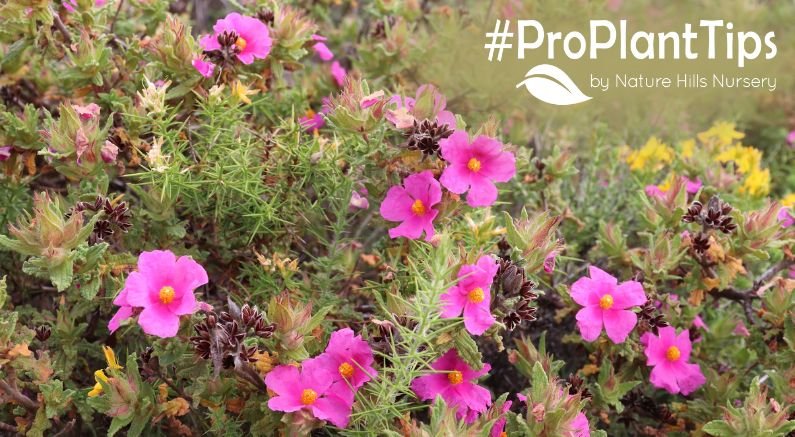
Rock Roses (Cistus spp.), also known as Sun Roses, are a gardener's dream! Carefree, drought-tolerant, long-blooming, and stunningly beautiful!
With their papery, crepe-papery petals and a shrubby form, these Mediterranean marvels offer intense seasonal color and resilience where other plants might falter. And now, thanks to NatureHills.com, you can enjoy some of the best Rock Roses on the market!
Often overlooked for flashier garden plants, Rock Roses are finally having their moment in the sun. They thrive in hot, dry climates; shine in water-wise landscapes; and flourish in easy-care garden beds where you crave beauty without the babysitting. Add your own from this curated Nature Hills collection, and let mother nature do her thing!
Key Features of Rock Roses
- Beloved for their delicate, crepe-paper-like petals and vivid colors
- Broadleaf evergreen foliage that adds year-round interest
- Excellent drought tolerance once established
- Ideal for Xeriscaping, rock gardens, borders, and low-maintenance beds
- Attract pollinators like bees and butterflies
- Rarely bothered by deer or rabbits
- Low-growing, mounding habit that's perfect for hard-to-mow slopes and erosion control
Landscaping With Rock Roses
Rock Roses shine in warm, dry zones (USDA Zones 7-10) and blend beautifully into Mediterranean, coastal, and Southwestern landscape designs. They thrive in full sun, gravelly soils, and raised beds.
Try them in mass plantings, as flowering facer shrubs, or spilling over retaining walls. You can even tuck them into containers for patio color.
Use them where you need:
- Heat-proof groundcover-like color
- Pollinator-friendly borders
- Floral specimens and accents in Rock Gardens
- A low-growing blooming hedge alternative
- Drought-tolerant curb appeal
Nature Hills' Top 9 Rock Roses!
Also known as Sunrose, Rush Rose, and Broom Rose, these are fantastic xeric flowering shrubs for a wide range of hot growing zones and tricky spots. Here are 9 top-performing Rock Roses available at NatureHills.com. Each one offers unique hues and charm!
Crimson-Spot Rock Rose (Cistus ladanifer)

This bold and statuesque shrub draws the eye with dramatic contrast. Its white petals, painted with crimson spots, stand out like brushstrokes on a canvas, lending the landscape a classic Mediterranean flair. The dense, shiny foliage adds texture year-round and carries a warm, resinous fragrance in the summer heat.
- Zones 6-9
- Grows 4-5 feet tall and wide
- Resinous foliage releases fragrance in the sun
- Gorgeous in Cottage Gardens
Purple Flowered Rock Rose (Cistus x purpureus)

The epitome of Mediterranean charm, this variety dazzles with oversized blooms in rich orchid purple. The dark blotches at the center create a sultry, moody effect that draws in bees and admiring glances alike. It brings grace and a splash of drama to any dry garden bed or stone border!
- Zones 7-10
- 4-5 feet tall and wide
- Excellent for Mediterranean-style gardens
- Showy in garden beds and borders
Little Miss Sunshine Rock Rose (Cistus x 'Little Miss Sunshine')

Cheerful as its name implies, this sunny charmer offers small golden blossoms that pop against cool silver foliage. It hugs the groundcover-like a blooming blanket, perfect for filling in cracks, softening hardscapes, or brightening bare spots with a ray of yellow joy.
- Zones 8-11
- Just 12-24 inches tall and 12-18inches wide
- Tidy, mounding habit
- Great for front-of-border edging and sunny banks.
Snow Fire Rock Rose (Cistus x 'Snow Fire')

With blooms like crisp snowflakes kissed by sunshine, this Rock Rose lives up to its name with red-tinged new growth in the spring. The stark contrast of white petals and vivid yellow eyes is pure visual refreshment, and its dense habit makes it perfect for tidy, sunbaked borders. These are fantastic for blocking weeds!
- Zones 7-11
- 4-5 feet tall and 4-6 feet wide
- Dense and compact, great for erosion control
Sunset Magenta Rock Rose (Cistus x pulverulentus 'Sunset')

Vibrant and intense, this magenta marvel brings a sunset’s drama to the garden floor. It forms a floral carpet of saturated pink blooms that intensify in afternoon light, ideal for sunny slopes and hillsides. The broadleaf evergreen foliage and repeat blooms are a spectacle anywhere Sunset Magenta is planted!
- Zones 8-11
- 2-3 feet tall
- Spreads 6-8 feet wide
- Adds electric color to slopes and rockeries
Orchid Rock Rose (Cistus x purpureus 'Orchid')

This cultivar evokes the delicate beauty of tropical orchids, with broad petals in soft pink brushed with dramatic wine-colored spots in the center around a tuft of golden anthers. It brings a painterly elegance and effortless charm to dry garden beds. The evergreen foliage makes these brilliant blooms stand out even better for your pollinators.
- Zones 8-11
- 3-4 feet tall and 6-8 feet wide
- Evergreen with elegant texture
White Rock Rose (Cistus x hybridus)

Refined and serene, this white-blooming form creates an ethereal mood wherever it grows! Ideal for moon gardens or pairing with bold foliage, it offers a cooling effect in hot, dry gardens. Clean, pure-white flowers with a soft yellow eye brighten up gravel paths and dry corners.
- Zones 7-10
- 2-5 feet tall and 5-6 feet wide
- Highly reflective for moon gardens
Sageleaf Rock Rose (Cistus salviifolius)

A rugged beauty with soft, woolly leaves that mimic culinary sage, this Rock Rose adds texture and a soothing palette to xeric plantings. The simple, creamy blooms enhance its understated, natural appeal.
- Zones 8-11
- 2-4 feet tall and 4-6 feet wide
- Soft, woolly, evergreen, aromatic foliage and highly drought-tolerant
Dwarf Pink Rock Rose (Cistus x skanbergii)

Don't let its size fool you! This little bloomer packs a punch! With waves of soft pink petals, it lights up the fronts of borders and as specimens in containers with sweet color and charm, making it a favorite for cottage gardens, container gardens, and are wonderfully space-saving for small gardens.
- Zones 8-11
- 2-4 feet tall and 4-5 feet wide
- Great for edging, container gardens, and small spaces
How To Care For Rock Roses
Rock Roses are low-maintenance once established, but they do best with the right start:
- Sunlight: Full sun is essential for abundant blooms and tight growth.
- Soil: Well-drained soil is a must. Sandy, gravelly, or rocky soils are ideal.
- Water: Water regularly during the first year using the Finger Test, then reduce as plants mature. Avoid soggy conditions.
- Pruning: Lightly shear after flowering to maintain shape and encourage bushier growth. For more, read All About Deadheading For More Blooms.
- Feeding: Minimal fertilizing is needed; too much can reduce flowering.
- Mulch: Apply arborist mulch to help retain moisture and suppress weeds, but keep it away from stems.
- Winter: Protect young plants in colder zones with mulch or a cover during hard frosts.
The Rosy Rock Star of the Garden!
Rock Roses prove that beauty and toughness can go hand in hand. Whether you're battling heat, drought, poor soil, or all three, these flowering shrubs ask for very little and give back in spades. With the Nature Hills lineup, you're sure to find one that fits your color palette and garden space.
In a world that often demands more than we can give, Rock Roses offer effortless joy! Their petals may be fleeting, yet each bloom is a sunlit celebration, here for a moment, but remembered for a season. Like mother nature’s reminder that simplicity can still dazzle, they thrive with minimal care, serenading the wind with their silky flowers and evergreen grace.
Happy Planting!
