Shop With Confidence: FREE Growing & Glowing Guarantee

Free Shipping on Orders $199+

Care guide

Columbine Care

Columbines are spring blooming perennials for part shade and moist, well-drained soil. Here is how to keep them watered, when to feed them, how to handle faded flowers and tired summer leaves, how to deal with leaf miners, and how self-seeding keeps these short-lived plants coming back.

Zones 3 to 8

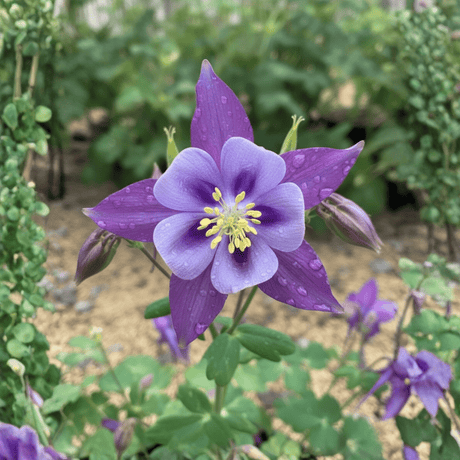
Earlybird™ Purple Blue Columbine

Where to Plant

Columbine prefers part shade and cool growing conditions. It grows in full sun if the soil is kept moist, though the flowers tend to be more muted in color and shorter lived in full sun.

Give it organically rich, moist soil that drains well. Columbine does not tolerate wet, poorly drained soil, and it tends to struggle in heavy, compacted soil. Mix compost into the planting area to help hold moisture while still letting water drain. Crown rot can develop where the soil stays wet.

Depending on the kind, plants grow about 6 inches to 3 feet tall. Use them in borders, woodland and shade gardens, naturalized areas, cottage gardens and pollinator gardens. The flowers draw hummingbirds and bees.

Plant when the ground can be worked, meaning it is not frozen and not too wet. If the roots circle the pot, trim them before planting. Water the new plant well and mulch around it.

Watering Requirements

Keep the soil evenly moist. Columbine is not drought tolerant, so give it extra water when conditions are dry. Keeping the soil evenly moist after bloom also helps the leaves stay attractive longer.

Moist does not mean soggy. Wet, poorly drained soil can lead to crown rot. A layer of mulch around the plants helps keep the soil cool and moist.

Pruning Tips

After the flowers fade, remove the flowering stems to encourage more bloom and to keep plants from reseeding everywhere. Columbine is fairly short lived, often lasting only a few years, and hybrids may last just one to three. If you want new plants to replace older ones, leave a few flowers to set seed. Seedlings of hybrids rarely look like the parent plant.

The leaves of many columbines decline by early to mid summer. When they do, cut them to the ground. Wild columbine leaves stay attractive through summer as long as the soil stays moist.

Leaf miners leave white, winding trails inside the leaves. The damage is mostly cosmetic. If it bothers you, trim the foliage back to the base after flowering and a fresh mound of leaves will grow. Wild columbine resists leaf miners.

Columbine is hard to divide. If you try, do it in late summer, separate the long, coarse roots carefully and replant right away.

Fertilizer Needs

Apply an all-purpose, complete fertilizer in spring as the leaves begin to emerge. You can make a second application when the flower buds are forming.

Working compost into the soil at planting helps provide the rich, moist soil columbine likes. Fallen leaves spread around the plants as mulch break down and feed the soil naturally.

Through the year

Spring Care

If you left last year's stems standing, cut them back in early spring before bees start flying. Feed with an all-purpose fertilizer as the leaves emerge, and again as flower buds form. Plant new columbine once the ground can be worked. Mulch around the plants to keep the soil cool and moist and to help hold back weeds.

Leaf miner flies lay their eggs on the leaves around the time plants start to bloom. Picking off and destroying mined leaves before the larvae finish feeding and pupate can reduce their numbers.

Summer Care

When the flowers fade, remove the flowering stems for more bloom, or leave a few to drop seed for new plants. Keep the soil evenly moist and water during dry spells. When the leaves look tired or are badly marked by leaf miners, cut them back to the base and a fresh mound of leaves will grow.

Insecticides do little to control leaf miners and can kill the beneficial insects that help keep them in check.

Fall Care

You can leave the stems standing over winter or cut them back once frost has killed them. Leaf miners spend the winter in the soil, so if your plants had them, remove the infested plant debris and lightly cultivate the soil around the plants. After frost, spread about 1 inch of mulch around the plants.

Winter Care

Columbine dies back to the ground in winter and regrows from the crown in spring. Stems left standing help protect the crown and give shelter to pollinators and other wildlife. Keep mulch off the crown, since mulch piled on top of the crown can cause rot. Cut the old stems back in early spring, before bees start flying.

Columbine varieties

Shop all Columbines
  • Earlybird™ Purple Blue Columbine

    Aquilegia x hybrida 'Earlybird Purple Blue'

    (2)
    Regular price From $1999 Up to 25% off
  • Little Lanterns Columbine

    Aquilegia canadensis 'Little Lanterns'

    Sale price From $2434 Regular price $3043 20% off
  • Kirigami™ Yellow Columbine

    Aquilegia caerulea 'Yellow'

    Sale price $2492 Regular price $3115 20% off
  • Earlybird™ Red Yellow Columbine

    Aquilegia x Earlybird 'Red Yellow'

    Sale price $2494 Regular price $3118 20% off
  • Winky Double Red & White Columbine

    Aquilegia 'Double Red & White'

    (1)
    Sale price $2213 Regular price $2950 25% off
  • Earlybird™ Yellow Columbine

    Aquilegia x Earlybird 'Yellow'

    (1)
    Regular price From $1999 Up to 25% off