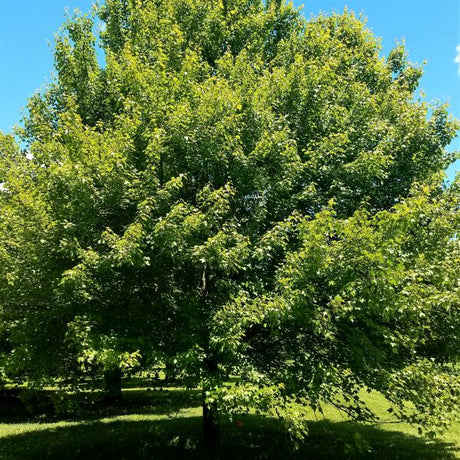
Walk through any garden center in spring and you will see it: shoppers gravitating to the biggest tree on the lot, assuming bigger means better. Growers know a secret that saves money and years of frustration. The smartest tree you can plant is usually the smaller one, and that is the whole idea behind Whipper Snapper® brand trees.
What Is a Whipper Snapper Tree?
A Whipper Snapper tree is a young shade or ornamental tree raised by professional growers who train a strong, straight central leader and a dense, healthy root system before the tree ever ships. The name comes from the old expression for a confident youngster, and the hang tag calls it the world's best little tree. That confidence is earned. With good early training behind it, a young tree needs nothing more from you than a proper planting hole, water and a little patience.
The collection spans the trees gardeners ask us about most: shade trees like maples, oaks, ginkgo and sweetgum, and flowering trees like dogwoods, flowering cherries, crabapples and redbuds.
The Real Cost of Transplant Shock
Here is what the big-tree shoppers do not see. When a large tree is dug from a nursery field, it can leave the majority of its root system behind in the soil. The tree arrives at your home already running a deficit, and it spends its first years rebuilding roots instead of adding height and canopy. Arborists use a rule of thumb of roughly one year of recovery for every inch of trunk caliper. A three inch caliper tree can sulk for three years while it re-establishes.
A young container-grown tree keeps essentially all of its roots. It goes into the ground with its engine intact, establishes in a single season and resumes full speed growth almost immediately. Side by side plantings tell the same story again and again: within a few years, the small tree catches the big one, and then it passes it.
What Starting Small Saves You
- Money. A young tree costs a fraction of a large specimen, and the price gap widens once you add big-tree delivery and installation.
- Labor. One person with a shovel can plant a Whipper Snapper tree in an afternoon. No crew, no crane, no torn-up lawn.
- Risk. Less transplant shock means fewer losses. A tree that establishes quickly is also better equipped to handle its first summer heat wave or dry spell.
- Water. A smaller root ball needs far less irrigation to stay evenly moist while it settles in.
How to Plant Your Young Tree
Planting day is where you set the tree up for its next fifty years, and it is refreshingly simple with a young tree.
- Dig the hole twice the width of the root ball and no deeper than the ball itself.
- Remove the container and set the top of the root ball slightly above ground level.
- Score the root system in about four places around the ball to encourage roots to grow outward.
- Backfill with a blend of native soil and organic matter, tamping lightly as you go.
- Water deeply to settle the soil, add more soil if it slumps, and water again.
- Finish with 1 to 2 inches of mulch, kept a few inches away from the trunk.
In a spot with poor drainage, plant in a raised bed instead of fighting the soil. And through the first two growing seasons, water deeply and regularly. That single habit does more for a young tree than anything else you can buy.
Training a Tree the Grower's Way
Whipper Snapper trees arrive with their early training done, and keeping them on track takes minutes a year.
- Stake for one year, then stop. Two hardwood stakes with soft ties, an inch of slack so the trunk can flex. Movement is how a trunk builds strength, so remove the stakes after year one.
- Protect the leader. Never trim back the main central stem. It is the tree's future height.
- Thin, do not shear. Remove crossing or parallel interior branches while keeping the natural shape.
- Raise the canopy later. A year after planting, you can remove the lowest limbs if you want mowing or walking clearance.
Six Great Trees to Start Small
- Ivory Silk Japanese Tree Lilac: creamy June flower plumes on a tidy tree for zones 3 to 7.
- Princeton Sentry Ginkgo: narrow, tough as nails and pure gold in fall.
- Red Sunset® Maple: one of the most dependable red fall colors of any maple.
- Kwanzan Flowering Cherry: double pink spring blooms that stop traffic.
- Lucas European Hornbeam: a columnar form perfect for screens and formal lines.
- Bur Oak: a native legacy tree your grandchildren will picnic under.
Plant Smart, Then Watch It Fly
The best time to plant a tree may have been twenty years ago, but the second-best time is not the day you finally rent a crane. It is today, with a young, well-grown tree and a shovel. Browse the full Whipper Snapper Trees collection, match a tree to your zone and your spot, and let a little tree prove what it can do.