Shop With Confidence: FREE Growing & Glowing Promise

Free Shipping on Orders $199+

Top 10 Pear Trees at Nature Hills Nursery

Top 10 Pear Trees at Nature Hills Nursery - Nature Hills Nursery

Charlotte Weidner |

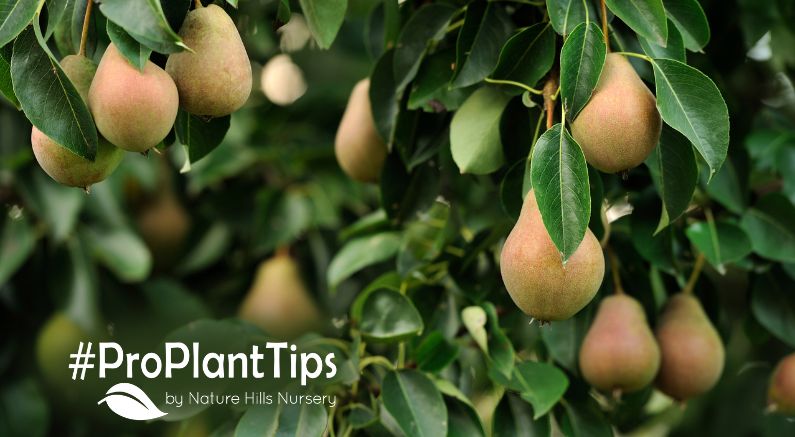
Looking to grow the best Pears right in your own backyard? Whether you're into snacking, baking, preserving, or gifting fresh fruit to friends and neighbors, Pear trees are a must-have in your edible landscape. With the right variety and care, these trees will bless your garden with fragrant spring blossoms and branches heavy with sweet, juicy fruit year after year.

Here are ten popular Pear tree varieties to consider for your garden:

1. Bartlett Pear

The world's most popular Pear! A classic heirloom known for sweet, juicy fruit with crisp white flesh.

  • ~800 chill hours
  • Mature Size: 15-30 feet tall, 12-15 feet wide
  • Zones 5-9
  • Partially self-fertile (Recommended pollinators: Bosc, D'Anjou, Comice)
  • Mid-season harvest
  • Excellent fresh, baked, or canned

2. Warren Pear

Smooth, buttery, dessert-quality fruit. Naturally pyramidal tree with strong Fire Blight resistance.

  • ~600 chill hours
  • Mature Size: 15-25 feet tall, 15-25 feet wide
  • Zones 5-9
  • Mostly self-fertile, but produces more with a partner
  • Late-season harvest

3. Bosc Pear

Firm, dense, and spiced white flesh makes this a top choice for baking and preserving.

  • 500–600 chill hours
  • Mature Size: 12–15 feet tall, 12–18 feet wide
  • Zones 5–9
  • Needs a pollinator (Warren, Bartlett, Comice, Seckel)
  • Late-season harvest

4. Comice Pear

An award-winning antique! The famous "Christmas Pear" has rich, dessert-quality flavor.

  • 500–600 chill hours
  • Mature Size: 12–18 feet tall and wide
  • Zones 5–9
  • Not self-pollinating (Pollinators: Bartlett, Bosc, Warren)
  • Mid-season harvest

5. Sensation Red Bartlett Pear

A vibrant red-skinned version of Bartlett with the same sweet, juicy flavor and broad versatility.

  • 600-has 800 chill hours
  • Mature Size: Up to 25 feet tall, 10-25 feet wide
  • Zones 5-9
  • Partially self-pollinating (Best with Orient or Bartlett)
  • Early autumn harvest

6. Shinseiki Pear

Also called "New Century", this Asian Pear delivers crisp, lemon-yellow fruit with a refreshingly sweet bite.

  • 300-400 chill hours
  • Mature Size: 8-10 feet tall, 6-7 feet wide
  • Zones 5-9
  • Self-pollinating, but benefits from other Asian Pears
  • Early to mid-season harvest

7. 20th Century Pear (Nijisseiki)

A crisp, round Asian Pear known for sweet, juicy flavor and great storage qualities.

  • 400–600 chill hours
  • Mature Size: 15–20 feet tall and wide
  • Zones 5–9
  • Self-fertile, but performs better with Shinseiki nearby
  • Mid-season harvest

8. D'Anjou Pear

Subtly sweet, citrusy European Pear with a smooth, firm texture. Fantastic fresh or cooked.

  • ~700 chill hours
  • Mature Size: 10–15 feet tall and wide
  • Zones 5–9
  • Not self-pollinating (Best with Bartlett, Bosc, or Comice)
  • Late-season harvest

9. Kieffer Pear

A Southern favorite! A huge pear with crisp, firm flesh perfect for preserves and canning, with good disease resistance.

  • 350-400 chill hours
  • Mature Size: 15-20 feet tall, 12-20 feet wide
  • Zones 4-9
  • Self-fertile, but larger yields can be achieved with another variety nearby
  • Mid to late-season harvest

10. Oriental Asian Pear

Sweet and juicy with a crisp crunch, these are fantastic for fresh eating and easy to grow.

  • 400-600 chill hours
  • Mature Size: 12-15 feet tall and wide
  • Zones 5-9
  • Self-fertile, though cross-pollination improves production
  • Mid to late-season harvest
Pears

Pear Tree Planting & Care Tips

  • Sunlight: Plant your Pear tree in a location that receives full sun (at least 6–8 hours daily).
  • Soil: Ensure well-drained, fertile soil.
  • Watering: Provide consistent moisture, especially during dry periods.
  • Pruning: Prune annually during the dormant season to maintain shape and remove dead or diseased wood.

Read full planting, pruning, and care information for your new Pear Tree in our Garden Blog!

Pollination: How to Maximize Your Pear Harvest

Pollination Basics

  • Many Pear trees are partially self-fertile, but cross-pollination = better yields.
  • Choose a compatible pollinator that blooms around the same time.
  • Asian and European Pears generally do not cross-pollinate unless bloom times overlap.

Spacing for Pollination

  • Plant trees within 50–100 feet of one another for bee-assisted pollination.

Harvesting & Ripening Pears the Right Way

How to Know When to Harvest

  • Most Pears are picked when mature but still firm.
  • A ripe Pear gives slightly to pressure near the neck (close to the stem).
  • Check for color changes, sweet aroma, and easy twisting off the branch.

Ripening Indoors

  • Let the Pears ripen at room temperature on the counter.
  • Speed up ripening by placing Pears in a paper bag with an apple or banana.
  • Refrigerate once fully ripe to preserve texture and flavor.

Pro Tip: Don't wait too long to harvest! Overripe Pears on the tree can become mealy or mushy.

Read more in-depth harvesting and ripening information, plus a ton of ways to enjoy your harvest in our Garden Blog Here!

Find Your Perfect Pear Tree at Nature Hills

Asian Pears

There's a reason Pears have been cherished for thousands of years, they're delicious, nutritious, beautiful, and surprisingly easy to grow at home. Whether you're drawn to the buttery Warren, the iconic Bartlett, or the crisp snap of an Asian Pear, there's a perfect Pear tree waiting for you at Nature Hills Nursery.

By choosing the right pollination partner, planting with care, and learning the right time to prune and pick, you're setting yourself up for a season after season of sweet success.

So go ahead, plant your legacy, feed your family, and bring a little old-world orchard magic to your modern backyard.

Happy Planting!

Shop for pear trees today at nature hills!
Previous Next

Compare Plants

Browse the features and specs side-by-side to find the best fit for your garden.

A table comparing the facets of 3 products
Facet
Bartlett Pear Tree (Pyrus communis 'Bartlett'), a tree featuring white flowers and deciduous.
Bartlett Pear Tree
View details
Kieffer Pear Tree (Pyrus communis 'Kieffer'), a tree featuring white flowers and deciduous.
Kieffer Pear Tree
View details
Oriental Asian Pear (Pyrus pyrifolia), a tree featuring white flowers and deciduous.
Oriental Asian Pear
View details
Rating
Rating
(28)
--
Type
TypeTreeTreeTree
By
ByNature Hills NurseryNature Hills NurseryNature Hills Nursery
Flower Color
Flower Color
  • White
  • White
  • White
Growing Zone Range
Growing Zone Range
5-9
4-9
5-8
Mature Height
Mature Height
18-25 ft
15-20 ft
30-40 ft
Width
Width
15-20 ft
12-15 ft
30-40 ft
Price
Price
Regular price From $13645
Regular price $9269
Regular price $23044

Frequently Asked Questions

Do pear trees need a pollinator to produce fruit?

Some pear trees are self-fertile and can produce fruit on their own, but most varieties will yield a significantly larger and more reliable crop when paired with a compatible pollinator. Varieties like Shinseiki and 20th Century Asian Pears are self-fertile, while others like Comice and Bosc require a pollinator to fruit at all, and partially self-fertile types like Bartlett perform much better with a partner nearby. For best results, plant at least two compatible varieties within 50 feet of each other, making sure they bloom at the same time, and check the pollinator recommendations for your specific variety before purchasing.

Which pear trees grow best in cold climates?

For gardeners in cold climates (Zones 5 and lower), Bartlett, Warren, Bosc, and D'Anjou Pears are all solid choices, as they are rated for Zone 5 and require substantial chill hours ranging from 500 to 800 hours to produce their best fruit. The Warren Pear is a standout for colder regions thanks to its strong Fire Blight resistance and reliable production even in challenging conditions. Asian Pears like Shinseiki, with only 300 to 400 chill hours required, are better suited to milder winters and may underperform where winters are harsh. Browse Nature Hills' full Pear tree selection and filter by hardiness zone to find the best match for your specific growing region.

How tall do Bartlett pear trees get at maturity?

Bartlett Pear trees reach a mature height of 15 to 30 feet tall with a spread of 12 to 15 feet wide, making them a substantial addition to any home orchard in Zones 5 through 9. Their size can vary depending on rootstock, soil conditions, and pruning practices. To keep your Bartlett more manageable for harvest and maintenance, plan for regular pruning each late winter to control height and encourage strong fruiting wood.

How do you care for a pear tree in your backyard?

Pear trees thrive in Zones 5-9 with full sun, well-drained soil, and consistent watering during their first few growing seasons to establish strong roots. Prune in late winter before buds break to maintain an open canopy, remove crossing branches, and keep the tree to a manageable height since most varieties reach 12-30 feet at maturity. Apply a balanced fertilizer in early spring and monitor for Fire Blight, a common disease that can be managed by choosing resistant varieties like Warren Pear. Start with the right variety for your chill hours and climate, ensure you have a compatible pollinator nearby, and visit naturehills.com to find the best pear tree for your backyard.

When is the best time to plant a pear tree?

The best time to plant a pear tree is in early spring, just as the ground thaws and before the tree breaks dormancy, or in fall at least six weeks before your first expected frost. Container-grown trees from Nature Hills can be planted throughout the growing season, giving you more flexibility than bare-root stock. Gardeners in Zones 5 through 9 will find the widest window for successful establishment, though those in hotter zones should prioritize fall planting to help roots settle in before summer heat arrives. Choose your planting window, prepare a well-draining site with full sun, and have your pollinator variety selected and ready to plant at the same time for the best results.

Are Bosc pears good for cooking and eating fresh?

Bosc pears are especially prized for cooking, baking, and preserving thanks to their firm, dense flesh and spiced flavor that holds up beautifully under heat. They are also enjoyable fresh, though their texture is less buttery than dessert varieties like Comice or Warren. Bosc trees thrive in Zones 5 through 9 and produce a late-season harvest, giving you plenty of time to plan both fresh eating and preserving projects. Keep in mind that Bosc is not self-fertile, so plant it alongside a compatible pollinator such as Warren, Bartlett, Comice, or Seckel to ensure a good crop.

Can you grow pear trees in Ohio and the Midwest?

Yes, pear trees thrive in Ohio and throughout the Midwest, which generally falls within USDA Hardiness Zones 5 through 6, making the region well-suited for most European and Asian pear varieties. Classics like Bartlett, Bosc, D'Anjou, and Warren are all rated for Zones 5 through 9 and perform beautifully in the region's climate. Keep in mind that most pear varieties require a pollinator partner to produce their best crops, so plan to plant at least two compatible varieties. Browse the pear tree selection at Nature Hills Nursery and use your zip code to confirm the best varieties for your specific location.

How long does it take for a pear tree to produce fruit?

Most pear trees begin producing fruit within 3 to 5 years after planting, though some varieties may take up to 7 years to reach full productivity. European pears like Bartlett, Bosc, and Comice tend to bear fruit on the later end of that range, while Asian pears like Shinseiki and 20th Century often produce sooner. Planting a pollinator partner nearby is one of the best ways to encourage faster, heavier fruiting for varieties that are not self-fertile. Choose a variety matched to your hardiness zone and chill hour requirements, and your tree will reward you with consistent harvests for decades to come.

What are the healthiest pear varieties to grow at home?

All pear varieties offer excellent nutritional value, but Asian Pears like Shinseiki and 20th Century are standouts because their crisp, low-sugar flesh is packed with fiber and antioxidants, and they ripen earlier in the season for fresh eating at peak nutrition. European varieties like Warren and Comice deliver rich, dessert-quality fruit with natural sweetness that satisfies without added sugars, making them great alternatives to processed snacks. Both Asian and European types thrive in Zones 5-9, so browse the full selection at Nature Hills and choose a variety suited to your chill hours and intended use, whether fresh eating, baking, or preserving.

How do you prune a pear tree to keep it productive?

Prune pear trees during late winter or early dormancy, just before new growth begins, to encourage strong structure and maximum fruit production. Focus on removing crossing, dead, or inward-growing branches to open up the canopy and improve airflow, which also helps reduce Fire Blight pressure. Aim to maintain a central leader with well-spaced scaffold branches, and avoid heavy pruning in a single season, as pear trees respond by producing vigorous but unfruitful water sprouts. Each year, make clean cuts just outside the branch collar and step back often to assess balance and light penetration throughout the canopy.