
The chirping birds, fresh air, and gorgeous blooming flowers are finally here. And we can’t wait another second to tell you all about our favorite spring blooming plants!
I’m not sure if it’s just me, but when I go shopping, I always ask the employees for advice of what product is their favorite. If you’re anything like me, your plant experts are here to fill you in on all the deats!
There are so many to pick from, but no matter the color, size, and zone, we will give you options to pick from. Prepare yourself because you’ll fall in love with every single one, just as I did!
 Just as you were stressing out to find a plant that met all your wants and needs, this picture perfect shrub seemed to show up at just the right time!
Throughout the year, you will be showered with abundant colors and surprises from your Pieris Mountain Fire (Pieris japonica 'Mountain Fire').
The spring foliage is a fun mixture of last year’s pure green foliage with splashes of narrow, fiery red leaves that appear to look like flowers.
Before you know it, bundles of intriguing pinkish-white flowers appear forming into unique chains that drape elegantly over its foliage.
Planting near your porch or patio will provide you with lasting fragrance and beauty day in and day out.
- USDA Zones 5 - 8
- 6-8 Feet Tall and Wide
- Fragrant Pinkish-White Flowers
- Splashes of Narrow, Red Leaves
- Adored By Pollinators
- Katsura Pieris: Fragrant, pale pink bell-shaped flowers that bloom in early spring
- Dorothy Wycoff Pieris: Dark red, bell-shaped flower clusters in the early spring
 We have two words to describe this favorite spring blooming tree: Absolutely. Stunning.
The White Snow Fountain Weeping Cherry (Prunus x 'Snofozam' White) has a bright white canopy of fragrant blossoms that catch people in a complete and utter trance.
After seeing this tree, there will be no doubt in your mind why this is one of our favorite spring blooming plants. Not only is it our favorite, but the local pollinators too!
This weeping cherry tree frosted with beautiful blooms makes for a quintessential addition to your springtime landscaping.
White Snow Weeping Cherry Tree makes for an ideal ornamental plant that will brighten your landscaping up, even on the rainy spring days!
Keep your tree hardy and healthy by planting in rich, well-drained soil with full sun and room to stretch out and show off it’s elegance.
- USDA Zones 5 - 9
- 8-15 Tall and 8-10 Feet Wide
- Full Sun
- Pure White, Fragrant Blooms
- Pollinator Favorite
- Yoshino Weeping Cherry Tree: Larger in size with porcelain-pink spring blooms.ll
- Weeping Cherry: Large weeping cherry tree with prolific pink double blooms in the very early spring.
 Grab your sunglasses and start your spring off with booming yellow blooms that will be your missing ray of sunshine, especially on the rainy spring days!
The Show Off Sugar Baby Forsythia (Forsythia 'NIMBUS' PP# 23838) is one of the first plants to bloom in the spring. And trust me, won’t be able to miss it.
This shrub is covered from head to toe on its skinny, upright branches with immaculate sunshine-yellow flowers. It’s a no brainer why this shrub is one of our favorites, you simply can’t resist it.
The Show Off Sugar Baby Forsythia is a “get the job done” type of shrub. It will fit perfectly in any tight, compact location to ensure that any dull, empty spot is covered with bright coloration.
Your days of trying to find your pot of gold at the end of the rainbow will be over after planting this shrub in your favorite container on your porch or patio!
Plant your shrub in full sun to partial shade with rich, well-drained soil for the best growth possible of 18-30 inches tall and wide. You'll be gifted with illuminating color daily by doing little to no work!
- USDA Zones 5 - 8
- Full Sun to Partial Shade
- Covered Head to Toe with SunShine-Yellow Flowers
- Easy to Grow and Care for
- Meadowlark Forsythia:Much larger Forsythia shrub with brilliant yellow bloom in the early spring.
- Sunrise Forsythia: Medium sized Forsythia shrub with narrow branches full of yellow blooms.
 It’s nearly impossible to imagine a shrub that fits into any landscaping so perfectly, until you meet this one. Small or big landscaping, P.J.M Rhododendron (Rhododendron ‘P.J.M.’) will outkick our desires and here is why!
This broadleaf evergreen shrub with popping ornamental features of brilliant lavender blooms will quickly sweep you off your feet every spring.
The beauty doesn’t end there either! Each fall you will watch shiny dark green leaves turn a dark wine red and mahogany color for a long lasting show.
The small, dull, boring areas of your landscaping that you just can’t seem to eliminate, can finally be filled with clusters of vibrant lavender beauties!
Line your house with this tremendously reliable foudation plant that offers not only a stunning physical appearance, but a lasting subtle fragrance.
Planting your P.J.M Rhododendron in rich, well-drained soil with full sun to partial shade will give you full, luxurious blooms year after year, which the beneficial pollinators will thank you for!
- USDA Zones 4 - 8
- 4-6 Feet Tall and 3-4 Feet Wide
- A Pollinator Favorite
- Tremendous Foundation Plant
- Easy to Care for
- We would be remiss if we didn’t mention this whole group of plants. There are just too many favorites to pick from! Check out our whole selection of Rhododendrons and Azaleas here
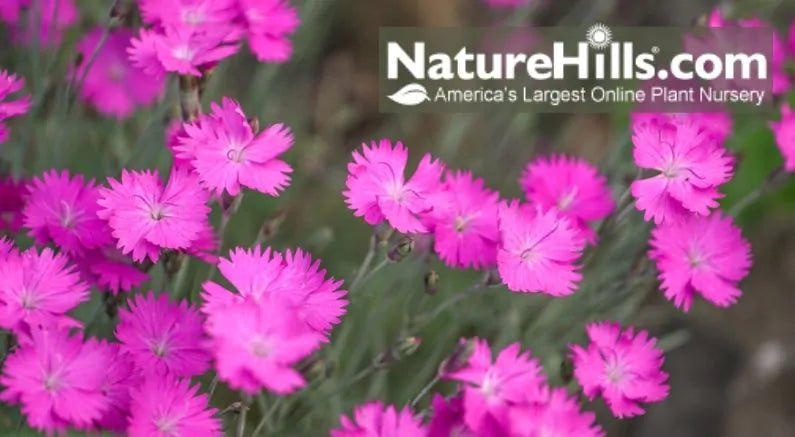
 Lastly, the one we have been dying to tell you all about is the fan favorite Firewitch Dianthus (Dianthus gratianopolitanus 'Firewitch').
Its frilly fringed, magenta flowers that cascade elegantly over it’s gray-green foliage makes anyone and everyone’s jaws drop to the floor.
Although this perennial is only 6-8 inches tall with a 6-12 inch spread, it goes unnoticed no matter where it’s planted in landscaping. From its color, to its shape, to its size, I think it’s safe to say that this perennial simply has it all.
You can kiss the dull, empty spots in your garden goodbye after planting your attention grabbing Firewitch Dianthus into the mix!
Fill your porch or patio container full of Firewitch Dianthus and spend your spring season embracing its beauty, smelling its enchanting perfume scent, while sipping on your favorite drink.
Don’t forget to deadhead this plant and you’ll be rewarded with another round of these impeccable fragrant blooms later in the summer!
Plant in full sun with rich, well-drained soil and let this plant work it’s magic in your landscaping with little to no work on your part!
Let Nature Hills bring paradise to your with this exquisite perennial!
- USDA Zones 3 - 9
- 3 to 5-foot height and width
- Frilly Fringed Magenta Pink Petals
- Gray-Green Foliage
- Perfume Fragrance
- Magnificent Gap Filler
- Cherry Vanilla Dianthus: Rosy red petals with a line of pink picotee along the edges and gray-green foliage.
- Dianthus Everlast Burgundy Blush: Double blooming, fragrant, burgundy-red flowers with pink edges that bloom in the spring.
We have a variety of plants to pick from and these are only the start! Enjoy your spring gardening by adding these plants into the mix.
Happy Gardening!
