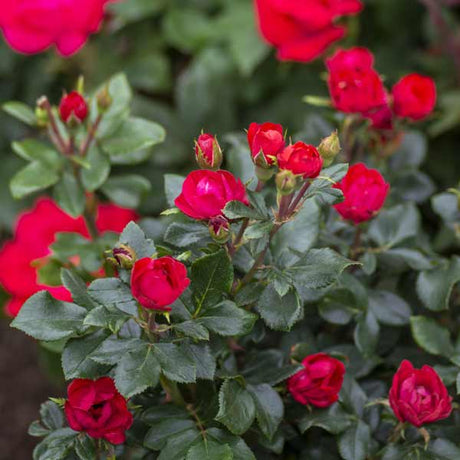
Miniature Roses are stealing the spotlight in today’s gardens, container patios, balcony spaces, and sunny windowsills. These pint-sized bloom machines deliver classic Rose elegance with a modern twist, offering nonstop color, compact growth, and incredible versatility.
Gardeners searching for Mini Roses, Miniature Rose bushes, patio Roses, or florist Mini Roses love them for their repeat blooms, vibrant colors, and easy placement in small gardens, container gardens, entryways, and decorative pots. For anyone craving a high-bloom, low-footprint flowering shrub that plays beautifully with all other sun-loving plants, Miniature Roses bring major flower power in a compact frame!
- A Closer Look at These Petite Bloomers
- Landscaping Uses
- Top 10 Miniature Roses at Nature Hills
- Miniature Rose Trees
- How to Care for Miniature Roses Outdoors
- Florist Miniature Roses and Indoor Care
- Bringing It All Back to the Mini Magic

A Closer Look at These Petite Bloomers
What makes a Miniature Rose truly miniature comes down to genetics, not pruning. These scaled-down beauties belong to the same genus as larger Rose bushes, yet they naturally form smaller stems, tiny buds, finely scaled leaves, and charmingly petite blooms.
Their compact nature lets them thrive in containers, balcony gardens, tight borders, pathways, and as edging near larger shrubs like Hydrangea bushes or Evergreen bushes. Many varieties are fragrant, some strongly so, giving the garden a jewel-box effect when blooms open. For more scented-garden inspiration, explore these fragrance favorites.
Florist Mini Roses are greenhouse-grown and shine indoors when placed in bright, airy windows, offering a burst of color before transitioning outdoors.

Miniature Roses trace their roots back to China several hundred years ago, where early forms first appeared. They symbolize joy, gratitude, admiration, and the sweetness of small gestures.
Today’s breeders continue refining Mini Roses for richer color, stronger rebloom, improved fragrance, and even tree-form standards that add vertical structure. Their blooms may be small, but their presence is big-time garden magic.
Landscaping Uses
Miniature Roses create serious design flexibility thanks to their compact size, repeat blooms, and wide range of vibrant colors. Mix them into cottage borders, formal Rose gardens, pollinator displays, and container plantings filled with annual flowers, flowering annuals, full sun annuals, or perennials like Catmint, Salvia, and Russian Sage.
Their petite scale also pairs beautifully with Dwarf flowering tree options, patio-sized Fig tree plants, or even an Espalier fruit tree backdrop.

- Edging or borders: Line pathways with Mini Roses for nonstop color.
- Container displays: Perfect for porches with Boston ferns, hanging ferns, or patio groupings, especially when using smart thriller–filler–spiller design principles.
- Cut flower accents: Their tiny buds add sweetness to small arrangements. For more ideas, see must-haves for cutting gardens.
- Small gardens or urban landscapes: Ideal where space is tight, and bloom impact still matters.
- Tree-form Miniature Roses: Add height and structure without overwhelming nearby plants.
- Indoor Mini Roses: Florist Mini Roses offer temporary indoor décor before transitioning outdoors.

Top 10 Miniature Roses at Nature Hills
These standout varieties pack color, personality, fragrance, and performance into compact frames that thrive in balcony gardens, front yard beds, and decorative containers.
- Petite™ Knock Out® Miniature Rose: Nonstop blooms and exceptional disease resistance.
- Bridal Sunblaze® Miniature Rose: Soft, romantic white blooms that glow in morning and evening light.
- Salmon Sunblaze® Miniature Rose: Bright coral-salmon blooms with cheerful energy.
- All A'Twitter™ Miniature Rose: A lively orange Rose.
- Red Sunblaze® Miniature Rose: Classic red elegance in a small footprint.
- Rainbow's End™ Miniature Rose: Shifting multicolored blooms from yellow to red.
- Autumn Sunblaze® Miniature Rose: Warm-toned blooms perfect for season-spanning color.
- Tiddly Winks™ Miniature Rose: Bright, joyful pink blooms full of charm.
- Coffee Bean™ Miniature Rose: Rich, smoky-orange blooms with unique warmth.
- Be My Baby™ Miniature Rose: Sweet pink blooms with romantic, layered petals.

Miniature Rose Trees
Tree-form Mini Roses combine adorable blooms with tidy vertical lollypop-like structure, making them excellent for small garden beds and decorative pots.
- All A'Twitter™ Miniature Rose Tree Form
- Rainbow's End™ Miniature Rose Tree
- Coffee Bean™ Miniature Rose Tree
- Tiddly Winks™ Miniature Rose Tree
- Petite™ Knock Out® Miniature Rose Tree Form
How to Care for Miniature Roses Outdoors
These tiny charmers may be small, but they follow classic Rose care essentials: good sunlight, enriched soil, consistent moisture, and airflow.
Sunlight
- Full sun ensures the strongest bloom production.
- At least six hours of direct light keeps plants dense and floriferous.
Soil and Drainage
- Rich, loose, well-drained soil is ideal.
- Add compost yearly to improve organic matter.
- Arborist Mulch lightly to preserve moisture and stabilize soil temperatures.
Watering
- Keep soil evenly moist, especially when establishing.
- Water at the soil line to reduce disease.
- Once established, let the soil dry slightly between deep waterings. Try the Finger Test to gauge soil moisture, and brush up on the right way to water.
Pruning
- Prune lightly in early spring to shape the plant.
- Remove deadwood or crossing stems as needed.
- Pruning Roses offers detailed guidance for shaping and renewing plants.
- Deadhead blooms to encourage continuous flowering.
Keeping Blooms Looking Their Best
- Light feeding throughout the season supports strong flowering.
- Good airflow reduces disease and keeps foliage clean.
- Morning sun helps dry dew quickly.

Florist Miniature Roses and Indoor Care
Florist Mini Roses are best treated as temporary indoor guests. They need sunlight, airflow, and steady moisture even indoors.
- Place near a bright south or west-facing window.
- Keep soil lightly moist but never soggy.
- Use a pebble tray or humidifier to increase humidity.
- Rotate weekly for even growth.
- Transition outdoors slowly over 7 to 10 days.
- Plant in the garden or a larger outdoor container for long-term success.
With proper care, florist Mini Roses can move from indoor displays to garden showstoppers, joining your Perennials, Shrubs, or Rose bushes for years of color.
Bringing It All Back to the Mini Magic!
Miniature Roses may be small, but they offer superstar energy to gardens and indoor spaces alike. From Sunblaze® classics to playful varieties like Tiddly Winks™ or Rainbow's End™, these tiny legends deliver season-long color and charm. Treat them well, and they prove that the tiniest blooms bring the biggest smiles.
Happy Planting!