Shop With Confidence: FREE Growing & Glowing Promise

Free Shipping on Orders $199+

How to Grow & Care For Bluebeard Bushes

Shop for Bluebeard Bushes at Nature Hills!

Charlotte Weidner |

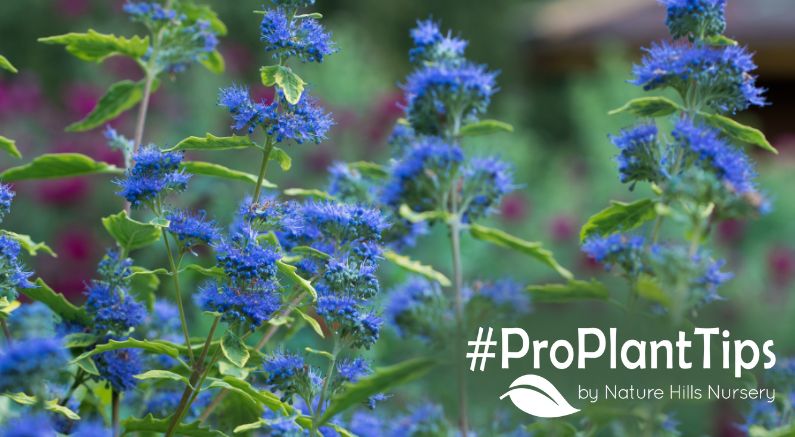
Bluebeard bush flowers

Looking for a drought-tolerant, deer-resistant, low-maintenance shrub with true-blue blooms? Bluebeard bushes (Caryopteris), also known as Blue Mist Bush, or Blue Spirea, are standout blue-flowering plants that bring structure, unexpected late-season color, and pollinator power to your garden!

With aromatic foliage and rich clusters of cobalt to lavender flowers, these deciduous flowering bushes offer a striking visual impact and minimal upkeep. You'll love the fresh-smelling perfume of their slender, Willow-shaped leaves with each touch. Perfect for sunny borders, Rock Gardens, pollinator patches, and modern landscapes, Bluebeard shrubs bloom when many summer plants fade. Discover how to cultivate and care for these captivating blue-flowering bushes to enjoy waves of butterflies, bees, and hummingbirds dancing through your garden. Plus, you'll have plenty of blooms to snip for indoor cut flower arrangements.

Now that your curiosity's been piqued, let's take a closer look at the top Bluebeard bushes that deserve a sunny spot in your landscape!

Top Bluebeard Bushes from Nature Hills

1. Dark Knight Bluebeard

Shop Dark Knight Bluebeard Bush

This classic variety brings drama with its moody blue flowers and upright form, thriving in USDA Zones 5-9 with excellent drought resistance!

  • Grows 2-3 feet tall and 18-24 inches wide
  • Deep violet-blue flowers and rich green foliage
  • Great for borders and pollinator gardens
  • Attracts bees and butterflies by the dozens!

2. Proven Winners® Beyond Midnight® Bluebeard

Buy Proven Winners Beyond Midnight Bluebeard

With glossy leaves and nearly inky blue blooms, this compact powerhouse thrives in containers or tight garden spaces in Zones 5-9.

  • Stays compact at about 2-3 feet tall and 2 feet wide
  • Glossy deep green foliage and saturated blue blooms
  • Cold-hardy and perfect for small-space landscapes

3. Blue Mist Bluebeard

Shop Blue Mist Bluebeard bushes

One of the earliest known cultivars, this soft, powdery purple-blue bloomer adds a vintage flair to perennial beds in Zones 5-8.

  • Grows 12-18 inches tall and up to 3 feet wide
  • Powdery blue blooms and silver-green aromatic foliage
  • Ideal for Rock Gardens and mixed borders
  • Loved by hummingbirds and bees

4. Proven Winners® Lil Miss Sunshine® Bluebeard

Buy Proven Winners Lil Miss Sunshine® Bluebeard

This standout combines glowing gold foliage with deep blue blooms for high contrast and bold personality in Zones 5-9.

  • Compact, rounded shape under 3 feet tall and wide
  • Golden-yellow foliage and cobalt-blue blooms
  • Perfect for pollinator and butterfly gardens

5. First Editions® Sapphire Surf™ Bluebeard

Shop First Editions® Sapphire Surf™ Bluebeard today

With tightly packed flower clusters and a naturally rounded habit, this variety shines in mass plantings and borders across Zones 5-9.

  • Stays compact at 2 feet tall and up to 3 feet wide
  • True-blue flowers and silver-green stems
  • Thrives in heat and dry soils, great for xeriscapes


6. Grand Bleu® Bluebeard

shop Grand Bleu Bluebeard

A vigorous grower with bold texture, this variety is prized for long-lasting, intense-blue blooms that light up sunny spots in USDA Planting Zones 5-9.

  • Reaches 2 to 3 feet tall and wide
  • Large clusters of violet-blue flowers
  • Excellent low hedge or accent plant

7. Proven Winners® Sunshine Blue II® Bluebeard

buy sunshine blue Bluebeard at nature hills

With golden-chartreuse foliage and soft blue blooms, this cheerful shrub keeps color going well into fall throughout USDA Growing Zones 6-9.

  • Grows 2 to 3 feet tall and wide
  • Yellow foliage and blue flowers contrast
  • Deer-resistant and pollinator-approved

8. Arthur J. Simmonds Bluebeard

Buy Arthur J Simmonds Bluebeard here!

A tried-and-true heirloom variety, this elegant option brings upright form and historic charm to pollinator gardens in USDA Zones 5-9. Featuring purple fluffy blossoms that pollinators love.

  • Reaches about 3 feet tall and wide
  • Silvery-green foliage and soft purple flowers
  • Great for traditional borders and English-style gardens

9. Petit Bleu™ Bluebeard

Petit Bleu Bluebeard for sale at nature hills

One of the smallest cultivars, this dwarf flowering shrub offers deep indigo blooms for tight spaces and patio pots in Zones 5-9.

  • Grows just 24 - 30 inches tall and 24 inches wide
  • Compact and tidy with long-lasting lavender-blue blooms
  • Perfect for edging, rock gardens, or containers


Best Landscape Uses For Bluebeard Bushes

Bluebeard bushes grow in naturally rounded, mounded forms that stay neat without fuss. Their soft, arching branches are topped with clusters of vibrant blue blooms, creating a billowy silhouette that adds structure and color without overwhelming your garden.

With a tidy, low-maintenance shape and bushy, dome-like habit, these compact flowering shrubs fit beautifully into both formal borders and more relaxed, pollinator-friendly plantings.

  • Add vibrant color to late-summer and fall gardens

  • Use as a low hedge or backdrop in borders

  • Soften hardscapes or driveways with soft blue blooms

  • Tuck into Rock Gardens or xeriscapes

  • The aromatic foliage is a great addition to sensory gardens!

  • Pair with Gold or Orange perennials for high contrast

  • Try one as a blue accent among native grasses and Coneflowers

How To Grow & Care For Bluebeard Bushes

Sunlight & Placement:
Bluebeard bushes crave full sun. Select a location with at least 6 hours of direct sunlight daily for optimal blooms and healthy growth.

  • Soil Requirements:
    Well-drained soil is essential! Avoid overly rich or soggy spots. Slightly alkaline to neutral soil is ideal.
  • Watering:
    Water deeply but infrequently, especially during their first year in the ground. Use the Finger Test to check for moisture and prevent overwatering.
  • Spacing:
    Most Bluebeard shrubs grow 2-4 feet tall and wide. Allow enough space for air circulation to prevent mildew and promote flower production.
  • Pruning:
    These flowering bushes bloom on new wood. In early spring, prune back to 6-12 inches from the ground to encourage dense growth and abundant blooms.
  • Deadheading:
    You can deadhead Bluebeard to extend flowering and tidy up its appearance.
  • Fertilizing:
    Avoid heavy fertilizing. A light application of compost or balanced, slow-release fertilizer in spring is enough.
  • Winter Prep:
    In Zones 5-9, most Bluebeard bushes are cold-hardy. In colder zones, treat them as herbaceous perennials that regrow from the base.
  • Pests & Problems:
    These shrubs are relatively pest-free. Watch for spider mites or mildew in overly damp or crowded settings.

Blooms, Bees & Blue Hues Await!

If you're craving color in late summer, Bluebeard bushes are one of the best blue-flowering plants to grow. These hardy, fragrant, pollinator-friendly flowering bushes keep giving long after other plants fade. With varieties perfect for containers, borders, and naturalistic plantings, there's a Bluebeard for every landscape!

Their mounded shape, aromatic foliage, and cool-toned flowers bring texture and motion to garden beds, while drawing in bees, butterflies, and hummingbirds like a late-season magnet! Whether you plant one as a bold accent or mix several into a full-sun pollinator patch, Bluebeard shrubs deliver both beauty and resilience with little effort.

Give your garden a sip of something blue and breezy, Bluebeard's the refreshing touch mother nature would approve of.

Happy Planting!

Shop for Bluebeard Bushes at naturehills.com
Previous Next

Compare Plants

Browse the features and specs side-by-side to find the best fit for your garden.

A table comparing the facets of 5 products
Facet
Dark Knight Bluebeard (Caryopteris x clandonensis 'Dark Knight'), a shrub featuring blue, purple flowers and deciduous.
Dark Knight Bluebeard
View details
Proven Winners? Beyond Midnight? Bluebeard
Beyond Midnight® Bluebeard
View details
First Editions® Sapphire Surf™ Bluebeard
Sapphire Surf™ Bluebeard
View details
Sunshine Blue® Bluebeard II
Sunshine Blue® II Bluebeard
View details
Petit Bleu™ Bluebeard
View details
Rating
Rating
(9)
--
(2)
-
Type
TypeShrubShrubShrubShrubShrub
By
ByNature Hills NurseryProven WinnersFirst EditionsProven WinnersProven Winners
Flower Color
Flower Color
  • Blue
  • Purple
  • Blue
  • Blue
  • Blue
  • Blue
  • Purple
Growing Zone Range
Growing Zone Range
5-9
5-9
5-9
5-9
5-9
Mature Height
Mature Height
2-3 ft
2-3 ft
1-3 ft
2-3 ft
2-3 ft
Width
Width
1-2 ft
1-3 ft
2-4 ft
2-3 ft
1-3 ft
Price
Price
Regular price $5799
Regular price $3099
Regular price $5817
Regular price From $2614
Regular price $5739

Frequently Asked Questions

How do I grow bluebeard bushes, and what conditions do they need to thrive?

Bluebeard bushes (Caryopteris) thrive in full sun and well-drained soil across USDA Zones 5-9, and they are highly drought-tolerant once established, making them ideal for low-maintenance landscapes. Most varieties grow 2-3 feet tall and wide, so choose a sunny border, rock garden, or pollinator bed with good air circulation. Plant in spring or fall, water regularly during the first season to establish roots, then cut plants back hard in early spring to about 6 inches to encourage vigorous new growth and the best bloom display later in summer.

How much sun do bluebeard bushes need for the best flowering?

Bluebeard bushes (Caryopteris) perform best in full sun, requiring at least 6 hours of direct sunlight per day to produce their signature cobalt to lavender blooms. Insufficient light leads to leggy growth and significantly reduced flowering, especially during their late-season bloom period when many other shrubs have faded. Plant your Bluebeard in the sunniest spot available in your landscape, whether in a border, rock garden, or pollinator patch, to ensure the most vigorous growth and the heaviest flower production.

What kind of soil is best for bluebeard bushes?

Bluebeard bushes thrive in well-drained, moderately fertile soil and will actually struggle in rich, overly amended ground that holds too much moisture. They prefer a neutral to slightly alkaline pH and are naturally adapted to lean, sandy, or gravelly conditions, which is part of what makes them so drought-tolerant once established. Avoid heavy clay soils that stay wet, as root rot is one of the few things that can truly set these shrubs back. If your soil is dense or poorly drained, amend it with coarse sand or fine gravel at planting time, or consider raised beds or rock garden settings where drainage is naturally improved.

How big do bluebeard bushes get, and how far apart should I space them?

Bluebeard bushes are generally compact shrubs, ranging from about 1 to 3 feet tall and 2 to 3 feet wide depending on the variety, with spreading types like Blue Mist reaching up to 3 feet wide and upright selections like Dark Knight staying closer to 18 to 24 inches wide. When planting, space them according to their mature spread, typically 2 to 3 feet apart, to allow good air circulation and room to fill in naturally. For mass plantings or hedges, you can space them slightly closer, around 18 to 24 inches, for a fuller, quicker effect.

Are bluebeard bushes drought tolerant, or do they need regular watering?

Bluebeard bushes (Caryopteris) are excellent drought-tolerant shrubs once established, making them ideal for low-maintenance landscapes in USDA Zones 5-9. During the first growing season, water regularly to help roots develop, but mature plants thrive with minimal supplemental irrigation. To support establishment, water deeply once or twice a week for the first few months, then scale back and let natural rainfall do most of the work. Plant them in full sun and well-drained soil to get the best performance with the least watering effort.

Why is my bluebeard bush not flowering?

If your bluebeard bush is not flowering, the most common culprits are too much shade, over-fertilization with nitrogen, or skipping the annual hard pruning that encourages vigorous new growth and blooms. Bluebeard blooms on new wood each season, so cutting plants back to 6-12 inches in early spring is essential for a strong flowering display later in summer. In colder zones at the edge of its hardiness range (Zones 5-9), die-back from a harsh winter can also delay flowering as the plant recovers. Check that your plant receives full sun, ease up on high-nitrogen fertilizers, and commit to that early spring pruning to get those blue blooms back on track.

Are bluebeard bushes deer resistant?

Yes, bluebeard bushes (Caryopteris) are considered deer resistant, making them an excellent choice for gardens in areas with heavy deer pressure. Their aromatic foliage is the key deterrent, as deer tend to avoid strongly scented plants. Plant bluebeard in a sunny border or pollinator garden where you want reliable, low-maintenance color from midsummer through fall without the worry of deer damage.

How cold hardy are bluebeard bushes, and what winters can they survive?

Most bluebeard bushes (Caryopteris) are cold hardy in USDA Zones 5 through 9, meaning they can handle winter lows down to around -20°F in their hardiest forms. They are deciduous shrubs that die back to the ground in colder winters but reliably resprout from their roots each spring. If you garden in Zone 5, choose a proven cold-tolerant variety like Beyond Midnight or Lil Miss Sunshine for the best winter survival. Apply a layer of mulch around the base in late fall to insulate the root zone and give your plants the best chance of bouncing back strong come spring.

Can I grow bluebeard bushes in containers or pots?

Yes, Bluebeard bushes can absolutely be grown in containers, and the Proven Winners Beyond Midnight Bluebeard is especially well-suited for this purpose, staying compact at just 2 to 3 feet tall and 2 feet wide. Choose a pot with excellent drainage, use a quality well-draining potting mix, and site your container in a spot that receives full sun. Container-grown Bluebeard shrubs are cold-hardy in Zones 5 to 9, though you may want to move pots to a sheltered location during harsh winters to protect the roots. Start with a container at least 12 to 16 inches in diameter and water consistently during the first season to help the plant establish.

How do I winterize bluebeard bushes to help them survive cold weather?

Bluebeard bushes (Caryopteris) are hardy in USDA Zones 5-9 and generally require minimal winter preparation, but a light layer of mulch around the base in fall helps insulate roots in colder zones. Wait until late winter or early spring to cut plants back hard, as the woody stems provide some cold protection through the winter months. In Zone 5, consider applying 2-3 inches of mulch after the ground freezes to protect the root zone from freeze-thaw cycles that can heave plants out of the soil.