Shop With Confidence: FREE Growing & Glowing Guarantee

Free Shipping on Orders $199+

Cultivating Beauty: Traverse City Gardening by the Great Lakes

Cultivating Beauty: Traverse City Gardening by the Great Lakes - Nature Hills Nursery

Nature Hills Nursery |

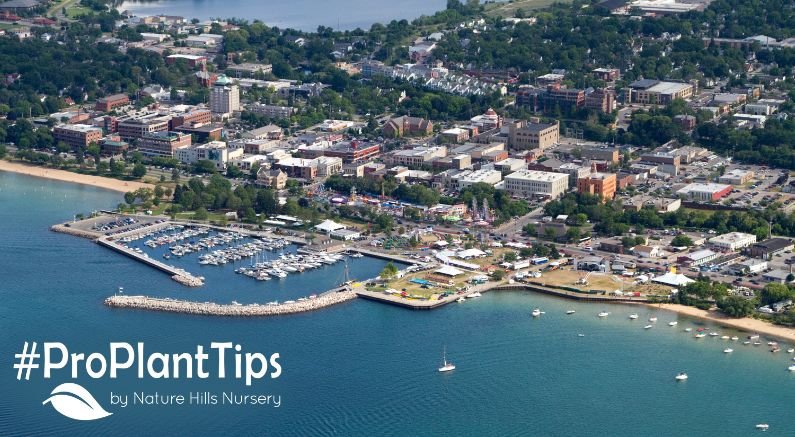
Cherry Capital at Traverse City

Traverse City, Michigan! Affectionately nicknamed the Cherry Capital of the World, is a gardener's paradise kissed by cool breezes off Lake Michigan. With its charming downtown, rolling vineyards, and sparkling shoreline, this Northern Michigan gem provides an inspiring backdrop for lush, resilient gardens.

Nestled into the shores of Grand Traverse Bay, Traverse City sits in USDA Zone 5b, blending humid continental weather with sandy, alkaline soils. While mother nature delivers both sweltering summers and bone-chilling winters, gardeners here can create spectacular outdoor spaces by selecting the right plant varieties and sustainable techniques.

Let's explore how to root your landscape firmly into the soul of Michigan's north country!

Traverse City's Soil, Landscape, and Weather Details

Traverse City's scenery is shaped by sandy glacial soils left behind from retreating ice sheets. These soils drain quickly but may need amending with organic compost for better moisture retention and fertility.

  • Soil Type: Predominantly sandy, alkaline, with occasional clay pockets inland.
  • Climate: Humid continental
  • Average Summer High: 80°F
  • Average Winter Low: 15°F
  • Annual Precipitation: About 34 inches, with generous snowfall (120 inches) in winter.

Microclimates abound, thanks to Lake Michigan, temperatures can be more moderate closer to the water. Inland areas, however, experience more temperature swings and heavier frost.

Michigan's State Tree

Let's pay homage to the mighty Eastern White Pine (Pinus strobus), Michigan's state tree. Towering and graceful with soft, bluish-green needles bundled in fives, this tree was a keystone in the state's early lumber economy and remains a majestic symbol of Michigan's enduring natural beauty.

Traverse City's Favorite Spots

While walking through Clinch Park, exploring Old Mission Peninsula, or gazing at the dunes near Sleeping Bear Dunes National Lakeshore, you'll spot many beloved plant varieties that thrive in this special lakeside environment.

Top 10 Plants for Traverse City Gardens

These hardy heroes stand tall in the Great Lakes weather:

  1. Blue Chinese Wisteria Tree: Cascading bluish-purple flowers with an enchanting fragrance.
  2. First Edition® Snow White™ Mock Orange: Easy-care shrub with intoxicating white blooms.
  3. American Persimmon: Hardy fruiting tree that brings both bounty and beauty.
  4. Endless Summer® Twist-n-Shout® Hydrangea: Repeat blooms with changing colors through the season.
  5. Double Flowering Japanese Kerria: Cheerful double-yellow flowers that brighten shady corners.
  6. Gatsby Pink® Oakleaf Hydrangea: Pink-blushed flowers and bold foliage.
  7. Alice Oakleaf Hydrangea: Huge flower heads; striking in any Michigan landscape.
  8. Easy Elegance® Kashmir Rose: Elegant creamy blooms, disease-resistant, and easygoing.
  9. President Grevy Lilac: Lavender-blue perfumed blooms in late spring.
  10. Ruby Slippers Hydrangea: Dwarf variety with ruby-red blossoms.

Top Michigan Native Plants For Success!

Native plants are the way to go for Michigan gardens because they are naturally adapted to the region's climate, soils, and wildlife, making them hardy, low-maintenance, and essential for supporting local ecosystems from pollinators to songbirds.

Native Trees of Michigan

  • Sugar Maple (Acer saccharum): Classic for fall color; source of maple syrup.
  • Eastern White Cedar (Thuja occidentalis): Known as American Arborvitae; sacred to Native peoples.
  • Paper Birch (Betula papyrifera): Striking white bark; vital for nesting birds.
  • Black Cherry (Prunus serotina): Host tree for swallowtail butterflies.

Native Shrubs

  • Ninebark (Physocarpus opulifolius): Peeling bark and beautiful flower clusters.
  • Winterberry Holly (Ilex verticillata): Bright red berries through winter; bird magnet.
  • Buttonbush (Cephalanthus occidentalis): Unique ball-shaped flowers and is wetland-loving.
  • American Hazelnut (Corylus americana): Edible nuts and ornamental foliage.

Native Perennials

  • Wild Lupine (Lupinus perennis): Essential host for the endangered Karner Blue butterfly.
  • Black-Eyed Susan (Rudbeckia hirta): Hardy, cheerful blooms through summer and fall.
  • Purple Coneflower (Echinacea purpurea): Supports pollinators and has traditional medicinal uses.
  • Bee Balm/Wild Bergamot (Monarda fistulosa): Fragrant foliage and bee-loved lavender flowers.

Native Fruiting Trees

  • Serviceberry (Amelanchier canadensis): Early blooms and sweet berries.
  • Chokecherry (Prunus virginiana): Edible fruit (after cooking) and lovely spring flowers.
  • Crabapple (Malus coronaria): Spring blooms and small fruit for wildlife.
  • Northern Wild Plum (Prunus nigra): Fragrant white flowers and tart fruit.

Native Fruiting Bushes

  • Highbush Blueberry (Vaccinium corymbosum): Sweet berries and fiery fall color.
  • American Elderberry (Sambucus canadensis): Umbels of white flowers and vitamin-rich berries.
  • Red Raspberry (Rubus idaeus): Thorny canes and delicious summer fruit.
  • Black Huckleberry (Gaylussacia baccata): Tasty berries loved by both people and critters.

Tips and Tricks for Gardening in Traverse City, Michigan

  • Use Arborist Mulch to insulate sandy soils, retain moisture, and suppress weeds. Here's why arborist mulch matters.
  • Water new plants with care, checking moisture needs using the Finger Test. Learn to use it here.
  • Amend sandy soil with compost and aged manure to boost fertility naturally.
  • Embrace native plants for lower maintenance and better resilience.
  • Protect tender plants from winter winds with burlap screens or natural windbreaks.
  • Create raised beds or berms for better drainage where needed.
  • Encourage biodiversity by designing wildlife gardens with layered plantings.
  • Harvest the bounty of edible plants by incorporating edible landscaping into your overall design.

Great Gardens on the Great Lakes!

Traverse City MI map

From the sandy shores of Grand Traverse Bay to the inland orchards and forests, Traverse City offers a landscape where hardy, beautiful gardens can thrive against a breathtaking natural Upper Midwestern backdrop.

Choosing plants that dance with the seasons, stand strong through fierce lake winds, and beckon bees, birds, and butterflies will root your landscape deeply in Michigan's proud natural traditions.

As you blend ornamental charm with native vitality, your garden will not only echo the beauty of the Great Lakes but also create a living celebration of resilience, community, and abundant life. Each bloom, berry, and bough will tell a story of Traverse City's heart, a place where rugged spirit and natural splendor meet!

Here's to lakeside landscapes, timeless blooms, and gardens that grow memories as deep as the Great Lakes themselves!

Happy Planting!

Previous Next

Compare Plants

Browse the features and specs side-by-side to find the best fit for your garden.

A table comparing the facets of 5 products
Facet
Eastern White Pine Tree (Pinus strobus), a tree featuring yellow flowers and evergreen.
Eastern White Pine Tree
View details
A large, flourishing purple wisteria vine draped over a wooden arbor against a clear blue sky in a spring garden with pink tulips in the background.
Blue Chinese Wisteria
View details
First Editions® Snow White™ Mock Orange
Snow White™ Mock Orange
View details
American Persimmon Tree (Diospyros virginiana), a tree featuring white flowers and deciduous.
American Persimmon Tree
View details
Gatsby Pink? Oakleaf Hydrangea
Gatsby Pink™ Oakleaf Hydrangea
View details
Rating
Rating
(1)
(306)
(4)
-
(646)
Type
TypeTreeTreeShrubTreeShrub
By
ByNature Hills NurseryNature Hills NurseryFirst EditionsNature Hills NurseryProven Winners
Flower Color
Flower Color
  • Yellow
  • Blue
  • Purple
  • Lavender
  • Violet
  • White
  • White
  • Yellow
  • White
  • Pink
Growing Zone Range
Growing Zone Range
3-8
5-9
4-8
4-9
5-9
Mature Height
Mature Height
60-75 ft
10-15 ft
5-6 ft
30-60 ft
6-8 ft
Width
Width
20-40 ft
10-15 ft
4-5 ft
20-40 ft
6-8 ft
Price
Price
Regular price From $4729
Regular price From $11999
Regular price From $3588
Regular price From $9790
Regular price From $2649

Frequently Asked Questions

What USDA hardiness zones cover Traverse City and the surrounding northern Michigan region?

Traverse City and the surrounding northern Michigan region fall primarily within USDA Hardiness Zone 5b, where average annual minimum temperatures range from -15 to -10 degrees Fahrenheit. Proximity to Lake Michigan creates notable microclimates, with lakeside areas experiencing slightly milder conditions than inland locations, which see greater temperature swings and heavier frost. When selecting plants for this region, always confirm Zone 5 cold hardiness at minimum, and look for varieties rated to Zone 4 if you garden in lower-lying or inland areas more exposed to winter extremes.

When is the safest time to plant trees, shrubs, and perennials in Traverse City given its short frost-free season?

In Traverse City's USDA Zone 5b, the safest window for planting trees, shrubs, and perennials is from mid-May through early June, once the risk of hard frost has passed and soil temperatures have warmed above 50 degrees F. A second excellent window opens in early fall, from late August through September, giving roots time to establish before the ground freezes, typically by late November. Avoid planting during July and August heat spikes, which stress new root systems, especially in Traverse City's fast-draining sandy soils. Check your last average frost date of around May 15 as your green light, and water new plantings deeply and consistently through their first growing season to help them anchor before winter arrives.

Which trees, shrubs, and perennials perform best in Traverse City's zones 4a through 5b climate?

Traverse City gardeners in USDA Zones 4a through 5b find great success with the Eastern White Pine, American Persimmon, and Blue Chinese Wisteria Tree, all of which handle the region's average winter lows of 15 degrees Fahrenheit with ease. Shrubs like First Edition Snow White Mock Orange, Double Flowering Japanese Kerria, and Endless Summer Twist-n-Shout Hydrangea thrive in the sandy, alkaline soils and benefit from the moderating influence of Lake Michigan near the shoreline. For best results, amend sandy glacial soils with organic compost before planting to improve moisture retention and fertility, and choose planting locations closer to the water if you want to take advantage of milder microclimates. Browse the full selection at naturehills.com and filter by Zone 5b to find proven performers ready to root into Michigan's north country landscape.

How much sunlight do common garden plants need to thrive in northern Michigan's growing conditions?

Most garden plants in Traverse City's Zone 5b thrive with 6 to 8 hours of direct sunlight daily, though the region's shorter growing season makes placement especially important. Full-sun plants like American Persimmon and Wisteria should face south or west to capture maximum light during the growing window, which typically runs from mid-May through September. Shade-tolerant options such as Hydrangeas can perform well with 4 to 6 hours and actually benefit from afternoon shade during peak summer heat around 80°F. Assess your yard's sun patterns in late spring before planting to ensure each variety gets the light exposure it needs to establish strong roots before winter sets in.

How often should I water new plantings versus established plants in Traverse City's climate?

New plantings in Traverse City's fast-draining sandy soils need consistent moisture, typically 1 to 2 inches of water per week through their first one to two growing seasons, watering deeply two to three times a week rather than shallow daily sprinkles. Established plants in Zone 5b generally manage well on Traverse City's roughly 34 inches of annual rainfall, though you should supplement during dry summer stretches when temperatures push toward the average high of 80 degrees Fahrenheit. Apply water at the base of plants in the early morning to reduce evaporation and fungal issues. Mulching with 2 to 3 inches of organic material around root zones will help retain moisture in these porous glacial soils and reduce how often you need to water.

How do I improve sandy soil in Traverse City gardens to support healthy plant growth?

Traverse City's sandy glacial soils drain quickly and can struggle to retain the moisture and nutrients that most plants need to thrive in Zone 5b. Amending your soil with generous amounts of organic compost is the most effective fix, working in a 2 to 4 inch layer before planting each spring to improve both moisture retention and fertility. For established beds, top-dress annually with compost and consider mulching with 2 to 3 inches of wood chips or shredded bark to slow evaporation during those hot 80 degree summers. Start soil prep in early spring as soon as the ground is workable, and get a basic soil test to check pH, since Traverse City soils tend toward alkaline and some plants may benefit from targeted amendments like sulfur to bring levels into the ideal range.

Should I use mulch in northern Michigan gardens, and what type works best for moisture retention and winter protection?

Yes, mulching is essential in Traverse City's Zone 5b gardens, where sandy soils drain quickly and winters can push temperatures down to 15°F or lower. Apply a 2 to 3 inch layer of shredded hardwood bark or wood chip mulch in spring to conserve moisture in those fast-draining glacial soils, and top it up to 4 inches in late fall before the ground freezes to insulate roots through the harsh northern Michigan winter. Avoid piling mulch directly against plant stems or tree trunks to prevent rot and pest damage. For best results, mulch after your first hard frost in autumn and refresh the layer each spring as it breaks down and enriches the soil with organic matter.

How do I design raised beds or berms to improve drainage in northern Michigan's landscape?

In Traverse City's Zone 5b, raised beds and berms are excellent solutions for managing the region's fast-draining sandy soils or any clay pockets that cause waterlogging. Build raised beds at least 12 to 18 inches tall and fill them with a blend of topsoil, compost, and coarse sand to balance drainage and moisture retention. For berms, aim for a gentle slope of 4 to 6 inches of rise per foot of run, and plant them in early spring or early fall to give roots time to establish before temperature extremes hit. Amend your fill material with organic compost each season to maintain fertility and keep your drainage solution working effectively year after year.

How does Lake Michigan influence growing conditions and plant selection around Traverse City?

Lake Michigan acts as a natural temperature buffer for Traverse City, moderating the extremes of the humid continental climate and creating milder microclimates along the shoreline compared to inland areas, which see heavier frost and greater temperature swings. The region sits in USDA Zone 5b, with average summer highs around 80°F and winter lows near 15°F, and receives about 34 inches of rain plus roughly 120 inches of snow annually. Gardeners closest to the water can push the limits of zone hardiness and experiment with slightly less cold-tolerant varieties, while those gardening inland should stick firmly to proven Zone 5b performers like Eastern White Pine, Endless Summer hydrangeas, and American Persimmon. Focus your plant selection on varieties rated for Zone 5 or lower, amend sandy alkaline soils with organic compost to improve moisture retention, and use the lake's proximity as your guide when deciding how adventurous to be with borderline-hardy species.

How do I protect garden plants in Traverse City from late spring frosts and harsh northern Michigan winters?

Traverse City's Zone 5b climate means winter lows can plunge to around 15°F, and late spring frosts remain a real threat well into May for inland gardens away from Lake Michigan's moderating influence. Apply 2 to 3 inches of organic mulch around the base of plants each fall to insulate roots and retain soil moisture through the freeze-thaw cycles. For tender perennials and newly planted shrubs, keep frost cloth or burlap on hand to cover plants when late-season cold snaps are forecast. Choose proven Zone 5 hardy varieties from the start, monitor your local microclimate relative to the bay, and mulch consistently each October before the ground freezes.