Shop With Confidence: FREE Growing & Glowing Promise

Free Shipping on Orders $199+

Celebrate St. Patrick's Day with Green Flowers

Celebrate St. Patrick's Day with Green Flowers - Nature Hills Nursery

Charlotte Weidner |

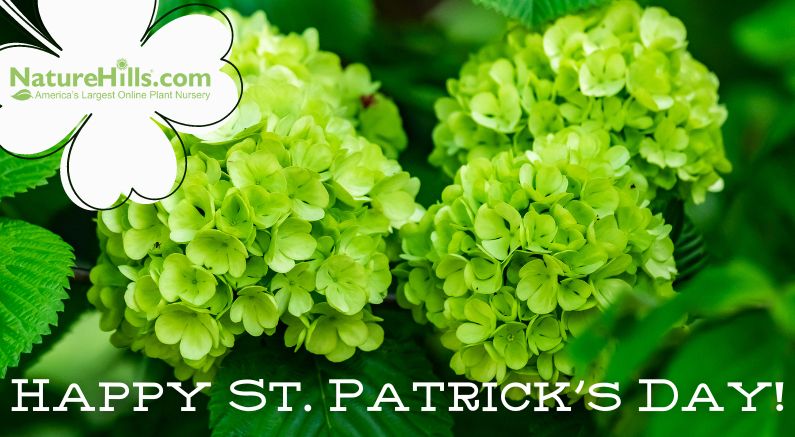
Happy St. Patrick’s Day! The beloved Irish holiday is upon us and what better way to celebrate than with green flowers. Get double the green and double the luck in your landscape this year. Now we can’t guarantee that your landscape will flourish (that’s up to your individual care and nature, of course!) but with the luck of the Irish on your side, who’s to say it won’t!

Here at Nature Hills, we can proudly say that green is our specialty! We’ve taken it upon ourselves to give you five types of green flowers that will leave you tickled pink with your landscape choice.

Top 5 Green as St. Patrick’s Day Plants

#5 - American Pie® Key Lime Pie Dianthus

Key Lime Pie Dianthus

Growing zones 5-9

Spicy-scented with a pure white flower and curious lime green eye, the American Pie® Key Lime Pie Dianthus takes after its namesake in more ways than one. Highly adaptable to a variety of conditions, this member of the Carnation family is perfect for the diverse weather your area may experience in March.

With multiple application sites to choose from, it’s hard to pick just one. Key Lime Pie Dianthus can be added to planters or throughout garden beds as edging. Trust us, you’ll want to make room for this perennial!

#4 - First Editions® Green Hypericum

green hypericum

Growing zones 6-9

Mystical Green indeed! First Editions® Green Hypericum is a small, dense native shrub that will bring happiness into your garden with its small rays of sunshine for blooms. First Editions® Green Hypericum boasts glossy green berries that emerge in late summer and simply scream St. Patty’s Day.

The exfoliating bark and evergreen foliage mark the intriguing winter interest of this hardy shrub. Those hard-to-mow slopes, hillsides, and wooded areas (where four-leaf clovers may hang about) are ideal locations where Green Hypericum can be planted as erosion control or to bridge the transition between your yard and a wooded edge.

#3 - Martin’s Spurge

martin's spurge

Growing zones 6-11

Have you spotted a leprechaun? No, that’s just Martin’s Spurge! With red foliage akin to a leprechaun’s scruffy beard and green foliage similar to their lengthy green coat, we could see why you may have gotten confused. Even the stems of Martin’s Spurge offer visual interest, ranging from yellow to green to red.

Martin’s Spurge is a fascinating perennial to add to your cottage border or perennial garden to give it a modern touch. It’s optimal to grow Martin’s Spurge in an area where it will receive ample amounts of sunlight. Unlike leprechauns which are solitary creatures, Martin’s Spurge prefers to be grown in groups.

Beware! You may attract more than just pollinators i.e. fairy friends by planting this alluring flowering variety.

#2 - Green Jewel Coneflower

Green Jewel oneflower

Growing zones 3-8

No need to chase the pot of gold at the end of the rainbow when you have this prized perennial planted in your garden. The Green Jewel Coneflower features a large green center cone with long-lasting lime green petals that stem out from the middle and a sturdy, leafy green stem, offering not just double but triple the green color.

Opt for deadheading the spent flowers to encourage new growth and improve overall appearance. With its tantalizing scent and dried seed heads materializing in the winter, the Green Jewel Coneflower will draw beneficial pollinators from all over, right to your yard!

Pro Plant Tip - About every four years, you may divide clumps when they become overcrowded and enjoy doubling plants for you or a friend!

#1 - Invincibelle Limetta® Hydrangea

invincibelle limetta hydrangea

Growing zones 3-8

She’s beauty and she’s grace; she’s the Invincibelle Limetta® Hydrangea! You can never go wrong with a hydrangea, especially one like the Invincibelle Limetta®. It has been carefully field-tested and maintains very reliable performance year after year. The Invincibelle Limetta® Hydrangea is as good of a good luck charm as a four leaf clover!

This shrub is smaller in size but no less than wonderful in appearance. Its lime green blooms emerge in early summer and age to jade green in the fall, offering two seasons of visual interest. The Invincibelle Limetta loves its fair share of the sun. Just be sure not to plant in full shade or it will develop thin stems that won’t be able to support the large flower heads.

Other Non-Flowering Options

Leprechaun Arborvitae - Year-round greenery, perfect size for privacy and screening around smaller properties.

Green Magic Inkberry Holly - Small, inconspicuous flowers but grown for its beautiful glossy green foliage year round.

Ferns - Soft and fluffy green fronds that come back year after year.

Boxwoods - Grown for their beautiful small rounded evergreen foliage year-round, a classic staple in the landscape.

Kiss Me I'm Irish!

All of these options are fashionable in cut flower arrangements if you plan on giving your Irish prince or princess a lavish display of green to commemorate the holiday. By planting any one of these lush green flowering varieties, you will have a landscape looking like the Emerald Isle in no time!

Happy Planting & Irish Blessings!

green bouquet
Previous Next

Frequently Asked Questions

Which green flowers are easiest to grow at home for a St. Patrick's Day bouquet?

For a St. Patrick's Day bouquet, the American Pie Key Lime Pie Dianthus (zones 5-9) is one of the easiest options, as it adapts well to a variety of conditions and produces charming white blooms with a distinctive lime green eye. Martin's Spurge (zones 6-11) is another low-maintenance choice that adds striking color interest with its red and green foliage, making it a unique cut stem for arrangements. Both are hardy perennials that reward minimal effort with maximum visual impact. Plant them in well-drained garden beds or containers and cut stems in the morning for the freshest, longest-lasting bouquet.

How do I combine green flowers and foliage to create a festive St. Patrick's Day floral arrangement?

For a festive St. Patrick's Day arrangement, combine the pure white blooms and lime green eye of American Pie Key Lime Pie Dianthus with the glossy green berries of First Editions Green Hypericum for a striking contrast. Add stems of Martin's Spurge for its red and green foliage, which brings both color depth and a playful nod to traditional Irish imagery. These plants are available at naturehills.com, so order early to ensure your arrangement comes together in time for the holiday.

Which green flowering plants make the most meaningful St. Patrick's Day gifts for gardeners?

For gardeners who love a meaningful St. Patrick's Day gift, the American Pie Key Lime Pie Dianthus and First Editions Green Hypericum are standout choices. The Dianthus thrives in zones 5 through 9 and offers spicy-scented blooms with a distinctive lime green eye, making it a versatile addition to containers or garden beds. The Green Hypericum, suited for zones 6 through 9, delivers glossy green berries in late summer and provides year-round interest with its evergreen foliage and exfoliating bark. Visit naturehills.com to order either plant in time for the holiday and give a gift that keeps growing long after March 17th.

What should I plant in my garden around St. Patrick's Day to take advantage of the season?

For a St. Patrick's Day-inspired garden, consider planting American Pie Key Lime Pie Dianthus (zones 5-9), which offers a white bloom with a striking lime green eye and works beautifully as edging or in planters. First Editions Green Hypericum (zones 6-9) is another excellent choice, bringing glossy green berries in late summer along with year-round interest, and it performs especially well on slopes or wooded edges as erosion control. Martin's Spurge (zones 6-11) rounds out the options with its red and green foliage that adds a modern touch to cottage borders. Browse these selections at Nature Hills to find the right fit for your growing zone and garden style.

Can I grow green carnations from seed, or is it more practical to buy them as cut flowers?

Growing true green carnations from seed is unreliable, as seed-grown plants rarely produce the exact color you expect, and green varieties in particular are often the result of careful breeding or even dye treatment of white blooms. For guaranteed results, purchasing cut flowers is the most practical route for a one-time display, especially around St. Patrick's Day. If you want a longer-term garden solution, consider the American Pie Key Lime Pie Dianthus, a close carnation relative that grows in zones 5-9 and offers that distinctive lime green eye on a pure white bloom as a reliable perennial. Look for named cultivars from reputable nurseries like Nature Hills rather than attempting to start green carnations from seed.

How do I get Bells of Ireland seeds to germinate and grow successfully in my garden?

Bells of Ireland seeds require cold stratification to germinate successfully, so refrigerate them for one to two weeks before sowing. Direct sow outdoors in early spring or fall, pressing seeds lightly onto the soil surface since they need light to germinate, and expect sprouts in two to three weeks once soil temperatures reach around 55 to 65 degrees Fahrenheit. They perform best in zones 2 through 11 as a cool-season annual, so time your planting to avoid peak summer heat. Start seeds indoors six to eight weeks before your last frost date for a head start, then transplant seedlings after hardening them off for about a week.

What soil, light, and watering conditions do green hydrangeas need to thrive?

Green hydrangeas generally thrive in well-draining, organically rich soil with a slightly acidic pH between 5.5 and 6.5, and perform best in USDA zones 3 through 9 depending on the variety. They prefer full sun to partial shade, ideally receiving morning sun with afternoon shade in hotter climates to prevent leaf scorch. Water deeply about once or twice per week, providing roughly one inch of water, and increase frequency during hot or dry spells. Mulch around the base to retain moisture and plant in a sheltered spot to protect blooms from harsh wind.

How do I time the care of green chrysanthemums so they bloom by St. Patrick's Day?

Green chrysanthemums are not covered in our St. Patrick's Day plant guide, and timing mums to bloom in mid-March can be challenging since most varieties are naturally programmed to flower in fall. For guaranteed green color in your landscape by St. Patrick's Day, consider one of our featured options like the American Pie Key Lime Pie Dianthus, which thrives in zones 5-9 and offers that green pop without precise bloom timing manipulation. Visit naturehills.com to explore our full selection of green-flowering plants suited to your growing zone.

Are shamrocks and clover the same plant, and which one is better to grow for St. Patrick's Day?

Shamrocks and clover are related but not identical plants, with true shamrocks referring to Trifolium dubium or Oxalis species, while clover typically refers to Trifolium repens, the common white clover found in lawns. Both share the iconic three-leaf appearance associated with St. Patrick's Day, but Oxalis varieties are the most popular choice for indoor displays due to their delicate foliage and easy container culture. For outdoor growing, white clover thrives in zones 3-10 and makes an excellent ground cover or lawn alternative, while Oxalis works best as a seasonal houseplant or container addition. For the most festive St. Patrick's Day landscape impact, pair a potted shamrock indoors with one of our green-flowering perennials like the American Pie Key Lime Pie Dianthus outdoors in zones 5-9 for a full celebration of green.

How do I keep a potted shamrock plant alive and healthy indoors after the holiday is over?

Potted shamrock plants (Oxalis) thrive indoors when given bright indirect light, consistently moist but well-drained soil, and cool temperatures around 60-70 degrees Fahrenheit. After blooming, the plant will naturally die back into dormancy, which is completely normal and not a sign of failure. During dormancy, reduce watering significantly and store the pot in a cool, dark location for about 2-3 months before resuming regular watering to trigger a fresh flush of growth. When the plant rebounds, move it back to a bright windowpane and fertilize monthly with a balanced liquid fertilizer to keep it vigorous year after year.