Shop With Confidence: FREE Growing & Glowing Promise

Free Shipping on Orders $199+

2023 Color of the Year in the Garden

2023 Color of the Year in the Garden - Nature Hills Nursery

Charlotte Weidner |

Pantone has declared their Color of the Year, Viva Magenta 18-1750, “vibrates with vim and vigor!” This pinkish-violet member of the red color family is the new signal of strength!

Magenta is about balance and harmony! A combination of the passion, power, and energy of the color red, tempered by the restrained introspection and quiet energy of violet, creates a hue that embodies both! It is said to promote compassion, understanding, kindness, and cooperation, as well as cheerfulness, happiness, and contentment, and conveys appreciation and character!

But for the garden, this is a color with some serious wow factor behind it!

Check out Nature Hills' favorite plants that were jumping on the Magenta bandwagon before they became the Color of the Year!

Top Magenta Plants at Nature Hills!

Not quite red, not quite violet, not quite wine, Magenta is a bright color more in step with raspberry, and carmine, with a touch of burgundy!

Bring this hot new shade into your landscape with these fantastic plants!

Perennials

Morello Hibiscus

Returning year after year, Perennials bloom their hearts out and are so versatile in the landscape! Usually smaller and space-saving, these easy-to-grow and love plants fill your garden with a rainbow of color choices! But this fantastic Viva Magenta can be found strongest in these plants!

There are more Clematis than we can mention in this fantastic color hue! Check them out here!

  • Rocky Road Magenta Creeping Phlox and Magenta Pearl Phlox
  • Moonshadow™ Morello Hardy Hibiscus
  • Purple Poppy Mallow
  • Cat's Eye Tall Bearded Iris
  • Peony Like Purple Sensation Peony, London, and Prince of Darkness!

Shrubs

Spilled Wine Weigela

Large and small flowering ornamental bushes, these leafy specimens fill themselves with Color of the Year saturated blooms!

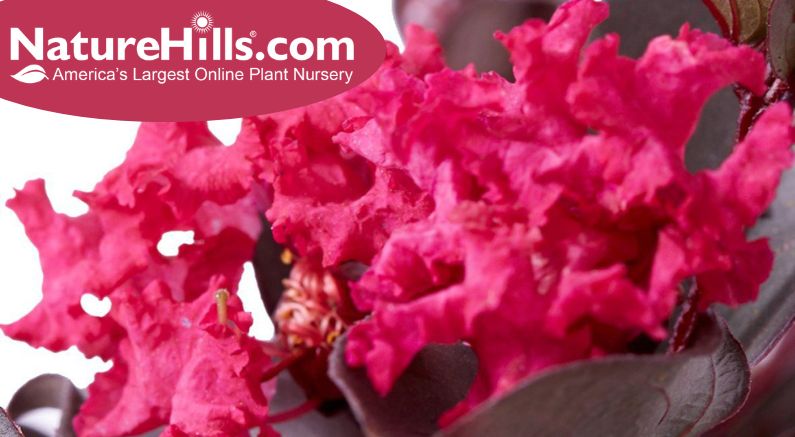
  • Black Diamond® Mystic Magenta™ Crape Myrtle Shrub
  • Anah Kruschke Rhododendron
  • Magenta Chiffon® Rose of Sharon Shrub
  • Buzz™ Magenta and Buzz™ Hot Raspberry Butterfly Bushes
  • Spilled Wine® Weigela
  • GreatMyrtle™ Red Velvet Crape Myrtle Shrub

Trees

red flowering dogwood

Vibrant magenta flowers really show off big time as they bloom on both large and small-scale trees!

  • Eastern Redbud and other Redbud Trees
  • Red Flowering Dogwood
  • Purple Prince Crabapple
  • Galaxy Magnolia
  • Merlot Redbud - both the flowers and foliage are in step with this trend!

Roses

voodoo ruby rose

There are too many Roses to mention individually, but you can find tons of Roses in the Nature Hills inventory that exhibit this amazing hue and combine it with fragrance as well!

  • Ruby Voodoo Rose
  • Be My Baby Miniature Rose
  • Hansa Hybrid Rugosa Rose
  • Sweet Spirit™ Grandiflora Tree Rose
  • Blaze Improved Climbing Rose

Fruit Trees & Plants

elephant heart

Want to eat this great color? There’s a fruit for that! Purple fruits and vegetables are said to be rich in anthocyanins and red fruits and vegetables contain antioxidants that reduce the risk of developing atherosclerosis, hypertension and high cholesterol. We would like to think that Magenta fruit has the best of both worlds!

  • Try a Raspberry Bush like Joan J, or Polka
  • Strawberry Plants like Sparkle or Berried Treasure®
  • Bite into an Elephant Heart or Showtime Plum!
  • Try an Arkansas Black Apple or Winecrisp™ Apple Tree
  • Pluck a few Bing or Lapins Cherries too!

Live Viva Magenta This 2023!

It was in 1858 that Renard Freres Franc mixed aniline with tin chloride and he named it fuchsine, after the Fuchsia flower! Going by purple-mauve, fuchsia, and roseine in the past, this dramatic hue doesn’t back down and embodies strength and resilience!

Employ this powerful color onto your landscape and garden as a way to show we’re bouncing back from troubling days and as a reminder that there are brighter ones ahead!

Nature Hills is in love with this fun color and everything it implies! Head over to NatureHills.com to find out more!

Happy Planting!

Previous Next

Frequently Asked Questions

Which flowers and plants best showcase magenta in a garden design?

Magenta shines brightest in the garden through a well-layered mix of perennials, shrubs, and trees that bloom across multiple seasons. Top performers include Rocky Road Magenta Creeping Phlox, Purple Poppy Mallow, and bold Peonies like Purple Sensation and Prince of Darkness for ground-level color, while Black Diamond Mystic Magenta Crape Myrtle, Magenta Chiffon Rose of Sharon, and Buzz Magenta Butterfly Bush add mid-level drama. For vertical impact, Eastern Redbud trees and Galaxy Magnolia deliver stunning magenta blooms at eye-catching scale. Browse the full magenta plant collection at Nature Hills to mix early, mid, and late-season bloomers for continuous color throughout your landscape.

How can I use magenta as the 2023 Color of the Year to update my garden this season?

Pantone's 2023 Color of the Year, Viva Magenta, translates beautifully into the garden through a wide range of perennials, shrubs, trees, and roses available at Nature Hills. For a quick seasonal update, consider fast-establishing perennials like Rocky Road Magenta Creeping Phlox or Purple Poppy Mallow, or make a bold statement with a flowering tree such as an Eastern Redbud or Galaxy Magnolia. For long-season color, layer in magenta-blooming shrubs like Buzz Magenta Butterfly Bush or Magenta Chiffon Rose of Sharon alongside fragrant roses like Ruby Voodoo. Browse Nature Hills' full magenta plant collection to mix and match bloom times and plant sizes for a landscape that carries this vibrant hue from spring through fall.

How do I keep color in my garden through all four seasons?

While no single plant blooms all year, you can maintain continuous color by layering plants with different bloom times, from early spring bulbs and redbuds to summer perennials like Hardy Hibiscus and Butterfly Bush, into fall foliage and winter bark interest. Evergreen shrubs and ornamental trees provide structure and color even in the coldest months. Visit naturehills.com to browse plants by bloom time and build a planting plan that keeps your garden vibrant from zone-appropriate spring thaws through the first hard frost and beyond.

Which plants provide the longest-lasting color in a garden?

Perennials, shrubs, and trees each offer different windows of color, so layering all three types ensures the longest-lasting display across the seasons. Reblooming perennials like Hardy Hibiscus and Creeping Phlox provide reliable color from late spring through fall, while long-blooming shrubs like Butterfly Bush and Weigela extend the show through summer. Trees like Eastern Redbud deliver stunning early spring blooms, and Crape Myrtles carry color well into late summer. Plan your garden with a mix of these plant types to ensure continuous magenta color from early spring through the first frost.

What should I plant to ensure continuous color from spring through winter?

For continuous magenta color across all seasons, layer your plantings strategically: start spring with Eastern Redbud trees and Creeping Phlox, transition into summer with Hardy Hibiscus, Butterfly Bushes, and Crape Myrtles, then carry color into fall with Rose of Sharon and repeat-blooming Roses like Ruby Voodoo. Perennials like Tall Bearded Iris and Peonies bridge the gap between spring and summer, while shrubs such as Spilled Wine Weigela extend the show. Browse Nature Hills' full selection of magenta-toned perennials, shrubs, trees, and roses to build a planting plan tailored to your hardiness zone and keep your landscape vibrant from the first thaw to the last frost.

How do I combine flowers, foliage, bark, and berries for year-round garden interest?

For year-round garden interest, layer plants with overlapping seasons of appeal, such as pairing a Merlot Redbud, which offers magenta spring flowers and rich burgundy foliage through summer, with an Eastern Redbud for early color and a Red Flowering Dogwood for fall berries and winter branch structure. Add evergreen shrubs like Rhododendron for consistent foliage and late-spring blooms, then weave in perennials like Hardy Hibiscus for summer color and ornamental grasses for winter texture. Finish with berry-producing shrubs such as Weigela, which attracts birds and extends seasonal interest into the colder months. Visit Nature Hills to browse plants by season of interest and build a layered planting plan that keeps your landscape vibrant from January through December.

Which annuals, perennials, shrubs, and bulbs work best for seasonal color?

For seasonal color in the magenta palette, perennials like Creeping Phlox, Hardy Hibiscus, Tall Bearded Iris, and Peonies return reliably year after year and offer some of the strongest Viva Magenta tones available. Shrubs such as Buzz Magenta Butterfly Bush, Magenta Chiffon Rose of Sharon, and Spilled Wine Weigela provide long-lasting seasonal blooms on a larger scale. For a layered approach, combine early-blooming Peonies and Iris with summer-peaking Hibiscus and Butterfly Bush to maintain continuous color from spring through fall. Browse Nature Hills' full perennial and shrub collections to find the right plants matched to your hardiness zone and garden space.

How do I choose plants that bloom at different times so my garden never looks bare?

To keep your garden in continuous bloom, layer plants by their flowering seasons, starting with spring bulbs and early perennials like Clematis, then bridging into summer with Hardy Hibiscus, Butterfly Bush, and Crape Myrtles, and finishing the season with late bloomers like Rose of Sharon. Pair these with flowering trees such as Eastern Redbud for early spring color and Crabapple for mid-spring interest, then let shrub roses like Ruby Voodoo Rose carry you through summer and fall. Visit Nature Hills and filter by bloom time to map out a succession planting plan that ensures something is always flowering in your landscape.

What color combinations work best with magenta in a garden design?

Magenta pairs beautifully with deep purples and cool blues for a sophisticated analogous scheme, or with chartreuse and lime green foliage for high-contrast drama that makes the magenta truly pop. Silver and white flowering plants act as elegant neutrals that allow magenta blooms to breathe without competing. Try pairing a Merlot Redbud with chartreuse-leaved companions underneath, or combine Buzz Magenta Butterfly Bush with purple salvia and silver artemisia for a stunning perennial border. Visit Nature Hills to browse our full selection of magenta plants and build a complete color palette for your landscape.

How do I plan a garden that carries the 2023 Color of the Year through every season?

To carry Viva Magenta through every season, layer plants with staggered bloom times starting with spring bloomers like Eastern Redbud and Tall Bearded Iris, moving into summer with Hardy Hibiscus, Butterfly Bushes, and Crape Myrtles, then finishing fall with late-blooming Clematis and Rose of Sharon. Add evergreen structure with Rhododendrons that bloom in late spring and hold foliage year-round, giving you color anchors even in winter. Shop Nature Hills for specific varieties like Merlot Redbud and Black Diamond Mystic Magenta Crape Myrtle, and check each plant's hardiness zone before purchasing to ensure your selections thrive in your region.