
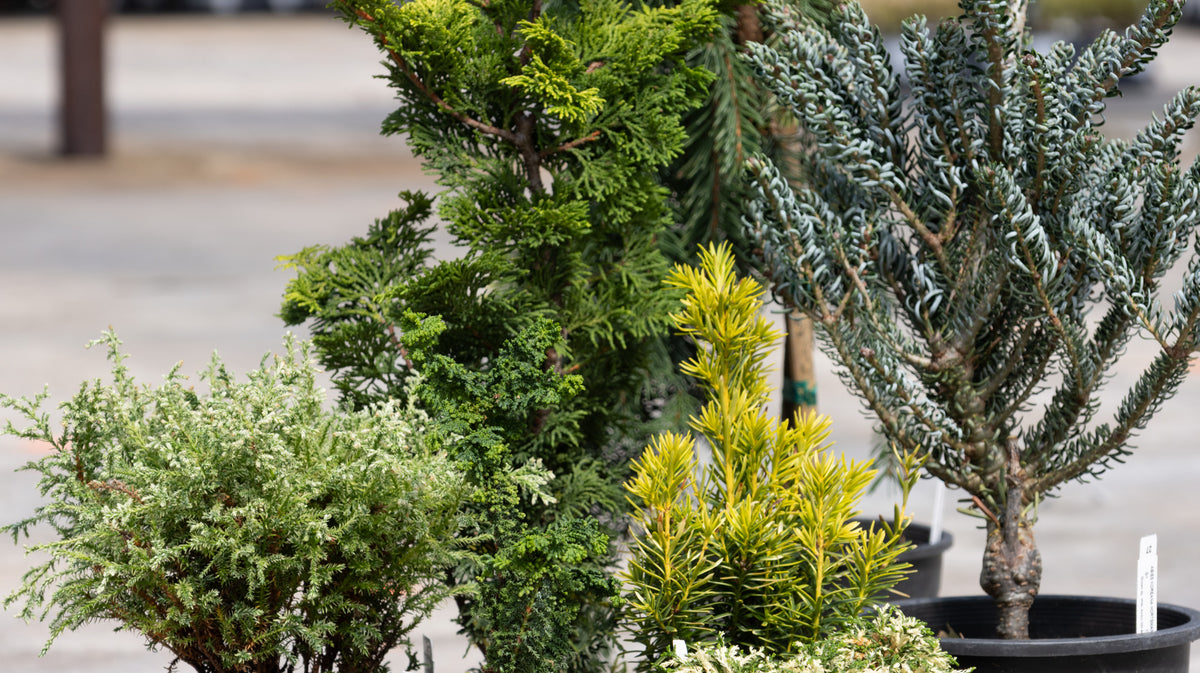
The plants people ask about.
Weeping cherries and redbuds, twisted branches, variegated leaves and rare conifers. One standout plant for your yard's focal point.
-
Robinia pseudoacacia 'Twisty Baby'
Regular price $12271Unit price /Unavailable -
-
Snow Fountain® Weeping Cherry Tree
Prunus x 'Snow Fountain'
50% offSale price $6894 Regular price $13787Unit price /Unavailable -
-
-
-
Salix caprea 'Pendula'
Regular price From $3499Unit price /Unavailable -
-
Lavender Twist® Weeping Redbud
Cercis canadensis 'Lavender Twist'
Regular price From $8999Unit price /Unavailable -
-
Cedrus atlantica 'Horstmann'
Regular price $12999Unit price /Unavailable -
-
-
-
Juniperus scopulorum 'Blue Arrow'
Regular price $2998Unit price /Unavailable -


The Nature Hills Advantage
Plant Sentry™ Protected: Every plant is inspected for invasive pests and diseases before shipment, ensuring your local ecosystem stays safe.
Nursery Direct: No middlemen. No big-box garden center delays. Just fresh plants from our field to your front porch.
Warranty Options: Every plant comes with our standard Nature Hills warranty. Optional protection can be purchased for total peace of mind.


Pick the spot first
How to choose
Specimen plants compete with each other. Put two weepers in the same view and neither one stands out. So start with the place, then find the one plant that belongs there.
- The end of a walk: a weeping cherry or redbud gives the path somewhere to arrive.
- The kitchen window: twisted branches and coral bark give you something to look at all winter.
- The turn of a bed: a blue or gold conifer anchors the corner year-round.
Frequently Asked Questions
What is a specimen plant?
What is a specimen plant?
A plant set by itself as a focal point, chosen for an unusual shape, branch or leaf color. Weeping, twisted, variegated and rare conifer forms are the most common.
How tall will a weeping tree get?
How tall will a weeping tree get?
Most weeping trees are trained up a stake or grafted onto an upright trunk, and their height depends on that stake or trunk. Two trees of the same variety can differ by several feet, so check the mature height listed on each plant.
Where should I plant a variegated tree?
Where should I plant a variegated tree?
Morning sun with afternoon shade. The pale parts of the leaf can scorch in hot afternoon sun and fade toward green in deep shade.
Why are the conifers slow growing?
Why are the conifers slow growing?
Slow growth is what keeps their shape so distinctive. It also means the size you plant is close to what you'll see for the next few years, so buy the largest size that fits your budget.
Can I plant more than one?
Can I plant more than one?
Yes, just not more than one type in the same view. Give each specimen its own spot so it isn't competing with another.
What if my plant doesn't make it?
What if my plant doesn't make it?
Every plant is covered by our free 45-day Growing & Glowing Guarantee, and fall deliveries are covered through May 1.
