Shop With Confidence: FREE Growing & Glowing Guarantee

Free Shipping on Orders $199+

Care guide

Bald Cypress Care

Bald cypress is a native conifer that drops its needles every fall and grows a new set in spring, so a bare tree in winter is normal. It grows in wet, average or drier soils. Here is how to site, water, prune and feed bald cypress through the year.

Zones 4 to 9

Bald Cypress Tree
Bald Cypress Tree

Where to Plant

Sources agree bald cypress is hardy in zones 4 through 9. It is best grown in full sun and also grows in part shade.

It adapts to a wide range of soils, whether wet, average or drier. It grows well in moist, well-drained soil and also in wet sites, including standing water, and in cultivation it grows very well in drier, upland soils. It tolerates clay and occasional flooding. Moist, acidic, sandy soil is ideal. In alkaline soil, chlorosis (yellowing) is common, so acidic soil is preferred.

Knobby root growths called knees usually form when the tree grows near or in water. Use it as a specimen or shade tree, near a pond or in a rain garden. It resists deer, salt, pollution and wind.

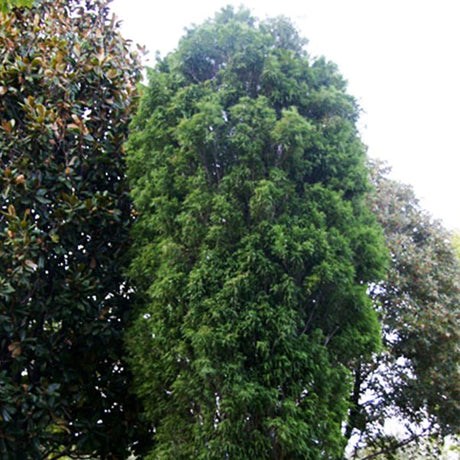
The species is a long-lived, pyramidal tree that grows 50 to 70 feet tall and 20 to 30 feet wide. A narrow pyramidal form grows about 50 to 75 feet tall and 15 to 20 feet wide. Weeping and dwarf forms are also grown, so check the mature size of the plant you choose before spacing it.

Watering Requirements

Bald cypress is moderately sensitive to drought, even though it grows in wet sites.

Water a new tree daily for the first 1 to 2 weeks, every 2 to 3 days for weeks 3 to 12, then weekly until its roots are established. Give 1 to 1.5 gallons per inch of trunk diameter each time, right over the root zone. Skip a watering only after a soaking rain of more than an inch. A new tree may need regular watering for two to three years.

After that, water by the soil, not the calendar. Water deeply, about an inch at a time, so it soaks 5 to 6 inches into the soil, and water around the drip line, under the ends of the branches.

Pruning Tips

Bald cypress is a low-maintenance tree. The late dormant season, late winter to early spring, is the best time for most pruning. Cuts made just before spring growth stay open only a short time, and bare branches make the structure easy to see.

On a young tree, prune to shape but do not cut back the leader. As the tree grows, remove lower branches gradually to raise the crown, and take out crossing branches and branches spaced too closely on the trunk.

Remove dead branches and branches injured by disease or storms. Never top the tree; topping leaves stubs and promotes weak branches. Leave pruning of large trees to a qualified tree care professional.

Fertilizer Needs

Fertilize only if a soil or leaf test shows a deficiency. A new tree does not need feeding at planting; water, not fertilizer, drives the root growth that gets it established.

Established trees do not need feeding every year, and every three to five years may be enough. If a test calls for it, feed once a year with a balanced fertilizer such as 10-10-10, in late fall once the tree is dormant or in spring as growth resumes.

Before feeding a tree with small or pale foliage, rule out lack of water, girdling roots and trunk damage, which cause similar symptoms.

Through the year

Spring Care

Finish any pruning in late winter or early spring, before new growth starts. A new set of soft, feathery needles grows in spring.

Wait to mulch until the soil warms and dries; mulch on cold, wet soil keeps it cold and wet. Then spread about 3 inches of wood chips or shredded bark in a wide circle, keeping it off the trunk and leaving the root flare bare.

If a soil test calls for fertilizer, spring as growth resumes is one of the two times to apply it.

Summer Care

Water new trees on schedule and established trees during dry spells. Summer watering also helps the tree form next year's buds.

Serious pests are uncommon. Watch for spider mites, gall mites, bagworms and cypress moths, and for twig blight, an occasional disease. Yellowing foliage in alkaline soil points to chlorosis.

Fall Care

The soft needles turn russet-red to cinnamon-brown in fall, then drop. Bald cypress is one of the few conifers that loses its needles each year, so this is normal.

Keep watering, especially new trees, as long as the soil is not frozen. Trees need ample water in their roots going into winter.

If a soil test calls for fertilizer, late fall after the tree goes dormant is a good time to apply it. Fallen leaves can be raked under the tree as mulch.

Winter Care

A bare tree in winter is expected. Bald cypress loses its needles each winter and grows a new set in spring. The small round cones stay on the branches into winter.

Late winter is the time for structural pruning, before spring growth starts. Remove branches broken by storms, and leave pruning of a large tree to a qualified tree care professional.

Bald Cypress varieties

Shop all Conifers
  • Bald Cypress Tree

    Taxodium distichum

    (51)
    Sale price $7897 Regular price $9291 15% off
  • Lindsey's Skyward™ Bald Cypress

    Taxodium distichum 'Skyward'

    (1)
    Sale price From $8928 Regular price $11160 20% off