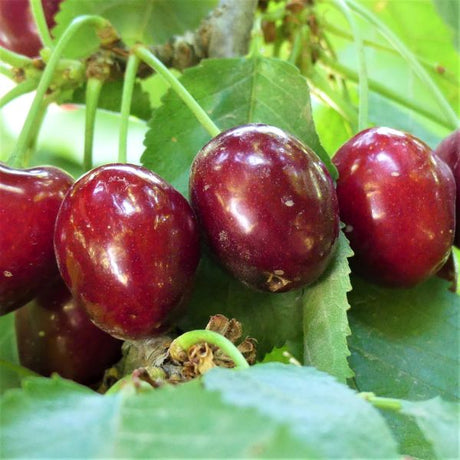
Care guide
Cherry Tree Care
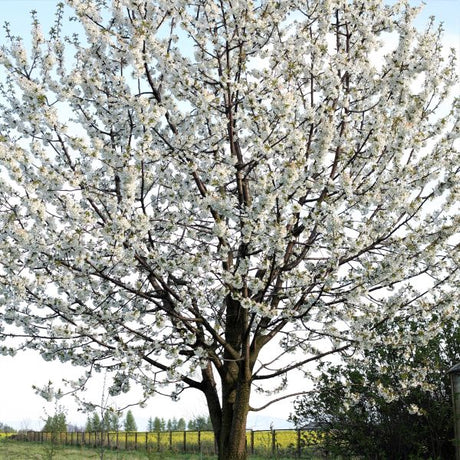
Cherries come in three kinds here. Sweet cherries grow into large trees, bloom early and are less cold hardy. Tart cherries are smaller and hardier. Bush cherries stay compact enough for an edible hedge. Sweet and tart cherries want full sun, well-drained soil and netting against birds at harvest.
Zones 3– to 9
This week in Zone
This week:
Hold off:
Where to Plant
Cherry trees need full sun, at least 6 to 8 hours a day, and moist, well-drained soil. They will not tolerate wet soil, and roots rot where water stands, so avoid soggy spots. Aim for a pH of about 6.0 to 7.0. Some shelter from wind helps.
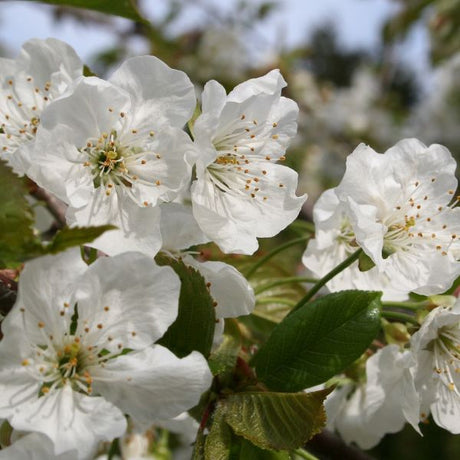
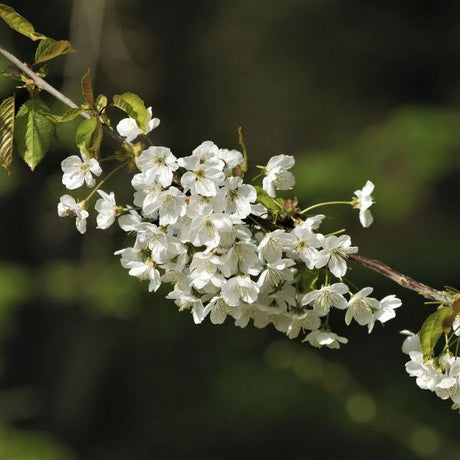
Frost. Cherry trees bloom very early, and late frosts can kill the flowers. Avoid south exposures, such as the south side of a building, that push bloom even earlier. Higher ground is better.
Sweet cherries. Standard trees grow 15 to 30 feet tall and about as wide, and they are less cold hardy than tart cherries. Rootstock sets tree size, and smaller trees are easier to net.
Tart cherries. Tart cherries are generally smaller than sweet cherries and much more cold hardy.
Bush cherries. A bush cherry takes a fraction of the space of a cherry tree and can be planted as an edible hedge. It wants full sun and tolerates clay and alkaline soil.
Space trees about as far apart as their mature height.
Watering Requirements
Young cherry trees need about 1 to 2 inches of water a week. In hot, dry weather, give about 5 gallons once a week. Water slowly and deeply so the whole root zone gets wet, and check the soil 4 to 8 inches down before watering again. Do not overwater; cherries will not tolerate wet soil.
Young trees, in their first few years, need water more often than established trees, which need water only during long dry periods.
Mulch. Spread about 4 inches of mulch in a circle at least 4 feet across, keeping it a few inches from the trunk. Keep grass 2 feet back from the trunk and renew the mulch each year.
Pruning Tips
Prune cherry trees every year in late winter, after the coldest weather has passed and before buds break. Waiting until buds swell lowers the risk of canker. Keep pruning light on young trees.
Remove dead, damaged, diseased and crossing branches, branches that point down, root suckers and water sprouts. Favor cuts that remove a branch at its base over cuts that shorten it, and thin the crown so light and air reach the inside, which helps limit brown rot.
Sweet cherries. Train them to a central leader and prune lightly; heavy pruning cuts into fruiting, and light pruning limits winter injury. Keep outward-growing branches and remove upright ones. There is no practical way to keep a standard tree small.
Tart cherries. Train them to a central leader or an open, vase-shaped center. Unpruned trees get too dense, so prune every year.
Bush cherries. Bush cherries need no fussy pruning.
Fruit spurs live 10 to 12 years, so mature trees need less pruning. Bring a neglected tree back over several years.
Fertilizer Needs
Never put fertilizer in the planting hole. Wait about 3 weeks after planting before feeding a new tree.
Let shoot growth guide you. Young trees that grew 15 inches or more last year need no fertilizer, and bearing trees that grew at least 8 inches are getting enough. If growth was short, feed in early spring before growth starts; compost spread over the root zone works well. Spread fertilizer from the drip line in to about 16 inches from the trunk.
Never feed trees that are growing normally or vigorously. Too much nitrogen lowers winter hardiness.
Through the year
Spring Care
Plant cherry trees in early spring, as soon as the soil thaws and is dry enough to work and before buds break. Set potted trees out after spring frost. Soak bare roots for 2 to 4 hours first, and add no fertilizer or heavy amendments to the hole. Keep the graft union 1 to 4 inches above the soil.
Finish pruning before buds break, remove winter tree guards and trunk wraps, and feed only trees that grew too little last year. Late frosts can damage buds and flowers.
Expect the first fruit about 2 to 7 years after planting, usually sooner on tart cherries than on sweet cherries.
Summer Care
Cover the whole tree with netting before fruit ripens; birds can take the entire crop. Squirrels also eat ripe fruit.
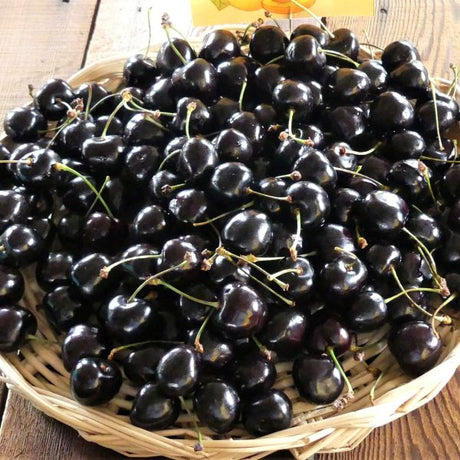
Harvest. Cherries do not ripen after picking. Pick tart cherries when soft and full-flavored, and sweet cherries when full-sized, evenly colored and flavorful. Pick with a twist, taking care not to break the fruit spurs. Refrigerated, cherries keep 3 to 5 days.
Sweet cherries. Rain near harvest can crack the fruit, so pick promptly.
Pests and diseases. Cherry trees face many problems, including cherry leaf spot, brown rot, black knot, powdery mildew and bacterial canker, plus plum curculio, cherry fruit flies and spotted wing drosophila. Pick up dropped fruit.
Cut root suckers to the ground in early summer, and keep watering in dry spells.
Fall Care
Rake up and remove fallen leaves and fruit; cherry leaf spot and brown rot carry over on them. Remove dried, shriveled fruit left on the tree too.
In late fall, put tree guards or wire mesh around young trunks against rodents, and fence trees where animals browse. Keep watering in dry spells through October.
Winter Care
Sweet cherries are less cold hardy than tart cherries. In cold areas, wrap the trunk in late fall from the ground to the first branches to prevent winter trunk cracking, and remove the wrap in spring.
Check trees through winter for damage from rodents and browsing animals. Hold pruning until late winter, after the coldest weather.
Cherry Tree varieties
Shop all Edible Cherry Trees-
Prunus avium 'Black Tartarian'
★★★★★(19)Sale price From $11762 Regular price $13838 15% offUnit price /Unavailable -
Prunus cerasus 'Montmorency'
★★★★★(30)Sale price From $11569 Regular price $13611 15% offUnit price /Unavailable -
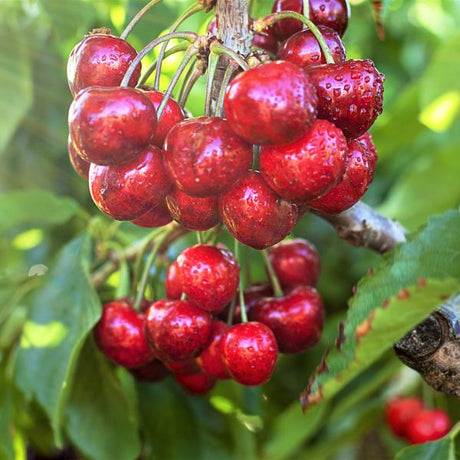
Prunus avium 'Stella'
★★★★★(10)Sale price $12498 Regular price $14703 15% offUnit price /Unavailable -
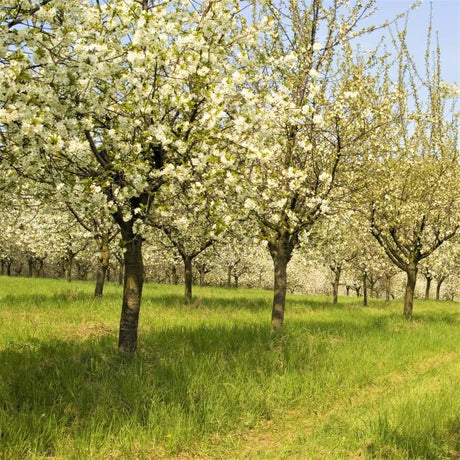
Prunus avium 'Sweetheart'
★★★★★(10)Sale price From $14368 Regular price $16903 15% offUnit price /Unavailable -
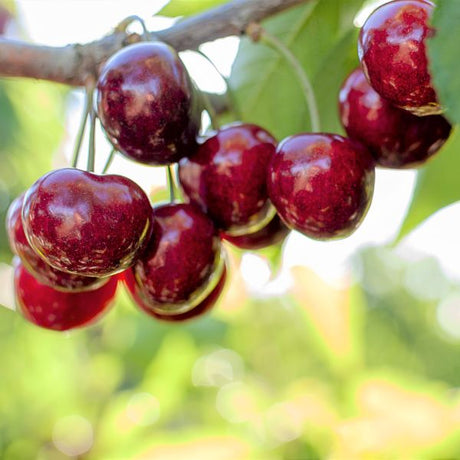
Prunus avium 'Rainier'
★★★★★(9)Sale price $9846 Regular price $11584 15% offUnit price /Unavailable