Shop With Confidence: FREE Growing & Glowing Guarantee

Free Shipping on Orders $199+

Care guide

Mock Orange Care

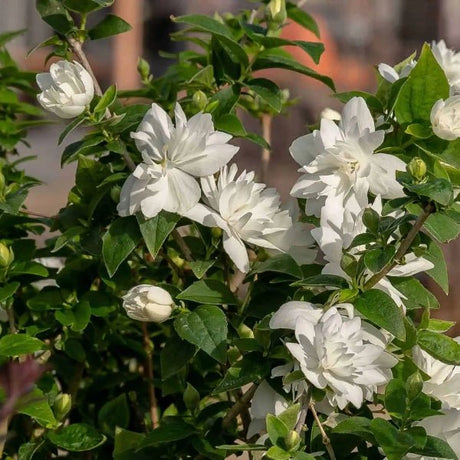
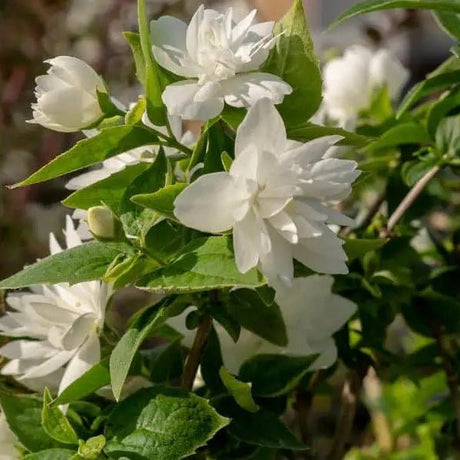
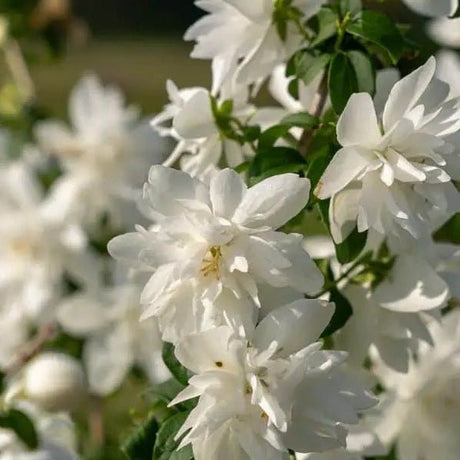
Mock orange fills late spring and early summer with sweetly fragrant white flowers that open on last year's stems. Prune right after the flowers fade, never in fall or winter. Here is how to site, water, prune and feed it through the year.

Blooms on old wood

Zones 4 to 8

Snow White™ Mock Orange

Where to Plant

Sweet mock orange is rated for zones 4 to 8, and hardiness varies by kind, so check the zone of the plant you choose. Plant it in full sun to light shade. It grows in part shade but blooms best in full sun.

Give it moist, well-drained soil. It adapts to sandy, loam or clay soil but does poorly in wet, poorly drained spots.

Size varies by kind, from about 2 to 12 feet tall and wide. The species grows 10 to 12 feet tall and as wide, while compact, columnar kinds can stay near 4 feet tall and 2 feet wide, so check the mature size of the plant you choose before spacing it.

Plant it near a patio or path where you can enjoy the fragrance, especially in the evening. It works as a specimen, in a border, or as a hedge or screen. Outside of bloom it is a plain green shrub, so it makes a good backdrop for smaller plants.

Watering Requirements

Water a new shrub when you plant it, then daily for the first 1 to 2 weeks, every 2 to 3 days through about week 12, and weekly after that until the roots are established. In cold climates that can take at least two growing seasons. Skip a watering only after a soaking rain of more than an inch.

Each time, give about one quarter to one third of the volume of the pot the shrub came in, applied right over the root zone.

Once established, mock orange does best in evenly moist, well-drained soil. Do not keep it soggy; it tolerates a wide range of soils but not poorly drained ones.

A layer of organic mulch helps hold soil moisture. Keep it off the stems and no deeper than 3 inches.

Pruning Tips

Mock orange blooms on old wood. It flowers in late spring to early summer on stems that grew the year before, then sets next year's flower buds soon after. Do routine pruning right after the flowers fade. Pruning in fall, winter or early spring cuts off flower buds.

Right after bloom, cut out dead wood and trim stems that have grown out of bounds. On older plants, also remove a few of the oldest, largest stems at the base, taking no more than one third of the stems in a year. Repeating this over three years renews the whole shrub.

An old shrub that has grown leggy can instead be cut to the ground to start over. Make that hard cut in early spring, before new leaves appear, and expect to give up that year's flowers.

Save hedge shears for formal hedges. Thinning cuts keep the natural shape and let light and air into the center of the shrub.

Fertilizer Needs

Healthy mock orange in most gardens needs no fertilizer, especially once it reaches mature size. Do not fertilize at planting; steady watering matters far more while the roots establish.

If a soil test shows a need, use a slow-release fertilizer in late winter to early spring or in late fall. Never feed in late summer or early fall, when it pushes new growth just as the shrub prepares for dormancy, and never feed a drought-stressed plant.

Through the year

Spring Care

If a soil test calls for it, feed in early spring before growth starts. Mulch new plantings and keep up regular watering.

Leave the pruners alone until the flowers fade. The one exception is an old, leggy shrub you plan to cut to the ground to renew, which is done in early spring before leaves appear.

Summer Care

Flowers open in late spring to early summer, roughly May to June depending on your climate. As soon as the main bloom fades, cut out dead wood, trim stray stems and thin the oldest stems. Prune promptly, before next year's flower buds set.

Keep watering new shrubs weekly, and skip fertilizer from late summer on. Serious pests are rare, though leaf spot, powdery mildew, rust, aphids, scale and leaf miners can show up. Mock orange tolerates Japanese beetles.

Fall Care

Skip pruning in fall. Next spring's flower buds are already on the stems, so fall cuts mean fewer flowers. Skip fertilizer in early fall too; if a soil test calls for feeding, wait until late fall.

Keep watering shrubs planted this year weekly, since they are not yet established. Skip only after a soaking rain of more than an inch.

Winter Care

Leave mock orange unpruned through winter; winter cuts remove next spring's flower buds. A layer of organic mulch up to 3 inches deep helps buffer swings in soil temperature.

Plan any hard renewal of an old, overgrown shrub for early spring, before new leaves appear.

Mock Orange varieties

Shop all Mock Orange Bushes
  • Snow White™ Mock Orange

    Philadelphus 'Snow White'

    (8)
    Sale price From $2512 Regular price $3588 30% off
  • Pearls of Perfume™ Mock Orange

    Philadelphus 'Pearls of Perfume'

    (5)
    Sale price $5443 Regular price $7776 30% off
  • Illuminati Arch® Mockorange

    Philadelphus coronarius 'Illuminati Arch'

    (3)
    Sale price $6606 Regular price $8258 20% off