Shop With Confidence: FREE Growing & Glowing Guarantee

Free Shipping on Orders $199+

Care guide

Apple and Crabapple Care

Apples and crabapples share a genus, a love of full sun and many of the same diseases. Apples are grown for fruit and need yearly training, pruning and fruit thinning. Crabapples are grown for spring flowers and small, colorful fruit and need only light pruning. Here is how to care for each.

Zones 3 to 9

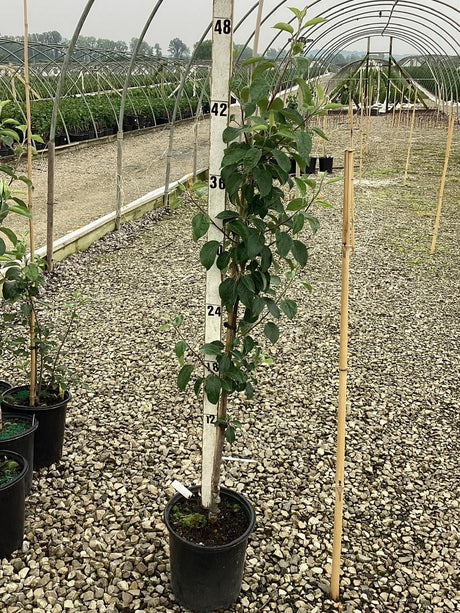
Gala Apple Tree
Gala Apple Tree

Where to Plant

Apples and crabapples grow best in full sun and well-drained soil. Apples need at least 8 hours of sun for the most fruit; morning sun dries dew from the leaves, which helps cut down on disease. Crabapples need full sun for the best flowers and fruit.

Soil. Apples grow in a wide range of soils but will not thrive where drainage is poor, and they also do poorly on droughty soils. Avoid spots where water stands for hours after a rain. Aim for a pH of about 5.8 to 7, and test the soil before planting. Crabapples prefer moist, well-drained, slightly acidic soil, about pH 5.5 to 6.5, and adapt to many soil types.

Size and spacing. An apple tree's rootstock largely decides how tall it grows and how soon it bears, so check the mature size of the tree you buy. Give each apple tree at least as much open space as its expected height. Dwarfing apple trees bear sooner and fit smaller yards. Crabapple crowns run about 10 to 25 feet high and wide; some kinds are mounded and shrubby, and some dwarf kinds stay 4 to 5 feet.

Cedar-apple rust needs eastern red cedar or other junipers nearby; remove the brown galls from nearby cedars where you can. Sargent crabapple is often damaged by deer.

Watering Requirements

Right after planting an apple tree, water deeply to settle the soil and remove air pockets around the roots.

Apples. Water deeply during dry spells from late spring through fall, aiming for about an inch a week from rain or watering. Apple trees do poorly on droughty soils, where shoot growth is stunted and fruit is smaller.

Crabapples. Crabapples like medium moisture. Established trees have some drought tolerance.

Around apple trees, mulch a few inches deep to hold moisture and keep weeds down, keeping it 3 to 12 inches back from the trunk. Keep grass and weeds away from the base of young apple trees, since they compete for water and nutrients.

Pruning Tips

Apples. Training starts at planting. Shape the tree to one central leader with wide-angled limbs spaced around it. Spend the first three years mostly on training. Do the major pruning while the tree is dormant, after the coldest weather has passed and before growth begins in spring.

On bearing trees, remove weak shaded wood, dead or diseased wood, water sprouts and root suckers, and open the center so light reaches the inside. Apples usually bloom on short spurs on wood 2 years old or older, and spurs need light to stay fruitful, so make thinning cuts that let light into the tree. In early summer you can also cut out water sprouts and root suckers. Bring a neglected tree back over two to three seasons.

Crabapples. Prune lightly in late winter, before the buds break. Avoid spring pruning, which leaves fresh cuts where fire blight can enter. Thin the crown for light, remove dead, diseased or crossing branches at any time, and cut suckers at the base as close to the ground as possible. Avoid heavy cuts of an inch or more, which set off a flush of water sprouts.

For fire blight, cut 12 to 18 inches below the damage, and disinfect pruners between cuts in 1 part bleach to 9 parts water.

Fertilizer Needs

For apples, start with a soil test and add only what it calls for, and never put fertilizer in the planting hole; it can burn the roots.

Apples. Let shoot growth guide you. Bearing trees growing about 8 to 15 inches a year are getting enough. If last year's growth was much shorter, feed a little more next spring, for example with compost spread around the base; if growth is excessive, cut back or skip a year. Spread fertilizer evenly over the root area and keep it at least 6 inches from the trunk. After a severe winter pruning, skip fertilizer that spring.

Crabapples. Crabapples need only medium fertility. Too much fertilizer can make them more open to fire blight.

For both, avoid heavy nitrogen feeding: the soft new growth it pushes is easily infected by fire blight.

Through the year

Spring Care

Finish dormant pruning before buds break. Plant bare-root apple trees as soon as the soil can be worked, and potted apple trees after the threat of spring frost has passed. On apples, set the graft union, the swollen joint near the base, 2 to 4 inches above the soil.

As apple flower buds turn pink, watch for insects and disease. Fire blight strikes in rainy weather above 60°F while trees are in bloom; blossoms and young shoots wilt and turn brown to black. Scab shows up in cool, wet springs as olive-green leaf spots and black spots on fruit.

Thin apples. Trees often set more fruit than they can carry. Within about 4 to 6 weeks after full bloom, when the fruit is about marble size, hand-thin to one apple per cluster, 4 to 6 inches apart. This gives larger fruit and a crop every year instead of every other year.

Skip spring pruning on crabapples and enjoy the bloom. Some crabapples bloom heavily only every other year.

Summer Care

Water apples during dry spells, aiming for about an inch a week. Finish thinning apples early in the season if you have not.

Early summer is a good time to cut water sprouts and root suckers off apples and to remove shoots killed by fire blight, cutting well below the damage. Keep removing suckers from the base of crabapples.

Watch for powdery mildew in hot, dry spells and for aphids, mites and Japanese beetles. Good airflow from pruning and fruit thinning helps limit summer fruit spots on apples. Apples need a regular spray program to keep diseases and insects in check; ask your county agent about one for your area.

Fall Care

Harvest apples when they look fully colored and the background color of the skin turns from green to yellow. Taste a few; if they are starchy, wait a few days. Lift and twist the fruit so the spur, which holds next year's flower buds, stays on the tree.

Rake up fallen leaves and fruit, and remove shriveled fruit left on the tree; disease can overwinter in them. Crabapple fruit colors up in fall, and some kinds hold it into winter as food for birds.

Skip routine pruning on apples in fall and early winter, while hard freezes are still ahead. In cold areas, put a white tree guard around young apple trunks in late fall.

Winter Care

Late winter is the main pruning season for both. Once the coldest weather has passed and before growth begins, prune apples to train and thin the tree, and prune crabapples lightly. Remove blighted twigs and cankers before growth starts.

In cold areas, a white tree guard that lets air move around the trunk protects young apple trees from sunscald and from bark chewing by voles and rabbits. Remove it once the bark is rough and mature. Where wildlife pressure is high, put fencing or cages around trees.

Some crabapples hold their fruit through winter, where it feeds birds.

Apple and Crabapple varieties

Shop all Apple Trees
  • Gala Apple Tree

    Malus 'Gala'

    (18)
    Sale price From $9847 Regular price $11585 15% off
  • Yellow Delicious Apple Tree

    Malus domestica 'Yellow Delicious'

    (1)
    Sale price From $7159 Regular price $8422 15% off
  • Cortland Apple Tree

    Malus 'Cortland'

    Sale price $5902 Regular price $6943 15% off
  • Honeycrisp Apple Tree

    Malus 'Honeycrisp'

    (48)
    Sale price From $7649 Regular price $8999 15% off
  • Fuji Apple Tree

    Malus 'Fuji'

    (17)
    Sale price From $8924 Regular price $10499 15% off
  • Braeburn Apple Tree

    Malus 'Braeburn'

    (8)
    Sale price $5902 Regular price $6943 15% off
  • McIntosh Apple Tree

    Malus 'McIntosh'

    (12)
    Sale price $5902 Regular price $6943 15% off
  • Fruit Snacks® Blushing Delight™ Columnar Apple Tree

    Malus 'Blushing Delight'

    (1)
    Sale price $11356 Regular price $13360 15% off
  • Fruit Snacks® Tasty Red™ Columnar Apple Tree

    Malus 'Tasty Red'

    (1)
    Sale price $11356 Regular price $13360 15% off
  • Urban Apple® Tangy Green™ Columnar Apple Tree

    Malus domestica 'Tangy Green'

    Sale price $9313 Regular price $12417 25% off
  • Red Delicious Apple Tree

    Malus 'Red Delicious'

    (1)
    Sale price $5669 Regular price $6669 15% off
  • Royal Red Honeycrisp Apple Tree

    Malus domestica 'Royal Red Honeycrisp'

    (1)
    Sale price $13229 Regular price $15563 15% off