Shop With Confidence: FREE Growing & Glowing Guarantee

Free Shipping on Orders $199+

Care guide

Hornbeam Care

Here is how to site American hornbeam, a native understory tree, and European hornbeam, including its upright and hedge forms, and how to water, feed and prune both.

Zones 3 to 9

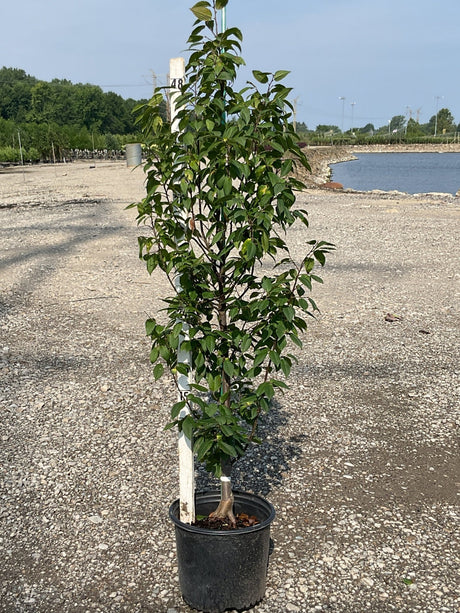
Lucas European Hornbeam

Where to Plant

American hornbeam is a native understory tree. It grows well in part shade to full shade, and with steady soil moisture it also thrives in full sun, where it grows denser and more even than in shade. In warmer climates, give it less sun. Plant it in moist soil rich in organic matter, ideally slightly acidic, though it adapts to a range of pH.

American hornbeam is sensitive to drought, heat and soil compaction, so keep it away from the heat of paving and building walls. It has low salt tolerance, which makes it a poor street tree in the north. It is hard to transplant: plant it in spring, since it establishes poorly when planted in summer or fall.

European hornbeam takes full sun to part shade and moist, well-drained loam or sandy soil. It also tolerates heavy soil and slightly alkaline soil, and it suits urban sites as a lawn tree, street tree or hedge. The species grows 40 to 60 feet tall. The species has many cultivars that vary in habit and form.

Watering Requirements

Proper watering is the most important care for a newly planted tree. For American hornbeam, give the root zone about 1 inch of water per week through the growing season while it establishes, which takes about one year for each inch of trunk diameter at planting. After that, water it during summer droughts. Mulch helps hold the soil moisture it needs.

European hornbeam tolerates dry conditions somewhat better than American hornbeam, but it still does best in moist, well-drained soil.

Pruning Tips

European hornbeam needs little pruning when grown as a tree, though its branches may droop with age and need some pruning. On American hornbeam, you can remove the lowest branches gradually to show off the trunk. Make these cuts in early to midwinter to limit sap bleeding, and avoid pruning in spring.

European hornbeam responds well to hard pruning, so it makes a good hedge or, with severe annual pruning, a tall screen. Shear hedges in its pruning window, from late summer to midwinter. American hornbeam also tolerates trimming fairly well.

Fertilizer Needs

Most healthy landscape trees need no fertilizer. Do not feed at planting or in the first growing season, since nitrogen then can suppress root growth. Fertilizer will not fix a stressed tree, so test the soil first if you suspect a problem, and feed only if the test shows a need.

If you do feed, use a slow release fertilizer in late winter or early spring, or in late fall. Never feed in late summer or early fall, when new growth would come just as the tree prepares for dormancy, and never feed a drought-stressed tree.

Through the year

Spring Care

Spring is the time to plant American hornbeam. Mulch American hornbeam to help hold soil moisture. Feed only if a soil test calls for it. Do not prune hornbeams in spring, when cuts bleed sap.

Summer Care

Water during summer dry spells, above all newly planted trees and American hornbeam, which is sensitive to drought. Do not plant American hornbeam now, and do not feed in late summer. From late summer on, you can shear European hornbeam hedges.

Fall Care

Do not plant American hornbeam in fall, when it establishes poorly. Skip feeding in early fall. If a soil test calls for feeding, late fall is a good time for it. European hornbeam hedges can still be sheared.

Winter Care

Early to midwinter is the time for any needed cuts on hornbeams, since winter cuts bleed less sap. Do not fertilize while the ground is frozen.

Hornbeam varieties

Shop all Columnar Trees
  • Lucas European Hornbeam

    Carpinus betulus 'Lucas'

    (3)
    Sale price $6764 Regular price $10406 35% off