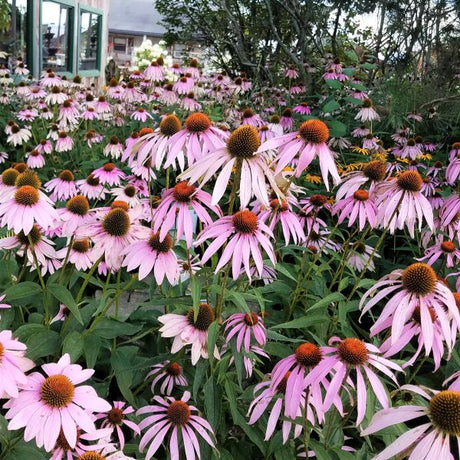
Bold, long-blooming, and beloved by pollinators, Coneflowers (Echinacea) are hardy herbaceous perennials with strong upright stems, coarse hairy leaves, and vibrant daisy-like flowers that light up the garden from mid-summer through frost! With large, domed, seed-filled centers and a rainbow of flower colors, these native stunners are magnets for butterflies, bees, and birds!
Their deep taproots and sturdy constitution make them drought-tolerant, cold-hardy, and perfect for sunny landscapes across USDA Zones 3 through 10. From fresh lemon yellows to rich berry tones, here are the Top 10 best-selling Coneflowers to add instant wow to your borders, beds, and bouquets!
- The Top 10 Coneflowers at Nature Hills!
- How To Use Coneflowers In Your Landscape
- Something Few Gardeners Know…
- Quick Care Tips For Coneflowers
A Colorful Countdown: The Top 10 Coneflowers at Nature Hills!
1. Purple Coneflower

The straight native species Echinacea purpurea, pollinator-friendly and wonderfully rugged. Its coarse, lance-shaped leaves and large orange cones offer a buffet for bees, butterflies, and birds while adding timeless charm to prairie-style landscapes.
- Height: 2 - 5 feet
- USDA Zone: 3-8
- Use: Prairie plantings, native plantings, and eco-gardens
2. Cheyenne Spirit Coneflower

A fiery mix of sunset tones from red and orange to creamy white, all on one plant! These blooms change color as they open, mature, and age.
- Height: 24 - 30 inches
- USDA Zone: 4-10
- Use: Mass plantings, mixed perennial beds, and sun perennial gardens
3. PRAIRIE STARS™ Tomato Soup Coneflower

With rich tomato-red petals and a large cone, this selection brings hot color to summer gardens.
- Height: 30 - 32 inches
- USDA Zone: 4-9
- Use: Garden focal points, cut flower beds, and mass plantings
4. Magnus Purple Coneflower

An heirloom favorite with bold, upward-facing lavender-pink petals and massive orange cones. These long-blooming flowers hold their color beautifully and are known to attract Monarchs and Painted Ladies in droves, standing tall on sturdy stems that rarely flop in summer storms.
- Height: 2 - 4 feet
- Zone: 3-8
- Best use: Cottage gardens, naturalized beds, and tall-grass prairie restorations
5. Green Twister Coneflower

Unique lime green and raspberry petals curl outward in a twisting display of color. This striking bi-color variety looks like a botanical watercolor painting come to life and adds artistic flair to modern or whimsical garden beds!
- Height: 2 - 3 feet
- Zone: 3-8
- Best use: Designer borders, garden focal points, and cutting gardens
6. PowWow® Wild Berry Coneflower

Bright rose-magenta blooms appear early and keep going for months. With its compact form and heavy bloom load, it's perfect for pots or front-of-border spots where color and pollinator action are needed without taking up much room.
- Height: 16 - 20 inches
- Zone: 3-9
- Best use: Perennial container gardens, small space & modern lots, front border accents
7. Pale Purple Coneflower

Narrow, drooping lavender petals and tall cones give this native species massive prairie charm. It brings a soft, graceful look to open landscapes and blends effortlessly with native grasses, waving in the wind like it belongs on the frontier.
- Height: 2 - 4 feet
- Zone: 3-10
- Best use: Wildflower gardens, restoration projects, and back-of-the-border specimens
8. Gray-Headed Coneflower

Sunny yellow petals arch downward from a tall gray cone that sways in the breeze. This tall prairie species has aromatic foliage and a naturalized feel, attracting native bees and beneficial insects with its golden, breezy blooms!
- Height: 3 - 5 feet
- Zone: 3-8
- Best use: Tall meadows, back of the perennial border accent, and wildlife gardens
9. Yellow Coneflower

Golden blooms, rugged form, and heat tolerance make this native variety a standout. It shines during the hottest months of the year, offering weeks of nectar-rich flowers that rise above coarse green leaves in sunny drifts.
- Height: 3 - 5 feet
- Zone: 3-8
- Best use: Butterfly gardens, dry slopes, tall accent in pollinator beds
10. PowWow® White Coneflower

Crisp white petals surround a golden-orange cone on compact, floriferous plants. This variety glows in moonlight gardens and makes a striking contrast among darker blooms, adding fresh elegance and strong pollinator appeal.
- Height: 16 - 20 inches
- Zone: 3-9
- Best use: Space-saving gardens and containers, moon gardens, and front bed edging
How To Use Coneflowers In Your Landscape
Coneflowers are landscape multitaskers. Mix and match these bold blooms with other sun perennials like Russian Sage, Salvia, or Catmint for a sun-loving pollinator buffet. Use shorter varieties like PowWow® and Sombrero® in front borders, along pathways, or in patio pots. Taller selections like Magnus or Yellow Coneflowers work beautifully in layered borders or mixed wildflower meadows.
They pair perfectly with Ornamental Grasses for movement and texture, or with full sun annuals like Zinnias and Lantana for nonstop summer dazzle. Try boosting pollination in your orchard or edible landscape by adding pollinator magnets like Coneflowers! Perfect around Blueberry bushes or near a Peach tree to attract pollinators and beneficial insects to your garden crops.
Something Few Gardeners Know…

Coneflowers don't just look great, they're rooted in centuries of herbal use. Native American tribes and early settlers used Purple Coneflower to treat everything from infections and coughs to snake bites. What many gardeners don't realize is that the entire plant is considered medicinal: roots, leaves, flowers, and seeds alike!
Feel a cold coming on? You can even make a soothing tea using the dried petals, leaves, or roots of the native Purple Coneflower variety. Steep a teaspoon or two of dried material in hot water for about 10-15 minutes. The flavor is earthy and slightly floral, often mixed with mint or lemon balm to round it out. It's commonly used to support immune health!
Tinctures, salves, and infusions can also be made from the plant, especially the roots, but it's important to harvest only from clean, pesticide-free sources. Avoid gathering from roadsides or commercial landscapes that may use chemicals. If in doubt, grow your own organically for the freshest and safest herbal uses right in your backyard.
And as a bonus? When left standing through fall and winter, dried Coneflower seed heads become a favorite natural snack for Goldfinches and other birds. So consider skipping the deadheading on a few! Your birds will thank you!
Quick Care Tips For Coneflowers
Coneflowers are famously low-maintenance once established. Plant them in full sun with well-drained soil. They tolerate drought like champs and rarely suffer from pests or disease. Just give them space, avoid soggy soil, and water using the Finger Test in their first year. Leave fall stems standing for wildlife interest, then tidy up in spring.
For full planting and growing guidance, check out this helpful blog: Coneflowers: Easy Care and Beautiful Diversity
Petal To The Metal: A Coneflower For Every Garden
With their dazzling color, rugged charm, and strong wildlife value, Coneflowers deserve center stage in every sunny landscape. Whether you're after native plant benefits, bold perennial borders, or blooms to brighten pollinator patches, there's a Coneflower variety ready to dazzle. These top 10 picks from Nature Hills bring lasting color, sturdy stems, and reliable blooms, all while supporting mother nature's pollinators and birds.
So mix a few, match a lot, or plant them en masse; your garden will burst with texture, movement, and seasonal joy from mid-summer into fall. Just give them sun, space, and a little care, and they'll reward you for years.
Happy Planting!