Shop With Confidence: FREE Growing & Glowing Promise

Free Shipping on Orders $199+

Springs Earliest Risers: Crocus, Squills, Snowdrops & More!

Springs Earliest Risers: Crocus, Squills, Snowdrops & More! - Nature Hills Nursery

Charlotte Weidner |

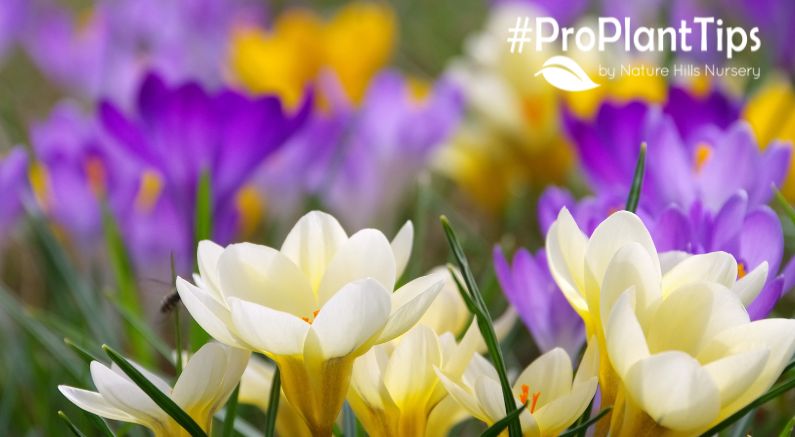
With a welcome, cheerful burst of much-needed spring color and fragrance after a long winter, the Crocus, Siberian Squill, and Snowdrops are a joy to see in any landscape! The first spring bulbs to pop up - sometimes before the snow has completely retreated - these small yet wonderfully impactful spring ephemerals are a sure sign that spring is here!

These are space-saving spring flowers and a must-have in all USDA planting zones! Check out some of Nature Hill's newest bulbs and some old-fashioned garden standards you need to include in your container gardens, forced winter pots indoors, and outdoor landscaping beds this coming year!

All About Crocus

Members of the Iris family (Iridaceae), these plants consist of about 100 species that grow from bulb-like structures underground called corms.

The spiky green foliage shoots up around the single flower each corm produces, which is relatively large in comparison to its corm! Freely spreading and multiplying, Crocus can colonize an area and naturalize politely in the areas they are planted.

Not just a sight for our sore eyes, but early-emerging pollinators rely on these spring blooms for food! Plus there are several varieties of autumn-flowering Crocus available to bring double the joy!

Native to Southern Europe to the Middle East, Crocus have been cherished by gardeners since the 1500s. In fact, the most expensive and sought-after spice - Saffron - is derived from the pollen anthers of Crocus sativus!

Whether you want an heirloom favorite Crocus speciosus (Snow Crocus) or a fancy new variety of Crocus, Nature Hills has you covered!

Heirloom Favorites

  • Yellow Mammoth Crocus - large yellow blooms
  • Blue Pearl Crocus - lavender blue pastel
  • Jeanne d’Arc Crocus - snow white blossoms
  • Vanguard Crocus - pretty purples
crocus

    New Varieties At Nature Hills

    • Orange Monarch Crocus - bright orange with burgundy streaked petals
    • Spring Beauty Crocus - showy lavender, light purple, and dark purple petals
    • Tricolor Crocus - pretty white, yellow, and lavender blooms
    • Advance Crocus - buttery yellow and purple
    • Saffron Crocus - cheerful lavender hue
    crocus

      Pretty Blue Stars - Siberian Squills

      siberian

      Siberian Squills (Scilla) are darling little blue starry flowers with one or more blue blooms per stem and naturalize freely in lawns and throughout gardens in the early spring. Not as early as Crocus and Snowdrops, Squill can flower as early as March, making it another great little bulb plant for pollinators and early color.

      Also known as Wood Squill, these Asparagus family flowers are native to Russia, Caucasus, and Turkey, and despite their name, they are not from Siberia.

      Find Portuguese Squill and Siberian Squill for your garden at Nature Hills!

      Early Bells - All About Snowdrops

      Darling white drop-like bells, the nodding white blossoms of the Snowdrop (Galanthus) can be seen emerging through a layer of snow in the very early spring and sometimes late winter! Members of the Amaryllis family, there are about 2,500 varieties of these bulbs that are native to the alpine mountains of Southern Europe and Asia Minor.

      Appearing singly on their stem, unlike Leucojum which have multiple flowers per stem, Snowdrops are tiny blossoms with just two slender leaves.

      The reason they can come up in the winter despite the snow? Snowdrops can actually produce enough heat to melt little circles in the snow in a process called thermogenesis!

      White Carpets - Glory of the Snow

      white

      Glory of the Snow (Chionodoxa bulbs) shoots up glistening white blossoms as if made from the snow itself, appearing to be growing through the snow and frost! Featuring star-shaped clusters of mildly fragrant blooms with tiny yellow centers. Appearing above clumps of Crocus-like spiky green foliage. Great for Rock Gardens and naturalizing under trees and shrubs, these small bulbs are native to Turkey and are closely related to Siberian Squills.

      Spring Flurries - Summer Snowflake

      Summer Snowflake (Leucojum) are actually late winter to early spring flowering bulbs despite their name and resemble Lily of the Valley and Snowdrops with their dainty white fairy bells with green-tipped petals. Native to a wide swath of Europe, these little beauties have naturalized throughout the US and beyond!

      Sunny Yellow - Winter Aconite

      winter

      Winter Aconite (Eranthis) are vibrant Buttercup-like or Anemone-like blooms that can flower before Crocus in the spring! Featuring buttery-yellow blooms with a fringe of green sepals, you’ll love the cuppy flowers and their tuberous bulbs in your garden! These heavy bulbs are native to Europe France to Bulgaria.

      Beautiful Dutch Iris

      Also known as Netted Iris and Species Iris, Dutch Iris (Iris reticulata) are tiny versions of their larger cousins and are very colorful little forms with the classic Iris shape but upright spiky little groupings of greenery that flower in the spring. Not quite as early as Crocus, these are very easy to force indoors and bridge the gap between the earliest flowering bulbs and the next round of Tulips, Hyacinths, and Daffodils!

      Get Ready For Spring - Now!

      planting

      While we’re still gearing up for the holidays, now is actually the time to prepare for spring with fall-planted bulbs from NatureHills.com! Fall-planted bulbs must be planted a few weeks before the ground freezes in your growing zone and Nature Hills does all the planning for you by shipping to your hardiness zone at the proper planting time!

      Indoors, you can start any bulb to grow by forcing in the winter! Fill your home with Paperwhites, Daffodils, Tulips, Muscari, Hyacinths, and more by reading our Blog Here!

      Mix these spring ephemerals with other early spring plants like Hellebores, Creeping Phlox, Forsythia, and Bleeding Hearts for an early display of unexpected flowers as early as March this year!

      Make your landscape a place where pollinators and neighbors who are also hungry for a break from the winter doldrums are sure to gravitate towards!

      Happy Planting!

      banner
      Previous Next

      Frequently Asked Questions

      How can you tell the difference between snowdrops, crocuses, and squills when they first emerge in spring?

      When crocuses first emerge, you'll see spiky green foliage shooting up tightly around a single relatively large flower growing from a corm, and they are typically the first to appear, sometimes even before snow fully melts. Snowdrops are recognizable by their delicate, nodding white bell-shaped flowers that hang downward on slender stems, while Siberian Squills emerge a bit later, often in March, displaying small starry blue blooms on short stems with one or more flowers per stem. Plant all three together in your landscape so you can observe their distinct emergence times and growth habits side by side, which is the fastest way to train your eye for identifying each one.

      Which spring bulbs bloom the earliest, and in what order do they typically appear?

      Snowdrops and Crocus are typically the first spring bulbs to emerge, often pushing through the soil before the last snow has fully melted. Siberian Squill follows shortly after, with blooms appearing as early as March. To enjoy the longest possible sequence of early spring color, plant all three together in groupings throughout your landscape or containers, as their staggered bloom times create a continuous display from late winter through mid-spring.

      How do you tell snowdrops and lily of the valley apart?

      Snowdrops (Galanthus) bloom very early in spring, often while snow is still on the ground, and feature small white drooping bell-shaped flowers with distinctive green markings on inner petals. Lily of the valley (Convallaria majalis) blooms later in spring, typically in May, and produces larger, broader leaves along with fragrant white bell-shaped flowers arranged along a single arching stem. The easiest distinction is timing and foliage: snowdrops have narrow, strap-like bluish-green leaves that emerge with the flower, while lily of the valley has wide, oval, deep green leaves. If you want the earliest possible spring blooms, plant snowdrops; if you prefer fragrant late-spring ground cover, choose lily of the valley.

      What are the best early spring bulbs that produce blue flowers?

      For stunning early spring blue flowers, Siberian Squill (Scilla) is one of the top choices, producing charming starry blue blooms as early as March and naturalizing freely in lawns and garden beds. The Blue Pearl Crocus is another excellent option, offering soft lavender-blue pastel flowers that emerge even earlier, sometimes before the snow fully retreats. Both bulbs work well across all USDA planting zones and multiply reliably over time. Plant a combination of these two bulbs in fall for a sequence of blue blooms that carries you from the earliest days of spring onward.

      How deep should you plant crocus, squill, and snowdrop bulbs for the best results?

      For best results, plant crocus corms about 3 to 4 inches deep, Siberian squill bulbs 3 inches deep, and snowdrop bulbs 3 to 4 inches deep, spacing them 3 inches apart. All three should be planted in fall, typically between September and November, before the ground freezes, in well-drained soil with full to partial sun. These small bulbs perform well across a wide range of USDA zones and naturalize beautifully when planted in clusters or drifts for maximum visual impact.

      How far apart should crocus, squills, and snowdrops be spaced to create a natural-looking display?

      For a natural, meadow-like look, plant crocus corms about 3 inches apart, snowdrops 3 inches apart, and Siberian squills roughly 4 inches apart. These small spring bulbs multiply and spread readily on their own, so even a modest planting will fill in beautifully over time. For the most organic appearance, try the "toss and plant" method, simply scattering a handful of bulbs across the planting area and setting them where they land. Plant in groups of 10 or more per variety in fall to ensure a bold, impactful display when spring arrives.

      What type of soil do crocus, squills, and snowdrops grow best in?

      Crocus, squills, and snowdrops thrive in well-drained soil with average to moderate fertility, as consistently wet or waterlogged conditions can cause their bulbs and corms to rot. A slightly sandy or loamy soil with a neutral to slightly alkaline pH is ideal for these early spring ephemerals. Plant bulbs in fall at a depth of about 3 to 4 inches in a location that receives full sun to partial shade. Amending heavy clay soils with grit or coarse sand before planting will significantly improve drainage and give these small bulbs the best chance to naturalize and multiply over time.

      How much sun or shade do crocus, squills, and snowdrops need to thrive?

      These early spring ephemerals are wonderfully adaptable and thrive in full sun to partial shade, making them easy to tuck into nearly any spot in your landscape. Because they complete most of their growth cycle before deciduous trees leaf out, planting them beneath trees or shrubs is a smart strategy since they will receive ample sunlight during their active spring growing period. Aim for a location with at least 4 to 6 hours of sunlight and well-drained soil to encourage healthy corm development and reliable bloom. Plant in drifts along woodland edges, under shade trees, or in open garden beds to maximize their naturalizing potential across USDA zones 3 through 8.

      How much water do crocus, squills, and snowdrops need after planting and once they finish blooming?

      Crocus, squills, and snowdrops need consistent moisture after planting in fall to help roots establish before the ground freezes, so water thoroughly at planting and supplement if autumn rainfall is less than about one inch per week. During their brief spring bloom period, normal rainfall is usually sufficient in most zones, but water lightly if conditions are dry to extend the display. Once foliage dies back naturally, these spring ephemerals enter dormancy and actually prefer drier soil, so reduce or eliminate supplemental watering entirely. Let the foliage yellow and fade on its own schedule, then simply leave the bulbs alone until the next growing season.

      Can you plant crocus, squills, and snowdrops together in the same bed or container?

      Yes, crocus, squills, and snowdrops make excellent companions and are commonly planted together in beds and containers for a long, staggered show of early spring color. Snowdrops and crocus typically bloom first, sometimes while snow is still on the ground, followed by Siberian Squill in March, extending your display by several weeks. All three naturalize readily and work well across most USDA planting zones, and they are compact enough to layer in a single container or tuck into small garden beds. Plant them in fall at the appropriate depth for each bulb type, grouping them in clusters of 10 or more for the most impactful visual effect.