Free Shipping on Orders $199+

Growing Zone: | Garden in
Find your Growing Zone!

The Complete Guide To Creating Boxwood Hedges

#ProPlantTips - Creating A Formal Boxwood Hedge! - Nature Hills Nursery

Charlotte Weidner |

The Complete Guide To Creating Boxwood Hedges

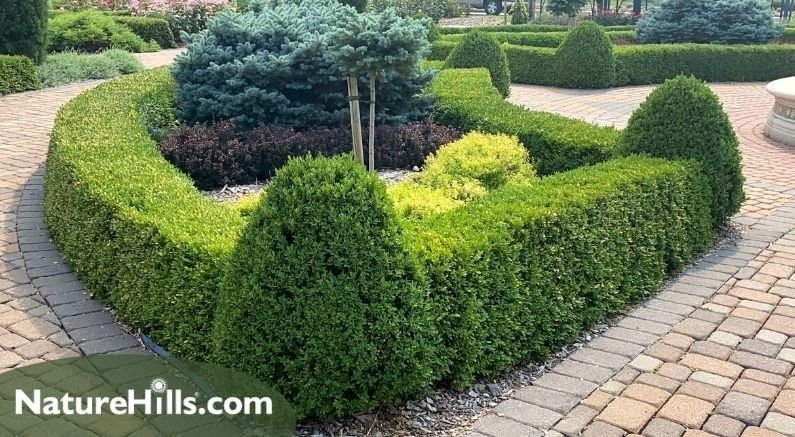
Good fences make good neighbors, and Boxwood hedges create the perfect natural fence! These versatile evergreen shrubs offer lush green foliage, consistent growth, and compact form, making them ideal for both formal and informal landscaping.

While there are many types of shrubs for hedges available, the iconic Boxwood stands out with consistent growth, lush green foliage, plus compact growth!

Why Choose Boxwood For Hedging?

Boxwood varieties have been garden favorites since 4,000 BC in Roman villa gardens. Here's why they're perfect for modern landscapes:

  • Deer and rabbit resistant - plant without worry
  • Year-round green color - beautiful in all seasons
  • Low maintenance - easy to trim and maintain
  • Versatile styling - formal hedges, informal borders, or topiary shapes

Planning Your Boxwood Hedge

Site Preparation

  1. Mark your layout using a garden hose, stakes, and twine, or marking paint
  2. Test your soil - ensure proper pH and drainage for Boxwood (6.5 to 7.5)
  3. Dig proper holes - twice the root system size for good drainage
  4. Install drip irrigation - essential for first-year establishment
  5. Add arborist mulch - 3-4 inches for weed control and moisture retention

Pro Tip: Boxwood has shallow roots and dislikes wet soil. If drainage is poor, create a berm to elevate your hedge.

Boxwood Hedge Styles

Formal Hedges

Perfect for a refined, castle-like appearance. Plant uniformly in straight rows and trim regularly for a solid green wall.

Informal Hedges

Create a cottage garden feel with natural shapes. Space plants wider apart and enjoy early spring white flowers when left unpruned. Use curved or zigzag lines instead of straight rows.

Other Landscaping Uses For Boxwoods

Add visual interest by placing taller shrubs at key locations:

How to create Hedges with your boxwoods
  • Foundation plantings
  • Anchor corners or hedge ends
  • Flank driveways and walkways
  • Create focal points with groupings
  • Frame seating areas for privacy
  • Add definition to garden spaces
  • Garden backdrops and property division
  • Knot gardens and Formal hedges

Best Boxwood Varieties For Hedges

Small Hedges (Under 3 feet)

Medium Hedges (3-4 feet)

  • Green Velvet Boxwood: 3-4 feet (most popular variety)
    • Formal: 15-18" spacing | Natural: 3-4 feet spacing
  • Wintergreen Boxwood: 4-5 feet spread
    • Formal: 24" spacing | Informal: 3-4 feet spacing

Tall Hedges (4+ feet)

  • Green Mountain Boxwood: 5 feet tall, 3 feet wide (pyramidal shape)
    • Formal: 18" spacing | Informal: 30"+ spacing

Boxwood Spacing Guide

  • Closer spacing = faster results, but more plants are needed.
  • Wider spacing = fewer plants needed, but longer to fill in

Remember: mature spread determines plant quantity, while height is easily controlled through pruning.

Pruning Your Boxwood Hedge

  • Hand pruners: Create a soft, informal look
  • Electric/gas shears: Best for a formal, even appearance
  • Timing: Avoid late summer/fall pruning - allow new growth to harden before winter
  • Shape: Trim wider at the bottom, narrower at the top for full coverage and to allow light penetration into the lower branches and prevent them from being shaded out.

Preventing Boxwood Blight

Boxwood blight is a fungal disease (Calonectria pseudonaviculata) that can damage your hedge. Watch for these symptoms:

Early Signs:

  • Dark leaf spots that become brown blotches
  • White fungal spores under leaves (in humid conditions)
  • Rapid leaf loss from bottom to top

Advanced Symptoms:

  • Black streaks (cankers) on green stems
  • White fuzzy fungal masses during high humidity

Action Plan: Remove infected plants immediately and protect nearby plants from spread.

For detailed information, visit Purdue University's resources.

Benefits of Boxwood Hedges

  • Privacy screening - a natural barrier for seclusion
  • Sound dampening - reduces noise from busy roads
  • Wind protection - blocks harsh winds
  • Wildlife habitat - provides shelter for local birds
  • Year-round interest - green backdrop for seasonal plants

Bring on the Boxwoods!

Ready to plant your Boxwood hedge? Head over to our Garden Blog for caring tips, then browse our Boxwood selection at NatureHills.com to find the perfect variety for your landscape.

Transform your property with the timeless beauty of Boxwood hedges - your neighbors will be impressed with your natural "good fence"!

Happy Planting!

Shop Boxwoods
Previous Next

Compare Plants

Browse the features and specs side-by-side to find the best fit for your garden.

A table comparing the facets of 3 products
Facet
Green Gem Boxwood
Green Gem Boxwood
View details
Green Velvet Boxwood in a stone pot on a wooden deck with blurred greenery in the background
Green Velvet Boxwood
View details
Bring shape and structure to your Christmas garden with the Green Mountain Boxwood. Its natural pyramid form and deep green foliage make it perfect for winter containers and holiday landscapes.
Green Mountain Boxwood
View details
Rating
Rating
(1)
(12)
(25)
Type
TypeShrubShrubShrub
By
ByNature Hills NurseryNature Hills NurseryNature Hills Nursery
Flower Color
Flower Color
  • White
  • Green
  • White
  • Green
  • White
  • Green
Growing Zone Range
Growing Zone Range
4-9
5-9
5-8
Mature Height
Mature Height
3 ft
3-4 ft
3-5 ft
Width
Width
3 ft
3-4 ft
2-3 ft
Price
Price
Regular price From $2219
Regular price From $1882
Regular price From $1935

Frequently Asked Questions

How big do boxwoods get?

Boxwood size varies significantly by variety, with dwarf cultivars like 'Green Gem' staying under 2 feet tall while larger varieties like American Boxwood can reach 15-20 feet at maturity. Most popular hedging varieties grow 4-6 feet tall and wide, making them ideal for property borders and foundation plantings in zones 5-9. Growth rate is typically slow to moderate at 3-6 inches per year, allowing excellent control through pruning. Choose your variety based on your desired mature hedge height and available space.

How far apart to plant boxwoods?

The spacing for boxwood hedges depends on your desired style and the mature size of your chosen variety. For formal hedges, plant boxwoods 12-18 inches apart to create a solid green wall, while informal hedges can be spaced 2-3 feet apart for a more natural cottage garden look. Smaller varieties like 'Winter Gem' need closer spacing than larger types like 'Green Velvet.' Measure the mature width of your specific boxwood variety and plant at half that distance for formal hedges, or at full mature width for informal styles.

How to plant boxwoods?

To plant boxwoods, first test your soil to ensure a pH between 6.5-7.5 and good drainage, as boxwoods have shallow roots and cannot tolerate wet conditions. Dig holes twice the width of the root system and plant at the same depth as the container. Install drip irrigation for first-year establishment and apply 3-4 inches of arborist mulch around the base. If your soil has poor drainage, create a raised berm to prevent root rot.

How to grow a boxwood hedge?

To grow a boxwood hedge, start by testing your soil pH (ideal range 6.5-7.5) and ensuring proper drainage, as boxwoods have shallow roots and dislike wet conditions. Dig planting holes twice the size of the root system, install drip irrigation for first-year establishment, and apply 3-4 inches of arborist mulch around plants. Space plants according to your desired hedge style: closer together for formal hedges or wider apart for informal cottage garden looks. Mark your layout with a garden hose first, then plant in early spring or fall for best establishment.

When is the best time to prune boxwood hedges?

The best time to prune boxwood hedges is in late spring after new growth has hardened off, typically from late May through early July in most zones. Avoid pruning in late summer or fall, as this stimulates tender new growth that won't have time to harden before winter frost. Make your cuts just above a leaf node or junction, removing no more than one-third of the total growth in a single pruning session. For formal hedges, plan to prune 2-3 times during the growing season to maintain crisp lines and dense branching.

How big does boxwood get?

Boxwood size varies significantly by variety, with dwarf cultivars staying 1-3 feet tall and larger varieties reaching 6-15 feet at maturity. Most popular hedging varieties like Green Velvet and Winter Gem typically reach 3-4 feet tall and wide when mature, while English Boxwood can grow 6-8 feet tall. Growth rate is slow to moderate at 3-6 inches per year, making them excellent for controlled hedge heights. Choose dwarf varieties for low borders under 3 feet, or standard varieties for taller privacy hedges that can be maintained at your desired height through regular pruning.

How often should I water boxwood hedges?

Water newly planted boxwood hedges deeply 2-3 times per week for the first growing season, providing about 1 inch of water weekly. Established boxwoods (after year one) typically need watering only during dry spells when rainfall is less than 1 inch per week. In zones 6-9, reduce watering frequency in fall to help plants prepare for winter dormancy. Check soil moisture 2-3 inches deep with your finger and water when it feels dry rather than following a rigid schedule.

How close to plant boxwoods for a hedge?

For formal boxwood hedges, plant shrubs 2-3 feet apart for a dense, solid appearance that will fill in within 2-3 years. For informal hedges with a more natural look, space them 3-4 feet apart to allow individual plants to maintain their shape. Closer spacing creates faster coverage but requires more plants and increases competition for nutrients. Mark your planting line with stakes and twine before digging to ensure consistent spacing.

How to plant boxwoods for hedges?

Plant boxwoods in well-draining soil with a pH between 6.5-7.5, digging holes twice the size of the root system. Space plants according to your desired hedge style: closer together for formal hedges, wider apart for informal borders. Install drip irrigation during the first year and apply 3-4 inches of arborist mulch around plants. If your soil has poor drainage, create a raised berm since boxwoods have shallow roots and cannot tolerate wet conditions.

What USDA zones are best for growing boxwood hedges?

Boxwood hedges thrive in USDA zones 4-9, with most varieties performing best in zones 5-8 where they experience consistent growth and minimal winter damage. Cold-hardy varieties like Green Velvet and Green Gem can survive zone 4 winters, while English boxwood performs exceptionally well in zones 6-8. In zones 9-10, boxwood may struggle with excessive heat and humidity unless provided with afternoon shade and consistent moisture. Choose cold-hardy cultivars for northern zones and provide wind protection, or select heat-tolerant varieties like Japanese boxwood for warmer southern regions.

Find Your Garden's Growing Zone!

Your Current Growing Zone:

Zone

ZIP Code:

✓ Growing Zone Set Successfully!

Your zone has been saved and will be used throughout the site.

⚠ Unable to locate a growing zone for that ZIP code.

Please check your ZIP code and try again.

Looking up your growing zone...

When ordering a tree or plant, make sure to know your planting zone.

You can determine your garden's USDA hardiness zone by entering your Zip Code below.