Shop With Confidence: FREE Growing & Glowing Promise

Free Shipping on Orders $199+

Prevent Crabgrass From Sprouting

Prevent Crabgrass From Sprouting - Nature Hills Nursery

Nature Hills Nursery |

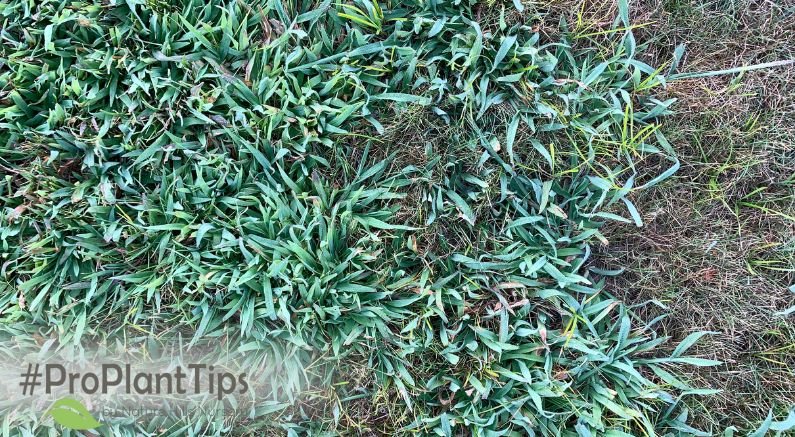
Crabgrass is an annual grass that produces a lot of seed. The seed sits in the soil waiting until the soil temperature warms up to make it sprout. Once it sprouts, it grows very rapidly in open sunny areas branching and making much more seed for the next year. You can stop this annual grass from sprouting by applying a pre-emergent crabgrass preventer before it sprouts.

crabgrass

Lawn care companies are out applying preventative before it sprouts (granular or liquid). How do you know if it is too late to apply?

The best rule of thumb is to see if the Lilacs have started to bloom yet. Crabgrass starts to grow around the time that Lilacs start to #flower. So if the Lilacs have not started to bloom in your area yet, there is still time to get your grass treated to prevent the weedgrass from growing this year.

If you did not have any crabgrass last year, you can probably skip the application this year.

Previous Next

Frequently Asked Questions

How do I identify crabgrass as it first sprouts in my lawn?

Crabgrass seedlings emerge in spring once soil temperatures consistently reach 55 to 60 degrees Fahrenheit, typically around the same time lilacs begin to bloom in your area. Young crabgrass sprouts appear as light green, coarse-textured blades that grow low and outward from a central point, spreading in a star or crab-like pattern along the ground. Because it spreads and sets seed so aggressively, your best strategy is to apply a pre-emergent crabgrass preventer before those lilacs flower rather than trying to manage it after it has already sprouted.

When should I apply a pre-emergent herbicide to keep crabgrass from sprouting?

Apply a pre-emergent crabgrass preventer before the soil warms up enough to trigger germination, which typically happens in spring. A reliable natural indicator is the blooming of Lilacs: if they have not yet flowered in your area, you still have time to treat your lawn. If you had no crabgrass last year, you can likely skip the treatment this season. Check your local Lilacs and act quickly once you see buds beginning to open.

Can I apply a crabgrass pre-emergent at the same time I am seeding a new lawn?

No, you should not apply a crabgrass pre-emergent at the same time as seeding a new lawn. Pre-emergent herbicides work by preventing seeds from germinating, and they cannot distinguish between crabgrass seed and desirable grass seed, meaning your new lawn seed will also be prevented from sprouting. Wait until your new lawn has been mowed at least two to three times before applying any pre-emergent product, or establish your lawn in the fall when crabgrass pressure is minimal and pre-emergent applications are unnecessary.

What soil temperature should I watch for before applying a crabgrass preventer?

Rather than monitoring soil temperature directly, a reliable rule of thumb is to watch for Lilac blooms in your area, since crabgrass begins to sprout around the same time Lilacs start to flower. Apply your pre-emergent crabgrass preventer, either granular or liquid, before you see those first Lilac blooms. If Lilacs in your area have not yet flowered, you still have time to treat your lawn. Skip the application entirely if you had no crabgrass problems the previous year.

How long does a crabgrass preventer stay effective and do I need a second application?

Most pre-emergent crabgrass preventers remain effective for 6 to 8 weeks after application, and a second application is often recommended in warmer climates or longer growing seasons where crabgrass pressure continues into midsummer. If you live in a southern region or notice crabgrass germinating later in the season, a follow-up treatment in early summer can help maintain protection. Check your product label for reapplication timing, and always water granular formulas into the soil within a day or two of spreading to activate the barrier.

Will mowing my lawn at a higher height actually help prevent crabgrass from sprouting?

Yes, mowing at a higher height of 3 to 4 inches helps shade the soil and crowd out crabgrass by blocking the sunlight it needs to germinate and establish. However, mowing height alone is not enough to fully prevent an infestation, especially in thin or bare areas of your lawn. For reliable control, pair proper mowing practices with a pre-emergent crabgrass preventer applied before soil temperatures warm and before local lilacs begin to bloom in your area.

How often and how deeply should I water my lawn to discourage crabgrass germination?

Watering deeply and infrequently is one of the best cultural practices to discourage crabgrass, as it favors the deep roots of established turf grasses over the shallow roots of crabgrass. Aim to water your lawn to a depth of 6 to 8 inches, roughly 1 to 1.5 inches of water per week, delivered in two sessions rather than daily light sprinklings. Shallow, frequent watering keeps the top layer of soil moist, which is exactly the environment crabgrass seeds need to germinate. Water in the early morning so grass blades dry quickly, and pair this practice with a pre-emergent application before your lilacs bloom for the strongest defense against crabgrass.

How effective is corn gluten meal at preventing crabgrass from sprouting?

Corn gluten meal is a natural, organic pre-emergent option that can reduce crabgrass germination by inhibiting root development in sprouting seeds, though it is generally less reliable than synthetic pre-emergent herbicides, with effectiveness ranging from 50 to 60 percent in the first year and improving with repeated annual applications. It works best when applied at a rate of about 20 pounds per 1,000 square feet before soil temperatures reach 55 degrees Fahrenheit, which aligns with the timing of lilac blooms in your area. For best results, apply it early in spring before crabgrass has a chance to sprout, and keep in mind that it also acts as a fertilizer, adding nitrogen to your lawn.

How does a pre-emergent differ from a post-emergent when it comes to controlling crabgrass?

A pre-emergent works by creating a chemical barrier in the soil that prevents crabgrass seeds from germinating, while a post-emergent targets crabgrass that has already sprouted and is actively growing. Pre-emergents are generally the more effective and preferred approach since crabgrass is much harder to eliminate once it has established. Apply your pre-emergent before soil temperatures warm enough to trigger germination, using the bloom time of Lilacs as your timing guide since crabgrass typically sprouts around the same time. If Lilacs in your area have not yet flowered, get your pre-emergent down now to stop crabgrass before it has a chance to take hold.

Should I overseed thin or bare lawn areas to help crowd out crabgrass before it can sprout?

Overseeding thin or bare areas is a smart long-term strategy since dense, healthy turf naturally crowds out crabgrass by limiting the sunlight and space it needs to establish. However, there is an important timing conflict to be aware of: pre-emergent crabgrass preventers work by inhibiting seed germination, which means they will also prevent your grass seed from sprouting if applied at the same time. If you plan to overseed, do so in early fall when soil temperatures drop to around 50-65°F, which is ideal for cool-season grass germination but well past the window when crabgrass is a threat. For spring bare spots, choose one approach or the other, and monitor your Lilacs as a natural cue that the crabgrass prevention window is closing.