Shop With Confidence: FREE Growing & Glowing Promise

Free Shipping on Orders $199+

Made In The Shade - Perennials For Full Shade!

Shade-loving Perennials at Nature Hills

Charlotte Weidner |

"There is something deeply satisfying about a garden that thrives in shade; it whispers where others shout." — Beverley Nichols

fantastic shade garden perennials at nature hills

There are many gorgeous shade-loving perennials available with vibrant colors and rich textures for gardeners working with limited sunlight. If you're blessed with a canopy of trees, a north-facing yard, or structures that block the sun, a full shade garden can still be a lush and beautiful oasis!

Whether you're looking to brighten up a deep corner of the yard, line a shaded walkway, or fill in the space beneath large trees or structures, shade perennials offer long-lasting color, texture, and seasonal interest. From dense shade to dappled light, you'll find options to transform even the gloomiest areas into a magical retreat!

What Makes A Perennial Good For Full Shade?

Full shade is defined as 4 hours or less of direct sun per day, often consisting of filtered or dappled light throughout the day. Shade garden plants that thrive in this environment are naturally adapted to woodland or forest-floor habitats and offer stunning foliage, intriguing flowers, and even fragrance.

Full shade perennials are the stars of the dark side of the garden:

  • Ideal perennials for under trees (both deciduous and evergreen trees)
  • Thrive beside fences, buildings, or large shrubs
  • Perfect for shaded patios, north-facing yards, or beneath decks
  • Can tolerate deep shadow, and some even prefer it!
  • Mix beautifully with full shade Shrubs

They create striking garden scenes along borders, winding shady paths, in containers, or nestled among water features and shade gardens. For those with dry shade, there are even drought-tolerant shade perennials that adapt once established.

Decorate the dappled shade beneath tree canopies, spruce up the shaded side of your home's foundation, or add greenery and flowers to shaded seating areas and patios!

Best Perennials For Shade (Full, Partial & Dense)

At Nature Hills Nursery, we carry a wide variety of shade-tolerant perennials suited to full shade, dense shade, and even partial shade conditions. Here are some top choices:

Astilbe (Astilbe chinensis)

  • Feathery plumes in shades of white, pink, red, and lavender
  • Lacy foliage adds softness to shaded beds
  • Attracts pollinators and is a great perennial for wet shade
  • Perfect for woodland gardens and pond edges

Ferns

  • Classic texture plant with arching fronds and lush green color
  • Great for mass plantings and woodland garden perennial landscapes
  • Deer-resistant and low-maintenance

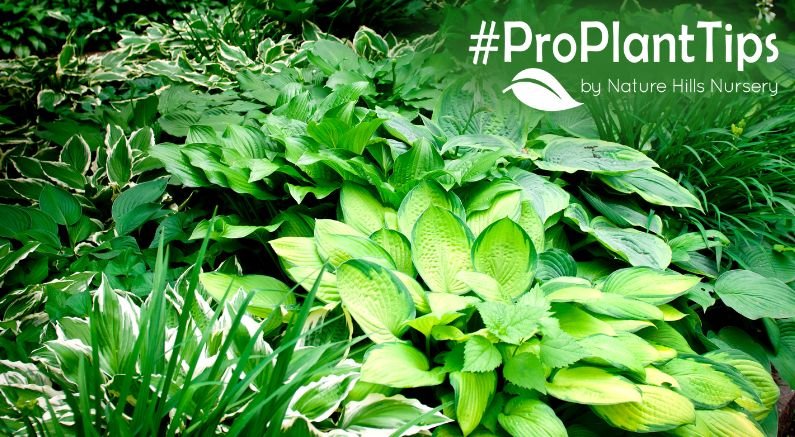
Hosta (Hosta spp.)

  • Broad, dramatic leaves in variegated and solid shades of green, blue, and gold
  • Excellent for groundcover and edging shaded paths
  • Loved for bold form and subtle, fragrant blooms
  • Handles a wide variety of shade/sun, but also a great shade perennial for clay soil

Coral Bells (Heuchera spp.)

  • Colorful ruffled foliage in burgundy, chartreuse, peach, and more
  • Tiny bell-shaped blooms attract hummingbirds
  • Evergreen in warmer zones and great for containers

Lungwort (Pulmonaria spp.)

  • Speckled foliage and delicate blue or pink flowers
  • One of the earliest bloomers in spring
  • Great for dense shade and moist woodland conditions

Bluebells (Mertensia virginica)

  • Native woodland beauty with bell-shaped sky-blue blooms
  • Spring ephemeral that dies back after blooming
  • Politely spreads throughout the understory
  • Pairs well with Ferns and Hostas

• Trillium

  • Native spring-blooming wildflower
  • Three-petaled flowers in white, pink, or red
  • A must for native shade gardens and woodland areas
  • Unique berry-like fruit in fall

Lamium (Lamium maculatum)

  • Fast-growing groundcover with silver-patterned leaves
  • Soft flowers in pink, white, or lavender
  • Excellent for partial shade and erosion control
  • Try the White Nancy, Purple Dragon, Orchid Frost, Pink Chablis, Purple Chablis, and Ghost Lamium varieties to try!

• Goatsbeard (Aruncus dioicus)

  • Tall, fluffy spires of white blooms
  • Great substitute for Astilbe in deep shade
  • Can reach 4 to 6 feet tall for background planting
  • Try Misty Lace Dwarf Goatsbeard, or the Proven Winners® Chantilly Lace.

Brunnera (Brunnera macrophylla)

  • Heart-shaped leaves, often variegated
  • Tiny blue flowers resemble Forget-Me-Nots
  • Thrives in moist, partial to full shade areas
  • Emerald Mist, Looking Glass, Variegata, Alexander's Great, and Jack Frost are popular varieties at Nature Hills

• Japanese Forest Grass (Hakonechloa macra)

  • Flowing tufts of bright green or golden arching blades
  • Adds motion and contrast in shady beds or containers
  • Slow-spreading and low-growing
  • The brilliant chartreuse Sunflare™, All Gold, and Variegated Forest Grasses are vibrant options available.

Variegated Solomon's Seal (Polygonatum odoratum 'Variegatum')

  • Arching stems with soft white bell-shaped flowers beneath variegated green-and-white foliage
  • Elegant, fragrant, and deer-resistant
  • Perfect for shady woodland borders and underplanting shrubs

Bleeding Heart (Dicentra spectabilis)

  • Iconic pink and white heart-shaped blooms dangle from arching stems in spring
  • Soft, fern-like foliage disappears by midsummer
  • Pairs beautifully with Ferns and Hostas in partial to full shade
  • Try Luxuriant, Burning Hearts, Goldheart, Valentine®, and the Old Fashioned Bleeding Hearts.

Samurai Toad Lily (Tricyrtis formosana 'Samurai')

  • Spotted, orchid-like blooms appear in late summer to fall, offering exotic flair
  • Prefers moist, well-drained soil and filtered light
  • Adds surprise color and intrigue to shaded garden corners

Chinese Wild Ginger (Asarum splendens)

  • Glossy, heart-shaped foliage hugs the ground and hides unusual maroon flowers beneath
  • Native groundcover that thrives in dense shade
  • Ideal for erosion control and naturalizing in woodland settings
  • Excellent for dense shade and erosion control.

Bugleweed (Ajuga reptans)

  • Spreads quickly with low rosettes of colorful foliage and short blue flower spikes in spring
  • Evergreen in mild climates and thrives in shady groundcover roles
  • Great for filling in gaps between stones or under trees

Must-Have Full Shade Vines and Groundcovers

Don't forget vertical interest! Try these twining climbers:

  • Climbing Hydrangea: Tolerates deep shade, clings to walls or fences, and bursts into frothy white blooms
  • English Ivy: Evergreen coverage and soil-stabilizing roots
  • Sweet Autumn Clematis: Fragrant white flowers in late summer, thrives in dappled light and understories.

How To Choose Full Shade Perennials For Your Landscape

To find the best perennials for shade, start by:

  • Observing the light throughout the day
  • Understanding your USDA Plant Hardiness Zone
  • Testing your soil drainage and quality
  • Knowing if you have dry shade, moist woodland soil, or clay-heavy soil

Use Nature Hills' filters to shop by zone, flower color, bloom time, mature size, and even wildlife benefit!

Caring For Full Shade Perennial Plants

Shade-loving perennials tend to be low-maintenance once established. Here's how to keep them thriving:

  • Water regularly using the Finger Test, especially during their first season
  • Amend the soil if needed, or plant in raised beds for drainage
  • Use arborist mulch to help retain moisture and regulate temperature
  • Fertilize lightly with a balanced, slow-release formula
  • Deadhead blooms when needed to encourage fresh flushes
  • Look for perennials that return year after year for lasting beauty

Low-Light Garden Perennials At Nature Hills Nursery!

gardening under the shade of tree canopies

Nature Hills Nursery is your one-stop source for shade-tolerant perennials and so much more. From colorful bloomers to structural foliage, our shade garden plants are shipped directly to your door with complete planting and care instructions. Explore our collection of perennials for dense shade, perennials for dry shade, and native perennials ideal for those darker corners.

Create a cool retreat, a woodland sanctuary, or a shade-drenched backyard haven that mother nature herself would applaud.

Happy Planting!

Previous Next

Compare Plants

Browse the features and specs side-by-side to find the best fit for your garden.

A table comparing the facets of 5 products
Facet
Virginia Bluebell (Mertensia virginiana), a perennial featuring blue, purple, pink flowers and perennial.
Virginia Bluebell
View details
All Gold Japanese Forest Grass (Hakonechloa macra 'All Gold'), a perennial featuring perennial and arching, cascading form.
All Gold Japanese Forest Grass
View details
Variegated Solomon's Seal (Polygonatum odoratum 'Variegatum'), a perennial featuring white flowers and perennial.
Variegated Solomon's Seal
View details
Luxuriant  Bleeding Heart
Luxuriant Bleeding Heart
View details
Old Fashioned Bleeding Heart (Dicentra spectabilis), a perennial featuring pink, white flowers and perennial.
Old Fashioned Bleeding Heart
View details
Rating
Rating-
(7)
(1)
(2)
(2)
Type
TypePerennialPerennialPerennialPerennialPerennial
By
ByAmerican BeautiesPlants That WorkNature Hills NurseryNature Hills NurseryNature Hills Nursery
Flower Color
Flower Color
  • Blue
  • Purple
  • Pink
  • Yellow
  • White
  • Red
  • Pink
  • White
Growing Zone Range
Growing Zone Range
4-9
5-9
3-9
3-9
3-9
Mature Height
Mature Height
1-2 ft
1-2 ft
1-2 ft
1-2 ft
1-2 ft
Width
Width
1 -2 ft
1-2 ft
1 ft
1 ft
1-2 ft
Price
Price
Regular price $4096
Regular price From $4430
Regular price $4093
Regular price $3651
Regular price From $2322

Frequently Asked Questions

Can daylilies actually thrive in full shade, or do they need at least some direct sun to bloom?

Daylilies are sun-loving plants that need a minimum of 6 hours of direct sunlight daily to produce their best blooms, making them a poor choice for true full shade conditions. In fewer than 4 hours of sun, daylilies will survive but produce sparse foliage and very few, if any, flowers. If your space receives at least partial shade with 4 to 6 hours of direct sun, some lighter-colored varieties can manage, but performance will still be reduced compared to a sunny site. For genuinely shaded areas, choose proven shade performers like Astilbe or Hostas instead, and save your daylilies for the sunnier spots in your landscape.

Which perennials perform best in spots that receive little to no direct sunlight throughout the day?

Perennials naturally adapted to woodland and forest-floor habitats perform best in full shade, defined as 4 hours or less of direct sun per day. Top performers include Astilbe, which produces feathery plumes in white, pink, red, and lavender while thriving in moist to wet shade, and ferns, which offer lush, arching fronds ideal for mass plantings and deer-resistant ground coverage. Both blend beautifully beneath deciduous or evergreen tree canopies, along north-facing foundations, and beside fences or structures. Browse the full shade perennial selection at Nature Hills Nursery to find the right plants for your specific light conditions and regional climate.

How many hours of sun separates full shade from part shade, and does it change which perennials you can grow?

Full shade means a spot receives 4 hours or less of direct sun per day, while part shade typically means 4 to 6 hours, and that distinction absolutely affects your plant selection. Plants adapted to full shade, like astilbe and ferns, are built for the low-light conditions of forest floors and can struggle or scorch if pushed into too much sun. Part shade perennials generally need that extra burst of morning or filtered light to flower well and maintain vigor. Take stock of how many hours of direct sun your beds actually receive before purchasing, and match your plants accordingly for the best long-term results.

Which full shade perennials will bloom season after season, and which ones are better relied on for foliage interest?

Full shade perennials that reliably rebloom season after season include Astilbe, which produces feathery plumes in white, pink, red, and lavender each summer, making it a standout flowering choice for moist, shaded beds. For foliage interest, ferns are the backbone of any shade garden, offering arching fronds and lush texture that persist throughout the growing season without relying on flowers to carry the display. A well-designed shade garden layers both types together, pairing bloomers like Astilbe with ferns or other foliage perennials to ensure the bed looks full and interesting even when nothing is in flower. Browse the full shade perennial selection at Nature Hills to find plants suited to your specific zone and light conditions, then plan for a mix of flowering and foliage varieties for season-long appeal.

How do you prepare and amend soil for shade perennials when competing tree roots are present?

When planting shade perennials beneath trees, work a 2 to 3 inch layer of compost or leaf mold into the top 8 to 10 inches of soil in any open pockets between roots, being careful not to sever major roots larger than 1 inch in diameter. Avoid tilling aggressively, as this damages feeder roots and stresses the tree. Instead, focus on building soil quality over time by top-dressing with compost each spring and using a 2 to 3 inch layer of shredded bark mulch to retain moisture and suppress weeds. Choose shade perennials like ferns or astilbe that tolerate dry, root-competitive conditions, and water deeply after planting to help new plants establish before competing roots draw moisture away.

Which shade perennials hold up best under dry shade conditions, and which ones need consistently moist soil to survive?

For dry shade conditions, look for tough performers like drought-tolerant ferns, epimedium, and liriope, which establish strong root systems that handle competition from tree roots and limited moisture once settled in after their first season. On the moisture-loving end of the spectrum, astilbe truly needs consistently moist to wet soil to thrive and will struggle or fail in dry conditions, making it ideal for pond edges, rain gardens, or low spots that stay reliably damp. Before planting, assess your shade garden's soil moisture by digging down 6 inches after a rain and checking how long it stays damp. Match your plant selection to those real conditions, and visit naturehills.com to browse our full shade perennial collection filtered by moisture needs.

How often should you water shade perennials during their first growing season, and how does that change once they are established?

During the first growing season, water shade perennials deeply two to three times per week, applying enough to moisten the soil to a depth of about 6 inches, which encourages deep root development. Once established, typically after one full growing season, most shade perennials need only about 1 inch of water per week from rainfall or supplemental irrigation, and some drought-tolerant varieties need even less. Check soil moisture by inserting your finger 2 inches into the soil; if it feels dry at that depth, it is time to water. Mulching with 2 to 3 inches of organic material around your plants will help retain moisture, reduce watering frequency, and keep roots cool throughout the growing season.

Which shade perennials are the most forgiving and lowest maintenance for gardeners just getting started with shady spots?

Ferns and astilbe are excellent starting points for beginner shade gardeners, as both are naturally adapted to woodland conditions and require minimal intervention once established. Ferns are particularly forgiving, thriving in dense shade and resisting deer browse, while astilbe rewards gardeners with showy plumes in white, pink, red, and lavender even in consistently moist or wet shade conditions. Start by assessing how many hours of direct sun your space receives, and if it is four hours or less, head to naturehills.com to browse our full selection of shade perennials matched to your specific conditions and hardiness zone.

How do you keep shade perennials from growing leggy, flopping over, or thinning out in low light conditions?

Shade perennials grow leggy or flop when they receive too little light or too much nitrogen fertilizer, so start by ensuring your plants are matched to the actual light conditions in your garden, whether that is dense shade, dappled light, or filtered sun. Divide clumping perennials like astilbe and hostas every 3 to 4 years in early spring before new growth emerges to prevent thinning at the center and encourage vigorous, upright growth. For naturally floppy plants, use grow-through ring supports installed early in the season when stems are just 4 to 6 inches tall. Choose species bred for shade rather than adapting sun-lovers, and feed sparingly with a balanced slow-release fertilizer in spring to avoid pushing weak, stretched growth.

Which shade perennials spread well enough to use as ground cover and fill in bare areas under trees?

Several shade perennials excel as ground covers under trees, including ferns, which spread reliably through rhizomes to form dense colonies in zones 3-9, and astilbe, which naturalizes beautifully in moist, shaded areas over time. Hostas are another standout option, with clumps expanding each year to suppress weeds and fill gaps beneath tree canopies across a wide range of zones. For drier conditions under trees, look for drought-tolerant varieties that establish and spread without competing poorly against tree roots. Visit naturehills.com to browse ground cover shade perennials by zone and spacing requirements so you can plan the right density for your specific planting area.