

Being surrounded by lush greenery is the goal when transforming your yard and garden into your personal oasis! One that helps shield you from the stress and worries of the world!
But what do you do when you get sick of that much ... green?
Easy! … You use variegated plants!
All About Variegated Plants

Variegation in plants is a natural mutation in chlorophyll distribution that creates bold leaf patterns. It can result from a cellular quirk, a virus, or natural evolution. Today, it's a highly prized garden feature that adds instant beauty and uniqueness to landscapes.
Variegated leaves often show white or non-green veins, or striking speckles, blotches, stripes, and colored edges caused by reduced chlorophyll. Sometimes it’s just the way light reflects on leaf surfaces, brightening your garden with extra dimension and color.
Variegation isn't limited to green and white. Expect vivid reds, pinks, purples, yellows, and oranges, especially in new growth. Much like fall foliage, these tones keep variegated plants looking seasonally fresh and dynamic.
Beyond foliage, some plants also show variegated stems, branches, seeds, or fruit, making them even more collectible. Plant breeders are constantly developing new variegated cultivars with rare color combinations and patterns.
Because of their uniqueness, rare variegated plants are extremely valuable. Collectors worldwide pay top dollar, with one Variegated Monstera Adansonii famously selling for $38,000 at auction.
Top Variegated Plants To Add Color To Your Landscape!
Many plants with variegation hold the botanical name 'Variegata', a Latin word meaning 'variation'. Bring an extra layer of color to your garden with these fantastically showy ornamentals that don’t need to rely on flowers to make a grand, longer-lasting display!
Top 5 Showiest Variegated Trees
The only thing showier than a variegated plant is an entire variegated tree! Soaring high with brilliant color that attracts attention from near and far! You’ll see traffic slowing down as it passes your home with one of these incredible Variegated Trees!
Gorgeous heart-shaped foliage with pink new growth that ages white and green, plus the Redbud family’s pinkish early spring blooms!
White foliage with green streaked and speckled centers, the Shiloh Splash tree adds variegation to the already beautiful qualities of a Birch Tree! Pretty golden-yellow fall color and features exfoliating bark in shades of cinnamon, salmon-pink, tan, and creamy white!
- Firebird™ Variegated Flowering Dogwood Tree
A brilliant Dogwood tree with red, pink, white, and green slashed new growth that remains showy throughout the growing season and showcases red and white blossoms in the spring!
The brilliant pink blooms are accented by this tropical plant's white and green, irregularly striped leaves! Available in tree and shrub forms, your garden will light up with this bright color combo!
- Eskimo Sunset Sycamore Maple
Speckled green and cream leaves, the Eskimo Sunset Maple has more white than green on its leaves and red leaf stems. In spring, the leaves emerge as a vivid pinky orange, then slowly turn a variegated mix of ivory and green. The foliage slowly turns purple in the fall!

Variegated Shrubs
Adding bright spots of color throughout the landscape without taking up any space. But their dramatic foliage more than makes up for these Variegated Bushes' size! Many Wintercreepers have loads of color variation from mixed light and dark greens, golds, and cream, like the Proven Winners® Gold Splash® Wintercreeper Euonymus.
- First Editions® Cool Splash® Dwarf Bush Honeysuckle
A cool green shrub with a bright white margin, these spreading shrubs also have bright yellow fragrant blooms and the added pop of red stems!
Shining green and white foliage, brilliant red stems, and flat-topped white flowers and resulting white clusters of berries for the birds, the Ivory Halo® is a fantastic variegated option!
White-edged green leaves, the smaller My Monet® series features bright trumpet-shaped flowers that butterflies and hummingbirds adore! This Weigela series also includes My Monet® Sunset with gold and green foliage and red fall color, the My Monet Purple Effect® with purplish blooms, and this pink original My Monet® with pink blossoms. All bring loads of color to your garden without sacrificing space.
- Nandina Twilight Heavenly Bamboo
Red and bronze new growth and showy, randomized, icy white and green foliage, this Heavenly Bamboo is a broadleaf evergreen shrub with fine-textured leaves that intensify in the winter with a showy pink glow in the spring.
Cool green leaves splashed in creamy white, the double candy-pink pompom-like flowers of the Sugar Tip® present a soothing shrub or small tree form with some training and pruning!

Ornamental Variegated Perennials
Hosta Plants seem to be the most widely varied perennial, which continuously have new color combinations and patterns developed every year! Naturally creating sports and easily hybridized by vegetative cloning, Hosta has a dizzying array of options to choose from!
Check out these other unique perennial plants that display wondrous variegation!
- Shockwave Tall Garden Phlox
The tall, flouncy light and dark green centers with bright yellow margins fade to a mellow, creamy yellow for a beautiful variegated show! Topped with lavender dollops of fragrant flowers that pollinators and hummingbirds love!
Highly adaptable in moist to dry soil, sun to shade, Liriope (also known as Lilyturf) is an easy-care, hardy perennial with purple flower spikes and showy striped green and white grass-like foliage.
Low-growing, spreading, trailing, vining perennials, Periwinkle Vinca adds a creamy white accent to the green vines and purple pinwheel blooms!
A showy and elegant groundcover perennial that will fill your sunny garden beds in delightful, airy blooms and ornamental foliage, Little Angel has deep green leaves with creamy white margins over a dwarf perennial with ruby red flowers.
A lacy and gleaming perennial groundcover the pretty white flowers of the fast-growing Lamium are accented by silver and green variegated leaves that shine in the shade!

Variegated Ornamental Grasses
While most plants have variegation that streaks down the length of the blade or splashes across the leaf, Porcupine Miscanthus Grass instead has bold creamy horizontal bands at intervals along each blade! Also called Zebra Grass, these are showier when the silvery white plumes arrive in the fall.
Chameleon's narrow leaves emerge striped green and cream, and form elegant, upright fountains that are compact and space-saving clumps! As summer progresses, the graceful tips become light purple and pinkish for a triple treat on this graceful Ornamental Grass.
Bright green leaves accented by orangy-yellow edges love higher moisture sites and shady locations, bringing a glint of shine and pop of color to your landscape beds and Rain gardens! Or try Ice Dance Sedge Grass for icy white and green foliage instead!
- Cosmopolitan Maiden Grass
Large coppery-pink flowers in the fall show off over arching strappy leaves with creamy white-edged soft-green leaves and golden yellow fall color!
Prized for its white-striped foliage blushed with pink, June brings panicles of soft white flowers that brighten your garden throughout a wide range of growing zones!

Unique Variegated Fruit Plants
Pretty variegated foliage and fruit? How about variegated fruit? These double-duty plants are worthy of edible ornamental landscaping in your front yard, or keep them hidden all for yourself in the privacy of your backyard!
- Arctic Beauty Male Kiwi Vine
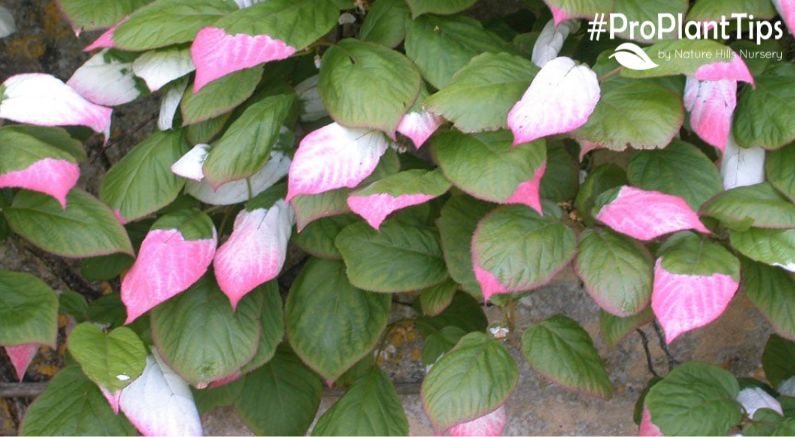
The Arctic Beauty Kiwi Vine is grown for its heart-shaped foliage, which opens purple and matures to bright green marked with splashes of white and pink. The fragrant blooms help pollinate the female Arctic Beauty Kiwi Vines become small yet flavorful fruit!
With green and yellow striped leaves, green and yellow striped fruit and stems, plus pink and white fragrant flowers, the Variegated Pink Lemon even has pink-tinted juicy flesh!
Bold green and creamy white striped leaves and young fruit, plus fragrant white flowers, these miniature Orange family trees have a strong flavor! The leaves and fruit are favorites in Thai cuisine.

Caring For Variegated Plants

-
Mind the sunlight - Variegated plants can burn more easily because of their reduced chlorophyll. Provide morning sun with afternoon shade, especially in hot climates.
-
Choose the right location - Some variegated shrubs and perennials need more sun to intensify their patterns, while others hold their color best with partial shade. Always match placement to the plant's needs.
-
Watch the soil - Certain variegated plants show brighter leaf patterns in specific soil pH. Test your soil to keep those unique colors vibrant.
-
Expect slower growth - With less chlorophyll, variegated plants often grow at a slower pace compared to solid-green plants. Be patient with their progress.
-
Fertilize wisely - Because of limited chlorophyll, they rely on balanced fertilizer to stay healthy and colorful. Feed regularly with a slow-release option.
-
Water and drainage - Treat them like their non-variegated cousins: plant in well-draining soil, water deeply using the Finger Test, but not too often, and avoid soggy roots.
- Pruning tips - Prune out solid-green shoots when they appear so the plant doesn't revert and lose its variegation.
Why do variegated plants sometimes revert to all green?
Reversion happens when a plant produces solid-green shoots that grow faster than the variegated portions. To maintain the variegated look, prune out any fully green shoots as soon as you see them. This ensures the plant keeps its patterned leaves instead of slowly turning back to all green.
Additional reasons variegated plants may revert to all green:
-
Low light levels – plants push out more green leaves to capture energy.
-
Stress or damage – pruning, transplant shock, or injury can trigger stronger green growth.
-
Nutrient imbalance – too much nitrogen may encourage faster, solid-green shoots.
- Genetic instability – some cultivars naturally revert over time as part of their growth pattern.
Age and maturity – older plants sometimes lose variegation as they prioritize survival growth. Use renewal pruning if it is a shrub.
Bring On The Color Show!
Brighten your garden and bring variety to your landscape with head-turning versions of your favorite landscaping plants!
Variegated plants are show-stoppers that are highly sought-after by all plant enthusiasts, so check out these and more favorite two-tone and three-tone trees, shrubs, and plants available at NatureHills.com!
Happy Planting!


