Free Shipping on Orders $199+

Growing Zone: | Garden in
Find your Growing Zone!

Top 10 Most Salt-Tolerant Plants

Top 10 Most Salt-Tolerant Plants - Nature Hills Nursery

Whitney Laritson |

top plants than handle salt and saline conditions

Need coastal and road salt-resistant varieties for your garden?

At Nature Hills, we frequently receive questions about salt-tolerant plants for specific locations.

Gardeners often ask: "What plants thrive in salty conditions? Which salt-resistant trees, shrubs, perennials, and bushes perform best?"

This question comes from a surprisingly wide range of areas. Beyond the obvious coastal regions: Florida, the Gulf Coast, South Texas, and California. But we also hear from unexpected places like Minnesota, Chicago, and Pennsylvania!

Why Salt Tolerance Matters Beyond Coastal Areas

The salt challenge in inland areas isn't from ocean spray: it's from road salt buildup during winter de-icing operations. This road salt can be equally damaging to plants as coastal salt spray.

When salt contacts plant leaves or washes into soil, it creates a process where salt leaches water from plant tissues. This dehydration eventually kills plants that lack salt immunity. Understanding this process helps gardeners choose appropriate salt-resistant landscaping solutions.

Top 10 Best Salt-Tolerant Plants For Your Garden

If your garden battles ocean spray, salty winds, or soil laced with salt, these top salt-tolerant plants are proven performers that thrive where others struggle.

Here are ten salt-tolerant trees, shrubs, perennials, and grasses that shine in salty conditions, whether by the coast or near salted roads.

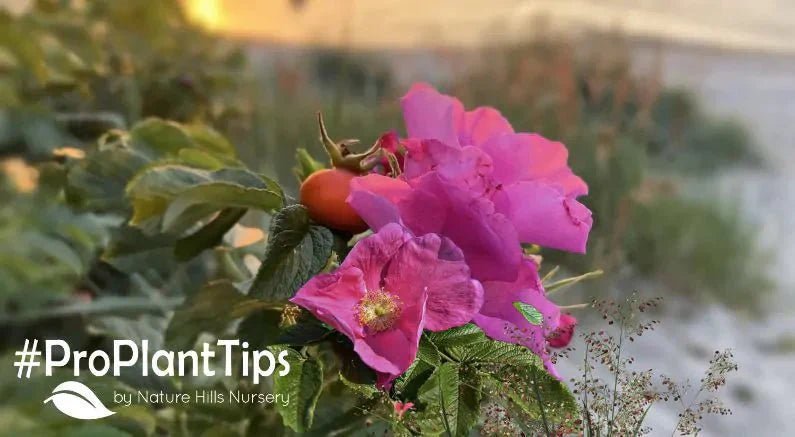
  • Rugosa Rose (Rosa rugosa): These are rough and tumble 'Wild' Roses found for years in fields and probably in your grandma's garden. Featuring romantic blooms and excellent salt spray tolerance. Rugosa Roses are not called Salt Spray Roses or Beach Roses for nothing!

  • Oleander (Nerium oleander): Resilient flowering shrubs that thrive in salt air and even polluted city medians. Oleanders are so tough that they use them in the medians of the fourteen-lane freeways in Los Angeles. If they can stand salt air AND that much traffic abuse, you know they will perform well in your garden.

  • Pittosporum (Pittosporum tobira): Evergreen foundation shrubs that handle salt, wind, and heat with ease. They have that reputation because they are tough as nails!

  • Pacific Wax Myrtle (Myrica cerifera): Also called Bayberry, this fragrant evergreen makes a great hedge. These high-salt-tolerance plants work great as an evergreen hedge, with tiny flowers and a spicy fragrance.

  • Cotoneaster (Cotoneaster integerrimus): Salt-resistant groundcover with spring foliage and fall berries. With a distinctive 'structured-but-wild' look, this hard-working groundcover looks great all year.

  • Scarlet Bottlebrush (Callistemon spp.): Striking red, brush-like flowers and excellent salt tolerance for warmer regions.

  • Mugo Pine (Pinus mugo): Hardy, deer-resistant mounding conifer that handles roadside salt.

  • Daylily (Hemerocallis spp.): Perennial flowers that bloom in many colors and keep thriving in salty soils.

  • Fountain Grass (Pennisetum alopecuroides): Ornamental grass with graceful motion in salty winds.

  • Bay Laurel (Laurus nobilis) - Evergreen Mediterranean tree with fragrant foliage that tolerates coastal salt spray and doubles as a culinary herb source.
Best Salt-tolerant plants

Honorable Mentions: Additional Salt Spray & Coastal Plants

Beyond the top 10, these honorable mentions are coastal gardening staples that deliver tropical flair, native resilience, or showy blooms in salt-heavy conditions.

  • Sea Grape (Coccoloba uvifera): Tropical coastal tree with round leaves
  • Bougainvillea (Bougainvillea spectabilis): Colorful tropical vine
  • Juniper (Juniperus spp.): Versatile evergreen conifer shrubs (find Juniper trees here)
  • Southern Live Oak (Quercus virginiana): Majestic Southern shade tree
  • Lavender (Lavandula angustifolia): Fragrant purple-flowered herb
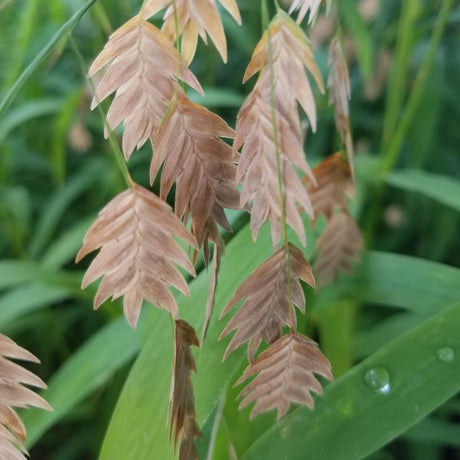
  • Northern Sea Oats (Uniola paniculata): Native coastal grass
  • Coconut Palm (Cocos nucifera): Iconic tropical tree
  • Firebush (Hamelia patens): Red-flowered native shrub

Top 10 Road Salt-Resistant Plants

top road salt resistant plants

For gardeners in snowy states, road salt is the enemy of healthy landscapes. These plants resist winter de-icing salt and keep thriving even after harsh northern winters.

  • Norway Spruce Tree (Picea abies): Cold-hardy evergreen tree
  • Colorado Blue Spruce (Picea pungens): Silver-blue needled conifer
  • Honeylocust (Gleditsia triacanthos): Fast-growing shade tree
  • Green Ash (Fraxinus pennsylvanica): Adaptable deciduous tree
  • Serviceberry (Amelanchier canadensis): Multi-season interest shrub
  • Forsythia (Forsythia × intermedia): Early spring flowering shrub
  • Barberry (Berberis thunbergii): Thorny, colorful shrubs
  • Spirea Bushes (Spiraea japonica): Compact flowering shrub
  • Hosta (Hosta spp.): Shade-loving perennial
  • Sedum/Stonecrop (Sedum spectabile): Drought-tolerant succulent perennial

Benefits of Salt-Tolerant Gardening

Choosing salt-tolerant plants not only protects your landscape but also adds resilience and variety. These adaptable species bring beauty to coastal gardens, road-adjacent yards, and anywhere salt stress would normally devastate your plants.

Adding salt-tolerant plants to your garden introduces diversity and resilience to outdoor spaces. These hardy varieties withstand salty soil conditions that prove inhospitable to other plants, making them smart choices for coastal gardening or urban landscapes.

Whether you're seeking colorful salt-tolerant flowers or incorporating edible options like salt-resistant fruiting shrubs, there's a salt-tolerant plant for every garden style and climate zone!

With proper research and planning, you can easily incorporate these hardy salt-resistant plants into your landscape design and enjoy their beauty and benefits for years to come!

Happy Planting!

Previous Next

Compare Plants

Browse the features and specs side-by-side to find the best fit for your garden.

A table comparing the facets of 3 products
Facet
Bay Laurel
Bay Laurel
View details
Northern Sea Oats Grass
View details
A detailed product photograph of a small, live Picea glauca 'Conica' (Dwarf Alberta Spruce) tree, densely covered with fine green needles and featuring a perfectly conical shape, presented in a simple black plastic quart nursery pot against a seamless white background, ideal for container gardening and small spaces.
Norway Spruce Tree
View details
Rating
Rating
(7)
--
Type
TypeTreePerennialTree
By
ByNature Hills NurseryNature Hills NurseryNature Hills Nursery
Flower Color
Flower Color
  • Yellow
  • Green
  • Beige
  • White
Growing Zone Range
Growing Zone Range
8-11 (Patio 4-11)
3-8
2-8
Mature Height
Mature Height
12-15 ft
2-5 ft
50-70 ft
Width
Width
12-15 ft
1-3 ft
25-35 ft
Price
Price
Regular price $4562
Regular price $3639
Regular price From $4729

Frequently Asked Questions

Do plants like salt water?

No, most plants do not like salt water or salty conditions. Salt dehydrates plant tissues by drawing water out of leaves and roots, which eventually kills plants that lack natural salt tolerance. However, certain specialized plants like Rugosa Roses and Oleander have evolved salt immunity and actually thrive in coastal spray or road salt conditions. Choose proven salt-tolerant varieties if your garden faces ocean exposure or winter road salt runoff.

What plants are salt tolerant?

Top salt-tolerant plants include Rugosa Rose (Rosa rugosa), often called Beach Rose for its exceptional salt spray tolerance, and Oleander (Nerium oleander), which thrives in salty coastal conditions. These hardy performers, along with salt-resistant grasses and shrubs, withstand both ocean spray in coastal zones and road salt damage in inland areas. Salt tolerance is crucial because salt dehydrates plant tissues by leaching water, eventually killing non-resistant varieties. Choose plants specifically labeled as salt-tolerant and match them to your hardiness zone for best results.

What plants live in saltwater?

Plants don't actually live in saltwater, but many thrive in salt-affected soils and coastal conditions with salt spray. Top performers include Rugosa Roses (Rosa rugosa), which tolerate direct salt spray and are often called "Beach Roses," and Oleander shrubs that handle both coastal salt and drought conditions. These salt-tolerant plants have adapted to process salt without the typical leaf burn and dehydration that kills most garden varieties. Choose plants specifically labeled as salt-tolerant for coastal gardens or areas near winter road salt applications.

What plants can grow in salt water?

No plants can survive in actual salt water, but many salt-tolerant varieties thrive in salty soil conditions and salt spray environments. Rugosa Roses (Rosa rugosa) and Oleander (Nerium oleander) are top performers in coastal zones 2-9, handling salt spray and sodium-laden soil where other plants fail. These plants develop natural mechanisms to resist salt's dehydrating effects on plant tissues. Choose proven salt-resistant varieties like these for areas with ocean spray, road salt runoff, or naturally saline soils.

Which USDA hardiness zones are best for planting salt-tolerant shrubs like Pittosporum?

Pittosporum thrives in USDA hardiness zones 8-10, where winter temperatures rarely drop below 10°F. Most salt-tolerant shrubs, including Pittosporum, perform best in these warmer coastal zones where they can handle both salt spray and moderate winter conditions. In zone 7, some varieties may survive with protection, but zones 8-10 offer the most reliable year-round growth. Plant in spring after the last frost date to give roots time to establish before winter.

How do I prepare soil for salt-tolerant plants near salted roads?

Test your soil's salinity levels first, as readings above 4 dS/m indicate problematic salt buildup from road treatments. Improve drainage by adding 2-3 inches of coarse sand or perlite to heavy clay soils, since salt-tolerant plants still suffer in waterlogged conditions where salts concentrate. Apply gypsum at 20-40 pounds per 1,000 square feet in fall or early spring to help leach sodium away from plant roots. Plant in raised beds 6-8 inches high when possible to further ensure good drainage and reduce direct contact with salt-contaminated runoff.

How often should I water salt-tolerant plants like Russian sage in coastal gardens?

Water salt-tolerant plants like Russian sage deeply but infrequently, typically once weekly during the growing season in zones 4-9. In coastal gardens, natural rainfall and higher humidity often reduce watering needs, so check soil moisture 2-3 inches deep before watering. Established plants may only need supplemental water during extended dry periods of 10-14 days without rain. Apply 1 inch of water when needed, watering early morning to minimize salt spray damage on wet foliage.

What is the best planting time for salt-tolerant grasses such as 'Karl Foerster' reed grass?

The best planting time for 'Karl Foerster' reed grass is early spring after the last frost date or early fall, 6-8 weeks before the first hard freeze. In zones 4-9, spring planting from April through May allows the grass to establish strong roots before summer heat, while fall planting from August through September gives it time to settle in before winter dormancy. Space plants 2-3 feet apart and water regularly the first season. Plant in early spring for immediate visual impact or fall for better root establishment and stronger growth the following year.

Will salt water kill trees?

Yes, salt water can kill trees by drawing moisture from their tissues through a dehydration process, essentially causing them to die of thirst even when watered. Most trees cannot tolerate salt concentrations above 2,000-4,000 ppm in soil or direct contact with salt spray. However, salt-tolerant species like Rugosa Rose and Oleander have developed natural immunity to these conditions. Choose proven salt-resistant varieties if your trees face ocean spray, road salt runoff, or brackish water exposure.

How far should salt-tolerant plants be planted from the ocean to avoid wind damage?

Plant salt-tolerant specimens at least 100-200 feet inland from the ocean's edge to minimize direct salt spray damage, though this distance varies based on your exposure and prevailing wind patterns. In zones 8-11, coastal properties within the first 500 feet of shoreline experience the most severe salt exposure and require the hardiest varieties like sea oats, beach grass, and salt-adapted shrubs. Consider installing windbreaks or fencing to create microclimates that further protect your plantings. Choose your planting sites based on your property's specific wind exposure rather than distance alone, and group the most salt-tolerant plants closest to the water.

Find Your Garden's Growing Zone!

Your Current Growing Zone:

Zone

ZIP Code:

✓ Growing Zone Set Successfully!

Your zone has been saved and will be used throughout the site.

⚠ Unable to locate a growing zone for that ZIP code.

Please check your ZIP code and try again.

Looking up your growing zone...

When ordering a tree or plant, make sure to know your planting zone.

You can determine your garden's USDA hardiness zone by entering your Zip Code below.