Free Shipping on Orders $199+

Growing Zone: | Garden in
Find your Growing Zone!

Top 10 Dwarf Evergreen Shrubs For Space-Saving Landscaping

To dwarf evergreen shrubs for space-saving beauty

Charlotte Weidner |

Looking for structure that stays strong all year without gobbling up precious garden space? Dwarf evergreen and broadleaf evergreen shrubs are your go-to green companions. These space-saving plants offer clean lines, rich color, and lasting texture, even when the rest of the garden sleeps.

Whether you're carving out a container display, defining a border, or filling the base of taller plantings, compact evergreens work overtime as the bones of your garden. Their year-round presence means less replanting and more relaxing. From Boxwood alternatives to miniature conifers, these tidy shrubs bring calm and class to even the smallest backyard stage!

Landscaping With Dwarf Evergreen Shrubs

Dwarf and broadleaf evergreens are some of the most versatile and hardworking plants in the landscape. They hold their shape, provide structure in all seasons, and make everything around them look more polished. Perfect for busy gardeners and tidy garden lovers alike, these evergreens offer beauty without fuss!

Use them to:

  • Add structure to small gardens without sacrificing space
  • Frame entryways, patios, and garden beds with year-round greenery
  • Plant as facer shrubs in front of larger evergreens or flowering shrubs
  • Design low hedges or garden edging for a formal look
  • Place foundation plantings to anchor your home in every season
  • Soften hardscape features like fences, walkways, or retaining walls
  • Use as space-saving privacy buffers for urban and narrow spaces
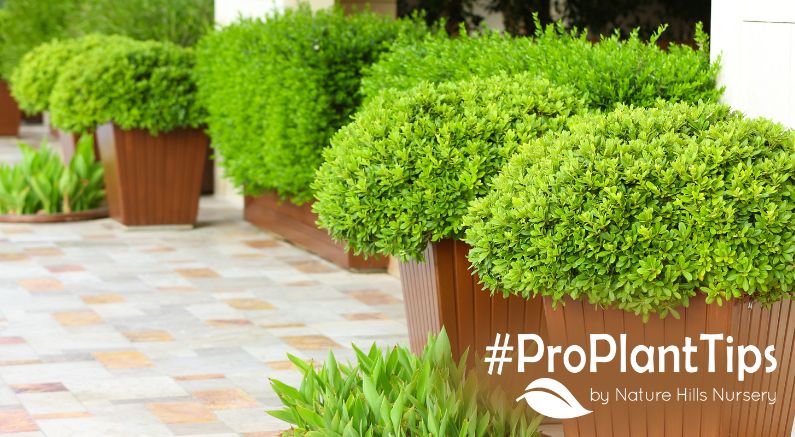
  • Add texture and color to container gardens on patios or balconies
  • Layer into rock gardens and alpine plantings for evergreen appeal
  • Tuck into courtyards and pocket gardens where a little green goes a long way
  • Great structure, low hedges, and facer plants in Knot Gardens.

These slow-growing shrubs offer neat form, bold foliage, and low-maintenance living in containers, borders, and beds alike. Whether clipped or left natural, they earn their spot in any style of garden!

Top 10 Dwarf Evergreen Shrubs

These evergreens bring year-round interest and clean structure to even the smallest landscapes, keeping things tidy and textured through every season.

1. Gem Box® Inkberry Holly (Ilex glabra 'SMNIGAB17')

buy the gem box inkberry holly

This native evergreen mimics the look of Boxwood with extra resilience, making it a perfect low hedge or foundation plant.

  • Grows 2-3 feet tall and wide
  • Dense, rounded habit with small, glossy leaves
  • Deer resistant and native to North America
  • Excellent for hedging or mixed shrub borders
  • Zone 5-9

2. Blue Star Juniper (Juniperus squamata 'Blue Star')

buy blue star juniper at nature hills

If you're seeking a vivid blue, drought-tolerant shrub for sun-drenched spaces, this spiky gem shines.

  • Stays 2-3 feet tall and 3-4 feet wide
  • Radiant silver-blue needles year-round
  • Slow-growing and compact
  • Great in rock gardens, containers, or massed in borders
  • Zone 4-8

3. Dwarf Globe Blue Spruce (Picea pungens 'Glauca Globosa')

buy dwarf globe blue spruce at nature hills

This icy-blue beauty brings formal flair and cold-hardy durability to landscapes across the country.

  • Forms a globe shape, reaching 3-5 feet tall and 5-6 feet wide
  • Striking blue needles offer bold texture
  • Low maintenance and needs no pruning
  • Stunning specimen or foundation accent
  • Zone 3-7

4. Little Giant Arborvitae (Thuja occidentalis 'Little Giant')

buy the little giant arborvitae at nature hills

With a naturally rounded shape and soft, feathery foliage, this Arborvitae is tailor-made for low hedges and accents. While a bit taller than others on this list, these can be easily pruned as small as needed.

  • 4-5 feet tall and 3-4 feet wide
  • Bright green fan-shaped foliage year-round
  • Requires little to no pruning
  • Neat appearance for formal and informal landscapes
  • Zone 3-8

5. Dwarf Mugo Pine (Pinus mugo var. pumilio)

buy dwarf mugo pine at nature hills

For a mountain-style garden in miniature, this dwarf classic of the Mugo Pine remains a favorite!

  • Compact forms vary, but most are around 3-5 feet
  • Dense, dark green needles
  • Adaptable to poor soils and tough climates
  • Excellent slope cover or accent in rockeries
  • Zone 2-8

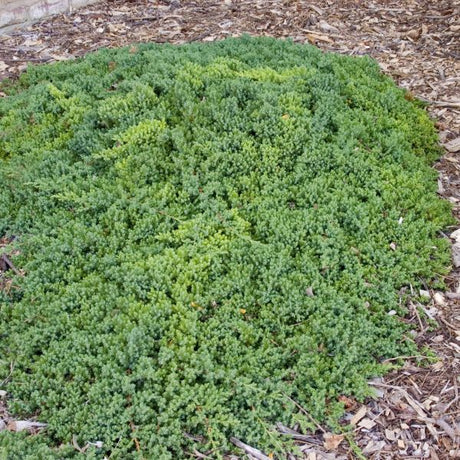
6. Dwarf Japanese Garden Juniper (Juniperus procumbens 'Nana')

buy the dwarf japanese garden juniper at nature hills

Low-growing and cascading, this conifer looks like flowing green water across rocks or garden edges.

  • Stays under 1 foot tall (typically 8-12 inches)
  • Spreads 4-5 feet wide
  • Blue-green foliage with a soft, spiny texture
  • Fantastic evergreen groundcover is ideal for erosion control
  • Zone 4-9

7. Heller's Japanese Holly (Ilex crenata 'Helleri')

buy heller's japanese holly at nature hlils

Small but mighty, Helleri Holly is a Boxwood-like broadleaf evergreen that thrives with minimal care.

  • Reaches 2-4 feet tall and about 3-5 feet wide
  • Tiny, dark green, glossy leaves
  • Naturally mounding and dense
  • Great in formal plantings or modern designs
  • Zone 5-8

8. Wee Willie® Boxwood (Buxus sinica var. insularis 'Wee Willie')

order a wee willie boxwood at nature hills

A refined broadleaf evergreen with classic styling, this dwarf Boxwood brings elegance without size.

  • 1-2 feet tall and wide
  • Dense, glossy green foliage creates a fine-textured, evergreen mound
  • Maintains shape with minimal shearing
  • Ideal for containers or tight corners
  • Zone 5-9

9. Enci Mugo Pine (Pinus mugo 'Enci')

buy the dwarf enci mugo pine at nature hills

This hardy dwarf Mugo Pine adds rustic character and rugged beauty to minimalist or alpine gardens.

  • Compact form, only 3-5 feet tall and wide
  • Dense branching with stiff, dark green needles
  • Drought-tolerant, wind-tolerant, and cold-hardy
  • Excellent in containers, slopes, or xeriscapes
  • Zone 3-7

10. Cream Ball False Cypress (Chamaecyparis pisifera 'Cream Ball')

buy your own cream ball false cypress at nature hills

This compact conifer brings eye-catching variegation and a soft, globe-like form to even the smallest gardens, offering structure, color, and charm year-round.

  • Reaches only 12-24 inches tall and wide
  • Densely rounded habit with creamy yellow and mint-green variegated foliage
  • Soft, feathery texture contrasts beautifully with bolder evergreens and shrubs
  • Slow-growing and naturally symmetrical, no pruning required
  • Ideal for containers, edging, rock gardens, or foundation facer plantings
  • Cold-hardy in USDA zones 4-8

Evergreen Style, Year-Round!

Dwarf evergreen shrubs bring lasting beauty in the most practical packages. They hold the landscape together through winter winds and summer sun, offering structure, privacy, and polish without outgrowing their space. Whether you're planting a container by the front door or designing a small-space hedge, these shrubs prove that lasting impact doesn't require large footprints.

Let these compact classics bring timeless year-round style to your garden, one small, mighty plant at a time!

Happy Planting!

buy evergreen bushes at nature hills today!
Previous Next

Compare Plants

Browse the features and specs side-by-side to find the best fit for your garden.

A table comparing the facets of 5 products
Facet
Gem Box® Inkberry Holly
View details
Blue Star Juniper
Blue Star Juniper
View details
Little Giant Arborvitae
View details
Dwarf Mugo Pine
Dwarf Mugo Pine
View details
Dwarf Japanese Garden Juniper
View details
Rating
Rating-
(1)
---
Type
TypeShrubShrubShrubTreeShrub
By
ByProven WinnersNature Hills NurseryNature Hills NurseryNature Hills NurseryNature Hills Nursery
Flower Color
Flower Color
  • White
  • Green
-
-
  • White
Growing Zone Range
Growing Zone Range
5-9
4 – 8
3-8
2-8
4-9
Mature Height
Mature Height
2-3 ft
2-3 ft
4-5 ft
3-5 ft
1 ft
Width
Width
2-3 ft
3-4 ft
3-4 ft
3-5 ft
4-5 ft
Price
Price
Regular price From $2659
Regular price From $3359
Regular price From $7984
Sale price $6640 Regular price $7995
Regular price From $4200

Frequently Asked Questions

What kind of evergreen shrubs stay small?

Dwarf evergreen shrubs and compact broadleaf evergreens naturally stay small through slow growth rates and genetic traits, typically reaching 2-4 feet at maturity rather than their full-sized counterparts that can grow 6-15 feet tall. Popular compact varieties include dwarf boxwood cultivars, miniature conifers like dwarf Alberta spruce, and small-leafed broadleaf evergreens such as compact hollies and dwarf rhododendrons. Look for cultivar names containing "dwarf," "compact," "nana," or "miniature" when selecting plants, and check mature size specifications to ensure they fit your space long-term.

What are the best dwarf evergreen shrubs for small spaces and space-saving landscaping?

The best dwarf evergreen shrubs for small spaces include compact boxwood varieties, miniature conifers like dwarf Alberta spruce, and broadleaf evergreens such as dwarf rhododendrons and compact holly cultivars. These slow-growing shrubs typically stay under 3-4 feet tall and wide, making them perfect for foundation plantings, low hedges, container gardens, and tight urban spaces. They provide year-round structure and require minimal maintenance once established in zones 3-9 depending on the variety. Choose plants based on your hardiness zone and available sunlight, then space them according to their mature size to avoid overcrowding.

Which dwarf evergreen shrubs are hardy in USDA zones 3-5 for cold climates?

For USDA zones 3-5, excellent cold-hardy dwarf evergreen options include Dwarf Balsam Fir (zones 3-6, 2-3 feet), Globe Blue Spruce (zones 2-7, 3-5 feet), and Dwarf Mugo Pine (zones 2-7, 3-5 feet). Boxwood varieties like Green Gem and Green Velvet perform well in zone 4-5 but need protection in zone 3. Plant these shrubs in early spring or fall, ensuring good drainage and wind protection in the coldest zones.

How much sunlight do dwarf evergreen shrubs need, such as full sun, partial shade, or shade?

Most dwarf evergreen shrubs thrive in full sun to partial shade, requiring at least 4-6 hours of direct sunlight daily for optimal growth and dense foliage. Conifers like dwarf spruces and pines typically prefer full sun conditions, while broadleaf evergreens such as boxwood and dwarf hollies tolerate partial shade well. Some varieties like dwarf yews actually perform better with morning sun and afternoon shade in zones 7-9 to prevent winter burn. Check your specific variety's light requirements and observe how your shrubs respond during their first growing season to adjust placement if needed.

What type of soil is best for planting dwarf evergreens, and how do I ensure well-draining conditions?

Most dwarf evergreens thrive in well-draining, slightly acidic to neutral soil with a pH between 6.0-7.0. To ensure proper drainage, amend heavy clay soils with coarse sand, perlite, or compost, or plant in raised beds 4-6 inches above ground level. Avoid waterlogged conditions, which can cause root rot in most evergreen species. Test drainage by digging a 12-inch hole and filling it with water - it should drain within 24 hours for optimal planting conditions.

When is the best time to plant dwarf evergreen shrubs in my garden?

The best time to plant dwarf evergreen shrubs is during fall (September through November) or early spring (March through May) when temperatures are moderate and rainfall is typically more consistent. Fall planting is ideal in zones 6-9 as it allows roots to establish before winter, while spring planting works better in zones 3-5 where harsh winters can stress newly planted shrubs. Plant at least 6-8 weeks before your area's first hard frost in fall, or after the last frost date in spring. Choose a cloudy day or plant in late afternoon to reduce transplant shock.

How should I plant dwarf evergreens to avoid waterlogging or root rot, especially planting high in the soil?

Plant dwarf evergreens with the root ball sitting 1-2 inches above the surrounding soil level to ensure proper drainage and prevent waterlogging. Create a gentle mound of well-draining soil around the elevated root ball, then mulch around (not against) the stem to retain moisture while allowing air circulation. This planting method works especially well in heavy clay soils or areas with poor drainage. Water deeply but less frequently once established, checking soil moisture 2-3 inches down before watering again.

How often and when should I prune dwarf evergreen shrubs like Pittosporum to keep them compact?

Prune dwarf evergreen shrubs like Pittosporum once yearly in late spring after new growth hardens off, typically May through early June in most zones. Light annual pruning of 2-3 inches maintains their naturally compact form better than heavy cutting, which can stimulate excessive growth. For formal hedging, add a second light trim in late summer if needed. Always prune selectively by cutting back to a leaf node or branching point to encourage dense, healthy growth.

Are dwarf evergreens low-maintenance, and what care do they require year-round?

Yes, dwarf evergreens are exceptionally low-maintenance once established, requiring minimal care compared to deciduous shrubs or perennials. These slow-growing plants need only occasional watering during dry spells, light fertilizing in early spring, and minimal pruning to maintain their natural shape. Most varieties are hardy across USDA zones 3-9 and hold their form naturally without constant trimming. Water deeply but infrequently during the first growing season, then provide supplemental water only during extended drought periods.

How do I fertilize dwarf evergreen shrubs, and what are the best timing tips?

Fertilize dwarf evergreen shrubs in early spring before new growth begins, using a balanced slow-release fertilizer (10-10-10 or similar) applied at half the recommended rate since these compact plants need less nutrition than full-sized shrubs. Apply a second light feeding in mid-summer if growth appears sluggish, but avoid fertilizing after late July to prevent tender new growth that won't harden off before winter. Water thoroughly after application and spread fertilizer evenly around the drip line, not against the trunk. Skip fertilizing newly planted shrubs for the first year while they establish their root systems.

Find Your Garden's Growing Zone!

Your Current Growing Zone:

Zone

ZIP Code:

✓ Growing Zone Set Successfully!

Your zone has been saved and will be used throughout the site.

⚠ Unable to locate a growing zone for that ZIP code.

Please check your ZIP code and try again.

Looking up your growing zone...

When ordering a tree or plant, make sure to know your planting zone.

You can determine your garden's USDA hardiness zone by entering your Zip Code below.