Shop With Confidence: FREE Growing & Glowing Promise

Free Shipping on Orders $199+

Our Perfect Christmas Plant Wishlist!

Our Perfect Christmas Plant Wishlist! - Nature Hills Nursery

Nature Hills Nursery |

Looking ahead to a new year, and reflecting on the past, we dream of new possibilities for our landscapes too!

Nature Hills Nursery is here to help inspire you with our Christmas Plant Wishlist!

No need to wait for Santa, Nature Hills has plants and gifts for everyone on your list! Or to fill your own stocking with goodies! After all, we’re sure you deserve it!

1. New Rock Rose Bushes

Rock Roses are hardy and heat-tolerant, smaller waterwise flowering shrubs have dense broadleaf evergreen leaves and cheerful flowers that pollinators adore! Growers in warm-growing zones can enjoy these shrubs as living groundcover, edging, and en masse for a wide range of landscaping needs.

  • Orchid Rock Rose - Rosy pink crinkled petals and aromatic dark gray-green leaves
  • Sunset Magenta Rock Rose - Brilliant magenta blooms on soft sage mounds of leaves
  • Dwarf Pink Rock Rose - Baby pink blooms with cheerful centers on a dwarf-sized shrub!

These are great for hot arid climates and Xeric conditions like Rock Gardens, Coastal sites or salt-treated city streets. Control erosion and enhance a hard-to-mow slope with these pretty flowering plants!

2. New Evergreen Shrubs

Nature Hills is happy to announce three new Evergreen shrubs for your landscape, both with incredible evergreen foliage! Pyramidal form and easy-to-grow nature, these two smaller conifers will light up the garden year-round!

  • Cat's Eye Arborvitae - Growing up to 10 feet tall, this gorgeous shrub has a nearly-iridescent chartreuse greenish-yellow foliage that stands out big time!
  • Star Power™ Juniper - Growing 18 feet tall, these blue-green shrubs have star-like juvenile foliage which gives them a delicate, almost sparkling texture!
  • Wichita Blue Juniper features silvery-blue growth with gray fall color, growing 15 feet tall

These shrubs are lovely screens and hedges, fantastic specimens, and even work in large planters!

3. New Crape Myrtle Bushes

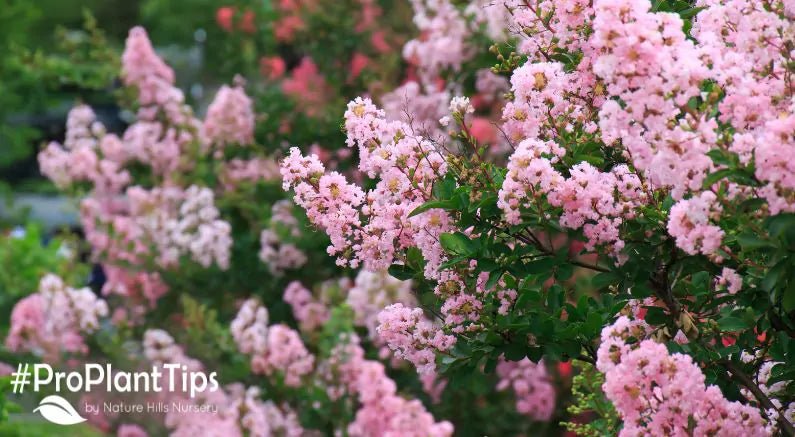
Crape Myrtles are fantastic flowering shrubs with long-lasting summer flowers reminiscent of crepe paper! The glossy foliage doesn’t fade in the heat, humidity, or sun of the southern climate.

  • Catawba Crape Myrtle - These decent-sized shrubs feature fast growth and purplish blooms that last until the autumn. Plus improved mildew resistance!
  • Red Rocket® Crape Myrtle - Shooting upwards fast, this brilliant red variety also has incredible fall color.
  • Tuscarora Crape Myrtle - Another mildew-resistant variety with dramatic coral-pink flowers and fall color!

Use these new and improved Crape Myrtles as hedges, specimens, trained into tree-form accents, or throughout the landscape as privacy and property division! Don’t forget the fantastic GreatMyrtle™ shrubs that are small cold-hardy options too!

4. Loads of Native Plant Offerings!

Nature Hills loves encouraging native plants! So we’ve teamed up with growers around the country bringing these hardy prairie and wetland plants to you so you can help wildlife and beneficial insects cope with habitat loss and broaden native plant diversity throughout your area! Nature Hills makes it easy by listing hardy natives for your State too!

  • Compass Plant - Tall Sunflower-like native with coarse leaves that turn to orient themselves to the sun! We also now carry False Sunflowers to feed pollinators too!
  • Gray Headed Coneflower - A dramatic yellow-petalled Coneflower with elongated grayish domed centers and a long bloom time!
  • Copper Iris - A coppery flowered Iris that is native to swampy wetlands!
  • Possomhaw Holly - a native Holly that thrives in the sun or shade, average garden soil or wetlands with berries local songbirds will love!
  • Rattlesnake Master - A native prairie plant with dramatic sunflower-like flowers and unique seed pods!
  • Sideoats Grama - A curious short grass prairie native with dangling seedheads on one side of every flowering plume. Incredible drought-resistant perennial grass!
  • Native Trees like the Ozark Chinquapin and the Mockernut Hickory bring native hardiness and nuts for wildlife and people alike!

There are so many more new offerings including two native Roses, prairie standards like Wild Quinine, Prairie Cordgrass, and White Prairie Clover! Flowering plants like the Golden Alexander, Bigfruit Evening Primrose, and native Bee Balm are pollinator favorites that stand up to the sun!

5. Newest Fruit Trees!

Expand your home orchard or explore new fruit trees to boost your healthy food access.

  • Bailey Hardy Peach Tree - A juicy sweet semi-freestone that ripens mid-August
  • BlackIce® Plum Tree - A large round Plum variety with dark purplish-black skin and red flesh with semi-clingstone pits
  • Honeygold Apple Tree - Golden yellow-green fruit that is sweet, crisp, and juicy, this is excellent for fresh eating and also good for cooking. Ripening late September.
  • Prairie Magic® Apple - A super hardy introduction from Canada with medium-large green fruit with red blush, ripens in mid-September.
  • Wodarz Apple Tree - A popular heirloom Apple selection in North Dakota. A unique green fruit with a pink blush is very sweet and stores well! Fire-blight resistant!
  • Parker Pear Tree - Showy red fruit that’s sweet and features a purple fall color
  • Golden Spice Pear - Golden yellow fruit that is fire-blight resistant!

Increasing your edible landscaping and enjoy the spring flowers, lush summer leaves, delicious fruit, and the fall color of these new fruit tree offerings at Nature Hills!

Dreaming of a White Christmas and Greener Springs!

Look forward to the next growing season with new plant offerings that will have you dreaming of more than sugar plums and

Order your Christmas wishlists and dream plants at Nature Hills and let us handle the shipping and delivery next spring when planting season rolls around once again!

None of these great plants look perfect for that hard-to-shop-for person on your list? A Nature Hills e-Gift Certificate is an instant, easy, and convenient stocking stuffer!

Happy Planting & Happy Holidays!

Previous Next

Frequently Asked Questions

How do I keep holiday plants like amaryllis and poinsettias healthy and thriving indoors during the Christmas season?

Poinsettias thrive indoors when kept in bright indirect light at temperatures between 65 and 70 degrees Fahrenheit, away from cold drafts or heating vents that cause leaf drop. Water thoroughly when the top inch of soil feels dry, and never let them sit in standing water in the saucer. Amaryllis bulbs prefer a sunny windowsill and should be watered sparingly at first, increasing moisture as the flower stalk emerges, then fed with a balanced liquid fertilizer every two weeks to encourage blooming. Keep both plants away from fruit bowls, as ethylene gas from ripening fruit shortens their display significantly.

What kind of light do popular Christmas plants need to stay vibrant and colorful through the holidays?

Most popular holiday plants thrive with bright, indirect light for at least 6 hours per day, avoiding harsh direct sun that can scorch leaves or fade blooms. Poinsettias, for example, prefer temperatures between 65 and 70 degrees F and should be kept away from cold drafts or heating vents that cause leaf drop. For evergreen shrubs like Arborvitae and Junipers grown outdoors in zones 4 through 9, full sun of 6 or more hours keeps their foliage vivid and dense through winter. Place indoor holiday plants near a bright east or south-facing window, and rotate the pot every few days to ensure even light exposure and lasting color.

How often should I water Christmas plants like paperwhites and cyclamen without overwatering them?

Paperwhites prefer consistently moist but never soggy soil, so water thoroughly when the top inch of soil feels dry, typically every 5 to 7 days depending on your home's humidity and temperature. Cyclamen are especially sensitive to overwatering and root rot, so water from the bottom by setting the pot in a shallow dish of water for 20 to 30 minutes, then removing it and allowing excess to drain completely. Always empty saucers after watering to prevent standing water at the roots. Check soil moisture with your finger before each watering rather than following a fixed schedule, since indoor conditions vary widely.

Can Christmas plants like amaryllis or rosemary topiaries be planted outdoors in the garden after the holidays?

Yes, many holiday plants can successfully transition to your outdoor garden after the holidays, depending on your growing zone. Amaryllis bulbs thrive outdoors year-round in zones 8 to 10, while gardeners in colder zones can plant them out after the last frost in spring and dig them up before fall freezes. Rosemary topiaries are cold-hardy in zones 7 to 11 and can be planted directly in the ground once nighttime temperatures stay consistently above freezing. Gradually acclimate both plants to outdoor conditions over 7 to 10 days by placing them in a sheltered spot before planting them in their permanent location.

What indoor temperature range keeps Christmas plants like poinsettias and Christmas cactus looking their best?

Most holiday plants like poinsettias and Christmas cactus thrive indoors between 65 and 75 degrees Fahrenheit during the day, with slightly cooler nights around 60 to 65 degrees. Avoid placing them near cold drafts, heating vents, or exterior doors where temperature fluctuations can cause leaf drop or bud blast. Keep your plants in bright indirect light away from direct heat sources, and check the soil every few days to water when the top inch feels dry.

How do I get my Christmas plants to rebloom again next holiday season?

Most of the plants featured in our Christmas wishlist, like Rock Roses, Crape Myrtles, and Evergreen Shrubs, are not traditional holiday bloomers forced for the season but rather landscape plants that follow their natural bloom cycles year after year. Crape Myrtles, for example, reliably rebloom each summer with minimal effort, while Rock Roses put on their floral display in spring and early summer in warm zones. To keep your plants performing their best, focus on proper pruning at the right time, consistent watering during establishment, and a balanced fertilizer regimen in early spring. Visit naturehills.com for plant-specific care guides to ensure your new additions thrive and reward you with beautiful growth season after season.

Should I fertilize Christmas plants during the holiday season, and how often should I feed them afterward?

Holiday plants like Rock Roses, Evergreen Shrubs, and Crape Myrtles generally do not need fertilizing during the dormant winter season, as feeding during this period can stimulate tender new growth that is vulnerable to cold damage. For most of these plants, begin a balanced slow-release fertilizer program in early spring, typically around March or April depending on your growing zone, and feed once or twice more through midsummer. Crape Myrtles in particular thrive with a granular fertilizer applied in spring when new growth emerges, while evergreen shrubs like Arborvitae and Junipers benefit from a single spring feeding with a formula designed for conifers. Hold off on any fertilizing after late summer to allow plants to harden off before winter and check your specific zone recommendations at naturehills.com for tailored timing guidance.

How do I prune or trim Christmas plants like rosemary and Christmas cactus to encourage healthy new growth?

For rosemary, light pruning after flowering or in early spring works best, trimming no more than one-third of the plant at a time to avoid cutting into woody, non-productive stems. Christmas cactus benefits from pinching back one to three segments per stem right after blooming, typically in late winter, which encourages branching and more flower buds for the following season. Always use clean, sharp pruners to prevent disease, and for Christmas cactus, those removed segments can be rooted in moist potting mix to propagate new plants.

Can Christmas plants be grown successfully in containers year round, or should they be moved outside in warmer months?

Many of the plants on our Christmas wishlist, including the smaller conifers like Cat's Eye Arborvitae and Rock Rose shrubs, can thrive in large containers year-round in appropriate climates. In colder zones, moving container-grown plants outdoors in spring after the last frost and back inside or into a sheltered spot before hard freezes will keep them healthiest. Crape Myrtles in containers do especially well when brought outside for the summer growing season in zones where winters dip below their cold hardiness range. Choose a container at least 15 to 20 gallons for shrubs, use quality well-draining potting mix, and water more frequently than you would in-ground plants since containers dry out faster.

How do I protect holiday plants from cold drafts, dry heat, and temperature swings near windows and doors?

Holiday plants thrive best when kept away from cold drafts near exterior doors and single-pane windows, as well as heating vents and radiators that can drop humidity below the 40 to 50 percent range most plants prefer. Sudden temperature swings below 50 degrees Fahrenheit can stress tropical holiday favorites like poinsettias, Christmas cacti, and amaryllis, causing leaf drop or bud failure. Place plants several feet from drafty entryways and heat sources, and use a small humidifier or pebble tray with water nearby to maintain consistent moisture in the air around them.