Shop With Confidence: FREE Growing & Glowing Promise

Free Shipping on Orders $199+

Let’s Talk About Bird Feeding (And Why it Matters!)

Let’s Talk About Bird Feeding (And Why it Matters!) - Nature Hills Nursery

Nature Hills Nursery |

Whether you have no bird feeders or 20+ around your property, it is always exciting when you buy a new one. There are so many different kinds, shapes, sizes, and colors to choose from! How can you only have one?

This blog will dive into all things bird feeding, such as different types of bird feeders, pesky squirrels, bird food, and setting up.

Kinds of Bird Feeders and Why it Matters

There are many types of bird feeders; however, there are a few major ones that apply to your favorite kinds of birds!

Platform Feeders

A platform or tray feeder is simple and sweet! They are open from the top to allow birds to choose what they want to eat. This kind of bird feeder attracts the most birds since it is easy and roomy. You can also put as many different types of food you’d like with this bird feeder. The Woodlink Double Platform Seed Feeder would be a great addition to your yard if you’re looking to enjoy different types of birds!

Tube Feeders

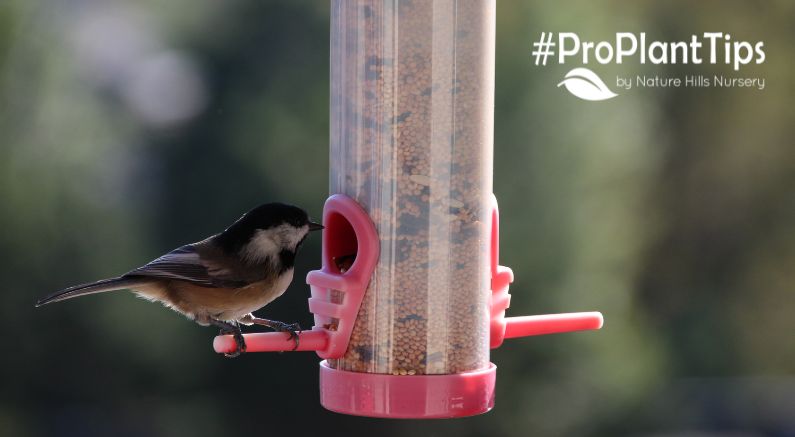
Tube feeders are neat, not letting too many birds crowd the area–squirrels too. Usually, they are designed specifically for Finches. They’re designed the way they are because Finches feed in trees, so having a vertical feeder makes sense to them. The Audubon Have a Ball Finch Feeder will look amazing in a backyard with bright flowers all through the spring and summer season! This easy-to-fill feeder will have Finches in your yard in no time.

Hopper Feeders

The last popular feeder is a hopper feeder. These usually come in different shapes and sizes, but all have roofs to keep the seeds dry. They are a lot like platform feeders but offer less space in order to keep the chaos away. While there are many different styles, the Woodlink Rustic Farmhouse Ranch Feeders With Suet Feeders is an amazing pick! The suet feeder feature will attract birds like Woodpeckers, Warblers, and Nuthatches.

Other Options

While those three types are extremely common, there are so many more! We offer a wide variety including squirrel proof feeders, Hummingbird feeders, and food specific feeders. You can truly get whatever kind of feeder you want unless you have a specific species you’re trying to lure. Grab your bird book and look out the window to watch the magic!

Pesky Squirrels

We know, we know. Squirrels cause a lot of problems. They may have cute bushy tails, but they will eat all your bird food.

Luckily, technology is on our side and there are now squirrel proof bird feeders! Nature Hills Nursery offers a few different types to fit your needs. Here’s a couple of our favorites:

Woodlink Birds Choice Squirrel Proof Feeder: This bird feeder is a sturdy hopper-like feeder with a roof that locks! Birds will easily be able to access this feeder, but squirrels stand no chance!

Songbird Essentials 12 Inch Clear Squirrel Baffle: This cute bird feeder has a large dome baffle at the top so squirrels will never get to the precious seeds! This is another kind of hopper feeder that is easy to fill and will welcome many kinds of birds.

Kinds of Bird Food

cardinal eating birdseed

Just like bird feeders, there are so many varieties of bird food! All birds like different kinds of food, but they aren’t the pickiest of eaters.

Sunflower Seeds

I think we all know the most popular bird food you’ll find is sunflower seeds–but there are two different kinds! The black oil seeds are very thin and full of fat content, which is important for winter birds. Striped sunflower seeds are thicker and harder for birds like Sparrows and Blackbirds to crack. Depending on what kind of birds you want around, you could pick either! We offer the easy America’s Favorite Black Oil Sunflower Seed for your feeders.

Peanuts

Peanuts are enjoyed by Woodpeckers, Cardinals, Jays, and Nuthatches. They are rich in protein, oil, and fat–which is just perfect for birds! This provides them energy and promotes growth. Squirrels also really like peanuts, so it is usually best to pair them with a squirrel proof feeder so your birds can enjoy in peace. For your convenience, Nature Hills Nursery offers America’s Favorite Raw Peanuts in Shell Wild Bird Feed.

Mealworms

Mealworms will attract quite a few different species of birds! This includes Bluebirds, Chickadees, Thrushes, Titmice, Wrens, Nuthatches, and Kinglets. Mealworms are great, but be sure to provide other nutritious food as well since mealworms don’t have the complete nutrition birds require. A great way to get around that issue is our Mealworm & Berry To Go Wild Bird Food. This has a blend of berry flavored dried mealworms, which offers great nutritional value!

Suet

Suet is most commonly sold in the shape of little cakes for convenience! They are the hard fat in beef and mutton. The birds that love suet are Woodpeckers, Chickadees, Flickers, Nuthatches, Wrens, and more. Suet is favorable in the winter rather than summer as it can melt in very high temperatures. In the winter, suet can really help birds fatten up and get them through the winter. We offer the Pine Tree Farms Bird Watchers Best Nutty Butter Suet Cake! Since this is mixed with nuts, this has so many great nutrients for your backyard birds!

Hanging Bird Feeders in the Landscape

There are many options when it comes to decorating your yard with bird feeders–get creative with it!

Feeding Stands and Stations

If you don’t have a tree or the tree is already filled with feeders, there are stands you can put in the ground that can hold up to five bird feeders! For example, we offer the Deluxe Wild Bird Feeding Station. Not only does it have spaces for feeding trays, but it has watering trays as well. It stands at 7 inches tall and matches different decor styles.

Trees

Most bird feeders will come with hooks or chains to secure into a tree branch. If not, they’re easy to find! You can also use a bungee cord. This will make your process of hanging them up easier than you think. If you have a separate squirrel guard like the Woodlink Wrap Around Squirrel Baffle, be sure to attach it to the cord before adding the bird feeder.

Fill Your Yard With Birds Today

Don’t be afraid to live out your bird feeding dreams! Watching these beautiful animals can really make your day. Imagine sitting in your living room and you look out the window to see a gorgeous Cardinal enjoying an afternoon snack. These little moments can redirect anyone's mood.

Shop Bird Feeders
Previous Next

Frequently Asked Questions

What should you put in a bird feeder to attract the most birds?

Platform or tray feeders give you the most flexibility for attracting a wide variety of birds because they allow you to offer multiple types of food at once. Filling a platform feeder with a mix of seeds, nuts, and other foods increases your chances of drawing in different species throughout the seasons. For the best results, try the Woodlink Double Platform Seed Feeder and experiment with different food combinations to see which birds visit your yard most frequently.

How do you get wild birds to start using a new bird feeder?

Place your new feeder in a visible, sheltered spot near trees or shrubs that birds already frequent, ideally within 10 to 15 feet of natural cover so birds feel safe approaching. Stock it with high-quality seed suited to the species in your area, since the right food is often the fastest way to draw in local birds. Platform feeders tend to attract the widest variety of birds the quickest because they are open and accessible, making them a great starting point if you are new to feeding. Be patient, keep the feeder clean and consistently stocked, and within a week or two you should start seeing regular visitors.

Should you place bird feeders in the sun or shade?

Ideally, place bird feeders in a spot that offers a mix of both sun and shade throughout the day. Full sun can spoil certain foods like suet more quickly, especially in warmer months, while a shaded location helps keep seed fresh longer and gives birds a more comfortable feeding environment. Aim to position feeders near natural cover like shrubs or trees within 10 to 15 feet, giving birds a safe place to retreat if predators approach. Observe your yard at different times of day and choose a location that balances visibility for your viewing enjoyment with shelter and shade for the birds.

How do you attract blue jays and cardinals to your yard?

Blue jays and cardinals are both attracted to platform or tray feeders, which offer open, roomy feeding space and accommodate a wide variety of foods including sunflower seeds, peanuts, and safflower seeds. Cardinals prefer feeding at lower heights, so placing a platform feeder no more than five feet off the ground will suit them well, while blue jays are less picky about height. Offering shelled peanuts is one of the most reliable ways to draw blue jays in quickly. Set up a Woodlink Double Platform Seed Feeder stocked with a mix of sunflower seeds and peanuts to give both species exactly what they are looking for.

Can you feed birds fat balls or suet in the summer months?

Yes, you can absolutely offer fat balls and suet to birds during the summer months, though you should choose no-melt or rendered suet specifically formulated for warmer temperatures, as standard suet can turn rancid quickly in heat above 70 degrees Fahrenheit. Summer suet is especially valuable for supporting birds during nesting season when they need high-energy food to feed their young. A hopper feeder with a built-in suet cage, like the Woodlink Rustic Farmhouse Ranch Feeder with Suet Feeders, is a great way to attract Woodpeckers, Warblers, and Nuthatches all year long. Check and replace suet every few days in hot weather to keep it fresh and safe for your backyard visitors.

Where is the best place to hang a hummingbird feeder in your yard?

Hummingbirds prefer feeders placed in a spot that offers a mix of sun and shade, as direct sunlight can spoil nectar quickly. Hang your hummingbird feeder about 5 feet off the ground, near flowering plants or shrubs that naturally attract hummingbirds, such as trumpet vine or bee balm, to draw them in faster. Make sure the feeder is visible from a window so you can enjoy the show, but positioned close enough to shelter like trees or shrubs so hummingbirds feel safe while feeding. Start with one feeder in a shaded, sheltered spot near native flowering plants and adjust placement based on how frequently your local hummingbirds visit.

How do you safely attach a bird feeder to a tree?

Attaching a bird feeder to a tree is best done using a hook or bracket mounted to the trunk rather than nailing or screwing directly into the tree, which can cause lasting damage. A sturdy S-hook or a specially designed tree hanger works well for hanging feeders from existing branches that are at least one inch in diameter. Position the feeder at least five feet off the ground to keep it out of reach of cats and other ground predators. Choose a branch with good visibility so you can enjoy watching your birds while also allowing the birds a clear flight path in and out.

Why does bird feeding matter for your local backyard ecosystem?

Bird feeding plays a meaningful role in supporting local wildlife populations, particularly during seasonal food shortages in winter or early spring when natural food sources are scarce. Attracting a diverse range of bird species helps maintain a healthy backyard ecosystem, as birds naturally assist with pest control, pollination, and seed dispersal. To make the greatest impact, choose feeders that attract a variety of species, such as a platform feeder paired with a hopper or tube feeder, and keep them consistently stocked throughout the year.

How do you keep squirrels from raiding your bird feeder?

Squirrels are persistent raiders that will quickly empty a bird feeder if given the chance. The most reliable solution is to invest in a squirrel proof bird feeder, which uses technology specifically designed to block squirrels from accessing the seed. Nature Hills Nursery carries several squirrel proof feeder options to fit different yard setups and budgets. Browse the selection at naturehills.com to find the right model for your space and start protecting your birdseed today.

How often should you clean and refill your bird feeders?

Bird feeders should be cleaned every one to two weeks, and more frequently during hot and humid weather when mold and bacteria can develop quickly. Refill feeders as needed based on bird activity, but avoid letting seeds sit for more than a week as wet or spoiled seed can harm birds. Use a diluted bleach solution of one part bleach to nine parts water to scrub feeders thoroughly, then rinse and dry completely before refilling. Keep an eye on seed levels daily so your feathered visitors always have a fresh and reliable food source.