What better way to celebrate mother nature's tallest and oldest beings than by diving into some downright astonishing tree trivia! From prehistoric roots to pollen speed records and glowing wood, trees are living legends that deserve more than just a passing glance.
Below is a whimsical, educational, and downright jaw-dropping collection of tree facts! Dig into the kind of crazy that only trees can bring!

What Makes A Tree A Tree?
A tree is classified as a perennial plant with an elongated woody stem or trunk that supports branches and leaves that photosynthesize, typically growing to a considerable height. Unlike shrubs, which may have multiple stems and shorter stature, a tree usually has a single dominant trunk (or trunks) that persists year after year.
Trees undergo secondary growth, meaning their stems and roots thicken over time thanks to specialized tissues called cambium. Two key tissues, xylem and phloem, are responsible for the transport of water, nutrients, and sugars: xylem moves water and minerals upward from the roots to the leaves, while phloem distributes sugars made during photosynthesis from the leaves to the rest of the tree. These vascular tissues not only nourish the tree but also form the wood and bark that define it.
To be considered a tree, the plant must also develop a defined crown and reach maturity with structural wood strong enough to support itself above ground.
Ancient Roots: Tree Facts from the Fossil Record
-
Trees first appeared about 385 million years ago, during the Late Devonian Period. The earliest known tree, Wattieza, looked somewhat like a modern Tree Fern and grew in what is now New York State.
- The Devonian Period is often called the "Age of Forests", as it marked the first time large plants with woody trunks formed complex forest ecosystems.
- These ancient trees predate the dinosaurs by over 150 million years. Dinosaurs didn't appear until the Late Triassic Period, around 230 million years ago.
-
Trees are older than flowering plants, which only showed up around 140 million years ago. The earliest trees reproduced with spores or cones, not blooms.
- Trees also came long before mammals (which evolved roughly 200 million years ago), birds (about 150 million years ago), and grass (a mere 66 million years old!).
- In a cosmic sense, trees are older than Earth's current continents in their present shapes, plate tectonics continually shifts land masses, but forests have blanketed Earth since before Pangaea split apart.
- Trees are also older than the rings of Saturn, which scientists believe formed just 100 to 200 million years ago.

Ancient Origins & Age Defying Trees
- Dendrology is the study of trees. Dendrochronology is the science of dating trees by their rings, each ring tells a story of a year gone by.
- Trees first appeared 300 million years ago in the fossil record, with early Fern-like species that grew to 26 feet tall and boasted woody vascular systems.
- The Wollemi Pine (Wollemia nobilis), once thought extinct, is a living fossil discovered in Australia's Wollemi National Park.
- The Ginkgo Tree, or Maidenhair Tree, has been around for nearly 250 million years and is considered a living fossil. The oldest living Ginkgo is about 3,500 years old.
- Methuselah, a Great Basin Bristlecone Pine Tree in California, is 4,789 years old, possibly the oldest individual tree on Earth.
- An ancient Cypress Tree (Cupressus sempervirens) in Iran is believed to be 4,000-5,000 years old.
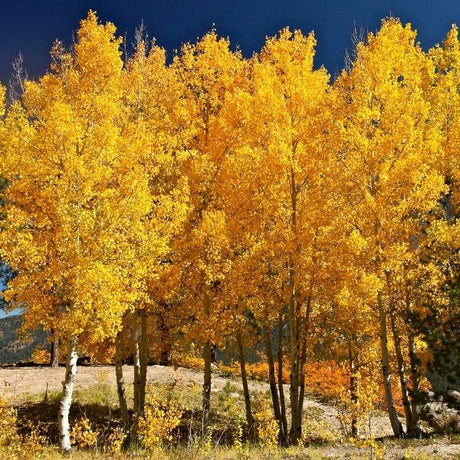
- The oldest tree colony is Pando, a clonal Quaking Aspen forest in Utah. It's a single organism aged 80,000 years, making it the oldest living plant system.
- The oldest grown seeds were 2,000-year-old Judean Date Palm seeds recovered during archaeological digs and successfully sprouted.

Size Does Matter: Tall, Wide, and Heavy Giants
- The tallest tree alive today is Hyperion, a 379.1-foot Coastal Redwood in California.
- The tallest recorded tree ever was a 435-foot Mountain Ash (Eucalyptus regnans) in Australia, which was logged in 1872.
- The stoutest trunk belongs to Árbol del Tule, a Montezuma Cypress in Mexico with a 30.8-foot diameter.
- The Banyan Tree called Thimmamma Marrimanu has the largest canopy, stretching 4.721 acres wide!
- The heaviest living organism is Pando, weighing an estimated 13.2 million pounds (6,000,000 kg).
- A Giant Sequoia can drink up to 500 gallons of water per day, while an Oak Tree can sip around 100 gallons daily and release over 40,000 gallons per year into the atmosphere!
Seeds, Roots & Underground Marvels
- The Coco de Mer, a rare Palm, grows the largest seed on Earth, reaching 12 inches long and nearly 40 pounds in weight!
- The Shepherd's Tree of the Kalahari Desert boasts the deepest recorded roots, reaching down 230 feet to find moisture.
- A mature Oak Tree's root system can stretch for hundreds of miles, forming massive subterranean networks.
- The Wild Fig Tree near Echo Caves in South Africa reportedly has roots reaching 400 feet deep, a world record!
Fast, Slow, Tiny & Showy: Extreme Tree Traits
- The Dwarf Willow of the Arctic is the smallest tree in the world, maturing at just 1-6 cm tall.
- The slowest-growing tree is the Cedar, which takes 150 years to grow just four inches.
The Empress Splendor (Paulownia fortunei) is one of the fastest-growing hardwoods, capable of growing 10-20 feet in a single year! - The White Mulberry Tree holds the record for fastest plant movement, its pollen-launching mechanism fires in 25 microseconds at speeds over half the speed of sound.
- The Bunchberry Dogwood flower explodes with pollen in under 0.5 milliseconds, faster than a blink!
- Black Locust wood glows under a blacklight, thanks to its unique chemical properties.

Biodiversity, Ecosystems & Tree Benefits
- Earth is home to an estimated 60,065 tree species, with about 3 trillion trees globally!
- Since the dawn of agriculture, Earth has lost 46% of its trees.
- A single mature tree can increase bird biodiversity by 80% in an otherwise open field or urban lot.
- On average, a mature tree produces 260 pounds of oxygen per year, enough for two people to breathe.
Cosmic Connections
- Trees can 'talk' to each other through underground fungal networks, often called the Wood Wide Web. These mycorrhizal networks help trees share water, nutrients, and even send distress signals! Add some to your yard by including Nature Hills Root Booster in your planting site or raked into the ground around existing plants!
- Some scientists believe that tree roots can 'hear' water and will grow in its direction, even through barriers, by detecting sound vibrations.
Fire, Ice & Survival Superpowers
- The Lodgepole Pine has serotinous cones that only open to release seeds in the intense heat of wildfires, a fiery rebirth strategy!
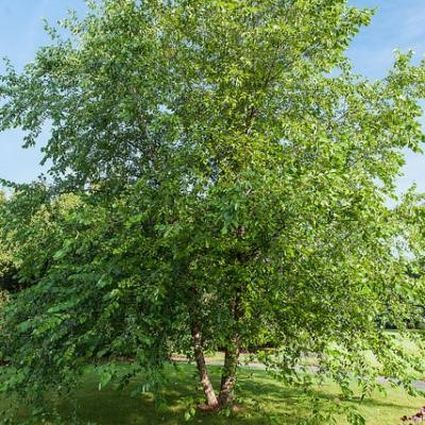
- Some deciduous trees can photosynthesize through their bark in winter after losing their leaves, particularly in extremely cold climates where foliage is only present for a short amount of time, or trees found growing at high altitudes. Aspen and White Paperbark Birch are some notable species here in the US.
Wild, Weird & Animal-Friendly
- The Ant Tree (Triplaris americana) forms a mutual bond with aggressive Pseudomyrmex ants, which live inside its hollow stems and defend it fiercely from herbivores.
- Sycamore Trees were sacred to Ancient Egyptians and often planted near tombs to provide shade in the afterlife.
Blossom Surprises
- The Cannonball Tree (Couroupita guianensis) has large, fragrant flowers that grow directly from its trunk, not its branches, and its fruit can weigh up to 10 pounds and explode open when ripe.
- The Baobab Tree's flowers bloom at night and are pollinated by fruit bats, a rare pollination method.
Eco Engineering
- Mangrove Trees are ecosystem superheroes. They have pneumatophores (breathing roots) and can filter saltwater, stabilizing coastlines and preventing erosion.
- The Dragon's Blood Tree (Dracaena cinnabari) from the Socotra archipelago in Yemen has umbrella-shaped growth and bleeds a red sap once used in medieval medicines and dyes.
A Tree-mendous Ending To A Tree-Lover's Tale!
From ancient Bristlecones whispering stories of ice ages past to sprightly Empress trees shooting skyward in a single season, trees are far more than static scenery. They are dynamic, diverse, and delightfully bizarre. Whether they're flinging pollen, glowing under black lights, or hosting bird choirs in their branches, trees continue to be mother nature's green miracles.
So, plant a tree, hug a tree, or just marvel at one today, and let the wild, woody facts root themselves in your mind!