There are countless varieties of evergreen trees and conifers growing across North America, from towering Pines and fragrant Spruce to stately Firs and graceful Cedars. To the casual eye, it's easy to lump them all together and call them “Pine Trees”, but in truth, each type of conifer has its own unique needles, cones, and growth habits. Identifying evergreen trees isn't just for arborists or botanists - with a little observation, gardeners and nature lovers can quickly learn to tell these ”ever”-greens apart!

Today, we're talking all about unique deciduous evergreens - those rare conifers that defy expectations by dropping their needles in fall! These fascinating trees add seasonal interest, vibrant fall color, and unusual textures that set them apart from the typical evergreens you may know. Perfect for landscaping near water features, creating living history specimens, or simply enjoying their natural beauty, deciduous conifers are one of mother nature's most surprising gifts.
- All About Deciduous Evergreens
- Top Deciduous Evergreens
- Care & Maintenance
- Falling For The Unexpected!
All About Deciduous Evergreens
Deciduous conifers, sometimes called "deciduous evergreens", are a rare and fascinating group of trees that break the rules of what most people expect from a conifer. Unlike their evergreen cousins - Pines, Spruce, and Firs - which keep their needles year-round, deciduous conifers shed their foliage every autumn. This leaf drop allows them to conserve energy and withstand extreme winter conditions in ways evergreen conifers cannot.
Botanically, these trees still produce cones (making them true conifers), but their foliage is adapted to act like deciduous trees. Their needles are softer, arranged in clusters or sprays, and change color dramatically in fall - glowing gold, bronze, or russet before carpeting the ground. After dropping needles, their silhouettes reveal strong branching patterns, unique bark textures, and often ornamental cones that add interest through winter.
Key differences from evergreen conifers include:
-
Seasonal Needle Drop - Deciduous conifers lose all their needles each fall and regrow them in spring, while evergreens continuously renew needles but retain some year-round.
-
Fall Color - Most evergreen conifers stay green, but deciduous conifers turn brilliant shades of yellow, orange, or copper before leaf drop.
-
Needle Structure - Their needles are typically softer, shorter-lived, and held in tufts or flat sprays rather than stiff bundles.
-
Moisture Adaptation - Many species, such as Bald Cypress and Larch, are specialized for boggy or swampy soils and are great for rain gardens or wetland plantings.
- Botanical Curiosity - These trees remind us that "evergreen" doesn't always mean forever green!
Because of these traits, deciduous conifers bridge the gap between broadleaf deciduous trees and evergreen conifers, offering gardeners a unique blend of seasonal drama and year-round form.
Top Deciduous Evergreens
Deciduous conifers are versatile additions to both naturalized and designed landscapes. Unlike true evergreens, they blend autumnal drama with year-round structure!
Bald Cypress (Taxodium)

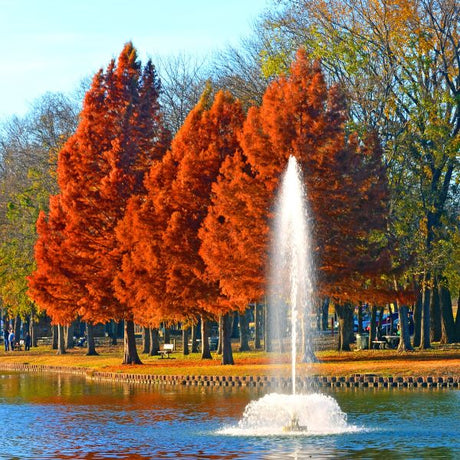
Famous for its "knees" - woody root projections that rise above water - this tree thrives in swamps, bogs, and along ponds. Its feathery, bright green foliage turns russet-orange in fall before shedding.
-
Needles: Fine, alternate, feathery and soft, arranged in flat sprays on deciduous branchlets
- Bark: Reddish-brown fibrous bark that peels in strips
- Cones: Nearly spherical, 1 inch across, green maturing to brown, with thick peltate scales, shattering at maturity
- Great for wetland restoration
- Excellent shade tree for larger properties
- Works well in group plantings for dramatic effect
Other Deciduous Cypress include:
- Lindsey's Skyward® Bald Cypress - Narrow, upright form; great for smaller yards or tight spaces; russet-orange fall color.
- Cascade Falls Bald Cypress - A compact ornamental miniature Cypress with a dramatic weeping habit; ideal near ponds or as a specimen tree; copper-bronze autumn display.
- Green Whisper® Bald Cypress - Light, airy green foliage; golden-russet fall tones; adaptable to wet or average soils.
- Shawnee Brave® Bald Cypress - Strong, pyramidal shape; rich copper fall color; excellent for large landscapes and urban settings.
- Pond Cypress (Taxodium ascendens) - A close cousin of Bald Cypress, smaller in stature with more upright, threadlike foliage.
- Montezuma Cypress (Taxodium mucronatum) - Native to Mexico, often semi-evergreen in warm climates, but drops foliage in colder areas.
American Larch Trees (Larix laricina)

A deciduous conifer with needles held in soft, tufted spur clusters. Larches love moisture and mountain or boggy conditions. Needles glow fresh green in spring, deepen in summer, and blaze golden yellow in fall.
- Needles: Fine, blue-green, soft, arranged in tight tufts of 10-20 needles on spur shoots
- Fall Color: Clear golden-yellow, lighting up northern bogs
- Cones: Small, egg-shaped, 0.5-1 inch long, upright with thin scales
- Bark: Thin, flaky, gray to reddish-brown
- Striking in groves or windbreaks
- Adds seasonal drama to mixed conifer plantings
- Upright female cones add winter interest
Other Larch family relatives include:
- American Tamarack (Larix laricina) - Native to North America; thrives in cold bogs and northern wetlands; brilliant golden-yellow fall color.
- European Larch (Larix decidua) - Tall, long-lived species from Europe; widely planted in landscapes; soft green needles turn yellow in fall.
- Japanese Larch (Larix kaempferi) - Fast-growing, pyramidal form; bluish-green needles; excellent golden autumn display.
Golden Larch (Pseudolarix amabilis)
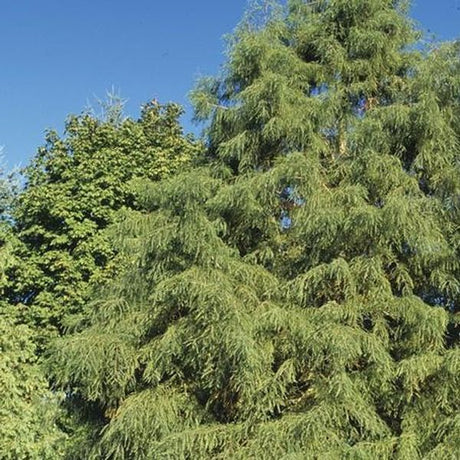
Not a true Larch, but just as stunning, the Golden Larch hails from China and brings a graceful, ornamental quality to gardens and parks. Its needles are broader and softer than true Larches and form elegant spirals that glow golden in autumn before dropping.
- Native to eastern China; thrives in temperate climates
- Needles: Spiraled around shoots, bright green, soft, flattened slightly
- Cones: Large, held upright, 2-3 inches, distinctive rounded form, scales fall apart when mature
- Bark: Gray-brown, furrowed with age
- Fall color is a luminous golden-yellow
- Upright cones resemble small flowers, adding ornamental appeal
- Often grown as a specimen tree for its beauty and rarity
Dawn Redwood (Metasequoia)

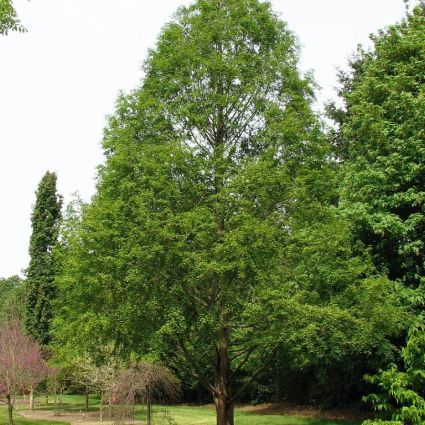
Once thought extinct and rediscovered in the 1940s, Dawn Redwoods are living fossils with a pyramidal habit and soft, fernlike foliage. Their fall color is a rich copper-bronze.
- Needles: Soft, opposite pairs, flat sprays, feathery texture, bright green
- Cones: Round, ~1-inch across, arranged in opposite pairs, hanging on slender stalks
- Bark: Fibrous, reddish-brown, becoming deeply furrowed with age
- Ideal as a specimen or avenue tree
- Tolerates wet soils but adapts to drier sites
- Creates a prehistoric, majestic feel in gardens or parks
Chinese Swamp Cypress (Glyptostrobus pensilis)
Closely related to Bald Cypress and Dawn Redwood, the Chinese Swamp Cypress is a critically endangered conifer once widespread across East Asia. Today, it survives mostly in cultivation and conservation plantings, but it remains a botanical treasure.
- Native to southern China, Vietnam, and Laos
- Deciduous, with soft, linear needles turning bronze in fall
- Prefers swampy, riparian, or wetland conditions
- Produces small, rounded cones similar to Bald Cypress
- Rarely available but prized for historic and ecological value
Care & Maintenance of Deciduous Conifers
Deciduous conifers are surprisingly adaptable once established. Each prefers moist soil conditions but can adjust to average garden soils with proper care.
-
Soil & Water
- Bald Cypress and Larch thrive in boggy, wet areas, swamps, and riverbanks
- Dawn Redwood tolerates both wet and well-drained soils
- Apply mulch to conserve moisture and reduce root stress
-
Light Requirements
- All three species grow best in full sun for dense, healthy foliage
- All three species grow best in full sun for dense, healthy foliage
-
Pruning
- Minimal pruning is needed - remove dead or crossing branches in late winter
- Avoid heavy pruning, which can disrupt natural form
-
Pollination
- These conifers are wind-pollinated
- Male cones release pollen in spring; female cones mature into woody structures that persist into winter
-
Long-Term Growth
- Expect Bald Cypress and Dawn Redwood to reach 50-70 feet or more in home landscapes
- Larch varies depending on species, but often grows 40-80 feet tall
Falling For The Unexpected!
Deciduous conifers are living contradictions - conifers that act like hardwoods, evergreens that embrace the seasons. From the swamp-loving Bald Cypress to the golden-glowing Larch and the ancient Dawn Redwood, these trees add intrigue, wildlife habitat, seasonal showmanship, and brilliant fall color to gardens and parks.
Plant one, and you'll discover why they've fascinated botanists and gardeners alike for centuries! Next up: Identifying Evergreens Part 9: Redwood Trees!
Happy Planting!