Free Shipping on Orders $199+

Growing Zone: | Garden in
Find your Growing Zone!

How To Identify Evergreen Trees Part 7: The Cypress Tree!

all about Cypress! Shop Cypress at nature hills

Charlotte Weidner |

Cypress Trees: Evergreen Icons of Strength and Style

There are so many wonderful varieties of evergreen trees around! Sometimes when you're out for a walk, you may find yourself referring to all of them as just Pine Trees. Understandably, the casual tree hugger is usually not immediately able to tell each type apart.

ID and shop for Cypress at nature hills

In reality, there are countless varieties of coniferous evergreen trees, and with a few moments of closer inspection, you'll notice the differences that set them apart. The Cypress tree family is a striking group that brings bold structure, evergreen color, and timeless beauty to landscapes across the country.

Today, it's all about the Cypress!

All About Cypress

all about Cypress trees at nature hills

Cypress trees (Cupressus spp.) are coniferous evergreens known for their slender needles, highly aromatic foliage, fibrous bark, and distinctive cones!

Their scale-like leaves are typically pressed close to the stems, forming flattened sprays or feathery fans. These needle sprays stay green year-round, adding lush texture that feels both soft to the touch and refreshing in fragrance.

Their cones are woody and rounded, often resembling small spheres with shield-like scales that open to release seeds. Unlike the long cones of Pine, Cypress cones are compact, firm, and often decorative in their own right. Bark can range from gray-brown and shaggy to reddish and furrowed, depending on the species.

Habit-wise, Cypress trees vary from narrow, upright spires (like the Italian Cypress) to wide, pyramidal forms used in privacy screens. Some dwarf and groundcover types, such as Russian Cypress, spread low and wide, their evergreen presence hugging the earth.

Cypress By Name

Though "Cypress" is often a catch-all name, not all trees called Cypress are closely related.

all about bald cypress at nature hills

What About Bald Cypress?

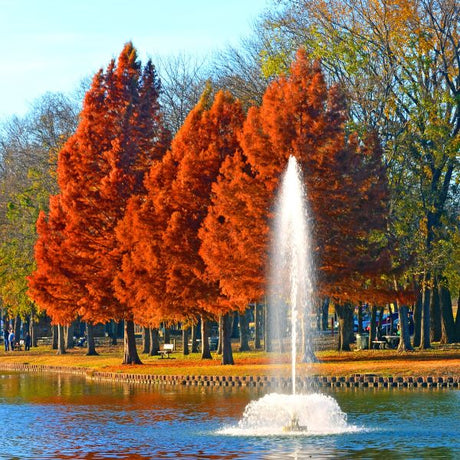
For example, the Bald Cypress (Taxodium distichum) is a deciduous conifer native to the wetlands of the southeastern United States. It sheds its feathery needles each fall, unlike the evergreen Cupressus. Its common name comes from early European settlers who thought its foliage resembled that of Old World Cypress trees.

What About False Cypress?

False Cypress (Chamaecyparis spp.) often gets lumped in with true Cypress, but botanically, they are different. While both are conifers with evergreen, scale-like foliage, False Cypress typically has softer, more finely textured sprays of needles. Their cones are smaller and less woody than those of true Cupressus, and their bark tends to peel in reddish strips.

False Cypress are highly valued in landscaping for their wide range of forms and colors – from golden dwarfs to tall pyramids with feathery blue-green foliage. They are not true Cypress, but like Bald Cypress, the resemblance in foliage and overall appearance gave rise to the shared common name.

Top Cypress Trees at Nature Hills

Here are standout Cypress varieties you'll find at NatureHills.com:

Italian Cypress

Bald Cypress

  • Bald Cypress Tree – A deciduous conifer that thrives in swampy soils and develops iconic "knees" for stability. Its feathery green foliage turns orange-brown in fall.
  • Lindsey's Skyward™ Bald Cypress – A narrow, upright form that fits well in smaller urban landscapes.
  • Cascade Falls Bald Cypress – A graceful weeping form with cascading branches, a real statement piece.
  • Pond Cypress Tree – A close cousin of the Bald Cypress, often found in still wetlands with tighter, upright foliage.

Arizona Cypress

  • Arizona Cypress – A rugged, drought-tolerant Cypress with silvery-blue foliage and peeling bark.
  • Blue Ice Arizona CypressBrilliant silvery-blue foliage with a frosty glow, perfect for hot, dry climates.
  • Sulphurea Arizona CypressGolden foliage that brings a bright splash of evergreen color.

Leyland & Murray Cypress

  • Leyland Cypress – A popular hybrid that grows quickly into a dense, conical form, ideal for windbreaks and privacy.
  • Murray Cypress Tree – A fast-growing, disease-resistant evergreen, great for hedges and screens.

Cypress Shrubs & Groundcovers

  • Celtic Pride® Siberian Cypress – A cold-hardy, low-growing, spreading evergreen with feathery foliage that bronzes in winter.
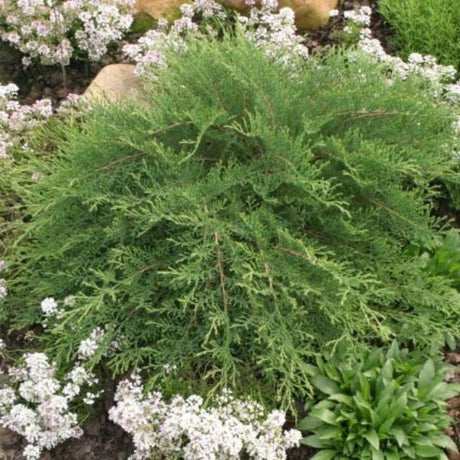
  • Russian Cypress – A hardy groundcover with fern-like foliage that creeps along slopes or borders.
  • Drew's Blue® Siberian Carpet Cypress – A mat-forming groundcover with striking blue-green tones.
  • Goldcrest Lemon Cypress – A compact form with cheerful golden-yellow foliage and a refreshing lemon scent.
  • Fuzzball® Siberian Carpet Cypress – A tidy, rounded groundcover with soft green foliage that develops bronzy tones in winter, perfect for compact spaces and borders.

Where Cypress Shines in Landscaping

shop and ID Cypress at nature hills today!

Cypress trees and their relatives are incredibly versatile!

Tall columnar types like Italian Cypress make stunning vertical accents or natural privacy walls. They are also very xeric and thrive in Mediterranean climates.

Fast-growing Leyland and Murray Cypress are workhorses for windbreaks, hedgerows, and large property borders.

Bald Cypress thrives near ponds, streams, and rain gardens, while Cascade Falls Bald Cypress creates a weeping focal point.

Groundcover Cypress varieties like Celtic Pride and Russian Cypress work well on slopes, rock gardens, and as low-maintenance foundation plantings.

Many Cypress also provide shelter and food for birds and wildlife, making them both functional and eco-friendly choices.

Care & Maintenance

Keeping Cypress trees healthy is straightforward with a few basic practices:

  • Soil & Water – Most Cypress prefer well-drained soil, though Bald Cypress thrives in wet soils. Watering deeply during establishment is key.
  • SunlightFull sun is best for all types.
  • PruningMinimal pruning is needed, usually just to shape or remove dead wood.
  • Fertilizer – Feed with a balanced slow-release fertilizer in spring.
  • Spacing – Give fast-growing Cypress, like the Leyland, enough room to mature, especially when planting hedges.

With the right placement, Cypress trees will reward you with year-round greenery, strength, and beauty!

Cypress Style - Evergreen All the Way!

From narrow spires to weeping cascades and swamp-loving species, Cypress trees bring a timeless elegance to gardens big and small. Their adaptability, fragrant evergreen foliage, and diverse forms make them favorites among landscapers and gardeners alike. Whether you want bold privacy, a dramatic accent, or a low-maintenance groundcover, Cypress has you covered.

Happy Planting!

Previous Next

Compare Plants

Browse the features and specs side-by-side to find the best fit for your garden.

A table comparing the facets of 4 products
Facet
Italian Cypress Tree
View details
Bald Cypress Tree
Bald Cypress Tree
View details
Lindsey's Skyward™ Baldcypress
Lindsey's Skyward™ Bald Cypress
View details
Celtic Pride® Siberian Cypress
View details
Rating
Rating
(16)
-
(1)
-
Type
TypeTreeTreeTreeShrub
By
ByNature Hills NurseryNature Hills NurseryNature Hills NurseryProven Winners
Flower Color
Flower Color
-
-
-
  • Green
Growing Zone Range
Growing Zone Range
7-10
4-10
5-9
2-7
Mature Height
Mature Height
50-60 ft
50-65 ft
18-20 ft
2 ft
Width
Width
4-5 ft
20-30 ft
5-6 ft
6 ft
Price
Price
Regular price $6984
Regular price $9291
Regular price $11160
Regular price From $2614

Frequently Asked Questions

Are cypress trees evergreen?

Yes, true cypress trees (Cupressus spp.) are evergreen conifers that maintain their scale-like, aromatic foliage year-round. These trees feature needle sprays that stay green through all seasons, providing consistent color and texture to landscapes. Note that Bald Cypress is actually deciduous despite its name and belongs to a different genus (Taxodium). When selecting cypress for your landscape, verify you're choosing true Cupressus species if you want guaranteed evergreen performance.

Is a cypress tree an evergreen?

Yes, most cypress trees are evergreens that retain their scale-like needles year-round, providing continuous green color and texture to your landscape. True cypress species (Cupressus spp.) feature aromatic foliage pressed close to stems in flattened sprays, staying lush through all seasons. However, note that Bald Cypress is actually deciduous despite its name. Choose upright varieties like Italian Cypress for narrow spaces or spreading types like Russian Cypress for groundcover in zones 6-10 depending on the species.

What does a cypress tree look like?

Cypress trees feature distinctive scale-like leaves pressed close to their stems, forming flattened sprays or feathery fans that stay green year-round. They produce compact, rounded woody cones (unlike the long cones of pines) and display fibrous bark ranging from gray-brown and shaggy to reddish and furrowed. Growth habits vary dramatically from narrow, upright spires like Italian Cypress to wide, pyramidal forms and low-spreading groundcover types. Look for the characteristic flattened needle sprays and small spherical cones to distinguish cypress from other evergreens in your landscape.

How to identify cypress trees?

Identify Cypress trees by their distinctive scale-like leaves that press close to stems in flattened sprays, creating soft, aromatic foliage that stays green year-round. Look for their compact, rounded woody cones (unlike the elongated cones of pines) and fibrous bark ranging from gray-brown to reddish. Growth habits vary dramatically from narrow upright spires to wide pyramidal forms, with some dwarf varieties spreading low as groundcover. Check the foliage texture and cone shape first, then observe the overall growth pattern to confirm you've found a true Cypress.

What do cypress trees look like?

Cypress trees are coniferous evergreens with distinctive scale-like leaves pressed close to their stems, forming flattened sprays that stay green year-round. They produce small, woody, rounded cones unlike the long cones of pine trees, and their bark ranges from gray-brown and shaggy to reddish and furrowed depending on the species. Growth habits vary dramatically from narrow, upright spires like Italian Cypress to wide, pyramidal forms and low-spreading groundcover types. Look for their soft, aromatic foliage and compact spherical cones to distinguish cypress from other evergreens in your landscape.

What is the best planting distance between cypress trees for hedges?

For cypress hedges, plant trees 3-6 feet apart depending on the mature width of your chosen variety and desired hedge density. Smaller cypress like Leyland cypress can be spaced 3-4 feet apart, while larger varieties like Arizona cypress need 5-6 feet between trees. Plant in early spring or fall when temperatures are moderate in zones 6-10, depending on your cypress species. Space closer together for faster screening but allow adequate room for air circulation to prevent disease issues.

What is a cyprus tree?

A Cypress tree (Cupressus spp.) is a coniferous evergreen featuring scale-like leaves pressed close to stems, aromatic foliage, and distinctive woody, rounded cones that differ from the long cones of pine trees. These trees range from narrow, upright forms like Italian Cypress to wide, pyramidal shapes perfect for privacy screens, with some dwarf varieties spreading low as groundcover. Cypress trees thrive in USDA zones 6-10 depending on the species and maintain their green color year-round. Choose upright varieties for vertical accents or screening, and wider forms for foundation plantings or windbreaks.

What tree is it?

To identify a Cypress tree, look for scale-like leaves pressed close to stems forming flattened sprays, small woody rounded cones (unlike long pine cones), and fibrous bark ranging from gray-brown to reddish. True Cypress trees (Cupressus spp.) are hardy in zones 7-10 and feature aromatic evergreen foliage that stays green year-round. Growth habits vary dramatically from narrow columnar forms like Italian Cypress to wide spreading groundcover types. Take photos of the leaves, cones, and overall shape, then compare these features against reliable tree identification guides or consult your local extension office for definitive species confirmation.

What are the ideal sunlight and soil conditions for planting cypress trees?

Cypress trees thrive in full sun (6+ hours of direct sunlight daily) and well-draining soil with a pH between 6.0-8.0. Most varieties are drought-tolerant once established but prefer consistent moisture during their first growing season. These adaptable evergreens perform well in USDA zones 6-10, depending on the specific variety. Plant in spring after the last frost for best root establishment before winter.

How often should I water newly planted cypress trees?

Water newly planted cypress trees deeply 2-3 times per week for the first growing season, providing approximately 1 inch of water each time. During hot summer months or in zones 7-9, increase frequency to every other day for the first 6-8 weeks after planting. Check soil moisture by inserting your finger 2-3 inches deep near the root zone. Reduce watering frequency once established, but maintain consistent moisture during the critical first year.

Find Your Garden's Growing Zone!

Your Current Growing Zone:

Zone

ZIP Code:

✓ Growing Zone Set Successfully!

Your zone has been saved and will be used throughout the site.

⚠ Unable to locate a growing zone for that ZIP code.

Please check your ZIP code and try again.

Looking up your growing zone...

When ordering a tree or plant, make sure to know your planting zone.

You can determine your garden's USDA hardiness zone by entering your Zip Code below.