Shop With Confidence: FREE Growing & Glowing Promise

Free Shipping on Orders $199+

Gardening in Denver: Thrive in Your Unique Climate

Gardening in Denver: Thrive in Your Unique Climate - Nature Hills Nursery

Nature Hills Nursery |

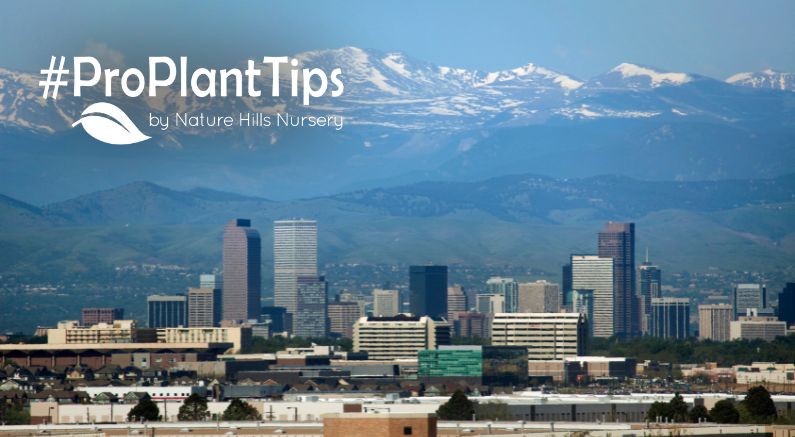
welcome to Colorado

The Mile High City has a climate that is as varied as it is breathtaking! Offering a distinctive backdrop for those eager to cultivate vibrant, lasting gardens.

Choosing the right plants is crucial because of the semi-arid conditions, intense sunlight, and unique USDA Hardiness Zones (5b-6a).

For suburban homeowners eager to enhance their outdoor retreats without the burden of high maintenance, this guide shares essential insights into flourishing green spaces amidst Denver's unpredictable weather and higher elevation.


Understanding Denver’s Unique Climate and Growing Conditions

At 5,280 feet above sea level, Denver boasts a semi-arid climate with crisp winters and sultry summers. This high elevation means intense sunlight, more than 300 days of sunshine a year, increasing water requirements and influencing plant growth. Being this close to the Rocky Mountains brings added challenges to this southwestern US state! Cold-hardy plants are non-negotiable due to the occasional winter frost.

Once you consider all these factors in your garden design, you'll be better able to select plants for your landscape perfectly!

Top Plant Choices For Denver Landscapes

Achieving a stunning Denver landscape begins with selecting trees, shrubs, and flowering plants that adapt seamlessly to local conditions. These Denver-native plants are well-adapted to high-altitude, dry conditions, and temperature fluctuations, making them ideal for low-maintenance, water-wise gardening in Colorado! Consider these top picks:

Recommended Trees

  • Blue Chinese Wisteria Tree: Celebrated for its dazzling blue to lavender blooms and its resilience against sun and light drought.
  • Quaking Aspen Tree: A classic native choice, adding charm and weather resistance, much like a treasured family heirloom.
  • Autumn Blaze® Maple: Famed for its fall vibrance, thriving in varied soils and sunlight levels.
  • Rocky Mountain Maple – A small, drought-tolerant native Maple with a bright fall color, great for urban and mountain landscapes.
  • Gambel Oak – A tough, drought-resistant Oak that provides wildlife habitat and brilliant golden fall foliage.
  • Limber Pine – A hardy, long-lived evergreen with flexible branches that withstand snow and high winds.

Ideal Native Shrubs and Bushes

  • Regent Saskatoon Serviceberry: Thrives in dry conditions, with early blooms greeting you like a Spring surprise.
  • Perfecta Trifecta & BiColor Butterfly Bush: These robust bushes invite pollinators and handle intense sunlight gracefully.
  • Redosier Dogwood: With its bright red stems in the winter, it’s the garden canvas’s equivalent of a bold stroke of color. Check out the Arctic Fire®!
  • Mountain Hydrangea: Boasting lush blooms that withstand Denver's intense sun. Mountain Hydrangea handles sun to part shade, while not needing as much moisture (once established) as their cousins. Try a Tuff Stuff Ah-Ha® for Lacecap blooms or the mopheads of Let’s Dance® Can Do™ for resilient blooms.
  • Apache Plume – A drought-tolerant shrub with white spring flowers and feathery pink seed heads.
  • Three-Leaf or Staghorn Sumac – Sumacs are low-maintenance, adaptable shrubs with orange-red fall color and fragrant yellow flowers.
  • Mountain Mahogany – A semi-evergreen, xeric shrub with twisting seed plumes and excellent erosion control.

Best Native Flowering Plants

  • Columbines: These native favorites are space-saving and enjoyable spring delights with unique blooms and a rugged nature that thrives almost anywhere! The Rocky Mountain Columbine is Colorado’s state flower, featuring blue and white blooms that attract hummingbirds.
  • Prairie Coneflower – A sun-loving perennial with drooping yellow petals and a tall central cone. The Gray-Headed and Purple Coneflowers are fan favorites.
  • Showy or Common Milkweed: bring in the butterflies with this native flowering Milkweed that the Monarchs depend on.
  • Pasque Flower – A spring-blooming, cold-hardy wildflower with purple petals and fuzzy seed heads.

Grasses

  • Blue Grama Grass – A low-water, fine-textured native grass with unique eyelash-shaped seed heads.
  • Little Bluestem – A hardy ornamental grass with blue-green summer foliage that turns copper-orange in fall.
  • Indian Ricegrass – A delicate, airy grass that thrives in dry conditions and provides seeds for birds.

Hardy Native and Adapted Options

Colorado has a wide range of native plants unique to its climate!

  • Blanket Flower: colorful blooms with fuzzy centers and toothy petals, Blanket Flowers are xeric perennials that thrive in rocky soil.
  • Single-Needle Piñón Pine: A native evergreen with edible seeds and a towering stature, Pinyon Pines are mighty conifers.
  • Whiteleaf Manzanita: a hardy broadleaf evergreen shrub with fragrant flowers, it handles poor soil and sun.
  • Kinnikinnick – A low-growing evergreen with glossy leaves and red berries, excellent for erosion control.

Native Fruiting Trees & Shrubs

  • Chokecherry – A wildlife-friendly small tree/shrub with dark red edible berries great for jams.
  • Golden Currant – A drought-tolerant shrub with fragrant yellow flowers and edible black berries.
  • Serviceberry – A multi-season shrub/tree with white spring blooms, edible blue-purple berries, and stunning fall color.

Honorable Mentions: Exceptional Plants Worth Considering

  • Dog Tuff Bermudagrass or Buffalo Grass: Offers enduring green spaces with minimal watering, imagine it as a fuss-free carpet for your garden.
  • Denim 'n Lace Russian Sage: A hardy perennial that thrives in arid conditions, adding brilliant hues.
  • Cascade Hop: Provides ornamental appeal and, for the adventurous spirits, home brewing ingredients that grow vertically in your sun gardens.

Implementing Water Management and Xeriscaping in Denver

mountain flowers

Xeriscaping champions water conservation through smart plant choices and careful landscape design. Drip irrigation proves superior to traditional methods, delivering water precisely, akin to sipping through a straw rather than pouring from a bucket.

Adding mulch and organic soil amendments ensures moisture retention.

Optimizing Soil Conditions For Denver's Clay-Rich Landscapes

Denver's rocky mountainous climate means easy rock garden, like craig, crevice, and alpine gardens! The clay-heavy soils require amendments for optimal plant health and drainage. Enhancing structure with compost or peat moss is the foundation that supports all plant growth. Regular soil tests balance pH and secure nutrient availability.

Strategic Planting Seasons and Protective Strategies

rock garden with cactus

Timing is key. Planting in spring and fall minimizes stress on new plants. Steer clear of peak summer to avoid transplant shock and high water needs. Guard against unexpected frosts with frost blankets, warm embraces for your plants on chilly nights.

Approaches To Pest and Disease Management

Integrated Pest Management (IPM) minimizes chemical dependence while promoting balance. Monitoring pests like aphids helps in maintaining healthy plants. Adequate plant spacing reduces fungal disease risks, similar to an athlete having a clear lane.

Value-Enhancing Opportunities With Trees and Shrubs

Deciduous trees like the fast-growing Black Locust or the striking Quaking Aspen offer seasonal shade and energy savings. Evergreens such as Pinyon Pine provide year-round structure and wildlife habitats. Choose hedge plants like Privet or the Common Purple Lilac for attractive privacy without the upkeep.

Plants to Avoid

Avoid any plant that requires deep, rich, highly organic soil and consistent moisture unless you are planning on babying it along its entire life.

  • Avoid water-hungry plants, which require consistently moist, acidic soil that Denver’s alkaline, clay-heavy soil cannot provide.
  • Hosta's and Impatiens also struggle due to low humidity and strong sun exposure, often wilting or burning in the intense summer heat.
  • Additionally, Tropical Hibiscus and Japanese Maple trees are ill-suited to Denver’s cold winters and unpredictable spring frosts, which can severely damage or kill them.

Remember to consider your elevation when selecting plants and give them a protected location from the worst of the winter winds and harshest summer sun.

Head over to your local County Extension Office for more info on local do's and don'ts.

Expert Tips for Successful Gardening in Denver

Thriving gardens in Denver, Colorado begin with choosing quality plants that suit the landscape and climate of this incredible region. Dive into research, consult expert guides, and your garden will reward you with resilience and beauty. Enhance your home’s appeal, making it the showpiece of the neighborhood.

Happy Planting!

Previous Next

Compare Plants

Browse the features and specs side-by-side to find the best fit for your garden.

A table comparing the facets of 5 products
Facet
A large, flourishing purple wisteria vine draped over a wooden arbor against a clear blue sky in a spring garden with pink tulips in the background.
Blue Chinese Wisteria Tree
View details
Quaking Aspen Tree (Populus tremuloides 'Quaking'), a tree featuring deciduous and pyramidal, rounded form.
Quaking Aspen Tree
View details
Autumn Blaze® Maple Tree (Acer x freemanii 'Jeffersred'), a tree featuring red flowers and deciduous.
Autumn Blaze® Maple Tree
View details
BiColor Butterfly Bush (Buddleia x weyeriana 'Bicolor'), a shrub featuring purple, orange flowers and deciduous.
BiColor Butterfly Bush
View details
Arctic Fire® Red Redosier Dogwood (Cornus sericea 'Farrow'), a shrub featuring white flowers and deciduous.
Arctic Fire® Red Redosier Dogwood
View details
Rating
Rating
(304)
-
(2)
(52)
(1)
Type
TypeTreeTreeTreeShrubShrub
By
ByNature Hills NurseryNature Hills NurseryNature Hills NurseryNature Hills NurseryProven Winners
Flower Color
Flower Color
  • Blue
  • Purple
  • Lavender
  • Violet
-
  • Red
  • Purple
  • Orange
  • White
Growing Zone Range
Growing Zone Range
5-9
2-6
3-8
5-9
3-7
Mature Height
Mature Height
10-15 ft
40-60 ft
40-60 ft
5-6 ft
3-5 ft
Width
Width
10-15 ft
20-30 ft
40-60 ft
4-5 ft
3-5 ft
Price
Price
Sale price From $10799 Regular price $11999
Regular price From $11022
Sale price $5950 Regular price $11900
Sale price From $2787 Regular price $5574
Regular price From $2614

Frequently Asked Questions

What USDA hardiness zone is Denver, Colorado, and how does it affect what I can grow?

Denver falls within USDA Hardiness Zones 5b to 6a, meaning average minimum winter temperatures range from -15°F to 0°F. Combined with the city's 5,280-foot elevation, intense sunlight, and semi-arid conditions, this zone rating shapes nearly every planting decision you will make. Cold-hardy, drought-tolerant plants are your best foundation, so focus on proven performers like Quaking Aspen, Rocky Mountain Maple, and native shrubs such as Regent Saskatoon Serviceberry that are built to handle Denver's temperature swings and dry conditions.

Can wisteria survive Denver winters and thrive in a zone 6a garden?

Yes, Blue Chinese Wisteria is a solid choice for Denver's Zone 5b-6a climate, as it is cold-hardy enough to handle the region's occasional harsh winters while also tolerating the intense sunlight and light drought conditions common at 5,280 feet elevation. For best results, plant in a sheltered south or west-facing location to protect against desiccating winds and late-season frosts. Apply a layer of mulch around the root zone each fall to insulate roots through the coldest months, and plan for supplemental watering during Denver's dry stretches to keep this vigorous bloomer at its best.

Can hydrangeas grow in Denver, and which varieties handle the climate best?

Hydrangeas can grow in Denver, but success depends heavily on variety selection and microclimate placement, as Denver's USDA Zones 5b-6a, intense sun, low humidity, and late spring frosts create challenging conditions. Panicle hydrangeas like Limelight and Quick Fire are your best bet because they bloom on new wood, making them frost damage resistant, and they tolerate drought and full sun far better than the more temperamental bigleaf types. Smooth hydrangeas such as Annabelle also perform reliably in Denver gardens. Plant in a spot with morning sun and afternoon shade to protect blooms from the intense high-altitude rays, water deeply and consistently through dry spells, and apply a layer of mulch to retain soil moisture and insulate roots through cold winters.

Do ornamental grasses come back every year in Denver gardens?

Many ornamental grasses perform excellently as perennials in Denver's USDA Hardiness Zones 5b-6a, returning reliably each year once established. Native and drought-tolerant varieties like Blue Grama, Little Bluestem, and Feather Reed Grass are especially well-suited to the semi-arid conditions and intense high-altitude sunlight. Cut grasses back to about 4 to 6 inches in late winter or early spring before new growth emerges, typically around March in Denver. Visit Nature Hills Nursery to browse ornamental grass varieties rated for Zone 5 and 6 to ensure the best performance in your Denver landscape.

Which plants grow best in Denver's climate and zone 6a conditions?

Denver's USDA Hardiness Zones 5b to 6a favor tough, adaptable plants that can handle semi-arid conditions, intense high-altitude sunlight, and occasional hard frosts. Top-performing trees include the Quaking Aspen, Autumn Blaze Maple, Gambel Oak, and Limber Pine, while shrubs like Regent Saskatoon Serviceberry and Butterfly Bush thrive in the dry, sunny conditions. Native and drought-tolerant selections are your best bet for low-maintenance success at 5,280 feet elevation. Browse Nature Hills Nursery's curated selection of Zone 5b to 6a plants to find proven performers ready to thrive in your Denver landscape.

When should I plant flowers, vegetables, and shrubs in Denver?

Denver's USDA Hardiness Zones 5b-6a mean your planting timing hinges on the last frost date, which typically falls between late April and mid-May. Wait until after that window to plant warm-season vegetables and tender annuals, while cool-season crops like lettuce and kale can go in the ground 4 to 6 weeks earlier. Shrubs and trees establish best when planted in early spring or early fall, giving roots time to settle before extreme heat or cold arrives. Use your local frost dates as your anchor point and always be prepared for a late spring cold snap at Denver's high elevation.

How often and how deeply should I water my Denver garden?

In Denver's semi-arid climate, most established trees and shrubs benefit from deep, infrequent watering rather than frequent shallow irrigation, aiming for moisture penetration of 12 to 18 inches to encourage deep root development. The intense sunlight and more than 300 days of sunshine per year at 5,280 feet elevation mean your garden will dry out faster than gardens at lower elevations, so check soil moisture weekly during summer and water when the top 2 to 3 inches feel dry. Native and drought-adapted plants like Quaking Aspen and Rocky Mountain Maple need less frequent watering once established, typically every 7 to 10 days in summer and every 2 to 4 weeks in winter when the ground is not frozen. Water deeply in the early morning to reduce evaporation and always adjust your schedule based on recent rainfall and seasonal temperature swings.

How can I improve Denver's clay soil for better plant growth?

Denver's heavy clay soil drains poorly and can suffocate roots, but it responds well to amendment with organic matter like compost worked in 6 to 8 inches deep before planting. Adding coarse sand or gypsum can also help break up compaction and improve aeration over time. For best results, amend your soil in fall so it has time to integrate before spring planting season in your Zone 5b to 6a garden. Top-dress beds annually with 2 to 3 inches of compost to continue building soil health and water retention without waterlogging roots.

Which annuals and perennials perform best in Denver gardens?

Denver's USDA Hardiness Zones 5b-6a and intense high-altitude sunshine favor tough, drought-tolerant annuals like zinnias, cosmos, and marigolds, which thrive in the long, sunny growing season. For perennials, look to native and adapted plants such as Blue Grama Grass, Purple Coneflower (Echinacea), Black-Eyed Susan, and Salvia, all of which handle Denver's temperature swings, semi-arid conditions, and occasional late frosts with ease. Start cool-season annuals indoors 6 to 8 weeks before your last frost date, typically around mid-May in Denver, then transition warm-season varieties outdoors once temperatures are consistently settled. Browse Nature Hills' selection of zone-appropriate perennials and annuals to build a pollinator-friendly, low-maintenance Denver garden that delivers color from spring through fall.

How do I create an attractive xeriscape garden in Denver?

Creating a successful xeriscape garden in Denver starts with selecting plants suited to USDA Hardiness Zones 5b-6a that naturally tolerate the city's semi-arid conditions and intense high-altitude sunlight. Native and drought-adapted choices like Rocky Mountain Maple, Gambel Oak, Limber Pine, and Regent Saskatoon Serviceberry form a strong foundation, requiring far less supplemental water once established. Group plants by water needs, apply 2-3 inches of mulch to retain soil moisture, and plan your installation for spring or early fall when temperatures are moderate and roots can establish before extreme weather arrives. Visit naturehills.com to browse our full selection of Denver-ready trees and shrubs that will keep your xeriscape looking beautiful year after year.