The Complete Pine Tree Guide

Pine trees are among the most recognizable evergreen trees in North America. There are so many wonderful varieties of Evergreen Trees around! Sometimes when you are out for a walk, you may find yourself referring to all of them as just Pine Trees. Understandably, the layman arborist may not be able to tell each type apart!
Whether you're looking to plant Pine trees in your landscape or simply want to identify Pine trees during nature walks, this comprehensive guide covers everything you need to identify and differentiate these easiest-to-recognize magnificent needle-bearing conifers.
- Quick Pine Tree Identification
- Understanding Pine Tree Basics
- Popular Pine Tree Types for Landscaping
- Native Pine Trees By Region
- Fascinating Pine Tree Facts
- Choosing the Right Pine for Your Property
- Common Pine Tree Problems & Solutions
- Getting Started: Pine Tree Planting Guide
- Seasonal Pine Tree Care Calendar
- The Pine Cone
- Why Choose Pine Trees?
- Picturesque Pines at Nature Hills!
Quick Pine Tree Identification

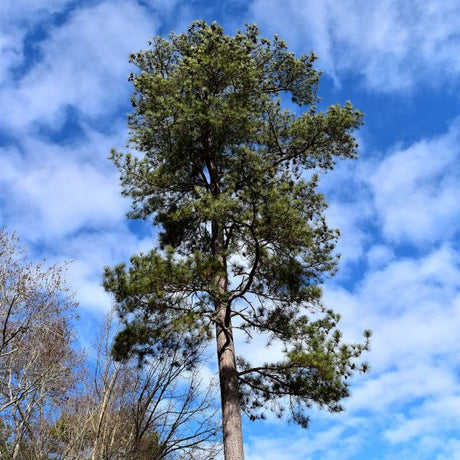
The gorgeous and easily identifiable coniferous evergreen features a pyramidal to rounded profile with long, shaggy, needle-like leaves. Their fluffy appearance and motion in the wind are the usual telltale signs from a distance.
Key Features at a Glance
New growth is held in prominent "candles" in the spring and is typically a lighter green to yellow!
- Needles: Arranged in bundles (held in papery sheaths called fascicles) of 2, 3, or 5
- Bark: Flaky, reddish-brown texture
- Shape: Pyramidal to rounded profile with shaggy appearance
- Cones: Hang downward from branches
- Sap: Very resinous when damaged
Easy Memory Tricks
- White Pine: 5 needles per cluster ("white" has 5 letters)
- Red Pine: 2 needles per cluster ("red" has 3 letters)
Understanding Pine Tree Basics
Pine trees belong to the genus Pinus with 126 species worldwide and about 35 varieties in the US. They're divided into:
- Soft Pines: More flexible timber
- Hard Pines: Stronger, denser wood
Growing Conditions
- Soil: Acidic, well-drained environments
- Adaptability: Thrives in poor soil and high elevations
- Pollination: Wind-pollinated with separate male and female cones
Like most Conifers, these trees are monoecious, meaning they have separate male and female cones on the same tree. The pollen is wind-distributed, blowing from one tree to the next. Typically, the male cones are higher up on the tree than the female cones, and wind and gravity do the rest.
Popular Pine Tree Types for Landscaping
Eastern White Pine (Pinus strobus)
- Height: 80-100 feet
- Needles: 5 per bundle, bluish-green
- Best for: Fast-growing shade, wildlife habitat
- Zone: 3-8
Austrian Pine (Pinus nigra)
- Height: 50-60 feet
- Features: Salt-tolerant, noise reduction
- Best for: Urban areas, windbreaks
- Growth rate: 3+ feet per season
- Zone: 4-7
Scotch Pine (Pinus sylvestris)
- Height: 30-60 feet
- Bark: Distinctive orange-red flaking
- Best for: Cold climates, poor soils
- Hardiness: Extremely cold-hardy
- Zone: 2-7
Ponderosa Pine (Pinus ponderosa)
- Height: 80+ feet
- Needles: 6-10 inches long, bundles of 3
- Best for: Western landscapes, timber
- Lifespan: 300-600 years
- Zone: 3-7
Loblolly Pine (Pinus taeda)
- Height: 60-80 feet
- Features: Fast-growing, fire-resistant
- Best for: Southern landscapes, screens
- Soil tolerance: Wet, acidic, clay soils
- Zone: 6-9
Native Pine Trees By Region

Eastern US
- Eastern White Pine: Maine to Georgia
- Red Pine: Northern states, zones 3-7
- Pitch Pine: Sandy coastal areas
- Virginia Pine: Mid-Atlantic region
Western US
- Ponderosa Pine: Mountain West
- Lodgepole Pine: Rocky Mountains
- Sugar Pine: Pacific Northwest
- Single-Needle Piñón: Southwest deserts
Southern US
- Longleaf Pine: Southeastern coastal plains
- Slash Pine: Florida and Gulf Coast
- Shortleaf Pine: Texas to Carolinas
Fascinating Pine Tree Facts
Record Holders
- Oldest living organism: Methusela, a Great Basin Bristlecone Pine (4,850 years old)
- Tallest Pine: 268.35 feet (Oregon)
- Largest cones: Sugar Pine (2 feet long)
- Longest needles: Longleaf Pine (18 inches)
Practical Uses
- Turpentine: Made from Pine resin
- Medicine: Resin treats burns and insect bites
- Food: Pine needles for vitamin C tea; Pinola trees make Pine nuts for cooking
- Mulch: Fallen needles make excellent garden mulch
Choosing the Right Pine for Your Property

For Small Spaces
- Mugo Pine (3-5 feet shrub)
- Blue Shag Eastern Pine: Dwarf form, 2-4 feet
- Tiny Kurls Eastern Pine: Unique twisted needles, 3-6 feet
- Green Penguin Dwarf Scotch Pine: Dwarf form, 4 - 6 feet
For Privacy Screens
- Austrian Pine (fast-growing, dense)
- Loblolly Pine (rapid growth)
- Eastern White Pine (soft texture)
For Wildlife Gardens
- Eastern White Pine (bird shelter, seed source)
- Ponderosa Pine (wildlife habitat)
- Any native species to your region. Check out Native trees for your state
Common Pine Tree Problems & Solutions
Yellowing Needles
- Normal: Inner needles turn yellow and drop after 2 years
- Solution: Natural process, no action needed
Poor Growth
- Causes: Wet soil, too much shade, poor drainage
- Solutions: Improve drainage, relocate if necessary
Pest Issues
- Prevention: Choose native species, avoid stress
- Treatment: Consult local arborist for severe infestations
Getting Started: Pine Tree Planting Guide

Step 1: Site Selection
Choose a location with:
- Full sun (6+ hours daily)
- Well-drained soil
- Room for mature size
- Protection from harsh winds
Step 2: Soil Preparation
- Test soil pH (aim for 5.5-6.8)
- Improve drainage if needed
- Add organic matter sparingly
Step 3: Planting
- Dig a hole 2x wider than the root ball
- Plant at the same depth as the container
- Water thoroughly, but avoid soggy soil
- Mulch around base (keep away from trunk)
Step 4: Aftercare
- Water weekly for the first month
- Deep watering during dry spells
- Avoid fertilizing for the first year
Seasonal Pine Tree Care Calendar
Even though they are evergreens, Pines usually keep their needles for about 2 years before replacing them with new growth. The interior-most and oldest growth is light to yellowish-green, and the older yellow needles that are ready to be cast off will collect beneath the tree. This Pine straw makes great mulch around the garden!
Spring
- Plant new trees
- Watch for new "candle" growth
- Apply mulch if needed
Summer
- Deep watering during drought
- Monitor for pest issues
- Enjoy fragrant new growth
Fall
- Best time for planting
- Collect Pine cones for crafts
- Rake and compost fallen needles
Winter
- Protect young trees from heavy snow
- Plan landscape additions
- Identify trees by bark and cone patterns
The Pine Cone

Not just for the squirrels and making craft projects out of! Many songbirds rely on the winged seeds hidden among the scales of the Pine cone.
- Male cones produce pollen, then fall off in the spring
- Mature female cones can have a sharp spike at the end of each cone scale
- Female cones have very hard scales and only open in some conditions and humidity
- Other varieties only open when exposed to fire
- Typically hang down from the branches
- Pines typically have sharp, pointed spikes on the cone scales
Why Choose Pine Trees?
Environmental Benefits
- Carbon sequestration throughout long lifespans
- Wildlife habitat for birds and small mammals
- Soil erosion control with extensive root systems
- Air purification and noise reduction
Landscape Advantages
- Year-round green color and structure
- Low maintenance once established
- Fast growth for quick results
- Versatile sizing from dwarf to giant varieties

Picturesque Pines at Nature Hills!
Habitat for squirrels, raccoons, birds, and other forest animals, Pine Trees are easy-to-grow and fast-growing evergreens!
With year-round greenery and fluffy form, the lovely Pine Tree will delight you and your local wildlife!
Ready to add these magnificent evergreens to your landscape? Pine trees near me can often be found at local nurseries, or consider ordering online from specialized growers. Whether you're interested in dwarf Pine trees for containers or large Pine trees for property borders, there's a perfect variety for every garden.
Get the kids outside and go on a nature walk to see how many of your region's native Pines you can identify! Collect some pinecones and make some crafts and try your hand at some wildcrafting with these versatile trees!
Happy Planting!
Check out all the varieties available at Nature Hills and stay tuned for How To Identify Evergreen Trees Part 2: Hemlock Trees!