Shop With Confidence: FREE Growing & Glowing Promise

Free Shipping on Orders $199+

Decorating a Fall Wreath With Homegrown Flowers!

Decorating a Fall Wreath With Homegrown Flowers! - Nature Hills Nursery

Charlotte Weidner |

Hang a Wreath to fill your home with holiday cheer. They’re made in circles, with no beginning or end, to symbolize the endless connection of family and friends dear! - Unknown

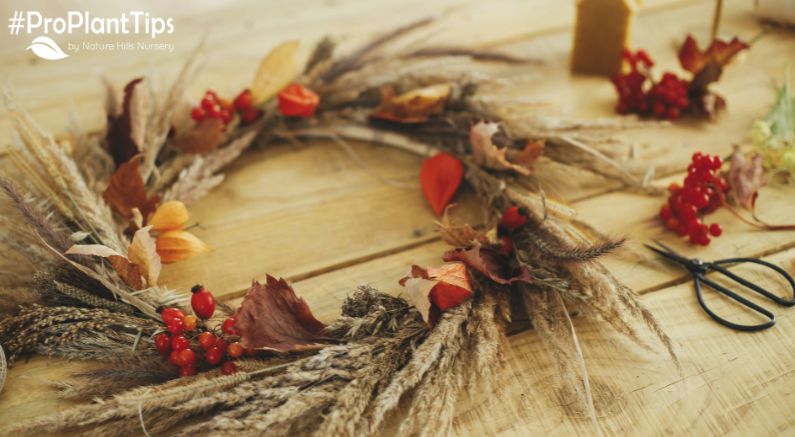
Go beyond table arrangements and dried bouquets and create lovely rustic wreaths and swags with what you have growing in your own landscape!

    Creating Fall Wreaths With Your Fresh & Dried Autumn Bounty

    sunflower arrangement

    After your cut flower gardens and landscaping borders have given up their bounty of fresh-cut blooms for your bouquets, there are still many crafty things awaiting you!

    From seedheads to fall blooms, berries, evergreen foliage, and dried herbs and flowers that you’ve gathered earlier in the season - there’s plenty available to you to create lively wreaths to adorn your front entry, the door of your office, or to hang over your hearth!

    Start now gathering bunches of greenery, berries, blooms at their peak, and bundles of seedheads from your garden while you are busy deadheading and cleaning up before the winter.

    The Wreath Base

    Fall Wreath

    This goes for circular and oval wreaths, swags, tear-drops, crescent, rectangular/diamond, and heart-shaped. You can even make garlands to match!

    If you are not starting with a store-bought wire or grapevine frame, then you need to make one. Trim vines and long supple stems, remove the leaves, then curl them into the bases for your wreaths, using pipe cleaners or wire to hold the tendrils or stems in place.

    Start with the thickest part of the stem/vine and create a circle in the size you wish, tying each loop in three or four places per pass and securing new stems/vines as you add them. Weave smaller stems and vines among the larger ones to help bind them further. Twisting and twining the branches in the same spiraling direction.

    For larger pieces, bunding straw in chicken wire, PVC, Styrofoam/Floral Foam, pool noodles, and more can be used as bulking additions and bases too!

    Best Vines & Stems For The Base

    • Birch
    • Bittersweet Vines
    • Cedar/Redcedar
    • Curly Willow
    • Dogwood Shrubs - Red/Yellow Twig
    • Grapevine/Canes
    • Harry Lauder’s Walking Stick
    • Hop Vines
    • Honeysuckle
    • Ivy
    • Poplar
    • Trumpet Vine
    • Wisteria
    • Witch Hazel
    • Willow Stems

    Best Evergreens & Broadleaved Evergreens For Wreaths

    Once the base is created, it’s time to add some further filler- or you can make the base itself with these incredible greens. Evergreens and broad-leaved evergreens are highly resinous and therefore long-lasting during the cold winter months outside. Misting with water and using anti-desiccants helps keep them from drying out for longer! Choosing fragrant stems enhances the outcome!

    • Balsam
    • Bay Leaves
    • Boxwood
    • Eucalyptus
    • Douglas Fir
    • False Cypress
    • Juniper
    • Hemlock
    • Holly
    • Magnolia Leaves
    • Pine
    • Privet
    • Yew
    evergreen for wreaths

    Colorful Wreath Additions

    Best Berries & Fruit For Wreaths

    Adding a pop of color in the way of berries and fruit adds unexpected vibrancy to your greenery. When displayed outdoors, birds will reap the benefits too!

    • Beautyberry
    • Bittersweet
    • Blackberry/Raspberry
    • Chinese Lanterns
    • Citrus Fruit - Fresh or Dried - Whole & Sliced
    • Crabapples
    • Eucalyptus
    • Japanese Skimmia
    • Juniper Berries
    • Hawthorn
    • Holly
    • Hypericum (St. John’s Wort)
    • Nandina
    • Privet Berries
    • Rose Hips
    • Snowberry
    • Viburnum
    • Winterberry
    Best berries

    Dried Seeds & Seedheads

    Fall is the perfect time to gather your wreath décor!

    • Alder
    • Allium
    • Billy Buttons (Craspedia)
    • Broomcorn
    • Clematis Seed Pods
    • Columbine
    • Golden Rain Tree
    • Hops
    • Lotus
    • Magnolia Seed Pods
    • Money Plant (Lunaria)
    • Nigella
    • Nuts From Nut Trees
    • Ornamental Grass Seed Plumes
    • Pine Cones of All Kinds
    • Ping Pong Scabiosa
    • Pomegranates
    • Poppy Seed Pods
    • Sea Holly
    • Sweet Gum
    • Sycamore
    • Teasels
    Dried seeds

    Best Dried Flowers

    Harvest now and start drying blooms for your bouquets! Many flowers can be dried by hanging them in bunches, pressing them between the pages of a heavy book, or dried in a granular desiccant. Then tie in or glue them in last so you handle their delicate petals the least.

    • Amaranth
    • Astilbe
    • Baby’s Breath
    • Bachelor's Buttons/Cornflower
    • Calendula
    • Cardoon (Cynara)
    • Celosia/Cock’s Comb
    • Delphinium/Larkspur
    • False Saffron (Carthamus)
    • Globe Amaranth
    • Gomphrena
    • Hydrangea
    • Lavender
    • Lollipop Verbena
    • Ornamental Grass Plumes
    • Roses
    • Sea Holly
    • Statice
    • Sunflower Heads
    • Strawflower
    • Tansy
    • Yarrow
    • Zinnias
    Best Dried Flowers

    Gorgeous Wreath Décor!

    Once you’ve assembled your goodies, use pipe cleaners in natural colors, floral wire or floral tape, and hot glue to put it all together. Don’t forget a wreath hanger and some ribbons and bows to finish your design!

    If you are using an evergreen filler, tie in your fall fruit and seed additions in a way that makes them easy to remove and change out for more winter holiday-themed items later on!

    Remember that if you are hanging your wreath outdoors, including birdseed and suet treats for your feathered friends - making your wreath serve as a pretty songbird hotspot!

    Beautiful rustic dried wreaths, swags, and garlands await you from your hard work all growing season! Fresh and dried garden bounty is only limited by your imagination! Beautify your home or office, or start making some very unique gifts for loved ones with the personal touches only your unique garden has to offer!

    Nature Hills is here to help you have all the outdoor and indoor beauty and squeeze every bit of enjoyment from your landscape!

    Happy Planting!

    Previous Next

    Frequently Asked Questions

    Which homegrown flowers hold up best when dried and used in a fall wreath?

    Flowers that dry well and hold their color and structure for fall wreaths include strawflowers, statice, globe amaranth, lavender, and yarrow, all of which should be harvested at peak bloom before they fully open to preserve their best color. Celosias, dried hydrangea heads, and black-eyed Susan seedheads are also excellent choices that add both texture and warmth to autumn arrangements. For best results, bundle stems loosely with rubber bands and hang them upside down in a dark, dry, well-ventilated space for two to three weeks before incorporating them into your wreath design.

    What natural materials from the garden work well alongside flowers in a fall wreath?

    Fall wreaths benefit from a wide range of natural garden materials beyond flowers alone. Berries, colorful seedheads, dried herbs, and evergreen or broadleaved evergreen foliage all add texture, color, and dimension to your design. Flexible vines and stems such as grapevine, bittersweet, curly willow, honeysuckle, and red or yellow twig dogwood are especially useful as structural base materials. Begin gathering these materials during your fall garden cleanup, collecting stems and bundles at their peak so you have plenty to work with before hard frost sets in.

    How do you preserve fresh-cut flowers before adding them to a fall wreath?

    Fresh-cut flowers intended for wreath decoration should be harvested in the early morning when stems are fully hydrated, cutting them at a 45-degree angle and immediately placing them in cool water. To extend their viability on a wreath, recut the stems and allow them to fully drink for several hours before arranging. For flowers you want to dry and preserve for longer-lasting use, bundle them in small groups of 5 to 10 stems, strip the lower leaves, and hang them upside down in a cool, dark, well-ventilated space for two to three weeks. Begin harvesting and drying blooms at their peak in late summer and early fall so you have a ready supply of preserved material when it comes time to assemble your autumn wreaths.

    How should a beginner attach flowers and foliage to a fall wreath base?

    Begin by gathering your materials at their peak condition, trimming vines and long supple stems, removing leaves, and curling them into your base shape. Secure each loop in three or four places per pass using pipe cleaners or wire, weaving smaller stems among larger ones to bind everything together. Always twist and twine branches in the same spiraling direction for a cohesive, sturdy result. Start with your thickest base materials first, then layer in evergreen foliage, berries, and dried flowers as decorative elements, securing each addition with wire or pipe cleaners as you go.

    How do you make a simple wreath base from garden-cut branches without a wire form?

    To make a simple wreath base without a wire form, trim flexible vines or long supple stems such as grapevine, willow, or bittersweet, remove the leaves, and curl them into a circle of your desired size. Secure each loop in three or four places per pass using pipe cleaners or wire, always starting with the thickest part of the stem. Add new stems by weaving smaller ones among the larger to bind everything together, twisting and twining all branches in the same spiraling direction for a tight, sturdy hold. Gather and shape your stems while they are still fresh and pliable, as dried stems become brittle and will crack when bent.

    What backyard greenery pairs well with fall flowers on a seasonal wreath?

    Evergreens and broadleaved evergreens form the perfect backdrop for fall flowers on a seasonal wreath, with cedar, redcedar, and ivy being top choices from your own yard. Flexible vining plants like bittersweet, grapevine, honeysuckle, and wisteria work double duty as both structural base material and decorative filler. Shrubs with colorful stems such as red or yellow twig dogwood add visual interest alongside your dried blooms and seedheads. Start gathering and bundling these materials during your fall garden cleanup so you have a fresh, well-stocked supply ready when you sit down to create.

    How do you hang a homemade fall wreath securely on a door or wall?

    Hanging a homemade fall wreath securely starts with choosing the right hardware for the weight and thickness of your wreath base. For doors, an over-the-door wreath hanger rated for at least 5 pounds works well for most grapevine or vine-based wreaths, while adhesive hooks like Command strips rated for 4 to 7 pounds are ideal for interior walls or painted surfaces without damaging them. For heavier wreaths built on wire frames with bulked-up materials like floral foam or straw, use a sturdy nail or screw anchor and hang with a length of ribbon, jute twine, or wire looped through the back of the frame. Always check the total weight of your finished wreath before selecting your hardware, and opt for ribbon or twine in autumn tones to add a decorative touch while keeping everything firmly in place.

    Which fall-blooming garden plants are worth growing specifically for wreath making?

    Several fall-blooming plants shine for wreath making, including ornamental seedheads from plants like echinacea and rudbeckia that dry beautifully on the stem, along with late-season herbs and dried flower varieties harvested at their peak. Bittersweet vines, hop vines, and grapevines pull double duty as both base-building materials and decorative additions with their berries and papery seedheads. Begin harvesting blooms and seedheads in late summer through early fall when they are fully formed but before frost softens their structure, bundling them in small bunches and hanging them upside down in a cool, dry location to preserve their color and form. Plan your cutting garden now by ordering vines, shrubs like red and yellow twig dogwood, and perennials from Nature Hills so they are established and ready to harvest by next autumn.

    How do you choose flowers for a fall wreath based on your growing zone and climate?

    Choosing flowers and foliage for a fall wreath starts with what is already thriving in your own landscape, since regional plants will dry and hold their color and structure far better than anything out of its element. Gardeners in cooler zones 3 through 5 should harvest seedheads, berries, and late-blooming stems like dogwood and bittersweet before the first hard frost, typically by mid-September to early October. In warmer zones 6 through 9, you often have more flexibility with broadleaved evergreens and late-season blooms lasting well into November. Walk your yard now while deadheading and cleaning up beds, and gather anything at peak condition, as that is the best window for material that will last through the season on your wreath.

    How can you extend the life of a fall wreath made with homegrown flowers and foliage?

    To extend the life of a fall wreath made with homegrown materials, harvest your flowers and foliage at their peak before frost hits, choosing blooms that are just opening rather than fully mature. Dry flowers like hydrangeas, strawflowers, and seedheads by hanging them upside down in small bundles in a warm, dark, well-ventilated space for two to three weeks before incorporating them into your wreath. Berries and evergreen foliage will hold up longest in cool temperatures away from direct sunlight and heat sources, so avoid hanging wreaths directly above a working fireplace or in a sunny south-facing doorway. Mist fresh greenery lightly with water every few days and treat stems with a floral preservative spray to keep your wreath looking its best throughout the season.