Free Shipping on Orders $199+

Growing Zone: | Garden in
Find your Growing Zone!

Complete Guide To Coreopsis Planting & Care!

shop for coreopsis at nature hills today!

Charlotte Weidner |

buy coreopsis plants at nature hills

Sunny and easy to grow Coreopsis, often called Tickseed or Calliopsis, is far more than just a cheerful flower! This daisy-like perennial from the Asteraceae family is beloved for its long bloom time, sun-loving nature, and wildlife-friendly blooms.

But beyond its fuss-free charm, this plant has deep cultural roots, fascinating symbolism, and ecological importance worth celebrating in your landscape!

The Many Names of Coreopsis

The botanical name Coreopsis comes from the Greek koris (bedbug) and opsis (view), referencing the seed's resemblance to a tiny insect. Yikes! But don't let that deter you! This flower is anything but creepy.

Other names include:

  • Tickseed: thanks to the appearance of the seeds
  • Calliopsis: an old-fashioned name still used in vintage garden books
  • Pot of Gold: a poetic nickname in reference to its sunny blooms
  • Golden Wave: describing masses of yellow flowers in motion

Symbolism & Meaning

Coreopsis is a symbol of cheerfulness and love at first sight. In Victorian floriography (the language of flowers), it conveyed joyous feelings and friendship. It's no wonder these blooms feel like a warm hug for your landscape!

How to Use Coreopsis in the Garden

Coreopsis is incredibly versatile and fits into nearly any sunny landscape design. Whether you want to fill a bare bed, liven up a patio pot, or add pollinator value to your garden, this plant delivers.

1. Cottage Gardens & Border Edging

  • Threadleaf varieties like Moonbeam and Zagreb create soft, feathery edges.
  • Plant in masses or drifts for a golden glow all summer long.
  • Combine with Daylilies, Geraniums, Salvia, and Catmint for layers of color in Cottage Gardens.

2. Wildflower & Native Gardens

  • Species like Lanceleaf Coreopsis and Plains Coreopsis are excellent for naturalized meadows.
  • Mix with Black-Eyed Susan, Yarrow, and Coneflowers for a pollinator-friendly prairie planting.
  • Xeric and drought-tolerant once established, and ideal for mixing with other heat and sun-loving perennials.

3. Containers & Patio Pots

  • Dwarf varieties like Li'l Bang™ Red Elf and Goldilocks are perfect for container gardening.
  • Use as a filler or even the star of the pot. Just give it full sun!
  • Excellent in balcony gardens or sunny entryway planters.

4. Butterfly & Pollinator Gardens

  • Creme Caramel™ Coreopsis and Mouse Ear Coreopsis are top choices for butterfly beds due to their continuous bloom and open flower shape.
  • Mix with nectar-rich annuals like Zinnias, Lantana, and Sunpatiens for a buzzing backyard.

5. Rock Gardens and Dry Spots

  • Threadleaf and Lanceleaf Coreopsis thrive in sandy or rocky soils and are perfect for rock gardens.
  • Plant with Sedum, Russian Sage, and Ornamental Grasses for a low-maintenance xeriscape.

6. Mass Plantings for Impact

7. Cut Flower Gardens

  • Taller varieties like PERMATHREAD™ Red Satin are perfect for bouquets.
  • Their long-lasting blooms add bold color and texture to mixed arrangements.
  • Wide range of colors and sizes for all kinds of cutting gardens.

8. Moon Gardens

  • Pale yellow Moonbeam Coreopsis glows in the evening garden.
  • Pair with white Daisies, Silver Artemisia, and Evening Primrose for a serene nighttime retreat.

9. Edible Landscapes

  • While not edible themselves, Coreopsis flowers support and attract pollinators for nearby crop pollination.
  • Great for edible landscaping beds alongside Fruit Trees and Herbs, bringing in the birds and pollinators.

Coreopsis & Wildlife: A Garden Essential

Coreopsis is a top performer for pollinators. The open, nectar-rich blooms attract:

  • Butterflies like Painted Ladies, Skippers, and Sulphurs
  • Native bees and honeybees
  • Hoverflies and other beneficial insects
  • Seed-eating birds in fall (especially Goldfinches)

Even better? These plants are deer-resistant, rabbit-resistant, and drought-tolerant, making them ideal for low-maintenance native plantings.

Coreopsis Facts

shop coreopsis today!
  • Some Coreopsis species were used by Native American tribes to make herbal teas.
  • A yellow dye can be obtained from the flowers and stems.
  • Coreopsis was designated Florida's state wildflower in 1991.
  • The genus includes over 75 species, mostly native to North America.
  • Threadleaf Coreopsis (Coreopsis verticillata) is especially prized for its ferny foliage.
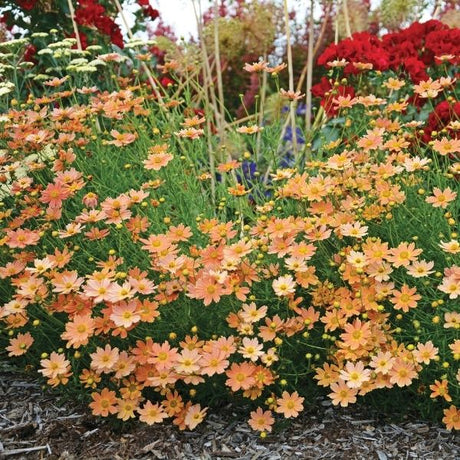
  • Hybrids now come in red, pink, peach, and bi-color forms, expanding their color palette beyond just yellow!

How To Plant Coreopsis

  • When to Plant: Spring or early fall
  • Soil Prep: Choose well-drained soil; amend heavy clay with compost
  • Sunlight: Full sun is essential for the best bloom (at least 6 hours direct sun a day)
  • Spacing: Plant 12-24 inches apart, depending on variety
  • Watering: Water young plants regularly; established plants are drought-tolerant
  • Arborist Mulch: Add 3-4 inches of arborist mulch to retain consistent soil moisture and suppress weeds

How To Care For Coreopsis

  • Use the Finger Test to check soil moisture
  • Deadhead spent flowers to extend bloom time
  • Cut back in late fall or early spring to refresh plants
  • Divide clumps every 3-4 years to maintain vigor
  • Fertilize sparingly. Too much can reduce blooming and encourage foliage growth

Final Thoughts on This Cheerful Garden Classic

shop coreopsis at nature hills today

Coreopsis delivers where it counts: long blooming, pollinator-approved, and endlessly charming. Whether you're crafting a golden-hued garden, soft romantic border, wildflower oasis, or simply need a low-maintenance filler with high impact, there's a Tickseed variety ready to thrive in your sunniest spots.

Its resilience in poor soils, resistance to pests and wildlife nibbling, and drought-tolerant nature make Coreopsis a true backbone plant in both ornamental and eco-friendly gardens. Plus, its joyful, daisy-like face invites butterflies, bees, birds, and even curious passersby to pause and smile.

Let these sunshine-filled blooms weave a little magic in your yard, whether planted en masse for bold waves of color or tucked into a patio pot for an up-close burst of cheer. Coreopsis isn't just easy to grow; it's a gardener's invitation to connect with mother nature, feed the pollinators, and embrace the art of effortless beauty.

So go ahead! Dig in, plant generously, and let the joy bloom!

Happy Planting!

shop for coreopsis today at naturehills.com
Previous Next

Compare Plants

Browse the features and specs side-by-side to find the best fit for your garden.

A table comparing the facets of 5 products
Facet
Zagreb Coreopsis
Zagreb Coreopsis
View details
Li'L Bang™ Red Elf Coreopsis
View details
Li'l Bang™ Goldilocks Coreopsis
View details
Creme Caramel™ Coreopsis
View details
Coreopsis Sunshine Superman
Sunshine Superman Coreopsis
View details
Rating
Rating---
(1)
-
Type
TypePerennialPerennialPerennialPerennialPerennial
By
ByNature Hills NurseryNature Hills NurseryPlants That WorkNature Hills NurseryAmerican Beauties
Flower Color
Flower Color
  • Yellow
  • Purple
  • Red
  • Yellow
  • Pink
  • Orange
  • Yellow
Growing Zone Range
Growing Zone Range
3-9
5-9
5-9
6-9
4-9
Mature Height
Mature Height
1-2 ft
1 ft
1 ft
1-2 ft
1-2 ft
Width
Width
1 ft
1-2 ft
1 ft
1-2 ft
1-2 ft
Price
Price
Regular price From $1699
Regular price $3453
Regular price $3443
Regular price From $1699

Frequently Asked Questions

Why isn't my Coreopsis growing in its second season after blooming beautifully the first year?

Some Coreopsis varieties are short-lived perennials or behave as annuals, especially in zones 3-5 where harsh winters can kill the crown. Additionally, if you didn't deadhead spent blooms last season, the plant may have exhausted itself producing seeds rather than storing energy for winter survival. Check for new growth at the base in late spring, as Coreopsis can be slow to emerge in cooler climates. Divide established clumps every 2-3 years and ensure well-draining soil to prevent crown rot over winter.

Can I grow Coreopsis and blanket flower together in the same garden?

Yes, Coreopsis and blanket flower (Gaillardia) make excellent companion plants since both thrive in full sun, tolerate drought conditions once established, and bloom throughout summer in zones 3-9. These prairie natives share similar growing requirements and create a stunning orange-red and yellow color combination that attracts butterflies and beneficial insects. Plant them 12-18 inches apart in well-draining soil for a low-maintenance, long-blooming display. Deadhead spent blooms regularly to encourage continuous flowering through fall.

What should I do with Tickseed Coreopsis plants before winter sets in—cut them back or leave them alone?

For winter preparation, you can either cut Coreopsis back to 2-3 inches above ground level in late fall after the first hard frost, or leave the seed heads standing to provide winter interest and food for birds. In zones 3-6, leaving some stems provides extra winter protection for the crown, while gardeners in warmer zones 7-9 can cut back anytime after blooming stops. If you choose to leave plants standing, cut them back in early spring before new growth emerges. Either approach works well, so choose based on your preference for winter garden appearance and wildlife support.

Can you divide Coreopsis plants?

Yes, Coreopsis plants can be divided every 2-3 years in early spring or fall to maintain vigor and prevent overcrowding. Use a sharp spade to cut through the root clump, ensuring each division has healthy roots and shoots. Replant divisions immediately at the same depth in well-draining soil, spacing them 12-18 inches apart. Water thoroughly after planting and divisions will establish quickly in full sun locations.

Why are my Coreopsis plants bending over or leaning forward?

Coreopsis plants typically bend or lean due to insufficient sunlight, overly rich soil that causes excessive soft growth, or tall varieties becoming top-heavy during peak bloom. Plants grown in partial shade will stretch toward available light, while over-fertilized Coreopsis develops weak, floppy stems that cannot support the flower heads. Most varieties need at least 6-8 hours of direct sunlight and well-draining, average soil to maintain sturdy, upright growth. Plant taller varieties like Lanceleaf Coreopsis in full sun and avoid high-nitrogen fertilizers, or choose compact cultivars like 'Moonbeam' for naturally sturdy stems.

When and how should I cut back Coreopsis to take tip cuttings?

Take tip cuttings from healthy Coreopsis stems in late spring to early summer when new growth is 4-6 inches long. Cut 3-4 inch sections just below a leaf node using clean, sharp scissors, ensuring each cutting has at least 2-3 sets of leaves. Remove the bottom leaves and dip in rooting hormone before planting in well-draining potting mix. Keep cuttings consistently moist in bright, indirect light until roots develop in 2-3 weeks.

Are non-yellow Coreopsis varieties, like Star Cluster or pink ones such as Sweet Dreams, short-lived and fragile?

Non-yellow Coreopsis varieties like Star Cluster and Sweet Dreams are typically shorter-lived than traditional yellow species, often behaving as tender perennials or short-lived perennials lasting 2-3 years in zones 4-9. These hybrid cultivars may require more consistent moisture and benefit from deadheading to extend their blooming period through fall. Plant them in well-draining soil with morning sun and afternoon shade in hot climates, and consider treating them as annuals in colder zones for best results.

Will Coreopsis Star Cluster perform reliably in zones 5-6?

Coreopsis Star Cluster is reliably hardy in zones 5-6 and will return each spring as a dependable perennial. This variety tolerates winter temperatures down to -20°F (zone 5) without protection. Plant in full sun with well-draining soil and cut back spent blooms regularly to encourage continuous flowering from late spring through fall.

Should perennial Coreopsis be deadheaded to encourage more blooms?

Yes, deadheading spent Coreopsis blooms will encourage continuous flowering throughout the growing season from late spring through fall. Remove faded flowers by cutting stems back to the next flower bud or leaf node using clean pruners. For threadleaf varieties like 'Moonbeam', you can simply pinch off the spent blooms with your fingers. Stop deadheading in late summer if you want to collect seeds or provide food for birds.

What is the best plant feed or fertilizer for Coreopsis?

Coreopsis thrives in average to poor soils and rarely needs fertilization, as rich soil can actually reduce flowering and make plants leggy. If your soil is extremely poor, apply a balanced 10-10-10 fertilizer once in early spring at half the recommended rate. Avoid high-nitrogen fertilizers which promote excessive foliage growth at the expense of blooms. For best results, focus on providing good drainage and full sun rather than heavy feeding.

Find Your Garden's Growing Zone!

Your Current Growing Zone:

Zone

ZIP Code:

✓ Growing Zone Set Successfully!

Your zone has been saved and will be used throughout the site.

⚠ Unable to locate a growing zone for that ZIP code.

Please check your ZIP code and try again.

Looking up your growing zone...

When ordering a tree or plant, make sure to know your planting zone.

You can determine your garden's USDA hardiness zone by entering your Zip Code below.