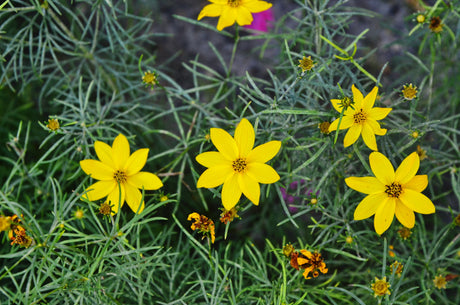
Li'l Bang™ Goldilocks Coreopsis
Coreopsis x Li'l Bang 'Goldilocks' PP32,336


Plant Sentry™ Protected
Your order is protected by our compliance system that:
- Prevents restricted plants from shipping to your state
- Ensures plants meet your state's agricultural requirements
- Protects gardens from invasive pests and diseases
Specifications
| Plant Characteristics | Compact/Dwarf, Reblooming, Deer-resistant, Low Maintenance, Flowering, Attracts Butterflies, Attracts pollinators, Heat Tolerant, Drought resistant |
|---|---|
| Sunlight | Full sun |
| Height | |
| Width | |
| Watering Needs | Moderate |
| Growth Rate | Moderate |
| Plant Life Cycle | Perennial |
| Blooms In | Summer |
| Flower Color | Yellow |
| Foliage Color | Green |
| Pet Safety | Non-toxic to pets, Non-toxic to horses |
| Suitable Space | Outdoors |
| Plant Name | Daisy |
| Botanical Name | |
| Cultivar | |
| Class | Asterales, Magnoliopsida |
| Does Not Ship To | AK, HI, ID, MT, PR |
Description
Li'l Bang™ Goldilocks Coreopsis – Brilliant Gold Blooms
Bring continuous golden blooms to your garden with Li'l Bang™ Goldilocks Coreopsis PP#32336 (Coreopsis x Li'l Bang 'Goldilocks'). This low-maintenance, compact perennial delivers nonstop color from early summer through fall, with bright yellow, daisy-like flowers that attract butterflies and bees!
Perfect for sunny borders, container gardens, and mass plantings, Li'l Bang™ Goldilocks Coreopsis thrives in heat, resists drought, and requires little maintenance throughout USDA planting zones 5 to 9. Its compact growth habit and prolific, cheerful blooms make Goldilocks an excellent choice for colorful edging, pollinator-friendly landscapes, and water-wise gardens!
Why Choose Li'l Bang™ Goldilocks Coreopsis
This easy-care, sun-loving perennial delivers months of bright blooms with minimal effort.
- Golden Yellow Flowers – Brilliant yellow, daisy-like flowers bloom continuously from early summer through fall.
- Low Maintenance & Self-Cleaning – No deadheading is required, but once they fade, the spent blooms drop naturally, encouraging reblooming.
- Pollinator Magnet – A favorite of butterflies, bees, and other beneficial pollinators.
- Drought-Tolerant & Heat-Resistant – Thrives in poor, dry soils and withstands hot summers.
- Compact & Versatile – Stays around 12 inches tall and wide, making it perfect for small gardens and patio planters.
- Deer & Rabbit Resistant – Unappealing to browsing wildlife, ensuring trouble-free growth.
- Easy to Grow – These are xeric, low-maintenance, and easy-to-grow perennial plants!
Landscaping with Li'l Bang™ Goldilocks Coreopsis
This compact, sun-loving perennial is ideal for a variety of garden styles and landscapes. Whether used as a bright focal point or a mass planting for bold impact, it provides season-long color and pollinator support.
- Pollinator Gardens – A top choice for bees, butterflies, and other nectar-seeking insects.
- Drought-Tolerant Landscapes – Thrives in xeriscapes and water-wise gardens, handling poor soils and dry conditions.
- Cutting Gardens – Gorgeous accents in bouquets and floral arrangements!
- Borders & Edging – Adds a low-growing splash of gold in mixed perennial and Cottage garden beds. Plant yours along walkways, garden paths, and mixed flower beds.
- Mass Plantings & Naturalized Areas – Creates a stunning golden display when planted in groups.
- Rock Gardens & Slopes – Excellent for well-drained, rocky, or sandy soil, perfect for difficult planting areas.
- Container Gardening – Ideal for patios, balconies, and small garden spaces, where its compact form and continuous blooms shine.
Care & Maintenance
This hardy, adaptable perennial thrives with little attention, making it perfect for beginner and experienced gardeners alike. Read more planting and care instructions for Perennials Here!
- Sunlight: Requires full sun (6 or more hours of direct sunlight daily) for the best blooms.
- Soil: Grows well in well-drained, sandy, or loamy soil; tolerates poor soil conditions.
- Spacing: Plant 8-12 inches apart for a full, bushy appearance.
- Moisture Needs: Water regularly when newly planted; once established, it is highly drought-tolerant.
- Mulching: A thin mulch layer helps retain moisture and suppress weeds.
- Minimal Fertilizing – Too much fertilizer can reduce flowering; a light compost application in spring is sufficient.
- Deadheading & Pruning – No deadheading is needed! The blooms drop naturally, allowing for continuous reblooming. Trim spent foliage in late fall or early spring to refresh the plant.
Compact, Long-Blooming Perennial With Vibrant Yellow Flowers
Li'l Bang™ Goldilocks Coreopsis offers season-long color with minimal effort. Its tough, sun-loving nature and compact growth habit make it an essential perennial for brightening landscapes.
Order now and enjoy an explosion of golden blooms all summer long.
Planting & Care
Delivery and Shipping
Shipping Rates
Ships in 3-5 business days • Tracking provided • Weather protected
| Under $50 | $9.99 |
| $50 - $99.99 | $14.99 |
| $100 - $149.99 | $16.99 |
| $150 - $198.99 | $24.99 |
| $199+ | FREE |
✓ Zone-specific timing • ✓ Professional packaging • ✓ Health guarantee
Find on Page
Type to search specs, description, care, FAQ, and shipping.
Other Daisy varieties
-

Coreopsis verticillata 'Novcorcar'
Regular price From $1999Unit price /Unavailable -

-

-

Coreopsis pubescens 'Sunshine Superman'
Regular price $1999Unit price /Unavailable -

Coreopsis x 'Lil Bang™ Daybreak'
Regular price From $1999Unit price /Unavailable -

Coreopsis grandiflora 'Sonnenkind'
Regular price From $1999Unit price /Unavailable -