Sunny, Uplifting, and Decorative

The effervescent St. John's Wort shrub is sure to provide you and your landscape with three seasons of appeal! You'll find a range of St. John's Wort plants for sale right here at Nature Hills Nursery. These cheerful shrubs bring golden blooms, berries, and year-round beauty to any garden!
- All About Hypericum
- Fantastic St. John's Worts At Nature Hills!
- St. John's Wort Care
- Pollinators & Florists Love Them!
- Hardy Hardworking Hypericum!
All About Hypericum

People have used Hypericum flowers as herbal medicine to combat depression and decorate their landscapes for millennia! You can be assured you're getting St. John's Wort varieties that bring a healthy addition to your landscape.
St. John's Wort can be a deciduous shrub during the cold, while others are evergreen to semi-evergreen in mild winters, or they may even die back to the ground in harsh winters.
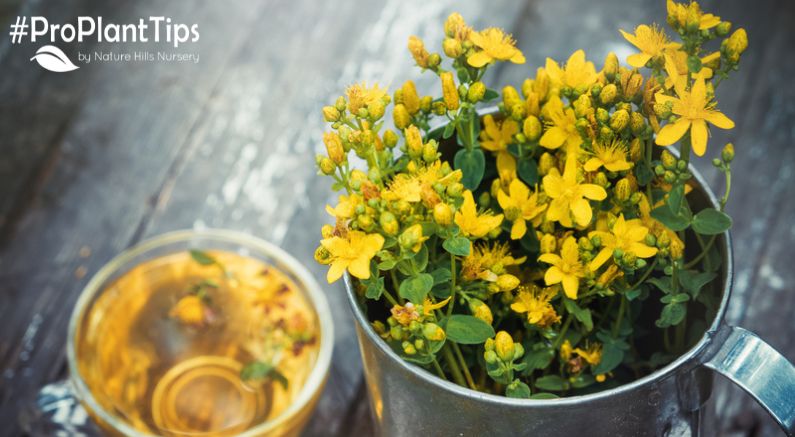
Mounded to creeping forms, lovely blue-green to silvery-green foliage, fall color, and winter interest, St. John's Worts have so much more than their brilliantly golden-yellow buttercup-like blooms and long-lasting nature! Each radiant blossom has an enchanting spray of the vivid yellow, spark-like stamen that explodes from the center of each flower, only adding to their appeal!
A 'Wort' By Any Other Name
What's a "wort"? A Wort in Old English is an ancient term that translates to medicinal 'plant', but can be traced further back to the Proto-Indo-European entomology of "root".
There are over 500 species of Hypericums, and they range from trees to woody subshrubs to deciduous perennials. It's important to understand that not all St. John's Wort plants are the same, despite having similar characteristics. The sheer diversity of this plant family has allowed it to thrive around the world!
St. John the Baptist is celebrated with a Holy Day on June 24. Blooming European native Hypericum perforatum plants were traditionally hung above door frames to ward off evil spirits on the eve of St. John's Day.
Fantastic St. John's Worts At Nature Hills!

These mounding plants offer green to blue-green foliage and yellow blooms through the summer, without the pain of deadheading!
Attracting tons of beneficial insects with vital nectar and pollen resources, Hypericum also has seed capsules or showy berries or 'hips' for winter décor. Long-blooming, seldom bothered by deer, cold-hardy, and sporting colorful fall fruit, St. John's Worts are cheerful garden additions.
Best Hypericum for Landscape Specimens & Focal Points
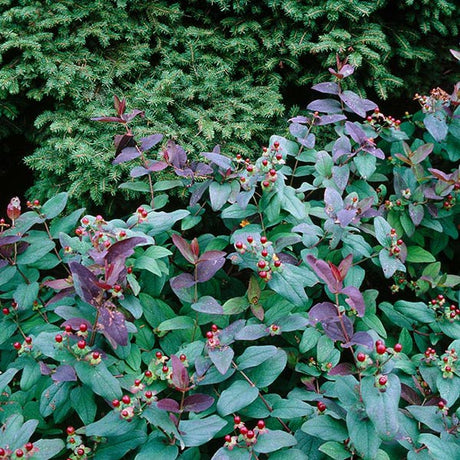
- Albury Purple - Unique red/purple foliage and red berries, native cultivar
- First Editions® Pumpkin - Glowing orange-pink berries
- First Editions® Cobalt-n-Gold™ - Fall color and wide-spreading
- First Editions® Red Star - Fall color & red-orange berries
- Proven Winners® Golden Rule® - Fantastic fall color & spreading nature
Best Hypericum For Groundcover & Erosion Control
- St. John's Wort - Native to Southern Europe and Southwestern Asia
- Sunburst - Evergreen-semi-evergreen foliage and red-brown berries
- Ames - Evergreen to semi-evergreen foliage and shiny brown seed pods
- Sunny Boulevard® - Evergreen/semi-evergreen foliage & tight branching
Best Hypericum For Cut Flower Gardens
- Beauty™ - Bright green foliage and rosy-salmon berries
- Glory™ - Caramel-orange berries in the fall
- Green - Green foliage and bright green fall berries
- White - Unique creamy white berries in fall

All St. John's Worts are fantastic pollinator plants and space-saving shrubs that exude bright color and fall/winter interest!
- Hypericum perforatum (European native): also known as Tipton's Weed, Rosin Rose, Goatweed, and Aaron's Beard
- Hypericum frondosum: compact, space-saving shrub varieties
- Hypericum x inodorum: hybrids that combine the best traits of different species
- Hypericum kalmianum: semi-evergreen foliage in warmer climates
- Hypericum calycinum: creeping, mat-forming plant native to Southern Europe and southwestern Asia
- Hypericum densiflorum: U.S. native species
Medicinal Qualities

St. John's Wort supplements tout this herb as a curative for anxiety, PMS, and depression. Topically, Hypericum has been used to treat cuts and burns. Recent studies suggest the effectiveness of this herb in treating ailments, including cancer, inflammation, and bacterial and viral diseases, and as an antioxidant and neuroprotective agent!
We don't recommend that you ingest garden-grown Hypericum, though. Discuss St. John's Wort supplements with your physician, especially if you are taking prescription medicine, then visit your local health food store for more advice.
But we like to say it's the cheerful blooms and working outside in your garden that can help boost your mood!
St. John's Wort Care

Here's the quick rundown on caring for these great little shrubs! St. John's Wort thrives in tough conditions and is usually left alone by deer!
- Thrives in tough conditions and is usually left alone by deer
- Adaptable to many soil types (except marshy or wet soils)
- Grows in full sun or partial shade
- Needs at least 4 hours of direct sunlight daily for best blooms and color
- Prefers rich, sandy loam but will grow in most well-drained soils
- Avoid "wet feet". Poor drainage can harm the plant
- Add a generous layer of mulch to retain moisture and protect roots
- Prune while dormant to control size and shape
- Most species bloom on new wood, so pruning in early spring won't reduce flowering
- Tolerates periods of drought once established
- Generally pest-resistant and grows vigorously with minimal care
Well-Behaved St. John's Wort Plant Landscaping Ideas

Versatile and low-maintenance, St. John's Wort fits beautifully into a wide range of landscape designs, offering color, texture, and reliability wherever it's planted.
- Use St. John's Wort as a ribbon of color along shrub borders or front walks
- Create a durable hedge that brings long-lasting seasonal interest
- Grow successfully in large containers for patios or entryways
- Works beautifully as a groundcover or in rock gardens
- Creeping varieties spread into attractive mats, perfect under mature evergreen trees
- Pairs well with other plants in naturalized landscapes
- Adds bright color to formal beds, informal borders, country gardens, and mixed-shrub plantings
- A smart choice for low screens and privacy hedges
- Ideal for erosion control, steep slopes, and large group plantings
- Naturally deer-resistant, making it reliable even in harder-to-maintain areas
Pollinators & Florists Love Them!

They will certainly brighten up the landscape, and you'll love seeing the butterflies and bees gather their nectar. Don't forget to include these flower factories in Pollinator gardens.
Professional florists use the cute, capsular fall fruit in cut flower arrangements, so they're a must-have for Cutting Gardens, too! Your cut flower beds are a natural place for these intriguing plants, and every florist will be familiar with the botanical name 'Hypericum'. If you don't use them in bouquets, the seedpods add incredible winter interest; they also fill out your tablescapes amazingly.
Hardy Hardworking Hypericum!

Count on NatureHills.com to help guide you to safe landscaping plants that perform beautifully in your garden. Check out more info on planting and flowering shrub care in our Garden Blog!
Like planting sunshine in your garden, you won't go wrong with the tough, adaptable, and cold-hardy St. John's Wort flowering shrub!
Happy Planting!