Shop With Confidence: FREE Growing & Glowing Promise

Free Shipping on Orders $199+

How A Florist Creates Magnificent Winter Containers

How A Florist Creates Magnificent Winter Containers - Nature Hills Nursery

Whitney Laritson |

The winter months can be such a festive time to transform your outdoor container gardens. In October and November, it's time to make the switch from flowering plants and tropicals to cut boughs arrangements.

We asked our in-house professional florist for tips and tricks on how to create gorgeous winter containers to extend your season and welcome guests to your home.

First, let's talk about your options to get materials:

  • Some people prefer to contract with local landscapers for help. This is a great option but be sure to place your order early. The waiting lists are long and understand that you'll pay a premium for that convenience.
  • Finding professional grade materials is another hassle. Some hobby and grocery stores carry limited selections, but you wind up driving all over to buy enough material to create an effective container, overfilled to create a generous, full visual effect. We've been there!

Step by Step Instructions for Winter Container Gardens

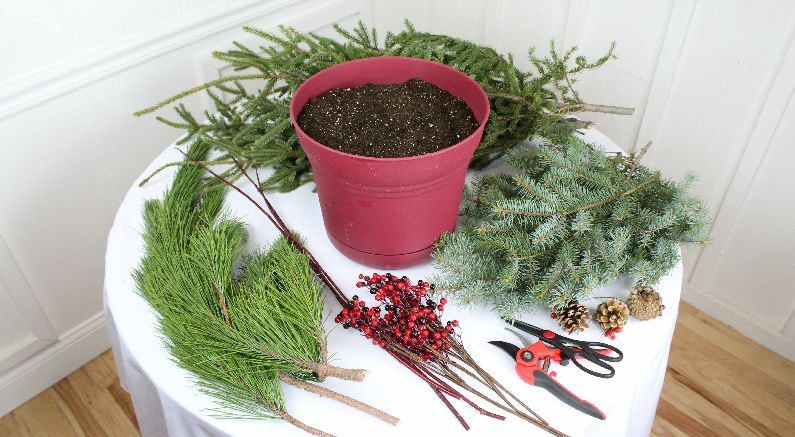
For existing containers, top off with dirt as needed. For new, please place your containers exactly where you want them before you start. Take your time and get it right, as they are heavy when full. Fill new containers with dirt to the top once they are in position.

Grab garden gloves, an old sheet or tarp, a crafty friend, and a happy, relaxed attitude. Before you get started, take a nice, deep breath. You gave yourself an opportunity to have a cool experience today. This is a process. Making garden containers takes a while. There is no such thing as perfection.

Ok, now that you are in a "good place", put on your gloves, open the box and take a nice deep breath. Mmm, we love the smell of mixed evergreen, don't you?

  • First, take everything out of the box.
  • Separate the materials into piles on your tarp or old sheet.
  • Sort the evergreens into piles by type and by size.

Step 1

  • Select the tallest, fullest bough and push it firmly into the dirt in your container.
  • If you'll see the container from all angles, place the bough in the center.
  • If you'll only see one side of the container, place the bough near the back and keep the "showiest" side facing out.
step 2

Step 2

  • If you need to trim the lowest branches, cut at a 45-degree angle close to the main stem.
  • Save all the little clippings to use later.
step 3

Step 3

  • Add smaller boughs around the first bough.
  • If you'll see the container from all angles, be sure to place boughs all around the largest bough.
  • If you'll only see one side of the container, place these boughs in front of and to the sides of the largest bough.
step 4

Step 4

  • Select smaller material to fill in the front.
  • Use the best looking material in the front facing your guests.
step 5

Step 5

  • Continue to fill and bundle several smaller boughs together if needed.
  • Use your saved trimmings to fill in bare spots.
step 6

Step 6

  • Tuck flat, small branchlets in under the other boughs as edging all around the pot.
  • This is a pro tip that polishes and softens the look.
step 7

Step 7

  • Add your focal point in place.
  • It's best to bundle these together before you push them into the dirt.
step 8

Step 8

  • Spread out the berry clusters and place them throughout the arrangement at high, medium and low points.
  • You can wire them to the upper branches, and even use hot glue to hold in place if needed.

Caring for Your Winter Container Gardens

finished evergreen

Spray the branches liberally with Wilt-pruf, an anti-dessicant starch spray. Plan to reapply as often as the directions say.

If you live in a frost zone, fill the container with water. The water will freeze and keep the materials intact.

It's fun to mix these up throughout the season. Try evergreen or holly branches, cut red twig dogwood stems, crabapple branches, viburnums berries, or dried Hydrangea flowers in winter pots.

Get wild! Decorate them with silver accents for New Year’s or add your team colors for the Superbowl. You’ll be so pleased to make them your own.

Enjoy these long lasting containers. Good job!

Previous Next

Frequently Asked Questions

How do florists minimize needle and foliage shedding in winter container arrangements?

Professional florists minimize shedding by working with freshly cut evergreen boughs and making clean cuts at a 45-degree angle close to the main stem to help the plant material last longer. Keeping arrangements well-watered and positioned away from direct heat sources or drying winds also significantly slows needle drop. For the longest-lasting displays, plan to assemble your winter containers in October or November when temperatures are consistently cool, as cold air naturally slows the drying process. Choose hardy evergreen varieties known for good needle retention, such as Fraser fir or white pine, and mist the foliage lightly during dry spells to keep it fresh throughout the season.

How do I choose the right container size to create a balanced and impressive winter display?

Choose a container that is at least 16 to 24 inches in diameter to give you enough room to layer multiple boughs and create the full, generous visual effect that makes winter displays truly impressive. Shallow containers will not anchor boughs securely, so look for pots with a depth of at least 12 inches to hold enough soil to keep tall centerpiece boughs firmly in place. Place your container in its final location before filling it with soil and arranging materials, as a properly sized and filled container becomes very heavy and difficult to move.

Which plants can survive outdoors in pots through winter in colder climates?

Many evergreen shrubs and conifers are excellent choices for outdoor winter containers in colder climates, including dwarf Alberta spruce, boxwood, and holly, which can handle temperatures well into USDA zones 4 and 5. Ornamental cabbages and kale hold up through light freezes, while certain heathers and hellebores can survive in zones 5 and above. Keep in mind that plants in containers are more exposed to freeze-thaw cycles than those in the ground, so choose plants rated at least one zone hardier than your own. For best results, select your container plants in early fall, place containers against a sheltered wall or structure, and consider wrapping pots in burlap to insulate roots from the coldest temperatures.

How do I keep roots from freezing in containers during harsh winter weather?

Roots in containers are far more vulnerable to freezing than roots in the ground, since the pot walls offer little insulation against harsh temperatures. In zones 6 and colder, wrap your containers with burlap, bubble wrap, or old blankets before temperatures drop below 20 degrees Fahrenheit, and consider moving pots close to a sheltered wall or structure to reduce wind exposure. Adding a thick layer of mulch, straw, or even shredded leaves across the soil surface inside the container provides an extra buffer against temperature swings. For especially tender plants, grouping containers together and placing them in an unheated garage or shed during the coldest stretches of winter is your safest bet.

Should I bring my winter containers indoors or can they stay outside all season long?

Winter containers made with cut evergreen boughs are designed to stay outdoors all season long and actually perform best in cold temperatures, which help preserve the greens and keep them looking fresh. Unlike tender plants, these arrangements thrive in freezing conditions and can last from October or November straight through to late winter or early spring. If you are in a very warm climate such as Zone 8 or above, you may find the greens dry out faster due to mild temperatures, so mist them occasionally and keep them away from heat sources like south-facing walls. Set your containers in their permanent spot before filling them, as they become extremely heavy, and plan to refresh any dried-out stems mid-season to keep the arrangement looking full and lush.

How often should I water winter containers to avoid rot and freeze damage?

Winter containers filled with cut boughs require very little watering since the evergreen materials are already cut and not actively growing. Check the soil moisture every two to three weeks, and only water if the soil is completely dry, as overwatering in freezing temperatures is the primary cause of container rot and root damage. In USDA zones 6 and below, allow the soil to freeze naturally, which actually helps anchor your boughs and protects the container structure. Water sparingly on days when temperatures are above 40 degrees Fahrenheit and the soil has thawed slightly, then allow it to drain fully before nighttime temperatures drop again.

When should I stop fertilizing plants in containers as winter approaches?

Generally, you should stop fertilizing container plants about 6 to 8 weeks before your first expected frost date, which varies by USDA hardiness zone. Continuing to fertilize late in the season encourages tender new growth that is highly vulnerable to frost damage and can weaken the plant heading into dormancy. For most of the country, this means wrapping up fertilization by late August or early September. Check your local frost dates, count back those 6 to 8 weeks, and mark that cutoff date on your calendar now so you don't forget.

How do I mulch winter containers to insulate roots and protect plants from temperature swings?

The article provided focuses on creating decorative winter containers using cut evergreen boughs rather than living plants with root systems that require mulching. For living container plants that need winter protection, apply 2 to 3 inches of bark mulch or pine straw over the soil surface to help moderate soil temperature fluctuations, and consider wrapping the outside of the container with burlap or bubble wrap for added insulation, especially in zones 5 and below. Move containers close to the house or into an unheated garage when temperatures are expected to drop below 20 degrees Fahrenheit for extended periods.

How do I wrap and protect pots so they do not crack or break in freezing temperatures?

Terracotta and ceramic pots are most vulnerable to freeze-thaw cycles, which cause moisture inside the pot walls to expand and crack the material. Before hard freezes arrive, wrap your containers with burlap, bubble wrap, or horticultural fleece, securing it with twine to insulate both the pot and the root zone inside. In zones 5 and colder, consider moving valuable containers into an unheated garage or shed where temperatures stay above 20 degrees Fahrenheit. For pots staying outdoors, elevate them slightly on pot feet or bricks to improve drainage and prevent water from pooling and freezing at the base.

Where should I place winter containers for the best combination of plant protection and curb appeal?

Place winter containers near your home's entrance or along a walkway where they can be seen from one primary direction, which also allows you to position the showiest side of your arrangement facing outward for maximum visual impact. Proximity to the house offers some protection from harsh wind and can moderate temperature swings that cause soil to heave and crack containers. Choose a spot and commit to it before you begin filling, since containers packed with soil and boughs become extremely heavy and difficult to move. Set your container in its final location first, then fill and arrange so you avoid any backbreaking repositioning later.