
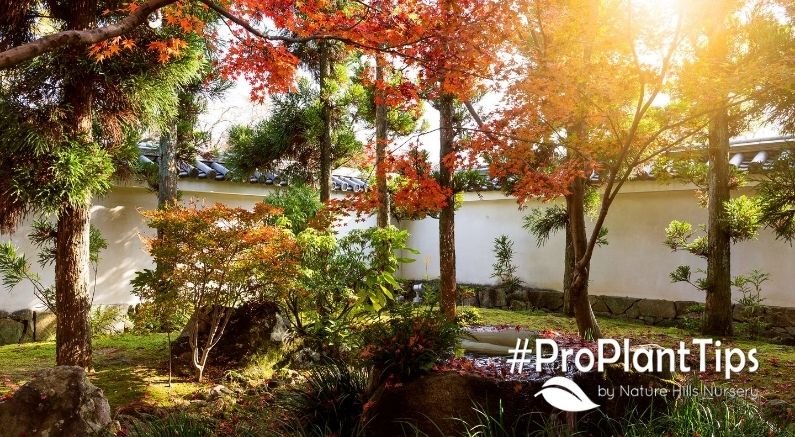
A full sun garden is a magical place and one that gives a gardener massive potential! It also brings its own challenges for both gardeners and plants alike because of what comes with it - dry conditions, heat and humidity!
For a northern gardener, full sun is a welcome luxury, but for more southern climates, it can mean constant watering, leaf burn and even dry, sunbaked soil that leaves plants and people gasping.
Finding plants that do their very best in hot climates and in full sun can be a challenge, but Nature Hills is here with some pre-planned gardens for full sun and some easy tips and tricks on combating the blaze!
- Beat the Heat in Hot Growing Zones
- Hydration
- Shade Your World
- Flowers That Defy The Sun
- Pre-Planned Gardens for Success
- Poolside Tropicals
- Red Hot Sample Garden - Zones 5 - 9
- Potted Berries - Zones 5 - 9
- Cool As A Cucumber
- Cactus Garden & Drought
- Dark Foliage Garden For Wet Soil
- Catch Some Rays!
Beat the Heat in Hot Growing Zones

We all want shade and cover when we’re stuck out in the sun. For plants, that coverage is best done at the root level. Plus moisture access, shade from the worst of the sun, and designed for heat, are all ways for plants to do better in the sun.
Survival in the full sun garden means ensuring you have hardy native plants that are made for the sun, or newer hybrids that are well rated for anything your growing zone can throw at them! Choose plants perfect for your climate by adding your Zip Code to our Growing Zone Finder, have a look at Plants for Your State for ideas, and get in touch with your local County Extension Office to learn more about what does best for your immediate area!
Having highly organic, enriched soil is the first step in preparing your landscape for the sun. Organic matter helps hold moisture and releases it slowly for plant roots, plus gives them a cool, fertile place to grow. Amending soil improves soil microbial life and increases moisture retention, cools the soil, and helps plants grow deeper and healthier! It aerates and keeps soil from compacting, limiting root growth and moisture getting deep into the ground and instead, just rolling off the surface.
A thick layer of Arborist Mulch, 3-4 inches deep, over the top of your garden beds is a sure-fire way to hold more consistent moisture and keep temperatures down, so roots stay cool. It also prevents evaporation. Mulch also adds to the organic matter, microbial action and biodiversity of your soil as it slowly breaks down.
Hydration

Using mulch and the methods above, you can help hold a more consistent soil moisture level throughout the highs and lows of the growing season. But another useful tool to help plants stand up to the sun is underground irrigation. When the sun is baking onto leaves and there is water present from an overhead system or sprinkles, it can actually burn holes into the leaves or cause brown markings. Plants rarely take in moisture through their leaves, so give them the hydration they need, delivered directly to the root zone.
Soaker hoses and other trickle systems won’t broadcast the water over the leaves and into the air, where most of it will just evaporate before the plant can use it. Keeping moisture where it’s needed most!
If you do water with a hose or sprinkler, water in the evening or morning so leaves have time to dry before the sun comes out.
Shade Your World
Shade trees thrive in the full sun while providing cooling relief! Set up a lawn chair and bask under their welcoming limbs! Evapotranspiration by trees, combined with the shade they produce, reduces summer temperatures by up to 10°F! Strategically plant around buildings or shade pavement that would otherwise radiate heat and amplify the sun.
- Magnolias - Saucer & D.D. Blanchard
- Linden Trees
- Crabapple Trees - Blooms & Edible Fruit
- Ginkgo Trees
- Sycamore, Hackberry & Honeylocust
- Evergreens
Flowers That Defy The Sun

Hardy Native Plants have evolved to survive full sun are perfectly adapted to your area! Native sun perennials do the best in the sun and also attract beneficial local pollinators and butterflies! These lovelies bloom all summer and provide you with armloads of bouquets!
Some plants that seem to defy the relentless sun regardless of growing zone are:
- Daylilies - Long blooming all summer
- Roses
- Sunflower family - At home in their namesake
- Rudbeckia, Blanket Flower & Echinacea
- Coreopsis
- Ornamental Grasses
- Daisies
- Butterfly Bushes
- Asters
- Yarrow
- Butterfly Milkweed
Pre-Planned Gardens for Success
Poolside Tropicals
These poolside tropical plants are fantastic year-round, or as annual accents for northern growers who can bring them in for the winter!
- Hardy Hibiscus
- Banana Trees
- ‘Houseplants’ - houseplants to northern gardeners are landscape plants for the south!
- Citrus Trees
- Mediterranean Fan Palm, Windmill Palm or Jelly Palm Tree
- Check out our new line of Tropical Trees

Red Hot Sample Garden - Zones 5 - 9
A fiery red full sun garden for around a seating area or set fire to your front landscaping!
- Cranberry Crush Hibiscus - Mid-size shrub
- Northern Wonder Banana™ (root hardy to zone 5) - Broad-leaf texture
- Sombrero® Sangrita Coneflower - Low color
- Moses' Fire Daylily - Low long-blooming color
- Cardinal Flower or Ragin Cajun Indian Pink - Back of the border perennial or en masse
- Red Hot Popsicle™ Dwarf Poker - Focal point
- Prairie Winds® Cheyenne Sky Red Switch Grass - Fine texture & filler
- Spartan Juniper Spiral Topiary - Upright evergreen specimen
- Crape Myrtle Tree- Black Diamond® Best Red or First Editions® Ruffled Red Magic

Potted Berries - Zones 5 - 9
Fruit Bushes are naturals in the sun! In fact, you’ll be hard-pressed to find a fruiting shrub that doesn’t crave the full sun! Here’s a berry-licious garden sample for containers and large planters, or in the ground.
- Dwarf Strawberry Tree
- Bushel and Berry® Container-Ready Raspberries, Blueberries & Blackberries
- Brown Turkey Fig or Chicago Hardy Fig Tree
- Strawberry Plants
- Low Scape Hedger® Chokeberry
- Columnar Fruit Trees - Like Flavor Grenade and Splash Pluots
- Dwarf Fruit Trees - Romeo and Juliet Cherry, or Bonfire Peach tree
- Australian Finger Lime - Small evergreen Citrus that can be houseplants in zones 7 and lower

Cool As A Cucumber
Sunny lemons and limes to light up your already sunny areas! Would really brighten up your front yard landscaping or turn your side yard into something more than an after-thought.
- Pumila Dwarf Pampas Grass - Tall colorful specimen
- Sunsation Magnolia Tree - Shade garden beds and you!
- Popcorn Drift® Rose - Long blooming buttery yellow mid-sized shrub
- Sunjoy® Gold Beret Barberry or Golden Rocket Barberry - Small color-packed backdrop
- Happy Returns Daylily - Long blooming color for anywhere
- Lemon Ball Sedum or Prima Angelia Sedum - Splash of color for edging
- Pineapple Popsicle™ Dwarf Poker - Serious specimen and focal point
- First Editions® Green Hypericum - Small perennial with 3-season interest
- Martin's Spurge - Vivid color accent
- Saybrook Gold Juniper - Evergreen color

Cactus Garden & Drought
Water-conserving landscaping for drought-tolerant gardens also means low-maintenance gardens for you! Using Xeric groundcover plants can significantly reduce your watering needs.
- Cape Rush & Flax Lily - Colorful spiky texture
- Agave & Yucca - Evergreen texture plus blooms for hummingbirds
- Sand Cherry, Pea Shrub, Prairie Rose, Chokeberry & Sumac - Mid-sized shrub
- Sedum - Spillers, fillers and edging
- Drought Tolerant Ornamental Grasses - Tall, flowing punctuation
- Lavender & Creeping Rosemary Plants - Loves Mediterranean climate
- Yarrow, Coreopsis, Russian Sage & Catmint - Small-sized perennial color!
- Mimosa or Cypress Trees - Tall shade
- Carissa Holly or Lingustrum - Evergreen drought-tolerant shrubs & tough-as-nails

Dark Foliage Garden For Wet Soil
- Illustris Elephant's Ear & Iris Black Gamecock- Large texture accent
- Pandora Ligularia or Black Scallop Ajuga- Groundcover & small accent
- Black Adder Phormium - Spiky texture and dramatic color
- Jazz Hands Night Moves™ Loropetalum - Tri-color specimen & accent
- Nosferatu Daylily - Long blooming focal point
- Mondo Grass & Dwarf Mondo Grass - Evergreen filler & small edging
- Purple Fountain Grass - Soft flowing dramatic texture
- Shade Tree - Loblolly Pine Tree
- Green Magic Inkberry Holly - Dark-leafed evergreen mid-sized shrub
Or plant a vegetable garden or orchard that will always welcome full sun!

Catch Some Rays!

Any time of the growing season, you’ll work on your tan while easily getting your garden full-sun ready! Let Nature Hills Nursery help you find the right plants for your unique landscape today by calling our customer service experts or dropping by our website anytime for inspiration!
So grab that sunhat and shades, some sunscreen, and a hammock, then get your garden ready for the sunshine!
Happy Planting!
