


Little Missy Boxwood
Buxus microphylla 'Little Missy'


Plant Sentry™ Protected
Your order is protected by our compliance system that:
- Prevents restricted plants from shipping to your state
- Ensures plants meet your state's agricultural requirements
- Protects gardens from invasive pests and diseases
Specifications
| Plant Characteristics | Attracts pollinators, Cold hardy, Compact/Dwarf, Container Friendly, Deer-resistant, Disease resistant, Evergreen, Full Sun, Hedge/Screen, Low Maintenance, Non-invasive, Rabbit Resistant, Shade Tolerant |
|---|---|
| Hardiness Zone | 6a to 9b |
| Sunlight | Full sun, Partial shade |
| Height | |
| Width | |
| Watering Needs | Moderate |
| Preferred Soil | Clay, Peaty, Sandy |
| Growth Rate | Slow |
| Growth Habit | Bushy |
| Blooms In | Spring |
| Flower Color | White |
| Foliage Color | Green |
| Pet Safety | Toxic to pets, Toxic to horses |
| Suitable Space | Outdoors |
| Plant Name | Boxwood |
| Botanical Name | |
| Species | |
| Cultivar | |
| Class | Magnoliopsida |
| Does Not Ship To | AK, HI, ID, MT, PR |
Description
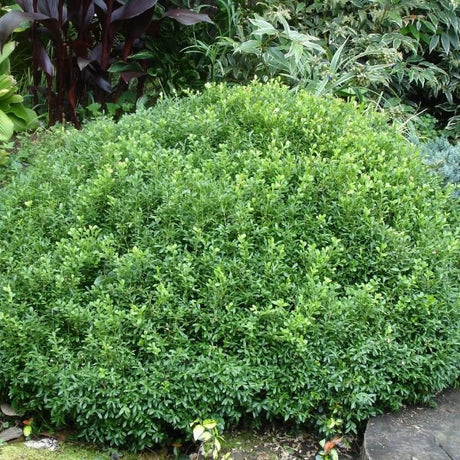
Looking for a "set it and forget it" evergreen that actually stays small? Meet the Little Missy Boxwood (Buxus microphylla 'Antoinette'). While many Boxwoods eventually outgrow their welcome or require constant shearing, Little Missy is the pint-sized overachiever that keeps its neat, rounded shape with almost zero effort from you. It is widely considered one of the most pest-resistant and hardy selections on the market today.
Year-Round Visual Interest and Texture
The first thing you’ll notice about Little Missy is its exceptionally dense, fine-textured foliage. The leaves are a lustrous, deep green that holds its color remarkably well through the winter, avoiding the "bronzing" or yellowing that plagues lesser cultivars. In early spring, look closely to find tiny, inconspicuous flowers that, while not showy to the eye, offer a sweet fragrance and a nectar source for early pollinators. Because of its tight internodes (the space between leaves), it creates a solid wall of green that looks polished 365 days a year.
Versatile Landscape Uses
Because this cultivar naturally matures into a compact mound, it is the premier choice for low-growing hedges and formal knots. It acts as a stunning "living frame" for rose gardens or perennial beds without competing for nutrients or space. If you have a smaller urban garden or a patio, Little Missy is a dream in decorative containers. Use it to flank a doorway for a touch of classic elegance or line a walkway to define your garden’s "bones."
The Gold Standard for Disease Resistance
One of the most important reasons to choose the Buxus microphylla 'Antoinette' is its high resistance to Boxwood Blight, a concern for many traditional gardeners. It has consistently ranked at the top of horticultural trials for its ability to stay healthy and vibrant even when other varieties struggle. It’s a tough, resilient shrub that brings a high-end, manicured look to your landscape without the high-maintenance headache.
Planting & Care
Delivery and Shipping
Shipping Rates
Ships in 3-5 business days • Tracking provided • Weather protected
| Under $50 | $9.99 |
| $50 - $99.99 | $14.99 |
| $100 - $149.99 | $16.99 |
| $150 - $198.99 | $24.99 |
| $199+ | FREE |
✓ Zone-specific timing • ✓ Professional packaging • ✓ Health guarantee
Find on Page
Type to search specs, description, care, FAQ, and shipping.
Other Boxwood varieties
-

-

-

Buxus x 'Cranberry Creek'
Regular price From $11888Unit price /Unavailable -

-

-
Buxus sinica var. insularis ‘RLH-BI’ PP 24,443
New arrivalRegular price From $9391Unit price /Unavailable -

Buxus microphylla var. japonica 'Winter Gem'
Regular price From $2489Unit price /Unavailable -

Buxus microphylla 'Kingsville'
New arrivalRegular price $7499Unit price /Unavailable


Plants similar to Little Missy Boxwood
-

Thuja occidentalis 'MR. BOWLING BALL'
Regular price $7709Unit price /Unavailable -

Ilex glabra 'ILEXFARROWTRACEY'
Regular price From $8741Unit price /Unavailable -

Thuja occidentalis 'SMNTOBAB' USPP30,761, Can PBRAF
Regular price From $7326Unit price /Unavailable -

Thuja occidentalis 'Hetz Midget'
Regular price $9324Unit price /Unavailable -

-

-

-


