


-
-
-
Wisteria frutescens 'Amethyst Falls'
Sold outRegular price From $5992Unit price /Unavailable -
-
Wisteria macrostachya 'Blue Moon'
Sold outRegular price $10459Unit price /Unavailable -




Wisteria Trees
Wisteria Trees for Sale at Nature Hills
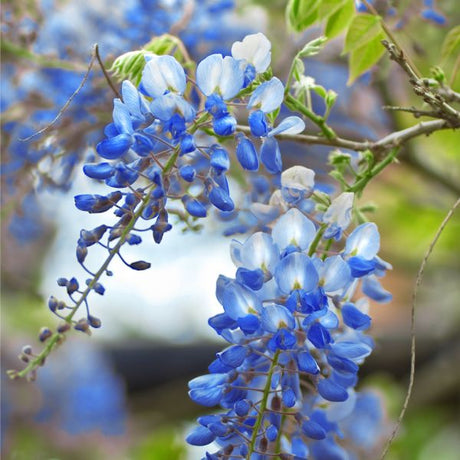
Transform your landscape with the enchanting beauty of trained wisteria trees. These aren't ordinary vines - they're carefully cultivated tree-form specimens with stunning cascading blooms that stop traffic every spring!
 Our wisteria trees deliver the romance and drama you love - fragrant flower clusters that appear in early spring before the leaves, followed by lush tropical-looking foliage all summer. Come fall, the leaves drop to reveal sculptural twisted branches and textured bark that looks stunning even in winter.
What Makes Tree-Form Wisteria Special?
Wisteria trees are Wisteria vines professionally trained into a single-trunk tree form through careful pruning and staking over 3-5 years. The result? A self-supporting specimen with a weeping, umbrella-like canopy that can sweep the ground - perfect as a stunning focal point in front yards, patios, or garden beds.
Unlike climbing vines that need arbors or pergolas, these trained standards stand alone as elegant specimen trees that won't take over your fence or gutters!
Popular Wisteria Tree Varieties
 Blue Chinese Wisteria Tree (Wisteria sinensis) - Our best-seller! This fast-growing beauty produces abundant lavender-to-pale-blue flower clusters that shift color as they open and age. Hardy in zones 5-9, it's ideal for creating instant drama in sunny spots.
Amethyst Falls Wisteria Tree (Wisteria frutescens 'Amethyst Falls') - This native American wisteria offers creamy lavender blooms and is non-invasive, making it a responsible choice for eco-conscious gardeners. This Georgia Gold Medal winner is hardy in zones 5-9 and often reblooms in summer!
Blue Moon Wisteria (Wisteria macrostachya 'Blue Moon') - Need extra cold hardiness? This cultivar survives zone 4 winters and blooms multiple times per season with fragrant blue-lavender flowers.
Wisteria Trees & Your Landscape
These trained specimens make spectacular front yard focal points that command attention when in full spring bloom. The arching canopy of compound leaves provides light shade all summer, and the architectural branching pattern creates visual interest throughout winter.
You'll attract pollinators like hummingbirds, bees, and butterflies while adding serious curb appeal to your property!
Growing Wisteria Trees: What You Need to Know
Sunlight: Plant in full sun (6+ hours daily) for maximum blooms. Wisteria can tolerate partial shade in southern zones but needs full sun in northern regions for best flowering.
Hardiness Zones: Most varieties thrive in zones 5-9, with cold-hardy selections like Blue Moon extending into zone 4.
Soil: These adaptable trees grow in a wide range of soils, including clay and sandy conditions. They prefer well-drained soil with moderate to low fertility. Avoid high-nitrogen fertilizers, which can produce excessive green growth at the expense of blooms.
Water: Regular moisture during establishment, then drought-tolerant once established. Mulch around the root zone to retain moisture.
Salt Tolerance: Wisteria handles roadside salt better than many ornamentals!
Pruning for Maximum Blooms
Here's the secret to spectacular flowering: prune twice yearly! In late winter or early spring, remove at least half of the previous year's growth, leaving a few buds per stem. Then in summer after blooming finishes (usually July-August), prune again to maintain shape and encourage next year's flower buds.
This twice-yearly approach keeps your tree manageable while maximizing bloom production. Get detailed instructions in our Wisteria Care & Pruning Guide.
Important Safety & Environmental Notes
Pet Safety: All parts of wisteria plants (especially seeds and pods) are toxic to dogs, cats, and horses if ingested. Plant away from areas where pets roam freely.
Invasiveness: Chinese (W. sinensis) and Japanese (W. floribunda) wisteria can be invasive in some regions. American wisteria varieties like Amethyst Falls are native, non-invasive alternatives. We're here to help you choose responsibly for your region!
Shipping Restrictions: Due to agricultural regulations, we cannot ship wisteria to California, Arizona, Idaho, or Colorado. We apologize for any inconvenience.
When Will My Wisteria Bloom?
Our trained tree-form wisteria are 3-5 years old and have already been established on a flowering schedule. Most bloom within the first or second season after planting! Expect flowers in April-May (timing varies by zone and variety), with some cultivars like Blue Moon and Amethyst Falls reblooming in mid-summer.
Order Your Wisteria Tree Today!
Whether you choose the classic Blue Chinese Wisteria or the native-friendly Amethyst Falls, you're getting a quality specimen that will provide decades of beauty. We'll ship your healthy, well-rooted wisteria tree at the perfect planting time for your growing zone!

