


Carolina Sweetheart® Redbud Tree
Cercis canadensis 'NCCC1'


Plant Sentry™ Protected
Your order is protected by our compliance system that:
- Prevents restricted plants from shipping to your state
- Ensures plants meet your state's agricultural requirements
- Protects gardens from invasive pests and diseases
Specifications
| Plant Characteristics | Cold hardy, Flowering, Fall Color/Interest, Thornless, Attracts pollinators, Heat Tolerant, Disease resistant |
|---|---|
| Hardiness Zone | 4a to 9b |
| Sunlight | Full sun, Partial shade |
| Height | |
| Width | |
| Watering Needs | Moderate |
| Preferred Soil | Clay, Loamy, Peaty, Sandy |
| Growth Rate | Moderate |
| Blooms In | Spring |
| Flower Color | Purple, Pink |
| Fragrant | Yes |
| Suitable Space | Outdoors |
| Botanical Name | |
| Species | |
| Cultivar | |
| Class | Magnoliopsida |
| Does Not Ship To | AK, HI, ID, MT, PR |
Description
Wildly Colorful Carolina Sweetheart® Redbud
- Vivid and Compact Ornamental Tree
- Excellent Mushroom-Shaped Form
- Four Seasons of Interest
- Incredible Accent, or Shade Tree for Small Space Gardens
- Brilliant Magenta-Pink Flowers on All Bare Branches in Very Early Spring
- New Heart-Shaped Leaves Emerge Purple
- As Leaves Age, They Turn Either Hot Pink or Variegated Green & White
- Winter Interest
- Stays Compact & Manageable
- Modern Cultivar of a Native Tree
- Disease-Resistant, Widely Adapted & Easy-Care
It's a good time to be a Redbud tree. Expert plantsmen are bringing incredibly ornamental cultivars of these beloved native trees to market.
They understand you may have a small yard, and must select trees that look great all year long. Everyone wants more color through blooms and showy foliage. Durability is critical, too!
You can't go wrong with the Carolina Sweetheart® Redbud (Cercis canadensis 'NCCC1'). This svelte version of the native Eastern Redbud stays compact and well-balanced in your landscape.
Like its cousin Redbuds, Carolina Sweetheart® puts on an astounding spring-blooming display. The fluorescent purplish-pink, pea-shaped flowers cover all the branches, and can even grow down the length of the tree trunk.
The sweet, sassy blooms are so welcome after the drab days of winter. Best of all, they are a sure sign that you have the entire summer ahead of you.
But...Carolina Sweetheart® Redbud has another feature that is just as dramatic. A dynamic set of purple new leaves follows the flowers.
As the leaves age, they'll turn a kaleidoscope of rose, hot Barbie pink, maroon, white, and plenty of green and white variegated. The trees will change from week to week in a color explosion.
So you have a nice shape and happy spring bloom, followed by incredible foliage all summer. Those eye-catching leaves hang from long petioles and will play and dance in the wind!
Get yourself a hammock and stand to while away a lazy summer afternoon near the wide-spreading canopy. No need for a book, when you can study the shimmer and sway of the multi-hued leaves in the slightest breeze.
Rely on this amazing tree to grow into the focal point of your landscape design. Complement the foliage with blooming perennials that pick up on the many hues of the bold foliage.
Some trees just "have it" all and Carolina Sweetheart® is one of them. Add one or several to your landscape this season. You'll get a professional-grade tree, securely boxed and shipped right to your doorstep.
How to Use Carolina Sweetheart® Redbud in the Landscape
This standout selection commands attention. We recommend giving it a prominent position, so everyone can see it.
Plant them in a long row that runs along the length of your property (even under power lines!) Add one at the corner of your house to anchor your foundation planting.
Or, carve out a personal space in your backyard. Create a unique getaway that suits your needs, along with a meandering path to reach it. Allow a Carolina Sweetheart® Redbud to become a destination spot in your own "Secret Garden".
They are fanciful enough to shade a child's playhouse. Encourage your young one's imagination with the amazing leaves and plant your tree near a Children's Garden.
Honestly, they'll jazz up anywhere you place them.
Add more than one in a grouping to give some stylish gravitas behind your patio seating. You'll be tempted to match your outdoor pillows to your trees.
Have a berm or a slope? Use Carolina Sweetheart® as the largest design element, and add plants around it.
If you have a picture window, this is the tree to place as a lawn tree in a mulched planting bed. You'll want to study the fabulous colors curled up on your couch.
Dry the leaves between two paper towels pressed in a heavy book for a few months. When they are dry, arrange them on paper and get them framed to use as special artwork indoors.
#ProPlantTips for Care
Carolina Sweetheart® Redbud trees require well-drained soil but are adaptable to many different types of soil. Be sure to include a pack of Nature Hills Root Booster in your order. It will help your tree access water and micronutrients over its entire lifespan.
They'll need at least four hours of direct sunlight to color their best. In the hottest climates, it will appreciate afternoon shade.
Your tree will need a regular schedule of water if you don't get enough rainfall. Spread a three-inch layer of mulch on top of the root system to cut down on surface evaporation. Just be sure to pull it away from touching the trunk.
Redbuds are a bit slow to fully leaf out in spring, so please be patient with your young trees. Those multi-colored and variegated leaves are worth the wait!
Order your Carolina Sweetheart® Redbud today. After all, the man at NC State University who introduced it said, "There is nothing else on the planet like it."! High praise, but well-deserved!
Explore More from Nature Hills
The Carolina Sweetheart® Redbud is a standout choice among redbud trees and joins our impressive selection of flowering trees and native plants that thrive in zone 6 plants, trees & shrubs collections. For expert guidance on selecting the right variety for your landscape, check out our #ProPlantTips: Best Redbud Tree Varieties & Care Guide which covers everything from planting to long-term care.
Planting & Care
Delivery and Shipping
Shipping Rates
Ships in 3-5 business days • Tracking provided • Weather protected
| Under $50 | $9.99 |
| $50 - $99.99 | $14.99 |
| $100 - $149.99 | $16.99 |
| $150 - $198.99 | $24.99 |
| $199+ | FREE |
✓ Zone-specific timing • ✓ Professional packaging • ✓ Health guarantee
Find on Page
Type to search specs, description, care, FAQ, and shipping.
Other varieties
-

-

Cercis canadensis 'Forest Pansy'
Regular price $9996Unit price /Unavailable -

-

Cercis canadensis 'NC2016-2'
Regular price $10999Unit price /Unavailable


Well, I'm very disappointed to say the least. This thing is 5' tall with a 1/2" diameter trunk. I just don't think its ever going to be right. Its a vine. I did some research it should be a minimum of 3/4" and as much as 1.5" for that height. Not to mention it so kinky, wavy, and curvy from being taped to a post growing in a bucket for, my guess is for years, to get that tall and have such a messed up trunk. I don't know if I should cut my losses and dig it up and throw it out, or nurture it for years to be even more disappointed for the work and time lost. Its starting to sprout new branches and leaves but they are only coming out it two directions. So if you look at from one direction its a few feet wide but if you walk around it 90 degrees, its only a few inches wide. My neighbors have one, its nothing like this! And I bought the root boaster, so I guess its $180 down the drain.
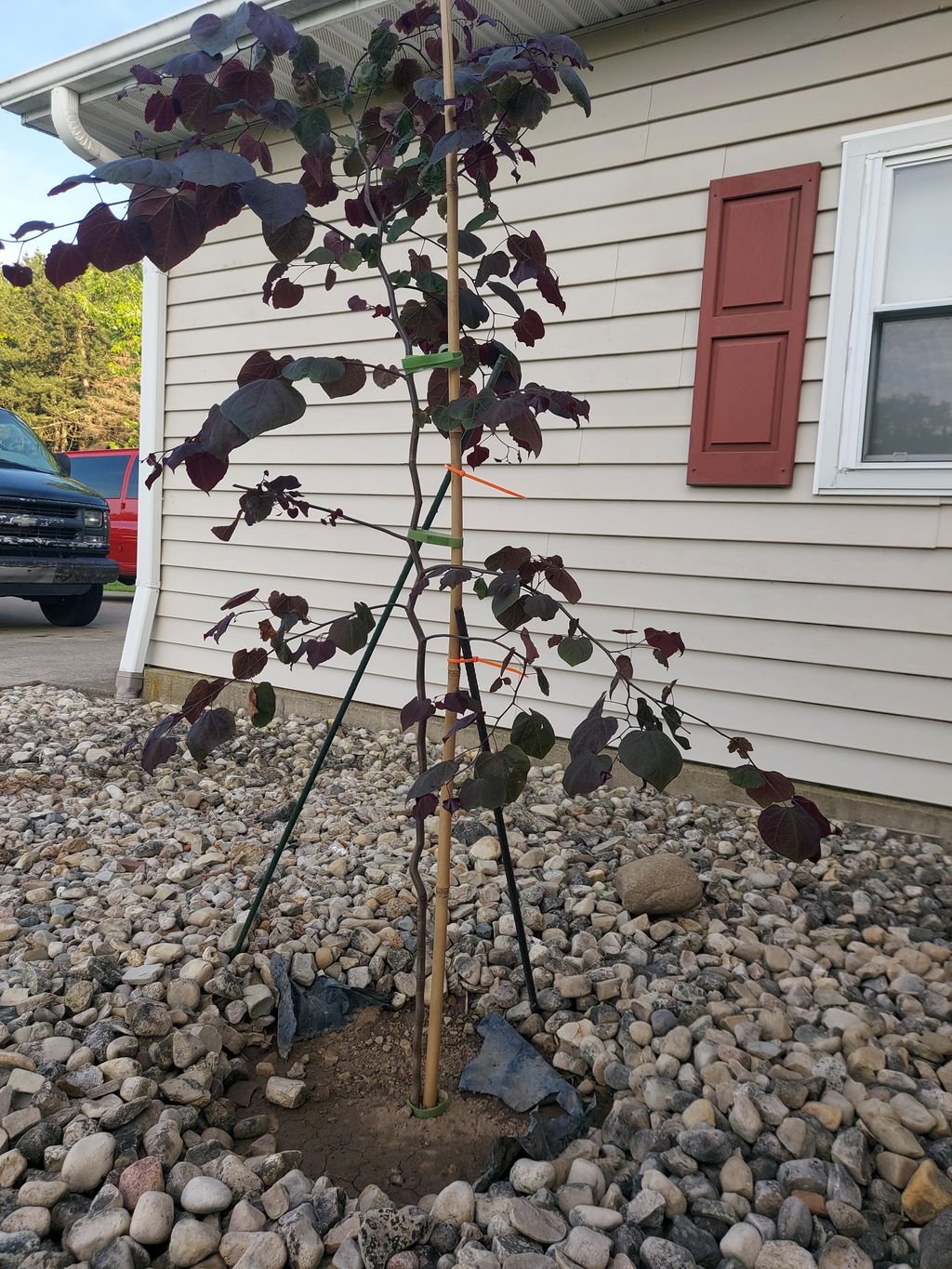
It had a bit of a rough ride getting here, a number of the little branches were broken and the leaves were all pale green. I planted it right away, snipped the broken stems, and mixed in root booster with its soil. Within two weeks it transformed into a rainbow of beautiful leaves and new growth. It was 4’+ on arrival. I’m working on training the branches and trunk but it is already gorgeous and healthy. I am looking forward to watching it grow in the coming years.
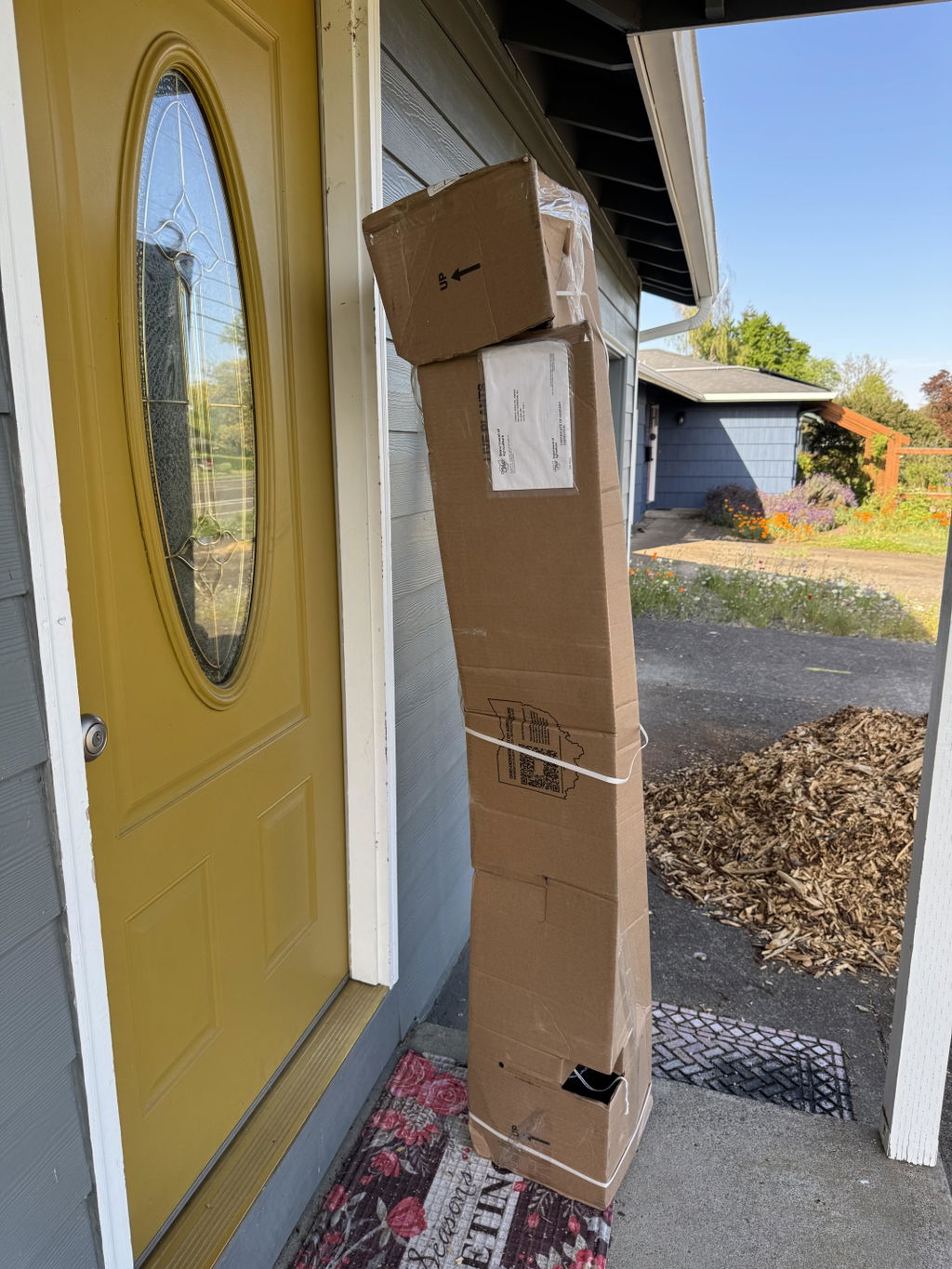
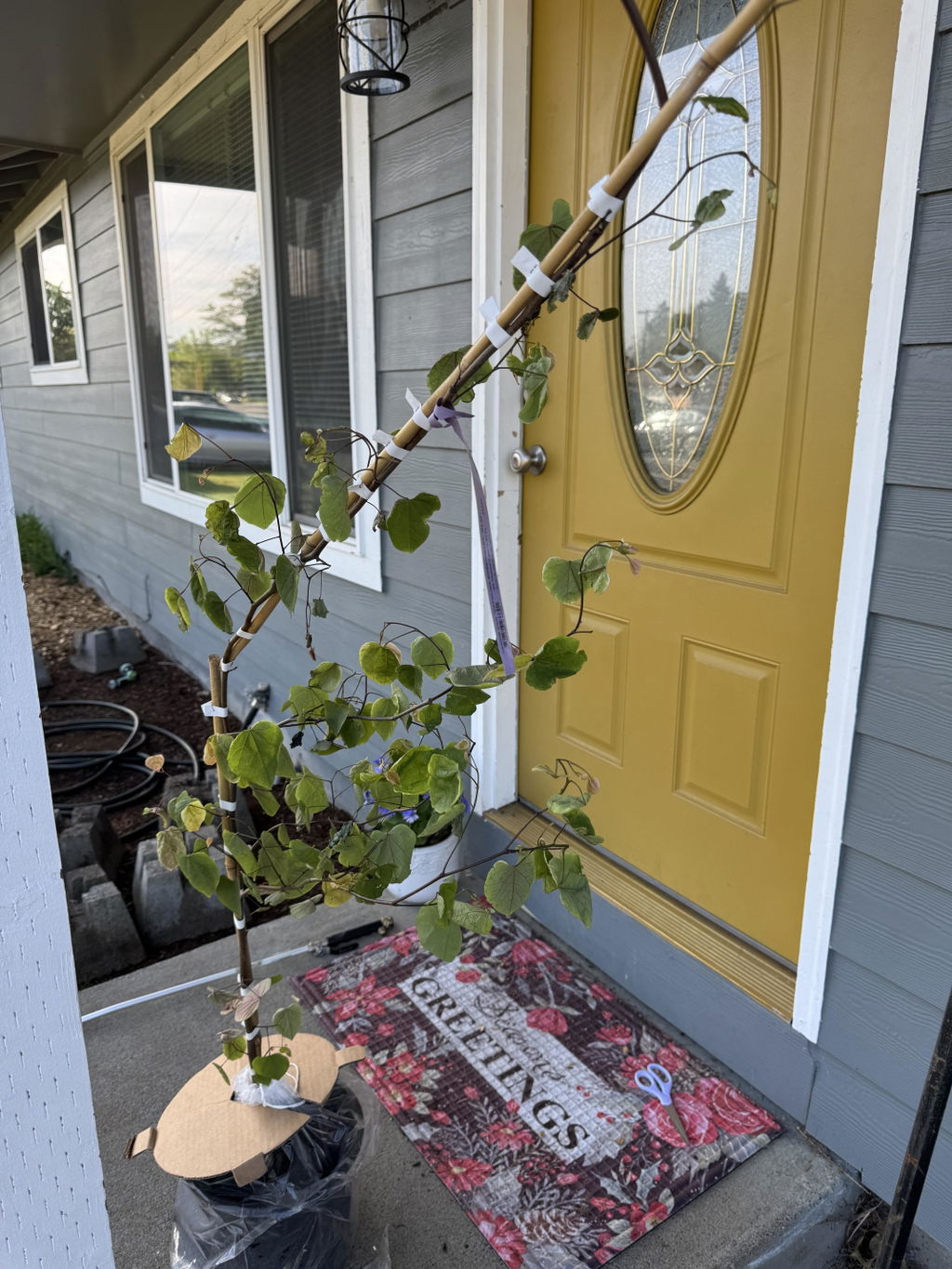
Shipping stress on young trees is real, and it sounds like you did everything right. Planting promptly, trimming the damage, and giving the roots a boost let it settle in and take off. The Carolina Sweetheart puts on quite a show once it finds its footing, and with the variegated foliage shifting through the seasons, you have a lot to look forward to. Thanks for sharing how it came around so well.
both arrived as expected, and waking up beautifully -
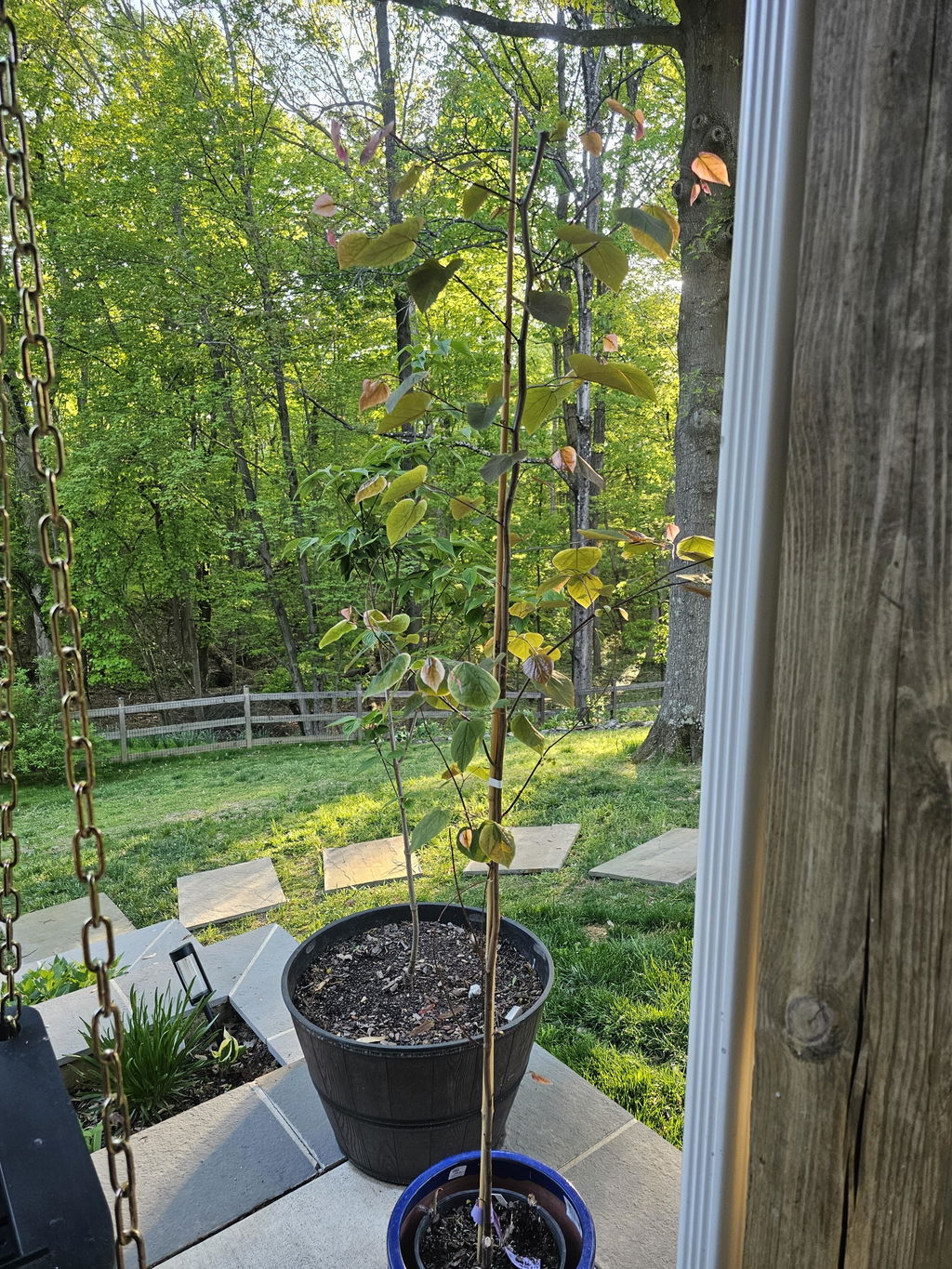
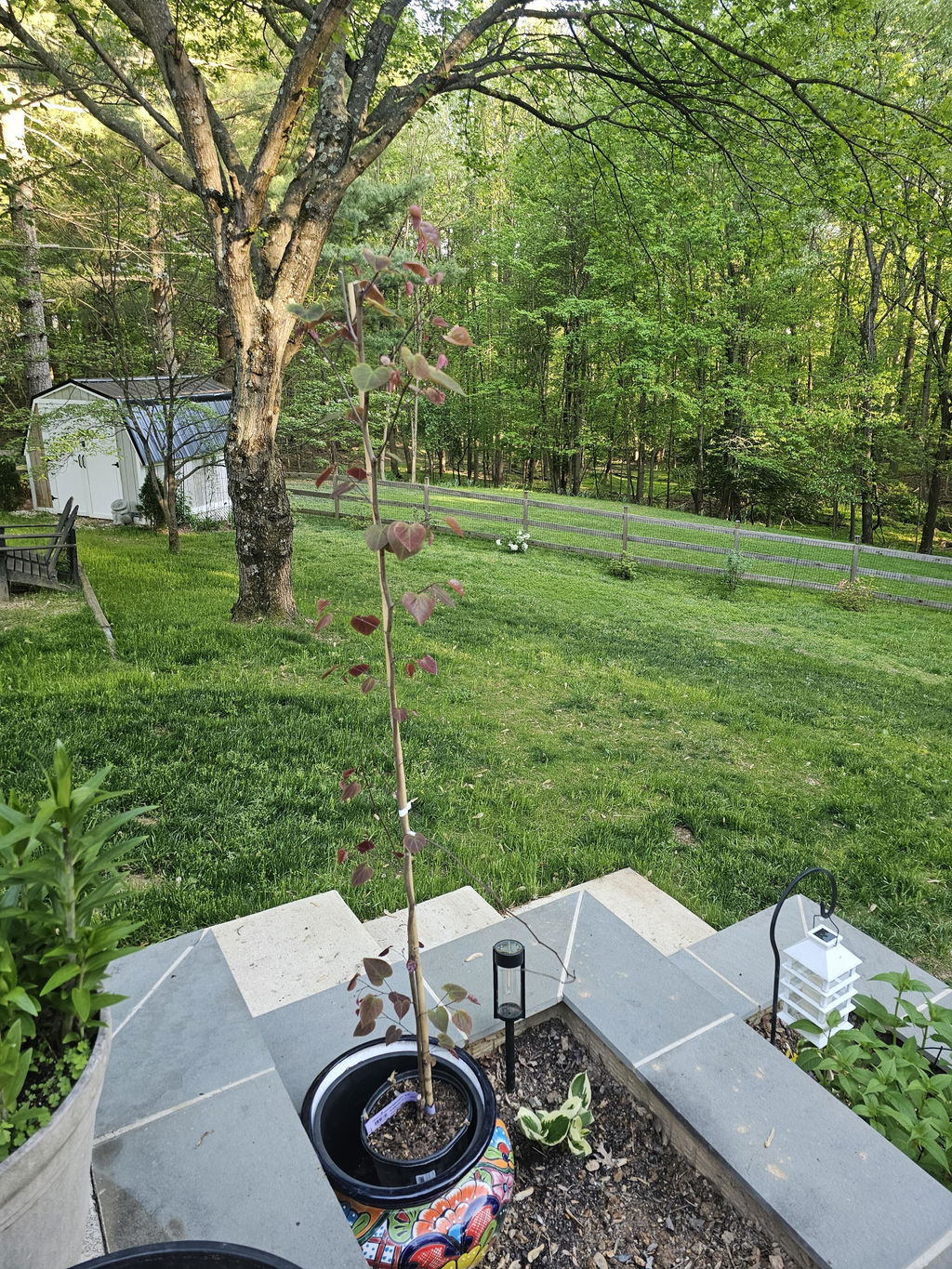
Redbuds leafing out in spring is one of the better garden moments, and the Carolina Sweetheart is especially worth watching as those variegated leaves unfurl. Give them a spot with decent drainage and they should reward you for decades. Thanks for the update, Katie!
It was packaged so well. Very impressed and they started sending out new Leaves right away. I will order again from you
Packaging that actually protects bare-root trees in transit makes a real difference, and we're glad it showed. Redbuds tend to push new growth quickly once their roots settle in, so those early leaves are a good sign the tree is off to a strong start. We look forward to your next order, Gwen. Thanks for sharing your experience.
Arrived packaged very nicely, much bigger than I expected. So far so good. We will see next year if its happy
Redbud packaging matters a lot since the branches are so delicate, and it sounds like this one traveled well. The size surprise is always a nice bonus with bare-root or container stock. Redbuds tend to put on a good show once they settle in, so fingers crossed for a strong spring bloom next year. Thanks for sharing the early update, Erica. The Nature Hills Team
The soil was nice and moist. Shrub has been growing nicely. 2 thumbs up.Can'twait to see the foliage.
Purchased two Carolina Sweetheart trees. One is thriving, vibrant and overall looks amazing. The second one is smaller in size and not thriving.
Dear Mijanou,
Thank you so much for sharing your experience with your Carolina Sweetheart trees. We’re delighted to hear that one of your trees is thriving and looks amazing! At the same time, we’re sorry the second tree isn’t doing as well—it’s always disappointing when part of your planting doesn’t meet expectations.
If you haven’t already, a close inspection of soil moisture and sunlight exposure can often reveal neutral clues; Carolina Sweetheart can be sensitive to too much water or less light than ideal. If it appears stressed, giving it consistent watering (about 1 inch per week) and ensuring it’s planted in well-draining soil with full sun can promote healthier growth. Sometimes a slow-release fertilizer balanced for blueberries or fruit shrubs can help as well.
If you’d like, feel free to reach out with any photos or more details, and we’d be happy to help troubleshoot further. We’re committed to helping you get the best results possible!
Rooting for your garden’s success,
Your Nature Hills Plant Care Team
Received this tree a few days ago. It looks grafted at the base of the trunk. Maybe that’s what they mean by “cultivar.” Good size for the price but the color of the leaves are not what I was expecting or pictured. Hopefully the variegation will show up soon as the leaves age. The tree was packaged well and arrive in a timely manner. Overall a good tree.
Hi Cathy,
Thank you so much for taking the time to share your experience with your Carolina Sweetheart Redbud! You’re absolutely right—the “grafted at the base” part refers to how this cultivar is propagated, ensuring the best qualities from both the rootstock and the desired variety above it. It’s great to hear that the tree arrived promptly and was well-packaged to protect it during shipping.
Regarding the leaf color and variegation, many redbud cultivars do undergo changes as their new growth emerges and matures. Sometimes the colors develop more vibrantly after a few weeks or with seasonal shifts, so hopefully, you’ll start seeing the charming variegation you were expecting soon. In the meantime, keeping the tree in a spot with the appropriate light—partial shade to full sun—can help maintain its healthy foliage.
If you have any questions about care or want tips on how to encourage that vibrant characteristic, don’t hesitate to reach back out. We’re always happy to assist!
Wishing you happy planting,
The Nature Hills Plant Experts
Received this tree a few days ago. It looks grafted at the base of the trunk. Maybe that’s what they mean by “cultivar.” Good size for the price but the color of the leaves are not what I was expecting or pictured. Hopefully the variegation will show up soon as the leaves age. The tree was packaged well and arrive in a timely manner. Overall a good tree.
Hi Cathy,
Thank you so much for taking the time to share your feedback about the Carolina Sweetheart Redbud! You’re absolutely right—what you’re seeing at the base of the trunk is likely the graft union, which is common for cultivars to ensure optimal growth and desired characteristics. It’s great to hear the size met your expectations and that the tree arrived safely and promptly.
Regarding the variegated leaf color, sometimes new leaves may start off lighter or slightly different than the photos due to growing conditions and seasonality. Over time, as your Redbud becomes established and balances like sunlight and temperature settle in, you’ll likely see the charming variegation develop more fully. To help enhance the leaf’s vibrancy, make sure your tree gets plenty of indirect sunlight and consistent moisture, but avoid overwatering extremes.
If you have any questions or want guidance on caring for your new tree as it settles in, we’re here for you! Don’t hesitate to reach out—we love helping gardeners nurture their beautiful plants.
Rooting for your garden’s success,
Your Nature Hills Plant Care Team
Just unwrapped my new tree! WOW!!! It is gorgeous! Just exactly what I hoped for!! Thank you so much for the wonderful quality! What a gorgeous tree. I have given it water and put it in the shade to rest and get acclimated. It was beautifully packed. I am thrilled…Kathy Sandel
Dear Kathy,
Thank you so much for your wonderful feedback! We’re absolutely delighted to hear that your Rainbow Carolina Sweetheart Redbud tree exceeded your expectations and arrived in such beautiful condition. You’ve taken exactly the right steps by giving it water and allowing it to rest in the shade to acclimate; this will certainly help your tree thrive in its new home.
If you have any questions as your tree settles in or as it grows, please don’t hesitate to reach out—we’re always here to offer guidance and support. Also, keeping the soil consistently moist during its first growing season will encourage a strong root system, and eventual bloom.
Wishing you happy planting,
The Nature Hills Plant Experts
Just unwrapped my new tree! WOW!!! It is gorgeous! Just exactly what I hoped for!! Thank you so much for the wonderful quality! What a gorgeous tree. I have given it water and put it in the shade to rest and get acclimated. It was beautifully packed. I am thrilled…Kathy Sandel
Dear Kathy,
Thank you so much for sharing your wonderful experience with your Rainbow Carolina Sweetheart Redbud tree! We're absolutely delighted to hear that it arrived as beautiful as you hoped and that the packaging met your expectations. Your care in giving it water and a shaded spot to acclimate is perfect and truly sets your tree up for a strong start.
If you ever have questions about its seasonal care, flowering, or any other garden tips, please don’t hesitate to reach out. We also have a helpful guide on planting and maintaining Redbuds available on our website that could offer some extra insights as your tree grows.
Wishing you happy planting,
The Nature Hills Plant Experts
