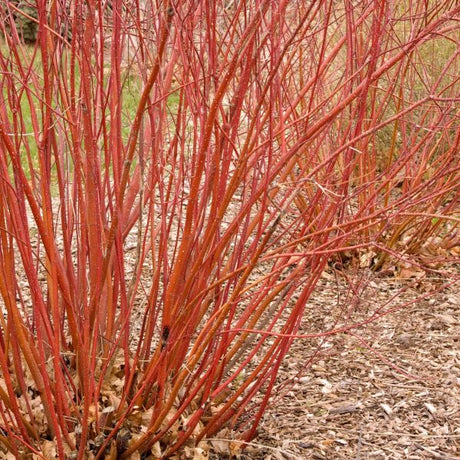

Looking to add bold color and wildlife appeal to your winter garden? Red-Twig Dogwood shrubs bring vibrant red, burgundy, maroon, yellow, coral, or orange stems that glow in snowy landscapes, plus beautiful foliage, spring blooms, and year-round interest for pollinators and birds.
When your garden slips into its winter slumber, Red Twig Dogwoods wake up and shine. These colorful shrubs aren't just one-season wonders! They provide season-long structure, fiery twig color in winter, soft flowers in spring, and berries that birds love.
Whether you're drawn to the classic Red Osier (Redosier) Dogwood or one of the newer gold and flame-twigged varieties, these shrubs are true four-season performers that look stunning and work hard in the landscape.
What Makes Red Twig Dogwoods Special?
Red-Twig Dogwoods (Cornus sericea and related hybrids) are deciduous shrubs with a naturally multi-stemmed, upright form. In spring and summer, they're covered in green or bluish leaves, some with striking variegation.
Come fall, the foliage shifts to burgundy or purple tones before dropping, revealing brightly colored stems that stand out against gray skies and snowy ground.
- Broad, oval leaves in green, bluish-green, or variegated cream and green
- Some varieties have purple or red-tinged foliage in fall
- Wide range of sizes and forms
- Upright or slightly spreading forms with multi-stemmed bases
- Flat clusters of small, creamy-white flowers in late spring to early summer
- Followed by white to bluish berries that feed birds and other wildlife
- Flowers are pollinator-friendly, especially to bees and native butterflies
- Red, orange, gold, or coral twigs take center stage in winter
- Color intensifies in cold weather, especially on younger stems
- Dogwood shrubs are generally deer-resistant unless they are desperate
Nature Hills Nursery's Top 5 Red Twig Dogwoods
Ready to light up your winter garden? These Red Twig Dogwoods bring year-round interest, but especially shine when their fiery stems blaze against snow, mulch, or evergreen backdrops.
Here are five top-selling and top-performing Dogwood Bushes you can grow with confidence:
1. Proven Winners® Arctic Fire® Red Twigged Dogwood
Intense red stems add a bold winter pop to gardens and containers. These shrubs handle full sun and partial shade locations with ease.
- Size & Zones: 3-5 feet tall and wide; USDA Zones 3-7
- Color Highlights: White flowers, bluish-white berries, green leaves with red-purple fall color, vivid red stems
- Best For: Small gardens, borders, and container plantings
2. Bailey Red Twigged Dogwood
Deep red branches deliver striking winter texture and color.
- Size & Zones: 6-10 feet tall and wide throughout USDA Zones 3-8
- Color Highlights: Creamy white flowers, white to blue-tinged berries, green summer foliage, bold red twigs in winter
- Best For: Hedgerows, privacy screens, and erosion control
3. Cardinal Red Osier Dogwood
Scarlet-red stems make this a standout focal point in any season.
- Size & Zones: 8-10 feet tall and wide. Great in USDA Zones 2-7
- Color Highlights: White flowers, white berries, dark green leaves with reddish-purple fall tones, vivid red stems
- Best For: Wetland edges, naturalized areas, and wildlife-friendly borders
4. Proven Winners® Arctic Fire® Yellow Twig Dogwood
Golden stems glow like winter sunlight in the snowy landscape.
- Size & Zones: 4-5 feet tall and 5-6 feet wide. Handles USDA Zones 2-7!
- Color Highlights: White blooms, bluish berries, and green foliage with purple-red autumn foliage, with bright yellow stems in winter!
- Best For: Mass plantings, mixed borders, and contrasting with red-stemmed Dogwoods
5. Proven Winners® Arctic Sun® Dogwood
Warm coral, orange, and yellow twigs create a colorful cold-season show.
- Size & Zones: 3-4 feet tall and wide; USDA Zones 3-9
- Color Highlights: White flowers, pale berries, green leaves turning golden in fall, sunset-colored stems
- Best For: Small spaces, foundation beds, and high-contrast accents

6. Silver and Gold Dogwood
Variegated leaves and golden stems offer elegant, multi-season appeal.
- Size & Zones: 6-8 feet tall and 8-10 feet wide. Best in afternoon shade, USDA Zones 3-8
- Color Highlights: White flowers, bluish-white berries, green leaves edged in cream, yellow winter stems
- Best For: Shaded gardens, bright focal points, and four-season interest
7. Garden Glow Dogwood
Bright golden-green foliage provides a luminous backdrop throughout the growing season.
- Size & Zones: 4-5 feet tall and wide. Hardy throughout USDA Zones 4-8
- Color Highlights: White spring flowers, white summer berries, golden-green leaves turning burgundy-red in fall, red stems in winter
- Best For: Shaded gardens, woodland edges, and adding vibrant foliage contrast
8. Ivory Halo® Dogwood
Variegated leaves and red stems offer striking visual appeal year-round.
- Size & Zones: 5-6 feet tall and wide throughout USDA Zones 3-7
- Color Highlights: White flowers, white berries, green leaves with creamy-white margins, red stems in winter
- Best For: Foundation plantings, mixed borders, and winter interest
9. Isanti Dogwood
Dwarf variety with dense branching and vibrant red stems.
- Size & Zones: 5-6 feet tall and wide. Perfect for USDA Zones 3-8
- Color Highlights: White flowers, white berries with a bluish tint, dark green leaves turning deep red in fall, bright red stems in winter
- Best For: Hedges, erosion control, and wildlife-friendly landscapes
10. Red Twig (Red Osier) Dogwood
A native North American shrub celebrated for its vibrant red stems that provide striking winter interest!
- Size & Zones: 6-9 feet tall and wide; USDA Zones 2-8
- Color Highlights: Creamy white flowers in late spring, white to bluish berries in summer, green leaves turning red to purple in fall, and bright red stems in winter
- Best For: Naturalized areas, wetland margins, erosion control, and wildlife gardens

Landscape Uses For Dogwood Shrubs
- Winter interest: Bright stems glow in snow or low light
- Hedges or privacy screens: Dense foliage in summer, colorful twigs in winter
- Rain gardens or wet spots: Tolerates poor drainage
- Naturalized or native-style plantings: Pairs well with native grasses and perennials
- Wildlife habitat: Provides shelter, nectar, and berries for birds and pollinators
- Foundation or border planting: Especially compact types like Arctic Fire®
- Larger varieties are fantastic windbreaks and help block drifting snow
- Some varieties form thickets by growing shoots at the base, which create politely expanding shelterbelts, groupings, and wildlife-friendly habitats.
- Fantastic winter color when planted in front of dark homes or dark evergreen hedges
- Fill late-season planters with colorful seasonal décor and vases with unique stems.
Pair these shrubs with evergreens for contrast, ornamental grasses for texture, or conifers to anchor the space all year long!
Dogwood Bush Wildlife Benefits
Dogwood bushes do more than just look good. They actively support your local ecosystem:
- Flowers feed bees and butterflies in spring
- Fruits are loved by birds and wildlife, including Robins and Cedar Waxwings
- Dense structure provides cover and nesting habitat
- Excellent for restoring native landscapes and riparian areas
- Many types of Lepidoptera use Dogwoods as Host Plants for their caterpillars
How To Get The Brightest Red Twig Color
Dogwoods are surprisingly easy to grow. Here's how to keep yours healthy! Here's how to keep your Dogwoods looking their most dazzling:
-
Sunlight is key! Full sun produces the most intense stem color, while too much shade can dull the vibrancy.
-
Water wisely. These shrubs thrive in moist, well-drained soil but can tolerate periodic drought once established. During dry spells, a deep soak helps maintain vigor and the best color. The Finger Test helps determine when your new Dogwoods need water during their first year.
-
Feed in early spring. Apply a balanced fertilizer in early spring to support lush growth and stronger stem coloration.
-
Use arborist mulch to retain soil moisture, insulate roots, and reduce competition from weeds. Learn how and why to mulch your plants. This also helps keep soil and soil-borne fungal issues from splashing onto the foliage.
-
Prune lightly after blooming. Late spring to early summer is ideal for shaping and removing dead or damaged stems. For more compact forms, light shaping can be done right after flowering. Always sanitize your pruning tools.
- Renewal pruning is important! It involves removing one-third of the oldest stems down to the ground each spring, and encourages new growth to take over. These new vigorous stems have a brighter color and take out any faded, less-productive, older wood.
A Shrub That Shines When Everything Else Sleeps

When your garden needs a pop of life in winter, Red Twig Dogwoods are ready to deliver. Their vivid stems glow like beacons through snow and frost, while their spring flowers, summer foliage, and fall berries add interest all year long.
And it's not just about looks! These shrubs are pollinator-friendly, wildlife-loving, low-maintenance, and tough enough to handle soggy soil, drought, deer, and freezing temperatures! All while waking up your dreary winter landscape!
Add colorful Dogwoods to your landscape and let your garden keep glowing long after the flowers fade.
Happy Planting!