Free Shipping on Orders $199+

Growing Zone: | Garden in
Find your Growing Zone!

Red Maple Trees: Nature’s Fiery Masterpiece

the majestic Red Maple - care and varieties

Charlotte Weidner |

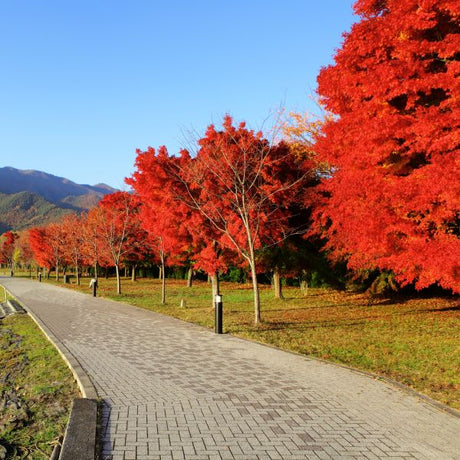
Few trees capture the drama and beauty of the seasons quite like the Red Maple (Acer rubrum). From the first soft flush of crimson buds in spring to the blazing scarlet spectacle of fall color, Red Maples turn the landscape into a living watercolor.

Their rounded crowns, symmetrical branching, and elegant silhouettes dance with mother nature's moods, bright and warm in sunlight, shadowed and graceful in rain. These trees are among North America's most beloved natives, found from the swamps of the South to the rocky hillsides of New England, thriving almost anywhere they are planted.

red maple leaves

With smooth gray bark maturing into a rugged, furrowed texture and three-lobed leaves that flutter in the gentlest breeze, Red Maples are the embodiment of both strength and softness.

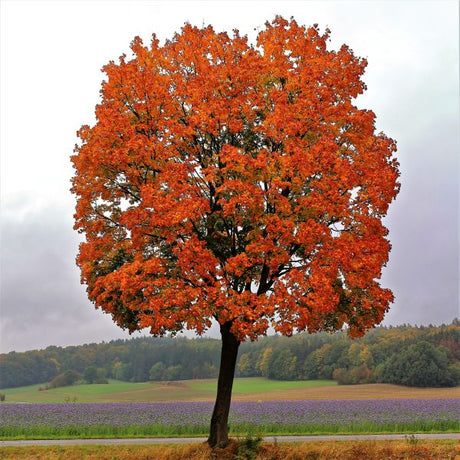
They're fast-growing, adaptable, and breathtakingly colorful, the perfect marriage of beauty and resilience. As the days shorten, their chlorophyll fades, and hidden pigments emerge in radiant tones of red, gold, and orange ... nature's chemistry at work through photosynthesis.

Landscaping Uses

Red Maples are true four-season showpieces. Their versatility allows them to shine as statement ornamental trees or shade trees in grand landscape designs. In spring, their scarlet blossoms feed pollinators and lend warmth to still-cool days. Followed by whimsical samaras that flutter in the wind.

red maple tree flowers in spring

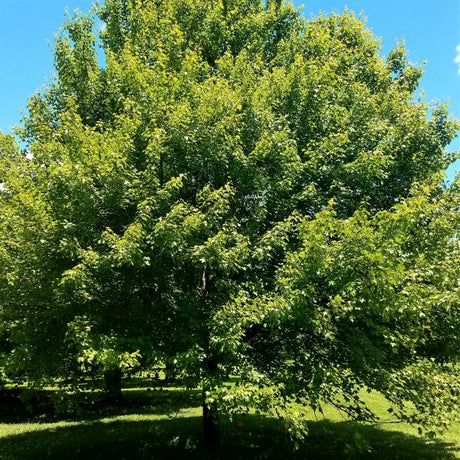
Throughout the summer, their dense canopy offers a welcome refuge of shade, cooling patios, driveways, and lawns naturally. By fall, they ignite the horizon in vivid hues, while their upright or spreading form adds architectural beauty to any yard.

Top landscape uses:

  • Shade trees: Perfect for large yards, parks, and streetscapes.

  • Accent trees: Their vivid color provides focal points in mixed plantings.

  • Wildlife gardens: Nectar-rich flowers attract bees, while seeds feed songbirds.

  • Windbreaks and slopes: Upright varieties like Armstrong form colorful living walls that help reduce erosion.

  • Reflection gardens: Their mirrored fall color on water features creates unforgettable scenes.

Pair Red Maples with flowering shrubs such as Hydrangea, Spirea, or Lilac for contrasting textures, or plant beneath with shade-loving perennials for shade like Hostas and Ferns. In fall gardens, combine them with Black-Eyed Susan, Russian Sage, or Ornamental Grasses for a painterly, multi-layered look, a simple way to extend color through the seasons.

For added wildlife appeal, surround your Maple with pollinator-friendly perennials and bird-friendly plants.

Care & Maintenance

red maple tree samaras (seeds)

Red Maples are remarkably adaptable but thrive best when given the right start. They prefer moist, slightly acidic soil and full sun to partial shade. Avoid extremely dry or compacted soils; though they can tolerate clay and occasional flooding, they don't fare well in prolonged drought. Healthy roots depend on soil health and well-drained soil.

Planting tips:

  • Choose a site with at least 6 hours of sunlight per day. Make sure you have allowed for the mature width of these trees to give their large root systems plenty of space. Learn more about tree roots and infrastructure safety.
  • Dig a wide planting hole, at least twice as broad as the root ball, and loosen the surrounding soil. Check proper planting depth.

  • Water deeply and regularly for the first few years, especially during dry spells. Use the Finger Test to check when the soil needs moisture.

  • Apply a mulch layer to maintain soil moisture and regulate temperature, but keep it a few inches away from the trunk and the tree's drip line.

  • Avoid high-nitrogen fertilizers; use a slow-release, balanced formula once in early spring. For guidance, see tree planting best practices.

Maintenance essentials:

  • Pruning: Best done in late winter or early spring before new growth begins. Remove crossing or dead branches to maintain a strong structure.

  • Watering tips: Once established, Red Maples are moderately drought-tolerant but perform best with consistent moisture.

  • Protection: Use tree guards on young trunks to prevent bark damage from sunscald or animals.

Top Red Maple Varieties at Nature Hills

gorgeous red maple tree in fall

Each Red Maple variety brings its own twist on fiery foliage and graceful form.

  • Red Maple Tree (native variety): The classic native, known for its brilliant scarlet fall color and wide adaptability.

  • Summer Red Maple Tree: Features maroon-red new growth that stays tinted through summer for extended color.

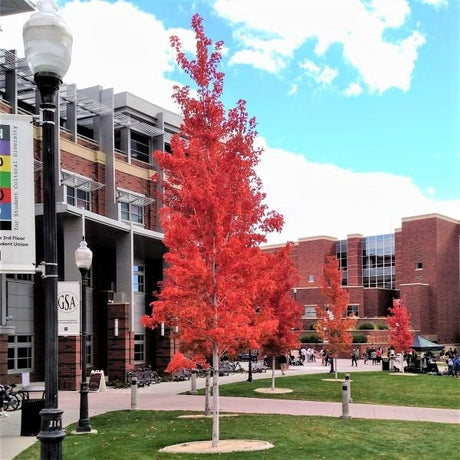
  • Redpointe® Red Maple Tree: A refined, upright form with exceptional symmetry and stunning red-orange autumn color.

  • October Glory® Red Maple Tree: Famous for its long-lasting, late fall display of bright crimson-red leaves.

  • Red Sunset® Maple Tree: One of the earliest to turn color - vibrant orange-red foliage that glows before frost.

  • Summer Sensation® Red Maple Tree: Noted for its strong central leader, yellow fall color, and tolerance of variable soils.

  • Autumn Fantasy™ Red Maple Tree: A hybrid marvel that combines rapid growth with intense red foliage and cold-hardiness.

  • Armstrong Red Maple Tree: Compact, narrow habit perfect for small yards or framing walkways, this is a Silver Maple and Red Maple hybrid.

Each of these selections offers brilliant fall color, reliable growth, and easy-care performance, making them some of the most requested pollution-tolerant trees at Nature Hills.

When the Forest Blushes Red

When autumn winds whisper and the sunlight takes on that golden edge, few sights rival a Red Maple in full color. Its canopy blazes against a cool sky, lighting up driveways and lakesides with a warmth that seems to come from within. This tree doesn't just mark the passage of the seasons ... it celebrates them!

A Red Maple's beauty lies not only in its color but in its message: growth, change, and renewal are all part of the same grand cycle!

Plant one, and each year you'll watch the world's most beautiful reminder unfold right in your own yard.

Happy Planting!

Find your USDA Growing Zone before planting to ensure your Red Maple thrives in your climate.
Previous Next

Compare Plants

Browse the features and specs side-by-side to find the best fit for your garden.

A table comparing the facets of 4 products
Facet
Red Maple Tree
Red Maple Tree
View details
October Glory® Red Maple Tree
View details
Red Sunset Maple
Red Sunset® Maple Tree
View details
Armstrong Maple
Armstrong Maple Tree
View details
Rating
Rating-
(1)
--
Type
TypeTreeTreeTreeTree
By
ByAmerican BeautiesNature Hills NurseryNature Hills NurseryNature Hills Nursery
Flower Color
Flower Color
  • Red
  • Red
  • Red
  • Red
Growing Zone Range
Growing Zone Range
4-9
4-9
4-9
4-9
Mature Height
Mature Height
40-60 ft
40-50 ft
40-50 ft
50-70 ft
Width
Width
40-60 ft
30-40 ft
30-35 ft
15-20 ft
Price
Price
Regular price $9790
Regular price $9200
Regular price $9441
Regular price $9755

Frequently Asked Questions

Are red maples good trees?

Yes, red maples are excellent trees that offer exceptional year-round value. These fast-growing North American natives thrive in zones 3-9 and adapt to almost any soil condition, from wet swamps to dry hillsides. They provide spring flowers for pollinators, dense summer shade, and spectacular fall color in brilliant reds, oranges, and golds. Choose red maples for reliable performance as shade trees in large yards or as striking accent trees in smaller landscapes.

Is red maple shade tolerant?

Red maples prefer full sun to partial sun conditions and are not considered shade tolerant trees. While they can survive in light shade when young, they require at least 4-6 hours of direct sunlight daily to develop their characteristic vibrant fall color and maintain healthy growth. Trees grown in too much shade will have sparse branching, reduced fall color intensity, and slower growth rates. For best results, plant your red maple in a location that receives morning sun and only light afternoon shade in zones 3-9.

How fast does a red maple tree grow?

Red maple trees are fast-growing, typically adding 1-2 feet of height per year under optimal conditions. In USDA zones 3-9, young trees can reach 15-20 feet within 10 years, eventually maturing to 40-60 feet tall with a 30-40 foot spread. Growth rates are fastest in moist, well-draining soil with full to partial sun exposure. For best results, provide consistent moisture during the first few years after planting and avoid compacted or overly wet soils.

How big does red maple get?

Red Maples typically reach 40-60 feet tall with a 30-40 foot spread at maturity, though some specimens can grow up to 90 feet in ideal conditions. These fast-growing trees add 1-2 feet of height per year and are hardy in USDA zones 3-9. Plan for adequate spacing when planting, allowing at least 25-30 feet from structures and other large trees to accommodate their full mature canopy.

How fast do red maples grow?

Red maples are fast-growing trees that typically add 12-18 inches of height per year under ideal conditions. Most varieties will reach 15-20 feet within 10-15 years and can eventually mature to 40-60 feet tall with a 25-40 foot spread in USDA zones 3-9. Growth rate depends on soil moisture, sunlight, and local climate conditions, with trees growing fastest in moist, well-drained soils. Plant young red maples in spring or fall and provide consistent watering during their first few years to maximize healthy growth.

How far apart to plant red maple trees?

Plant red maple trees 30-50 feet apart to accommodate their mature spread of 25-45 feet, depending on the variety. For smaller cultivars like 'October Glory', 25-30 feet spacing works well, while larger varieties such as 'Red Sunset' need the full 40-50 feet. Consider the tree's mature size and your landscape goals when determining final spacing to prevent overcrowding as they establish over 10-15 years.

What USDA hardiness zones are best for red maple trees?

Red maple trees thrive in USDA hardiness zones 3-9, making them one of the most adaptable native trees in North America. They perform exceptionally well in zones 4-8 where they receive adequate winter chill hours while avoiding extreme temperature fluctuations. In zone 9, choose a location with afternoon shade and consistent moisture to prevent heat stress. Plant in fall or early spring when soil temperatures are between 45-65°F for optimal root establishment.

How to identify a red maple?

Red Maple trees are easily identified by their three-lobed leaves with serrated edges, smooth gray bark that becomes furrowed with age, and distinctive winged seeds (samaras) that appear in spring. The leaves turn brilliant shades of red, orange, and gold in fall, while spring brings clusters of small red flowers before the leaves emerge. These fast-growing natives typically reach 40-60 feet tall with a rounded to oval crown and symmetrical branching pattern. Look for the characteristic leaf shape and seasonal color changes to confirm identification in your landscape.

Does montana have maple trees?

Yes, Montana has native maple trees, including Rocky Mountain Maple (Acer glabrum) which thrives in the western part of the state. However, Red Maples (Acer rubrum) are not native to Montana and face challenges in the state's harsh winters and dry conditions, typically surviving only in USDA zones 3-9 with adequate protection. Montana gardeners in milder microclimates around Billings or Missoula may have success with cold-hardy Red Maple cultivars like 'Red Sunset' if they provide wind protection and consistent moisture. Contact your local extension office to determine the best maple species for your specific Montana location and growing conditions.

When is the best time of year to plant a red maple tree?

The best time to plant red maple trees is during fall (September through November) or early spring (March through May) when temperatures are cooler and rainfall is more consistent. Fall planting is generally preferred because it allows the tree to establish its root system during the dormant season before facing summer heat stress. In USDA hardiness zones 3-9 where red maples thrive, avoid planting during the hot summer months or when the ground is frozen. Choose a day when soil moisture is adequate but not waterlogged, and plan to water regularly for the first growing season to ensure proper establishment.

Find Your Garden's Growing Zone!

Your Current Growing Zone:

Zone

ZIP Code:

✓ Growing Zone Set Successfully!

Your zone has been saved and will be used throughout the site.

⚠ Unable to locate a growing zone for that ZIP code.

Please check your ZIP code and try again.

Looking up your growing zone...

When ordering a tree or plant, make sure to know your planting zone.

You can determine your garden's USDA hardiness zone by entering your Zip Code below.