Free Shipping on Orders $199+

Growing Zone: | Garden in
Find your Growing Zone!

Identifying Evergreens Part 9: The Redwood

identifying and growing redwood trees at naturehills.com

Charlotte Weidner |

Redwoods are some of the most awe-inspiring evergreen trees on the planet, and learning how to identify them feels a bit like stepping into a living time capsule. These gentle giants tower with unmatched grace, bringing unforgettable texture, color, and structure to large landscapes. Whether you’re identifying Redwoods by their bark, needles, cones, or towering growth habit, each feature tells a story of age, endurance, and natural wonder.

In this chapter of our evergreen identification series, we’ll uncover the signature clues that set Redwoods apart from other evergreen conifers. With their soft, feathery needles, fibrous bark, and distinctive cones, these ancient trees offer a unique presence that stands tall in both wild forests and cultivated landscapes. Ma Nature really outdid herself with this evergreen family.

Meet the Redwood Family

Redwoods belong to two primary groups: Metasequoia (Dawn Redwoods) and Sequoia sempervirens (Coast Redwoods). Both are true living fossils. Dawn Redwoods were once thought to be extinct until a grove was discovered in China in the 1940s. Coast Redwoods claim the title for the tallest trees on Earth. Each has charming quirks and identifying features that make it unforgettable.

Below is a clear, gardener-friendly breakdown to help anyone, from curious beginners to seasoned plant lovers, quickly identify these impressive evergreen trees.

Key Identifying Features of Redwoods

Redwood Bark

  • Dawn Redwood: Reddish brown bark with long, vertical furrows. Bark tends to be softer and slightly flaky compared to Coast Redwood.
  • Coast Redwood: Thick, fibrous, deeply ridged bark. Soft and spongy to the touch. Warm cinnamon to deep red coloration. Remarkably fire resistant.

Redwood Tree Needles

  • Dawn Redwood: Soft, opposite-arranged, flat needles that turn brilliant coppery orange in fall. These are one of the few deciduous conifers, dropping their needles in winter.
  • Coast Redwood: Evergreen needles arranged in two flat rows along the stem. Dark green and glossy, with a faintly sweet aromatic scent when crushed.

Redwood Cones

  • Dawn Redwood: Small, rounded cones, about 1 inch long, with opposite scales forming a tight, compact pattern.
  • Coast Redwood: Small, egg-shaped cones, typically less than an inch long. Scales are thick and somewhat puffy.

Redwood Tree Shape and Structure

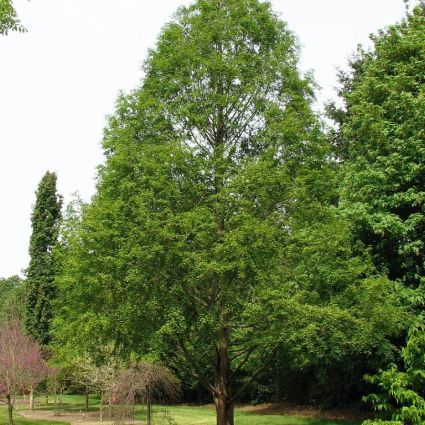
  • Dawn Redwood: Strongly pyramidal shape when young, becoming more rounded with age. Deciduous canopy stands out among evergreens.
  • Coast Redwood: Tall, narrow columns with persistent lower shading due to dense evergreen foliage. Massive main trunks and upward-sweeping limbs.

Redwood Tree Roots

  • Dawn Redwood: Fibrous, spreading roots that appreciate moisture and deep soil.
  • Coast Redwood: Wide spreading shallow roots often interlock with neighbors, giving stability to these skyscraper-sized trees.

Growth Speed

Both Dawn and Coast Redwoods grow exceptionally fast, making them powerhouse trees for large properties and long-term landscape design.

Top Redwoods at Nature Hills Nursery:

Dawn Redwood

Dawn Redwood is a fast-growing, deciduous conifer with soft, feathery needles that shift from fresh spring green to glowing copper in fall. Its pyramidal shape, furrowed bark, and strong trunk make it easy to recognize. This living fossil adds bold height and a timeless vibe to big open spaces.

Amber Glow Dawn Redwood Tree

A vibrant Dawn Redwood with golden chartreuse needles that shimmer in sunlight. New growth flushes with warm amber tones, giving it a glowing, almost sunrise-inspired look. Same quick growth and pyramidal form as the species, but much showier for modern landscapes.

Gold Rush Dawn Redwood Tree

A standout selection known for its bright golden foliage all growing season. The needles feel soft and fernlike, forming a fluffy, luminous canopy that lights up any yard. The gold tones intensify in full sun, making this one a true eye catcher.

Soquel Coast Redwood Tree

Soquel Coast Redwood is an evergreen Redwood with rich green needles arranged in elegant flat sprays. Famous for its strong central leader, bluish green cast, and straight, formal shape. Thick, reddish bark and dense foliage make it an incredible legacy tree for spacious sites.

Aptos Blue Coast Redwood Tree

A Coast Redwood is prized for its unique blue-green needles that give the whole tree a cool-toned glow. Its towering, columnar habit, deep red bark, and persistent evergreen canopy create a dramatic, forest-like presence. A real showpiece for large properties.

Redwood Tree Landscaping Uses

Because of their large size, Redwoods shine best in wide open spaces, public gardens, estates, parks, and acreage plantings. Gardeners love them for:

  • Majestic specimen plantings
  • Natural shade creation
  • Long-term windbreaks
  • Historic or educational garden displays
  • Waterside plantings
  • Architectural backdrops

Their tall, elegant forms also work beautifully as legacy plantings for future generations to enjoy.

Care and Maintenance of Redwoods

Redwoods are surprisingly low-maintenance for such iconic trees.

  • Plant in full sun for the strongest form and fastest growth.
  • Choose rich, moist, well-drained soil.
  • Keep young trees consistently watered: here are helpful watering tips.
  • Mulch generously to protect surface roots with a good mulch layer.
  • Avoid hot, dry, exposed sites for Coast Redwoods unless irrigation is available.
  • Prune only to maintain structure or remove dead wood.

A Redwood Reflection

Redwoods prove that time, patience, and towering beauty never go out of style. Their bark, needles, cones, and sky-reaching silhouettes tell a story that’s millions of years old. Talk about an evergreen charm that never quits growing.

Happy Planting!
Previous Next

Compare Plants

Browse the features and specs side-by-side to find the best fit for your garden.

A table comparing the facets of 1 products
Facet
Dawn Redwood
Dawn Redwood
View details
Rating
Rating-
Type
TypeTree
By
ByNature Hills Nursery
Flower Color
Flower Color
-
Growing Zone Range
Growing Zone Range
4-8
Mature Height
Mature Height
50-90 ft
Width
Width
15-25 ft
Price
Price
Regular price $10688

Frequently Asked Questions

Are redwood trees evergreen?

Coast Redwoods are true evergreens that retain their flat, two-rowed needles year-round, while Dawn Redwoods are actually deciduous conifers that drop their soft, opposite-arranged needles each fall after turning brilliant coppery orange. Both belong to the redwood family but have completely different seasonal behaviors. When selecting redwoods for your landscape, choose Coast Redwoods (zones 7-10) if you want year-round foliage, or Dawn Redwoods (zones 4-8) if you prefer seasonal color changes and winter structure.

How to identify a redwood tree?

Redwoods can be identified by their distinctive reddish-brown, deeply furrowed bark and soft, flat needles arranged in rows along the stems. Dawn Redwoods (Metasequoia) have opposite-arranged needles that turn copper-orange and drop in fall, while Coast Redwoods (Sequoia sempervirens) maintain evergreen needles year-round in two flat rows. Both species feature fibrous, spongy bark with warm cinnamon to deep red coloration that's remarkably soft to the touch. Look for these towering giants in USDA zones 6-10, and examine the needle arrangement and seasonal behavior to distinguish between the two main types.

Are redwoods evergreen?

Coast Redwoods (Sequoia sempervirens) are true evergreens that retain their flat, two-rowed needles year-round, while Dawn Redwoods (Metasequoia) are deciduous conifers that drop their soft, opposite-arranged needles each fall after turning brilliant coppery orange. Both species are hardy in USDA zones 6-10, though Coast Redwoods prefer the milder, fog-rich conditions of zones 8-10. When selecting redwoods for your landscape, choose Coast Redwoods if you want year-round evergreen foliage, or Dawn Redwoods if you enjoy seasonal needle color and winter structure.

What USDA hardiness zones are best for planting redwood trees?

Coast Redwoods (Sequoia sempervirens) thrive in USDA hardiness zones 7-9, requiring the mild, humid conditions found along the Pacific Coast. Giant Sequoias (Sequoiadendron giganteum) are more cold-hardy and grow successfully in zones 6-8, tolerating winter temperatures down to -10°F. Dawn Redwoods (Metasequoia glyptostroboides) are the most adaptable, flourishing in zones 4-8 and handling temperatures as low as -30°F. Choose your redwood species based on your specific zone and local climate conditions, ensuring adequate moisture and protection from harsh winds.

Is a redwood an evergreen?

Coast Redwoods (Sequoia sempervirens) are true evergreens that retain their flat, needle-like foliage year-round in two distinct rows along the stem. Dawn Redwoods (Metasequoia), however, are deciduous conifers that drop their soft, opposite-arranged needles each fall after turning brilliant coppery orange. Both species thrive in USDA zones 8-10, though Dawn Redwoods tolerate slightly colder conditions. Check the needle arrangement and whether foliage drops in autumn to distinguish between these two redwood types.

How far should I space redwood trees from buildings or other structures?

Plant redwood trees at least 30-50 feet away from buildings, power lines, and other structures to accommodate their massive mature size and extensive root systems. Coast redwoods can reach 200+ feet tall with a 25-foot spread, while dawn redwoods typically grow 70-100 feet tall with a 20-foot spread in zones 4-8. Consider the tree's full mature dimensions plus an additional safety buffer when selecting your planting location. Always check with local utilities before planting to avoid future conflicts with overhead lines.

Is a redwood tree an evergreen?

Coast Redwoods (Sequoia sempervirens) are true evergreens that retain their flat, needle-like foliage year-round in two distinct rows along their branches. However, Dawn Redwoods (Metasequoia) are deciduous conifers that drop their soft, opposite-arranged needles each fall after turning brilliant coppery orange. Both species thrive in USDA zones 6-10 depending on the variety. When selecting a redwood, choose Coast Redwood for year-round evergreen screening or Dawn Redwood if you prefer seasonal color changes in your landscape.

What type of soil do redwood trees prefer for optimal growth?

Redwood trees thrive in well-draining, acidic to neutral soil with a pH between 6.0-7.0 and consistent moisture retention. They prefer deep, fertile loam enriched with organic matter and perform best in USDA zones 7-10 where they can access coastal fog or supplemental irrigation. These trees require soil that stays evenly moist but never waterlogged, as their shallow root systems need both oxygen and water. Plant redwoods in areas with rich, humus-laden soil and establish a regular watering schedule during their first 2-3 years to ensure proper establishment.

When is the best time to plant redwood trees?

The best time to plant redwood trees is in fall or early spring when temperatures are mild and rainfall is adequate for root establishment. In USDA zones 7-10, plant from October through March, avoiding summer heat stress and winter freezing periods. Redwoods require consistent moisture and benefit from the natural winter rains in their preferred coastal regions. Choose a location with morning sun, afternoon shade, and protection from strong winds for optimal growth.

How long does a redwood tree take to grow?

Redwood trees are famously slow-growing giants that require decades to reach impressive heights. Dawn Redwoods typically grow 1-2 feet per year and can reach 70-100 feet in 50-75 years, while Coast Redwoods grow slightly faster at 2-3 feet annually but need centuries to achieve their legendary 300+ foot stature. Both species thrive in USDA zones 6-10 depending on variety, with Dawn Redwoods being more cold-hardy. Plant young trees in well-draining, consistently moist soil and provide ample space since they'll need room to spread their 15-25 foot canopy at maturity.

Find Your Garden's Growing Zone!

Your Current Growing Zone:

Zone

ZIP Code:

✓ Growing Zone Set Successfully!

Your zone has been saved and will be used throughout the site.

⚠ Unable to locate a growing zone for that ZIP code.

Please check your ZIP code and try again.

Looking up your growing zone...

When ordering a tree or plant, make sure to know your planting zone.

You can determine your garden's USDA hardiness zone by entering your Zip Code below.