Free Shipping on Orders $199+

Growing Zone: | Garden in
Find your Growing Zone!

Fastest-Growing Shrubs At Nature Hills Nursery!

Fastest-Growing Shrubs At Nature Hills Nursery! - Nature Hills Nursery

Charlotte Weidner |

Fast Growing Spirea

If you're dreaming of a lusher, fuller landscape without the long wait, you're in the right place! Nature Hills Nursery carries a bountiful selection of fast-growing shrubs that spring to life in record time!

These shrubs not only shoot up quickly but also bring rich color, full foliage, intoxicating fragrance, and year-round beauty! From vivid flowers to colorful foliage and even winter charm, these fast-growing champions are ready to work for you!

Whether you're looking to block out that nosy neighbor, add structure and seasonal flair, or fill your yard with butterflies and hummingbirds, these speedy bloomers and fillers are up for the job!

Types of Fast-Growing Shrubs at Nature Hills

Nature Hills Nursery offers an incredible range of fast-growing shrubs suited for just about any purpose or style. We've grouped them into handy categories to help you find the right match for your landscape in a flash.

Fast-Growing Flowering Shrubs

Nothing says "instant charm" like a shrub that bursts into blooms early and often. These flowering varieties start the season strong, and many continue to bloom through summer and even into fall.

  • Forsythia – Brilliant golden blooms early in spring.
  • Spirea – Compact with frothy clusters of pink or white blooms.
  • Mock Orange – Fragrant white blossoms with an orange-blossom scent.
  • Rose of Sharon – Late-summer blooms in tropical hues.
  • Sweetspire (Itea) – Fragrant racemes and fiery fall color.
  • Butterfly Bush – Nectar-rich panicles that attract pollinators in droves.
  • Deutzia – Arching sprays of bell-like blossoms.
  • Pussy Willow – Fuzzy spring catkins that hint at warmth to come.
flowering fast-growing shrubs

Colorful Foliage Shrubs

Not all beauty fades with the flowers! These colorful foliage shrubs bring drama and depth through their striking leaves.

  • Purple Sand Cherry – Bold burgundy foliage.
  • Bush Honeysuckle – Yellow flowers and vibrant fall foliage.
  • Smokebush – Fluffy "smoke-like" blooms and dramatic purple leaves.
  • Ninebark – Peeling bark, clusters of flowers, and colorful foliage.
  • Privet (Ligustrum) – Evergreen foliage and great for hedges.
Fast growing colorful foliage shrubs

Fast-Growing Shrubs For Tricky Spots

Every yard has its tricky corners, too dry, too wet, too windy, or too neglected. Thankfully, these fast-growing shrubs are built to thrive where others struggle, making them true problem-solvers in the landscape.

  • Willows (Dwarf Blue Leaf Arctic, Flame Willow, and Sageleaf) – Thrive in rain gardens, wet soils, low-lying areas, erosion-prone slopes, and riparian zones
  • Italian Buckthorn / Buckthorn – Handles urban pollution, poor soil, and coastal winds
  • Silverberry (Elaeagnus) – Ideal for dry, sandy, xeric, rocky, or nutrient-poor soils
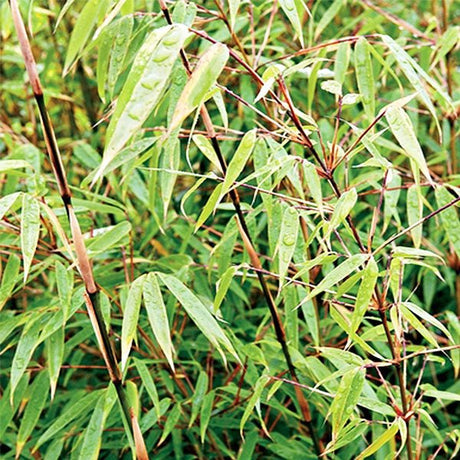
  • Clumping Bamboo – Excels in tight urban spaces and noise-sensitive areas
  • Fipside Chaste Tree (Vitex) – Loves hot, dry, sunny conditions
  • Arnold Red Bush Honeysuckle – Handles tough clay soils, salt, and wind. This dense, fast-growing shrub is ideal for roadside planting, coastal gardens, or slopes, where erosion control is needed.

These resilient shrubs make the most of challenging conditions and help you transform even the most inhospitable parts of your yard into thriving, lush spaces.

Fast growing shrubs for tricky spots

Tips For Growing Fast-Growing Shrubs

Before planting, always:

  • Know your Hardiness Zone – Each shrub has its preferred USDA planting zone.
  • Pick the right sun conditions – Full sun, part shade, or full shade.
  • Use arborist mulch to hold moisture and suppress weeds.
  • Water new shrubs regularly using the Finger Test to check soil moisture.
  • Prune as needed to shape and control size, especially important for hedge plants!
  • Deadhead spent blooms when applicable to encourage fresh flowers.

From Bare to Blooming in a Flash!

Fast growing Forsythia

There's something deeply satisfying about seeing instant impact in your garden. Fast-growing shrubs don't just speed up the landscaping process, they deliver instant privacy, quick curb appeal, and thriving habitats for wildlife in record time. Why wait years for results when you can enjoy lush greenery, colorful blooms, and seasonal interest now?

Whether you're shielding your backyard from prying eyes, building a backyard oasis, or kickstarting a brand new garden, these speedy shrubs work double duty, saving you time and money while giving mother nature a jumpstart. With the right care and smart plant choices, your landscape can look mature, polished, and purposeful in just a few seasons.

Grow smart and fast! Your dream landscape is only a season or two away!

Happy Planting!

Shop for bushes and shrubs at Nature Hills
Previous Next

Compare Plants

Browse the features and specs side-by-side to find the best fit for your garden.

A table comparing the facets of 1 products
Facet
Clumping Bamboo - Nature Hills Nursery - #1 Container -
Clumping Bamboo
View details
Rating
Rating-
Type
TypeShrub
By
ByNature Hills Nursery
Flower Color
Flower Color
-
Growing Zone Range
Growing Zone Range
5-7
Mature Height
Mature Height
6-10 ft
Width
Width
6-8 ft
Price
Price
Regular price $6310

Frequently Asked Questions

What is my USDA hardiness zone for planting fast-growing shrubs from Nature Hills Nursery?

Your USDA hardiness zone determines which fast-growing shrubs will thrive in your specific climate and survive winter temperatures. Most of Nature Hills' fast-growing shrubs like Forsythia, Spirea, and Butterfly Bush perform well in zones 4-8, while heat-lovers like Rose of Sharon excel in zones 5-9. You can find your exact zone by entering your zip code on the USDA Plant Hardiness Zone Map or checking Nature Hills' product pages for specific zone recommendations. Always verify the zone requirements for your chosen shrubs before ordering to ensure successful establishment and long-term growth.

How quickly do these fast-growing shrubs like Arnold Red Bush Honeysuckle or Chaste Tree actually grow each year?

Fast-growing shrubs like Arnold Red Bush Honeysuckle typically add 1-3 feet of growth per year once established, while Chaste Tree can achieve 2-4 feet annually in zones 6-9. Most fast-growing varieties will reach 50-75% of their mature size within 2-3 growing seasons under proper conditions. Growth rates depend on soil quality, moisture, sunlight, and climate zone compatibility. Plant in spring after last frost and provide consistent water the first year to maximize growth potential.

What is the mature height and width of fast-growing shrubs to avoid overcrowding in my landscape?

Fast-growing shrubs at Nature Hills vary significantly in mature size, from compact Spirea reaching 3-4 feet tall and wide to larger specimens like Rose of Sharon that can grow 8-12 feet tall and 6-10 feet wide. Most butterfly bushes and forsythia typically mature at 6-8 feet in both directions, while ninebark can reach 5-10 feet depending on the variety. To prevent overcrowding, research each specific cultivar's mature dimensions and plant accordingly, spacing shrubs at least two-thirds of their expected width apart. Check the individual plant tags or product pages for exact measurements since growth rates and sizes vary by hardiness zone and growing conditions.

Can these fast-growing shrubs handle tough conditions like clay soils, salt, wind, or slopes?

Many of Nature Hills' fast-growing shrubs are exceptionally tough and thrive in challenging conditions. Forsythia and Spirea handle clay soils and wind exposure beautifully, while Rose of Sharon tolerates urban pollution and compacted soil. Pussy Willow and Bush Honeysuckle are excellent choices for wet or boggy areas, and many varieties like Ninebark work well on slopes for erosion control. Check each plant's specific requirements on our product pages, then match your site conditions to find the perfect hardy performer for your landscape.

What are the best planting times for fast-growing privacy shrubs from Nature Hills?

The optimal planting times for fast-growing privacy shrubs are early spring (after last frost) and early fall (6-8 weeks before first hard frost). Spring planting allows shrubs to establish strong root systems during the growing season, while fall planting takes advantage of cooler temperatures and natural rainfall. In zones 3-6, plant between late March-May or September-October; in zones 7-9, extend the window to February-May and September-November. Choose your planting season based on your local climate and water availability for best establishment results.

What are the sun exposure requirements for the fastest-growing shrubs available at Nature Hills Nursery?

The fastest-growing shrubs at Nature Hills Nursery have varying sun exposure needs, with most thriving in full sun (6+ hours daily) to partial sun (4-6 hours daily). Popular rapid growers like Forsythia, Spirea, and Weigela perform best in full sun conditions, while others such as Ninebark and certain Hydrangea varieties tolerate partial shade. Arborvitae and Privet hedging shrubs also prefer full to partial sun for optimal growth rates of 2-4 feet per year. Check each shrub's specific light requirements on its product page before planting to ensure maximum growth potential in your landscape.

How do I plant fast-growing shrubs upon arrival from Nature Hills Nursery?

Plant your fast-growing shrubs immediately upon arrival, or keep them watered in their containers if planting must be delayed. Dig a hole twice as wide as the root ball but no deeper, ensuring the top of the root ball sits level with the surrounding soil. Water thoroughly after planting and apply 2-3 inches of mulch around the base, keeping mulch away from the trunk. Plant in early spring or fall for best establishment, and water regularly during the first growing season to support rapid growth.

When is the best time to prune fast-growing shrubs from Nature Hills to promote healthy growth?

The optimal pruning time for fast-growing shrubs depends on their flowering habit: prune spring bloomers like forsythia and lilac immediately after flowering ends in late spring, while summer bloomers such as butterfly bush and spirea should be pruned in late winter or early spring before new growth begins. In zones 3-7, aim for February through March pruning, while zones 8-10 can prune from January through February. Remove no more than one-third of the plant's height to avoid shock, and always use clean, sharp pruning shears to make cuts just above outward-facing buds. Schedule annual pruning to maintain shape and encourage vigorous new growth throughout the growing season.

How often should I water newly planted fast-growing shrubs for quick establishment?

Water newly planted fast-growing shrubs deeply 2-3 times per week for the first 4-6 weeks, providing approximately 1-1.5 inches of water weekly including rainfall. During hot summer months (zones 6-9), increase frequency to every other day for the first two weeks, then gradually reduce as roots establish. Check soil moisture by inserting your finger 2-3 inches deep near the root zone. Maintain consistent moisture without waterlogging, and apply a 2-3 inch layer of mulch around the base to retain soil moisture and reduce watering frequency.

Should I fertilize fast-growing shrubs right after planting from Nature Hills Nursery, and what type works best?

Wait 4-6 weeks after planting before fertilizing fast-growing shrubs to allow root establishment without shocking the plant. Use a balanced, slow-release fertilizer like 10-10-10 applied in early spring across zones 3-9, following package rates based on mature shrub size. Avoid high-nitrogen fertilizers during the first year as they can promote excessive top growth at the expense of root development. Water thoroughly after applying fertilizer and maintain consistent moisture throughout the growing season.

Find Your Garden's Growing Zone!

Your Current Growing Zone:

Zone

ZIP Code:

✓ Growing Zone Set Successfully!

Your zone has been saved and will be used throughout the site.

⚠ Unable to locate a growing zone for that ZIP code.

Please check your ZIP code and try again.

Looking up your growing zone...

When ordering a tree or plant, make sure to know your planting zone.

You can determine your garden's USDA hardiness zone by entering your Zip Code below.