Shop With Confidence: FREE Growing & Glowing Promise

Free Shipping on Orders $199+

Fall Planting … Do It Now, Do It Right!

Fall Planting … Do It Now, Do It Right! - Nature Hills Nursery

Nature Hills Nursery |

Finally, … a bit of relief from the sweltering summer days perhaps. We are ready to usher in the new fall season, how about you? Cooler nights are welcome and give your ac bill a break too. The shorter days reduce the amount of heat generated during the daytime.

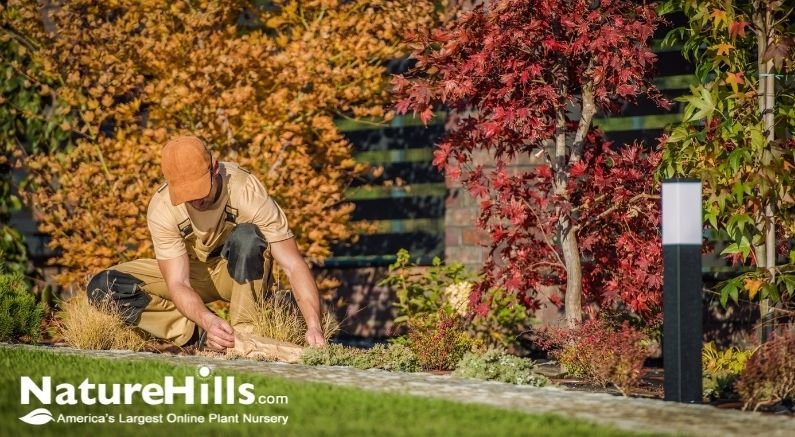
Maybe it hasn’t cooled much where you live just yet, but soon it will be noticed. Shorter days, cooler nights, and in many areas more frequent rainfall is a great benefit for your plants. The fall season is a welcome season not only established plants, but for new plants that you can install right now!

There is a whole underutilized season that you can all be taking advantage of. It is the fall planting season.

Fall planting works so well because the warm soils make new roots very quickly. In the spring, the soils in the more northern areas where they have frost and snow remain cold for a long time are cold to start out. The sun eventually warms them up. Now think about the soil temperatures in the fall. Just the opposite happens. The sun has been warming the soils all summer long so when fall rolls around they could not be more suitable for planting.

Warm soils encourage new roots to form very quickly. When new plants go in the ground, the faster they make new roots into your soil, the sooner your plant will re-establish in its new home. Warm soils initiate new roots whether you are planting bare root plants, or container grown plants. Even though bare root plants are going dormant, they still make new roots in the fall.

The beauty of planting new plants in the fall, your plants will get a jump start on the spring. Lilacs can produce new roots this fall, over winter, and then in spring – the plants think they have been in the ground for a full year already.

Both bare root and container grown trees and shrubs, perennials, roses, vines, evergreens and anything else that we offer in fall can get a jump start with fall planting. Get your fall wish list together.

Warm fall soils, cooler night temperatures, good moisture, and a bit slower time of the year in the garden are all outstanding reasons to utilize the fall planting season. Take advantage of everything mother nature is providing to aid in the establishment of new plants.

This time of the year is outstanding for establishing new seeded lawns and sod too. Again, warm soils, cooler air, and better moisture all will benefit from fall planting.

Always be sure to plant your bare root plants at the same depth they were grown at the nursery, and at the same depth that our container plants were grown in the pots. Please pay special attention to the planting depth as so many tend to plant those plant too deep.

Planting your plants too deep in the ground is probably the biggest mistake that people make. Trees, even when young, still have a wider trunk right as the trunk goes into the ground. If you are unsure, be sure to pull the soil away from the trunk of the tree in the pots and find the first set of roots and plant the tree so those roots are just under the soil surface.

The other super important thing to remember is that using shredded hardwood mulch around your plants is so beneficial in maintaining even moisture, controlling weeds, and increased root development. Using mulch over the tops of the root zone is where it should go. The mulch should not be piled up against the stems or trunks of the plants. Piling up excess mulch against the stems of plants and trunks of trees can be very detrimental to the health of your plants or even kill them.

The fall planting season in upon us. Take advantage of this incredible time of year where mother nature is on our side.

Previous Next

Frequently Asked Questions

How do I find my first fall frost date and use it to time my planting correctly?

To find your first fall frost date, enter your zip code into the USDA Plant Hardiness Zone map or check with your local cooperative extension office for historically accurate frost dates in your area. As a general rule, aim to get trees, shrubs, and perennials in the ground at least 6 weeks before your first expected frost date, giving roots enough time to establish in those warm fall soils before the ground freezes. Container-grown plants can often be planted closer to frost than bare root stock, but earlier is always better. Check naturehills.com for plant-specific guidance and get your order in now to make the most of this underutilized planting season.

How far back from my first frost date should I start fall planting to give plants enough time to establish?

Aim to get plants in the ground at least 4 to 6 weeks before your first expected frost date, which gives roots enough time to establish in the still-warm soil before the ground freezes. In northern zones (3 to 5), this often means planting in late August through September, while gardeners in zones 6 to 8 can often plant successfully into October or even November. The key advantage of fall is that soil temperatures remain warm from a full summer of sun exposure, which drives rapid root development even as air temperatures cool. Check your local frost date, count back six weeks on the calendar, and get your order placed so plants arrive with plenty of time to settle in before winter.

Which cool-season vegetables and quick-maturing crops can I still plant this fall in my growing zone?

Fall is an excellent time to direct sow cool-season crops like spinach, kale, arugula, radishes, and leaf lettuce, as well as transplant broccoli, cauliflower, and cabbage starts. In zones 6 through 9, you can typically continue planting these crops 6 to 8 weeks before your first expected frost date, taking advantage of the warm soil temperatures that encourage fast germination and root development. Radishes and spinach can mature in as little as 25 to 45 days, making them ideal for a quick fall harvest even in shorter growing windows. Check your local frost dates now, count back from that date, and get your seeds or transplants in the ground while warm soils are still on your side.

How many extra days should I add to the days-to-maturity on seed packets when planting fall crops?

The provided article does not cover seed packet days-to-maturity calculations for fall crops. As a general guideline, most experienced gardeners add 10 to 14 extra days to the listed days-to-maturity when planting fall crops, accounting for the shorter daylight hours and cooling temperatures that slow plant growth as the season progresses. Count backward from your first expected frost date using that adjusted number to determine your ideal planting window. Check your local extension service for frost date specifics in your zone to fine-tune your timing.

Should I direct-seed fall vegetables or use transplants to get a better harvest before frost?

For a reliable harvest before frost, transplants are generally the better choice for most fall vegetables like broccoli, cabbage, and cauliflower, since they give you a 4 to 6 week head start over direct seeding. Fast-maturing crops like radishes, spinach, lettuce, and arugula can be direct-seeded successfully since they reach harvest in 30 to 45 days. Count back from your first expected frost date to determine your planting window, and add at least 2 weeks as a buffer to account for slower growth in cooling temperatures. Start transplants indoors now or purchase them from a local nursery, and get them in the ground while soil temperatures are still warm to encourage strong root establishment before winter sets in.

How long do roots on newly planted trees and shrubs need to establish before the ground freezes solid?

Newly planted trees and shrubs generally need 6 to 8 weeks of root growth before the ground freezes solid, though warm fall soils can accelerate this process significantly. Because soil holds summer heat well into autumn, roots continue growing even as air temperatures drop, giving plants a strong head start before winter dormancy. In colder zones like 4 and 5, aim to plant by late September to early October, while gardeners in zones 6 through 8 can plant well into November. Get your trees and shrubs in the ground as soon as possible this fall to maximize root establishment time before your first hard freeze.

Should I amend the soil I use to backfill around newly planted trees and shrubs in fall?

When backfilling around newly planted trees and shrubs, it is generally best to use the native soil you removed from the planting hole rather than heavily amended mixes. Research has shown that roots tend to stay within the enriched zone if the backfill is too different from the surrounding native soil, which can limit long-term establishment. If your native soil is extremely poor, you can blend in a modest amount of compost, no more than 25 percent of the total backfill volume. Focus instead on proper planting depth, thorough watering at installation, and applying 2 to 3 inches of mulch over the root zone to retain the warm soil temperatures that make fall planting so effective.

How often and how deeply should I water new fall plantings as temperatures drop?

New fall plantings need deep, infrequent watering rather than shallow, frequent sessions. Aim to water slowly and deeply to reach 12 to 18 inches into the soil, roughly once or twice per week depending on rainfall, tapering to once every 10 to 14 days as temperatures drop below 40 degrees Fahrenheit. In zones 4 through 6, plan to give trees and shrubs a final deep watering just before the ground freezes to help roots survive winter. Monitor soil moisture by probing 3 to 4 inches down, and water whenever that layer feels dry to the touch.

How do I apply mulch around fall-planted trees, shrubs, and garden beds without damaging trunks or stems?

Apply a 2 to 3 inch layer of mulch in a wide circle around newly planted trees and shrubs, extending out to the drip line when possible, but always keep mulch pulled back 2 to 3 inches away from the trunk or stem to prevent rot and pest damage. Piling mulch against the bark, sometimes called volcano mulching, traps moisture and can introduce disease, so a flat, donut-shaped application is the correct technique. For fall-planted trees and shrubs in Zones 3 through 6, applying mulch before the ground freezes helps insulate soil, retain warmth, and protect newly forming roots through the winter. Pull mulch back slightly in early spring to allow the soil to warm evenly and check for any moisture-related issues at the base of the plant.

What lawn care tasks should I prioritize in fall, and in what order should I tackle seeding, fertilizing, aerating, and mowing?

Fall is an ideal time to establish or refresh your lawn because warm soil temperatures, cooler air, and increased moisture create perfect conditions for root development. Start with aeration to relieve compaction and open the soil, then overseed immediately so new grass seed makes direct contact with loosened soil. Follow up with a fall fertilizer application to feed both new seedlings and established turf as it builds root reserves for winter. Continue mowing at your normal height until growth stops, and get your seeding done at least 6 to 8 weeks before your first expected frost to give new grass time to establish.