Free Shipping on Orders $199+

Growing Zone: | Garden in
Find your Growing Zone!

Boston Ivy vs. English Ivy - What's the Difference?

Boston Ivy vs. English Ivy - What's the Difference? - Nature Hills Nursery

Charlotte Weidner |

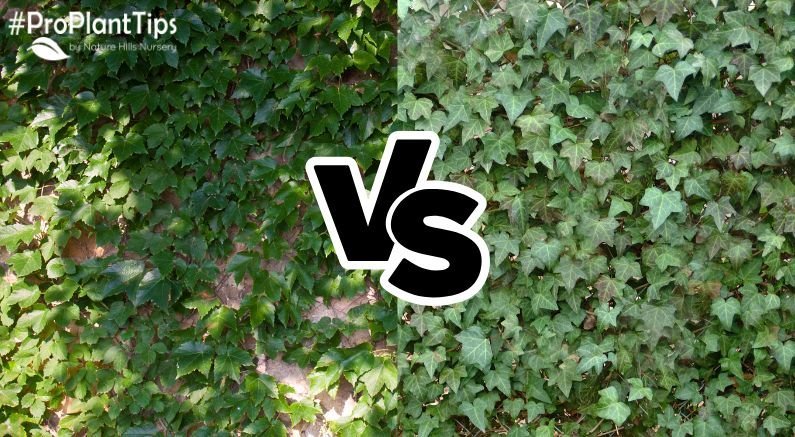
boston ivy vs english ivy comparison infographic

Boston Ivy and English Ivy are two of the most popular fast-growing climbing or groundcover plants used in landscaping! Both are stunning ornamental vines for covering walls, fences, retaining walls, trellises, and even trailing from hanging baskets.

While they share a similar use in the garden, Boston Ivy and English Ivy are quite different in appearance, care needs, and behavior. Knowing these differences helps gardeners choose the right vining perennial for their landscape.

Quick Overview: Boston Ivy vs English Ivy

Both types of Ivy are excellent for transforming outdoor spaces with lush greenery. Boston Ivy offers brilliant fall color and bird-friendly berries, while English Ivy provides evergreen coverage and timeless charm. But there's a place for everything - and everything in its place - when deciding which of these hardy climbing plants will suit your garden best.

All About Boston Ivy

Japanese Creeper

The Boston Ivy (Parthenocissus tricuspidata) is a hardy deciduous vine in the grape family. Native to eastern Asia - Korea, Japan, and northern and eastern China - this ornamental plant is also called Grape Ivy, Japanese Ivy, or Japanese Creeper. Though unrelated to true Ivies, Boston Ivy is beloved for its glossy foliage and brilliant autumn display.

Boston Ivy is a remarkably fast-growing vine with tendrils and suction cup-like feet that cling easily to rock, brick, and metal siding. Unlike Virginia Creeper, it is less difficult to remove, but should not be planted on wood or shingle siding where it may pull off paint or material. Gardeners also appreciate how easy it is to grow and care for, needing very little once established.

Boston Ivy Identification & Characteristics

Boston Ivy foliage is large, three-lobed, and deep green with reddish stems, often confused with Poison Ivy when young. In fall, leaves turn scarlet to deep red, creating one of the most stunning displays among ornamental vines. In mild climates, it can remain semi-evergreen. Spring brings greenish-white flowers buzzing with pollinators, followed by small black berries for birds. Its dense foliage also provides shelter for nesting.

Boston Ivy Key Features:

  • Fast-growing vine for walls, fences, and trellises
  • Cold-hardy in USDA zones 4-8
  • Full sun to partial shade
  • Drought-tolerant once established
  • Brilliant fall color
  • Pollinator flowers and bird-friendly berries
  • Insulates and shades hot walls
  • Mature size: 30-50 ft tall, 5-10 ft spread

The Robusta Boston Ivy is even more cold-hardy, thriving in zones 3-7 with red-orange fall color. Boston Ivy is deer-resistant, adaptable to most soils, and requires very little care once established.

All About English Ivy

English Ivy (Hedera helix) is a broad-leaved evergreen perennial vine native to Europe, Western Asia, and Northern Africa. Also called Common Ivy or European Ivy, this historic ornamental plant has covered castles, cottages, and Ivy League buildings for centuries! Its trailing vines are equally useful as living mulch, groundcover, and houseplants for air purification.

English Ivy grows vigorously in both sun and shade across USDA zones 4-9. It is prized as a groundcover under trees, a fast-growing vine for vertical surfaces, or a lush spiller in hanging baskets and containers. Indoors, smaller-leaved cultivars thrive as topiaries or hanging houseplants, improving air quality.

English Ivy Identification & Characteristics

Ivy background

The fan-shaped, shallowly lobed leaves are deep green with a subtle sheen. Alternate growth patterns and hairy mature vines make them easy to identify. Clusters of greenish-yellow flowers attract pollinators, followed by purple-black berries enjoyed by birds. Dense growth creates a thick canopy that suppresses weeds effectively.

English Ivy Key Features:

  • Mature height: 20-60 ft
  • Mature spread: 3-30 ft
  • Cold-hardy and heat-tolerant
  • Evergreen year-round foliage
  • Root hairs cling to many surfaces
  • Pollinator and bird-friendly
  • Adaptable groundcover or climbing vine

English Ivy prefers rich, well-drained soil but adapts easily. It requires moderate watering and benefits from mulch in cold climates. Trim regularly to manage the spread. In northern zones, plant in a protected area to prevent winter burn. The Thorndale English Ivy is a darker-leaved variety for zones 5-11 that tolerates heat beautifully.

Ivy Care & Maintenance

Ivy Care Infographic

Both Boston Ivy and English Ivy thrive in well-drained soil with consistent watering during establishment. Plant 18-24 inches apart for quick wall coverage, or 2-4 feet apart for slower, less aggressive growth. Arborist Mulch conserves moisture and protects roots in winter. Fertilizer is optional, but a light dose of all-purpose fertilizer in spring can boost vigor.

Care Requirements:

  • Boston Ivy grows best in full sun, tolerates part shade
  • English Ivy tolerates full sun or shade, prefers rich soil
  • Provide moderate, regular water until established. Use the Finger Test
  • Mulch to retain moisture and insulate roots
  • Prune in winter or early spring to control spread

Pruning Ivy Vines

Pruning is the only major chore! For Boston Ivy, prune in winter while dormant, cutting back no more than one-third at a time. For English Ivy, trim anytime during the year to keep growth in check, especially around doors, windows, and gutters. Regular pruning rejuvenates vines and prevents them from spreading where they shouldn't.

Happy Ivy Vines!

Boston Ivy and English Ivy each bring their own magic to the garden. One offers fiery fall color and bird-friendly berries, while the other gives evergreen coverage and timeless elegance. Both vines are versatile, hardy, and low-maintenance additions to any landscape. Cover walls, fences, trellises, or create lush groundcover with these iconic climbing plants!

Discover more ornamental vines at NatureHills.com and find the perfect Boston Ivy or English Ivy variety to transform your landscape today!

Happy Planting!

Shop Ornamental Vines
Previous Next

Frequently Asked Questions

What are the key differences in hardiness zones for Boston ivy and English ivy?

Boston ivy thrives in USDA hardiness zones 4-8, making it considerably more cold-hardy than English ivy, which is suited for zones 5-9. Boston ivy can withstand winter temperatures as low as -25°F, while English ivy typically suffers damage below -10°F. English ivy performs better in warmer southern climates and maintains its evergreen foliage year-round, whereas Boston ivy goes dormant in winter. Choose Boston ivy for northern gardens with harsh winters, and English ivy for milder climates where you want evergreen coverage.

How do the leaf shapes and colors differ between Boston ivy and English ivy throughout the seasons?

Boston ivy displays distinctive three-lobed leaves that transform from green to brilliant scarlet, orange, and burgundy in fall before dropping completely in winter. English ivy maintains its classic five-lobed, dark green leaves year-round as an evergreen, though some varieties may develop bronze or purple tints in cold weather. Boston ivy leaves are typically 4-8 inches across and much larger than English ivy's 2-4 inch leaves. Choose Boston ivy for dramatic seasonal color changes in zones 4-8, or select English ivy for consistent evergreen coverage in zones 5-9.

Is Boston ivy or English ivy better for climbing brick walls without causing damage?

Boston ivy is better for climbing brick walls without causing damage because it attaches using adhesive discs rather than rootlets that penetrate mortar joints like English ivy. Boston ivy (Parthenocissus tricuspidata) thrives in zones 4-8 and can reach 30-50 feet, while its sucker-like holdfasts grip surfaces without creating permanent holes. English ivy's aerial rootlets work into mortar and cracks, potentially causing structural damage over time, especially in older masonry. Choose Boston ivy for safer wall coverage and enjoy its spectacular fall color as an added bonus.

When is the best time to plant Boston ivy versus English ivy?

Both Boston ivy and English ivy are best planted in early spring after the last frost date or in early fall, 6-8 weeks before your first expected frost. Boston ivy (zones 4-8) benefits from spring planting to establish its root system before winter dormancy, while English ivy (zones 5-9) is more flexible and can handle fall planting even in cooler zones. In northern climates, stick to spring planting for both varieties to ensure adequate establishment time. Plant on an overcast day and water thoroughly to reduce transplant shock.

How does the growth rate of Boston ivy compare to English ivy in the first year?

Boston ivy typically grows 3-10 feet in its first year once established, while English ivy is considerably slower at 1-3 feet annually. Boston ivy may appear sluggish initially as it focuses on root development during the first few months, but it accelerates rapidly by midsummer in zones 4-8. English ivy maintains steady but modest growth throughout the season in zones 5-9. For faster coverage, choose Boston ivy and provide consistent moisture during its establishment period.

Are Boston ivy or English ivy more suitable for shady garden areas?

English ivy is significantly more shade-tolerant than Boston ivy, thriving in full to partial shade conditions while Boston ivy requires at least 4-6 hours of direct sunlight daily for optimal growth and fall color development. English ivy (zones 4-9) will maintain its evergreen foliage year-round in shady spots, whereas Boston ivy (zones 4-8) may struggle to establish and produce its signature autumn colors without adequate sun exposure. For deep shade areas receiving less than 4 hours of sunlight, choose English ivy for reliable coverage and growth.

What pruning techniques work best for controlling Boston ivy compared to English ivy?

Boston ivy requires more aggressive pruning in late fall or early winter, cutting back to 6-12 inches from the main stem to prevent it from overwhelming structures in zones 4-8. English ivy needs frequent light pruning throughout the growing season, trimming new growth back by one-third every 4-6 weeks to maintain control in zones 5-9. Both species benefit from wearing gloves during pruning since English ivy can cause skin irritation and Boston ivy has tough, woody stems. Prune Boston ivy when dormant for best results, but trim English ivy anytime during active growth for easier management.

Does English ivy stay evergreen while Boston ivy loses its leaves in winter?

Yes, English ivy remains evergreen year-round in zones 4-9, keeping its glossy green leaves through winter months. Boston ivy is deciduous and drops all its leaves in fall after producing spectacular red and orange autumn color, remaining bare until new growth emerges in spring. English ivy provides consistent coverage for privacy screens and winter interest, while Boston ivy offers seasonal drama with its color changes. Choose English ivy if you need year-round coverage, or Boston ivy if you prefer dramatic fall color and don't mind bare stems in winter.

How do the watering and feeding requirements compare between these two ivies?

Both Boston Ivy and English Ivy prefer consistent moisture but well-draining soil, requiring about 1 inch of water weekly during the growing season. Boston Ivy is more drought-tolerant once established and needs minimal fertilization, while English Ivy benefits from light feeding with balanced fertilizer in early spring. English Ivy requires more consistent watering in zones 4-5 where it's marginally hardy, whereas Boston Ivy (zones 4-8) handles fluctuating moisture better. Water deeply once weekly rather than frequent shallow watering, and avoid overwatering in winter when both plants are dormant.

Can Boston ivy or English ivy be used safely as a groundcover without becoming invasive?

Boston ivy is generally the safer choice for groundcover as it's less aggressive and easier to control than English ivy, though it still requires annual pruning to prevent unwanted spread. English ivy is considered invasive in many regions and can quickly overtake native plants, making it unsuitable for most groundcover applications. Boston ivy works well in zones 4-8 and stays relatively contained when trimmed back each fall, while English ivy should be avoided entirely in favor of native alternatives like wild ginger or pachysandra. Choose Boston ivy only if you're committed to regular maintenance, or select native groundcovers for a truly low-maintenance option.

Find Your Garden's Growing Zone!

Your Current Growing Zone:

Zone

ZIP Code:

✓ Growing Zone Set Successfully!

Your zone has been saved and will be used throughout the site.

⚠ Unable to locate a growing zone for that ZIP code.

Please check your ZIP code and try again.

Looking up your growing zone...

When ordering a tree or plant, make sure to know your planting zone.

You can determine your garden's USDA hardiness zone by entering your Zip Code below.